Where progress is shaped by story, and leadership is measured by service
Every issue of CancerWorld explores the terrain where science meets humanity, where personal history informs public responsibility, and where progress in cancer care is defined not only by innovation, but by values. This issue brings that mission into sharp focus through two cover stories that could not be more different in form, yet are profoundly aligned in spirit.
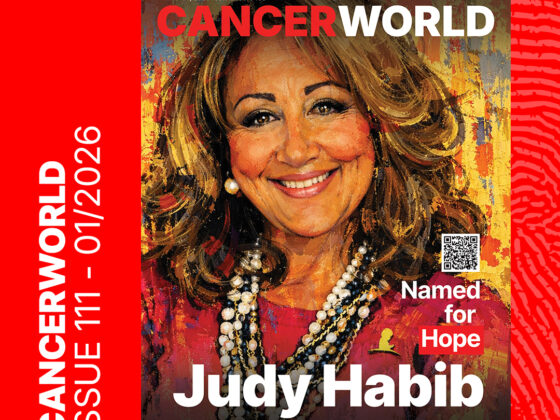
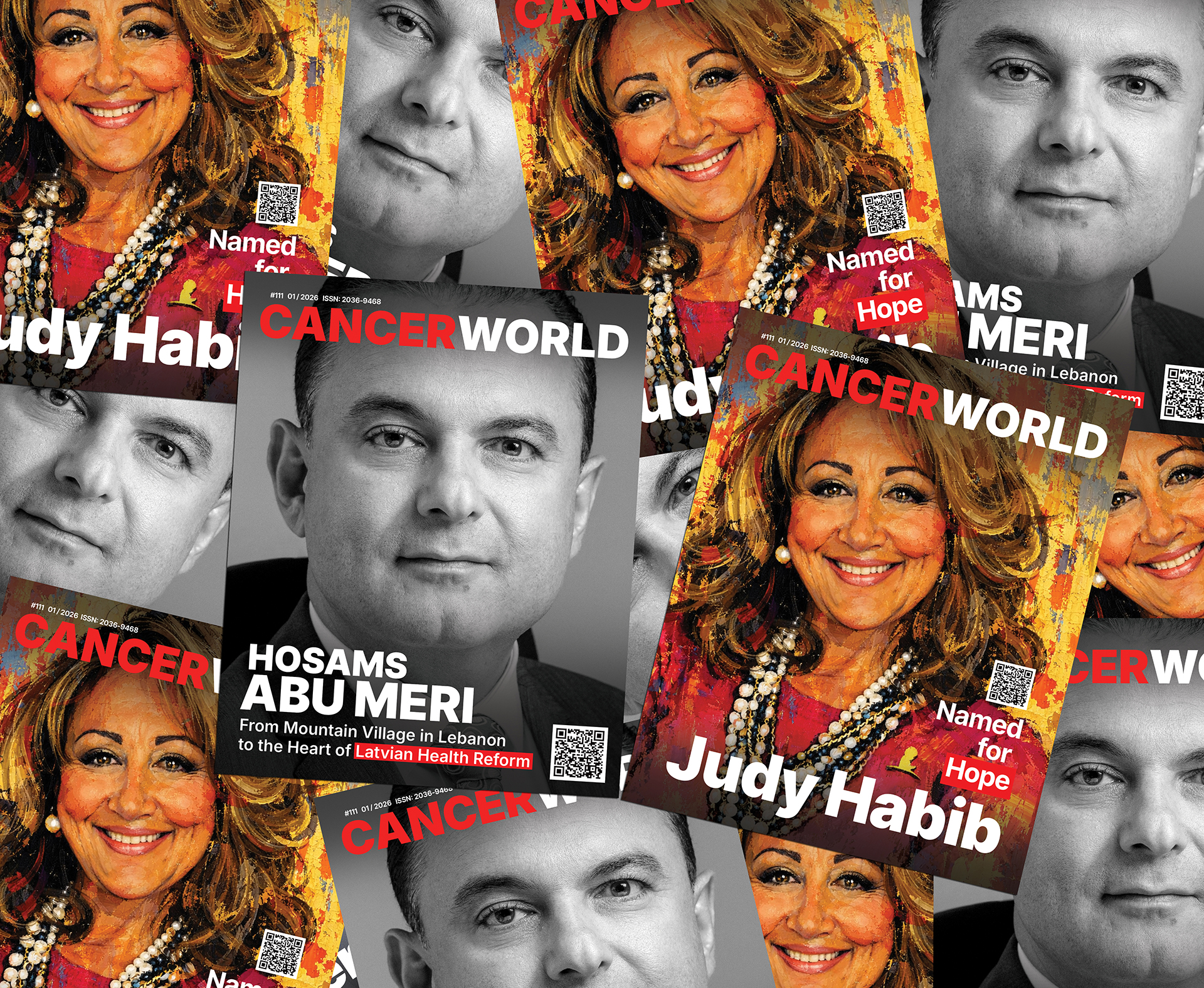
Our first cover story is Judy Habib: Named for Hope, a portrait that unfolds across memory, leadership, faith, and strategy. Named after St. Jude, the patron saint of hopeless causes, Judy Habib grew up inside the living history of St. Jude Children’s Research Hospital and ALSAC. From Danny Thomas’ vow that “no child should die in the dawn of life,” to the creation of one of the world’s most powerful philanthropic engines, her story reveals how movements are built: through integrity, storytelling, shared ownership, and the discipline to protect purpose as scale grows. As Chair of the Board of Governors of St. Jude, Judy Habib embodies a rare both/and leadership, finding cures and saving children, strategy and soul, ambition and humility.
Our second cover story takes us from a mountain village in Lebanon to the heart of European health reform. Dr. Hosams Abu Meri, gastroenterologist and Minister of Health of the Republic of Latvia, represents another form of service-driven leadership. Still performing endoscopies on weekends, still listening to patients firsthand, he governs with the lived awareness of clinical reality. From lowering medicine prices and rebuilding a depleted workforce, to strengthening cancer screening, digital health, and prevention policies, the Minister shows how credibility is earned when policy never drifts too far from the clinic.
From these two cover stories, the issue unfolds into a wide-ranging exploration of what sustainable, equitable cancer care truly requires.
Dr. Dario Trapani examines the architecture of equitable innovation, asking how value-based oncology, dose optimisation, and economic modelling can transform sustainability from a technical constraint into a moral commitment.
Prof. Andrea Filippi offers a deeply human portrait of modern radiotherapy, precise with cancer, gentle with people, where de-escalation, inclusion of fragile patients, and thoughtful leadership redefine what excellence looks like.
Ingrid Krücken reminds us that survivorship is not an afterthought, but a phase that demands justice, empathy, and structural protection, from the right to be forgotten to real support for families in crisis.
Dr. Jan van Meerbeeck reframes cancer screening as an issue of equity, not only evidence, challenging Europe to move from proof to implementation without leaving the most vulnerable behind.
Adrian Pogacian turns the lens inward, asking what unchecked emotional labor costs oncology professionals, and why learning to analyse our own emotions may be one of the most urgent tasks of 2026.
Dr. Luca Bertolaccini explores how artificial intelligence is entering the tumour board, not as a decision-maker, but as a disciplined tool that can sharpen judgment if governed with rigor and ethics.
This is an issue about hope with structure, leadership with memory, and reform with humanity.