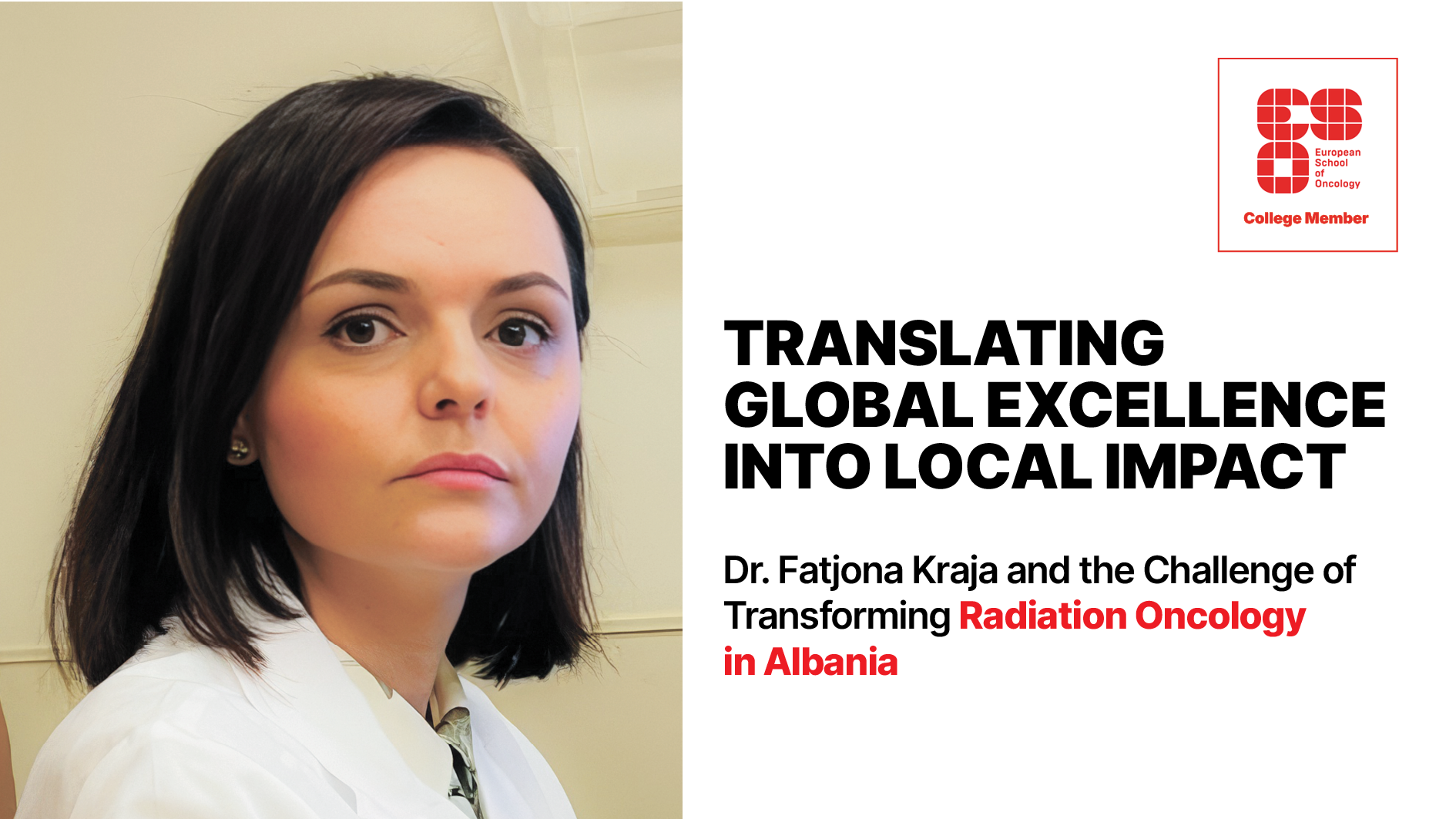
Radiation oncology is one of the most technologically sophisticated and intellectually demanding disciplines in modern medicine. Yet, for Dr Fatjona Kraja, newly appointed Faculty member of the European School of Oncology (ESO) College, the field is defined not only by scientific precision, but by its ethical responsibility to ensure equitable, patient-centred cancer care — regardless of geography.
“Access to advanced radiotherapy should not depend on where a patient lives,” she says. “My professional mission has always been to translate global standards into meaningful improvements for patients at home.”
Her journey from early clinical training in Albania to advanced oncology centres across Europe and the United States reflects a broader vision: building sustainable systems, embedding quality culture, and strengthening human-centred oncology.
From Local Constraints to Global Training
Dr Kraja began her clinical career in 2014 at the Radiotherapy Unit of the University Oncology Clinic, University Hospital Center Mother Teresa in Tirana, shortly after completing her specialization in Clinical Oncology. At the time, radiotherapy services in Albania were constrained by limited access to advanced technologies, contemporary planning techniques, and structured quality assurance frameworks.
“Recognising the gap between local practice and international standards motivated me to seek further training abroad,” she explains. “My goal was not simply personal development, but to bring back knowledge, structure, and institutional culture that could meaningfully improve patient care.”
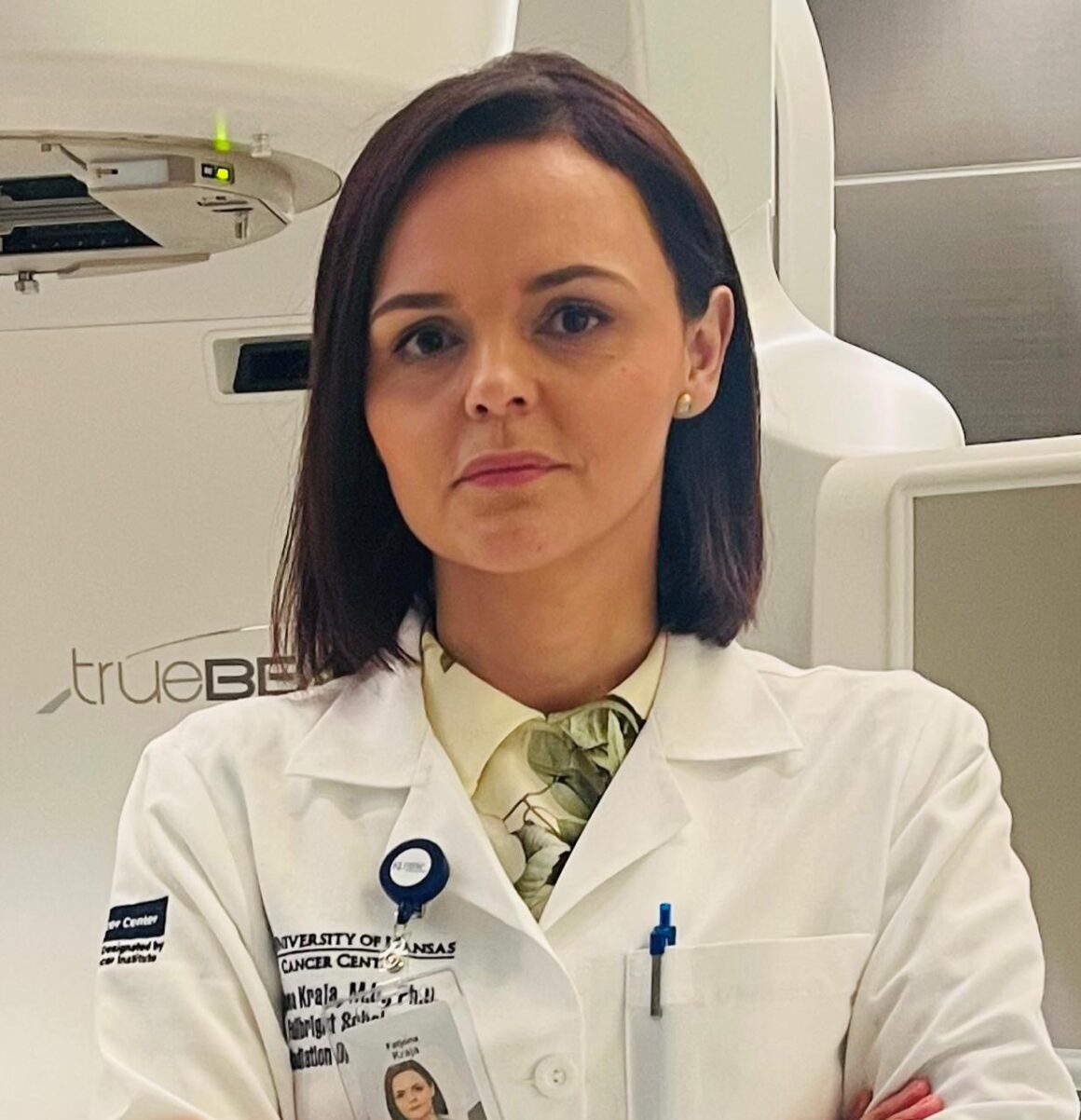
Her academic and clinical path led her to leading oncology centres, including the Istituto Nazionale dei Tumori, the European Institute of Oncology, and the National Centre for Oncological Hadrontherapy in Italy, followed by a six-month Fulbright Scholarship in the United States at the University of Kansas Cancer Center, a National Cancer Institute-designated Comprehensive Cancer Center.
“What impacted me most was not only the technological sophistication,” she recalls, “but the way systems functioned: multidisciplinary tumour boards, protocol-driven planning, embedded quality assurance, continuous audit, and systematic outcome monitoring. These elements transform technology into reliable, high-quality care.”
These experiences reshaped her perspective on healthcare development.
“I realised that improving oncology is not simply about acquiring equipment. It requires governance, structured training pathways, interdisciplinary collaboration, accountability, and leadership. Technology without system design cannot deliver its full benefit.”
Precision Medicine Grounded in Human Experience
Radiation oncology’s distinctive integration of medicine, physics, and radiobiology has always appealed to Dr Kraja. Yet, beyond its scientific complexity, the field’s emotional intensity has profoundly shaped her professional identity.
“What drew me specifically to radiation therapy was the precision it demands — translating radiobiological principles into millimetric accuracy while optimising the therapeutic ratio between tumour control and normal tissue protection.”
At the same time, she emphasises the uniquely human dimension of the discipline.
“Radiation oncology allows sustained interaction with patients over weeks of treatment. You witness vulnerability, resilience, fear, and hope in close proximity. This creates a deep responsibility: technical success means little if quality of life is compromised.”
This dual commitment to scientific rigor and patient-centred care underpins her strong focus on toxicity mitigation, survivorship, and quality-of-life research.
“Survival curves are essential, but they do not capture the full experience of cancer care. Every dose constraint represents a preserved function. Every contour represents a person.”
Translating International Experience into System Change
Returning to Albania, Dr Kraja focused not on replicating high-resource models, but on adapting international best practices to local realities. Recognising that sustainable progress requires structural change, she prioritised protocol-driven planning, contouring standardisation, strict dose-constraint adherence, and the introduction of peer-review culture.
Among the most tangible clinical improvements was the expansion of IMRT-SIB and hypofractionation protocols, particularly in genitourinary and gastrointestinal cancers, resulting in improved toxicity profiles, better functional outcomes, and strengthened confidence in organ-preservation strategies.
“Technology alone does not transform care,” she emphasises. “What truly matters is disciplined implementation of standards, structured workflows, peer review, and continuous outcome measurement.”
Equally transformative has been the integration of patient-reported outcome measures, including validated EORTC quality-of-life instruments, into routine clinical evaluation.
“Patient-centred oncology means systematically measuring what matters to patients function, symptoms, and wellbeing, not only survival.”
Introducing innovation locally, however, has not been without challenges.
“Resource limitations, institutional inertia, and cultural resistance to change are common barriers,” she acknowledges. “Meaningful progress requires patience, diplomacy, collaboration, and the gradual building of internal expertise.”
Her approach has been to embed change through evidence, transparency, and professional engagement rather than imposition.
“Sustainable improvement depends on collective ownership, not individual authority.”
ESO College: Educating a New Generation of Oncologists
Dr Kraja’s appointment as Faculty member of the European School of Oncology (ESO) College marks a significant milestone in her academic and leadership journey. In this role, she brings her international perspective into oncology education, emphasising scientific reasoning, adaptability, and ethical responsibility. She is also Lecturer of Oncology at Faculty of Medicine, University of Medicine Tirana.
“I teach young oncologists to think critically. Understanding why we make clinical decisions is as important as knowing how to execute them.”
Her educational philosophy centres on three core pillars: rigorous scientific reasoning, system-based practice, and patient-centred outcomes.
“I want trainees to appreciate radiobiological principles, therapeutic ratio optimization, and evidence hierarchy. But I also want them to understand workflows, quality assurance, toxicity monitoring, and survivorship planning as part of their professional responsibility.”
Global exposure has also shaped her emphasis on adaptability.
“Precision medicine must be scalable. Excellence is not defined by technology alone. It is reflected in contouring accuracy, protocol adherence, peer review, and toxicity mitigation , principles that apply across all healthcare settings.”
Central to her mentoring is the human dimension.
“Every contour represents a person. Every planning decision has lifelong consequences. That perspective must be instilled early.”
Leadership Beyond the Clinic
Over the course of her career, Dr Kraja has evolved from a clinician to a system-level leader, increasingly engaged in governance, education, research development, and healthcare reform.
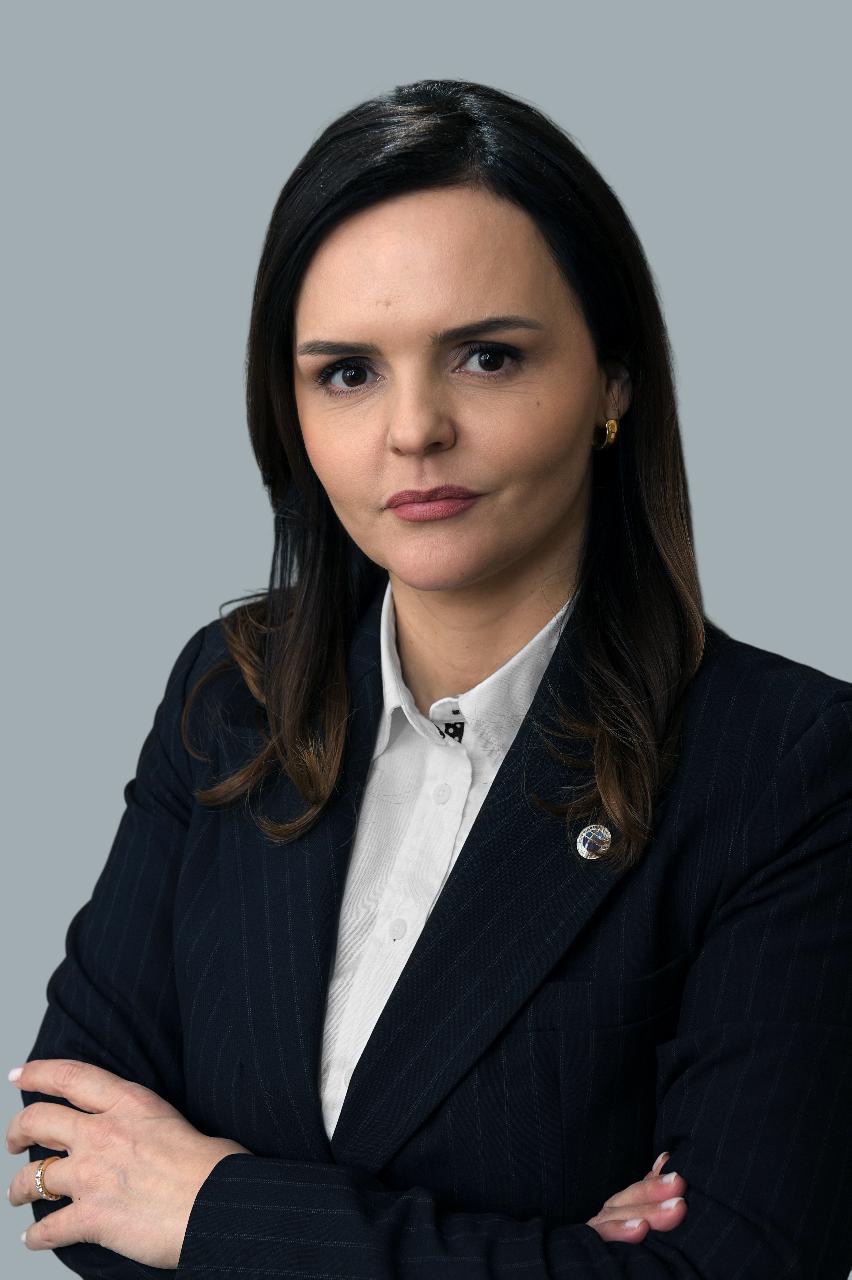
“Leadership in oncology means building environments where excellence becomes standard and accountability is embedded in daily practice.”
Her involvement in international research networks, professional societies, and educational platforms aims to strengthen Albania’s oncology system while embedding local practice within global oncology discourse.
“International collaboration accelerates system development. It enables knowledge transfer in quality assurance, multidisciplinary integration, survivorship care, and institutional governance.”
She views fellowships, exchanges, and joint research initiatives not as personal milestones, but as strategic investments in sustainable healthcare development.
“The real value of international experience lies in what you bring back — standards, culture, accountability, and vision.”
Shaping the Future of Radiation Oncology
Looking ahead, Dr Kraja aims to expand image-guided and adaptive radiotherapy, SBRT and biologically informed planning, and integrated strategies combining radiotherapy with immunotherapy. At the same time, she remains deeply focused on institutional culture.
“Machines evolve rapidly. Systems evolve slowly. Sustainable progress depends on training, governance, peer review, outcome monitoring, and ethical leadership.”
Her professional philosophy encapsulates the synthesis of science and humanity:
“Precision guided by science, delivered with responsibility, and always centred on the patient.”
Through her work as clinician, educator, and system builder, Dr Fatjona Kraja exemplifies how international experience, when thoughtfully translated, can drive lasting improvements in cancer care ,offering a model for healthcare systems seeking to bridge innovation with equity.
About the Author
Knarik Arakelyan (PhD) is a psychologist and communications professional with over 14 years of experience in public relations, health communication, and public awareness campaigns. She is currently the Managing Editor of “CancerWorld “ magazine, and serves as PR and Communications Officer at “EMERTÉ” Clinic.