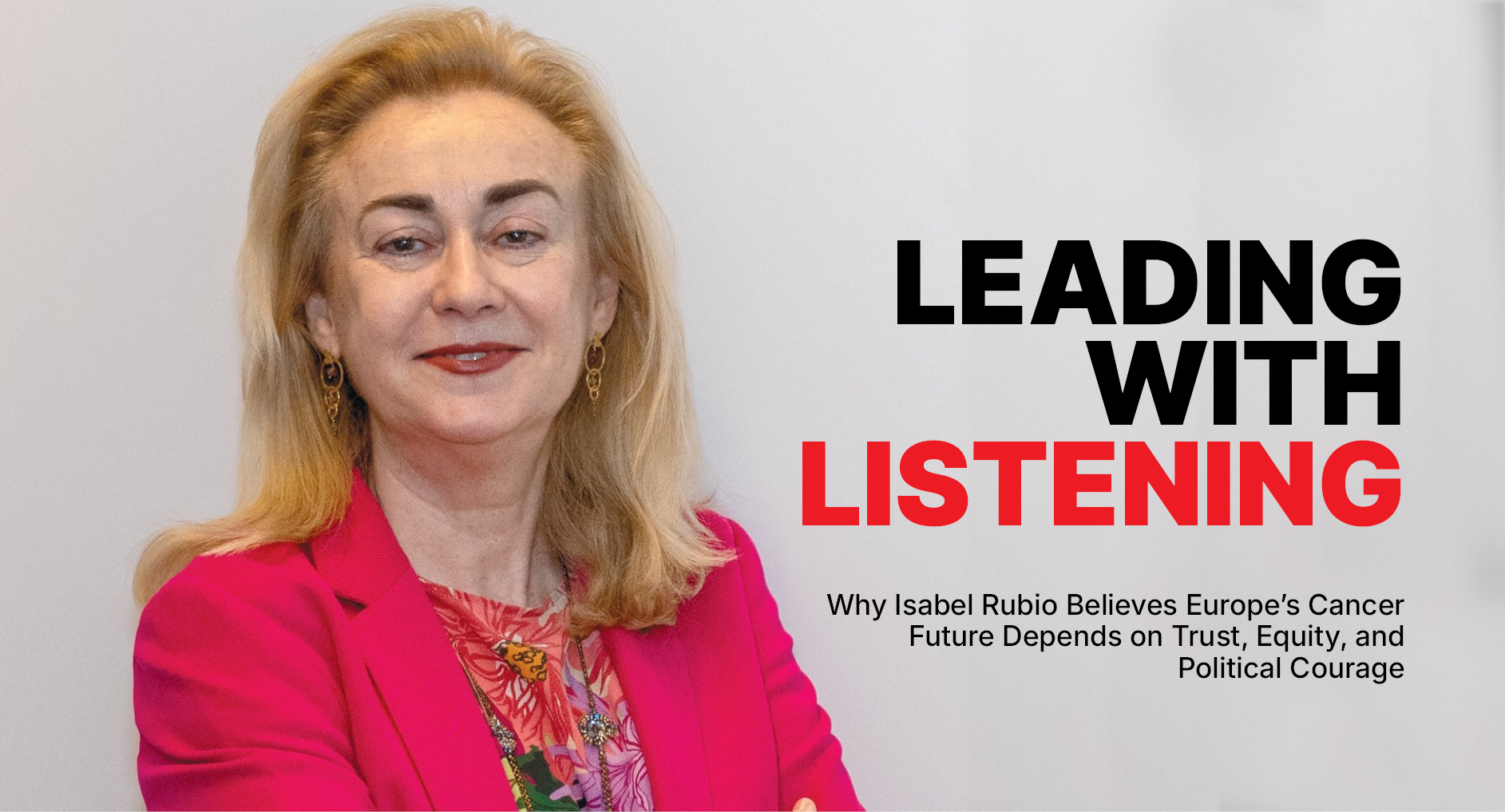
Leadership in oncology is often measured in breakthroughs, budgets, and policy frameworks. But for Dr. Isabel Rubio, President of the European Cancer Organisation (ECO), leadership begins somewhere far more intimate: in listening.
“Progress happens only when expertise is matched by trust,” she says. “And strategy must always be grounded in listening.”
It is a philosophy shaped not in boardrooms, but at the bedside — forged during her earliest years as a young surgeon confronting the realities of breast cancer care. At just 26, Rubio witnessed a clinical culture in which women were routinely excluded from decisions about their own bodies.
“There was a very paternalistic approach,” she recalls. “Patients were simply told they needed a mastectomy, with little discussion, no consideration of preferences, and no exploration of reconstruction options. I found this deeply unacceptable, both clinically and ethically.”
That moment became her defining professional compass. “I promised myself I would practise medicine differently — and I did.”
Today, as one of Europe’s most influential voices in oncology policy, Rubio is applying that same conviction to a much larger canvas: reshaping how Europe delivers, governs, and invests in cancer care.
From Medicine as Heritage to Medicine as Responsibility
Raised in a family of physicians — her father a head and neck surgeon, her mother a paediatrician — Rubio grew up immersed in clinical life. Medicine was not merely a career choice; it was a way of understanding the world.
Her training across multiple European health systems sharpened her political awareness. Witnessing both excellence and inequality, she came to see cancer not only as a biological disease, but also as a social one.
“I saw how high-quality cancer care can transform outcomes,” she says. “But I also saw how access to screening, treatment, and innovation varies widely between countries and within them.”
This contrast cemented her belief that cancer care is fundamentally a societal obligation.
“Ensuring equitable access across Europe must remain a central goal of our health systems and policy efforts,” she argues.
This conviction now underpins her presidency at the European Cancer Organisation: leadership in oncology must not only push science forward, but also pull systems closer together.
Inequality: Europe’s Unresolved Cancer Crisis
For Rubio, inequality is not an abstract concept. It is a measurable determinant of survival.
“When screening participation is high, cancers are detected early and outcomes improve. When participation is low, survival suffers dramatically,” she says.
Despite decades of innovation, unequal access to screening, specialist care, and advanced therapies remains Europe’s most stubborn cancer challenge.
“It is the most persistent and frustrating problem we face,” she says.
Her leadership stance is clear: scientific breakthroughs alone cannot deliver progress if systems fail to deliver access. That is why her policy focus-centres relentlessly on prevention, early detection, and sustained investment.
“Without political commitment and resources, progress cannot be maintained,” she warns.
The Politics of Momentum: Turning Europe’s Beating Cancer Plan into Lasting Change
Rubio’s presidency comes at a pivotal political moment. Europe’s Beating Cancer Plan has injected unprecedented momentum into EU cancer policy, elevating cancer control to the highest political level and mobilising significant financial and institutional resources. For the first time, Europe has a coordinated framework spanning prevention, early detection, treatment, survivorship, research, and inequality reduction.
Yet, Rubio cautions, momentum alone is not enough.
“The progress achieved through Europe’s Beating Cancer Plan must not be allowed to stall,” she insists. “Without sustained political commitment and long-term funding, we risk losing what has been built.”
Her top priority is securing strong, protected cancer funding within the EU’s next Multiannual Financial Framework (2028–2034) — a decisive budget cycle that will determine whether the ambitions of the Beating Cancer Plan become structural change or remain time-limited initiatives.
“We cannot afford political short-termism when the stakes are measured in lives,” she says. “This is about safeguarding Europe’s collective investment in better prevention, earlier diagnosis, fairer access to treatment, and stronger survivorship care.”
Beyond funding, Rubio argues that the Plan must evolve toward greater accountability, clearer targets, and stronger coordination.
“We need timely, reliable, and comparable evidence to identify inequities, guide investment, and measure progress,” she says.
Under her leadership, ECO positions itself as a bridge between policymakers, clinicians, and patient organisations, translating political ambition into coordinated implementation.
“Our role is to build consensus and turn it into practical, implementable policy,” she explains. “Then to maintain structured engagement with decision-makers so that evidence becomes action.”
In this sense, Rubio sees ECO not as a parallel actor, but as a catalyst, ensuring that Europe’s Beating Cancer Plan delivers tangible improvements for patients across all countries, not just those with the strongest health systems.
Trust as a Cornerstone
At the heart of Rubio’s leadership philosophy lies a deceptively simple idea: trust is fundamental.
“Effective leadership requires bringing people together, understanding different perspectives, and aligning them toward a shared goal,” she says.
This ethos guides her across multiple European oncology leadership roles. It also informs ECO’s convening model, where clinicians, patients, and policymakers co-develop recommendations rather than operate in parallel silos.
Tools like the European Cancer Pulse reflect this approach, making inequalities visible and comparable so political debate can move beyond rhetoric toward accountability.
“Data allows us to agree not just on priorities,” Rubio notes, “but on where action will have the greatest impact and whether we are truly closing gaps.”
Women, Cancer, and Policy Blind Spots
One of the clearest expressions of Rubio’s political leadership is her focus on women’s realities in cancer policy.
She also highlights the critical role of women in the cancer workforce, emphasizing the need for fair representation, leadership opportunities, and policies that recognize the gendered burden of care within the health system.
Despite decades of progress, health systems still fail to reflect the full spectrum of women’s experiences across prevention, diagnosis, treatment, survivorship, caregiving, and leadership.
“This is exactly why we are launching the Women & Cancer Policy Index,” she explains. “To compare how countries are addressing women’s cancer and generate evidence that drives investment, coordination, and reduced inequalities.”
More broadly, she sees optimism in Europe’s recent political commitment.
“Europe has shown it can accelerate progress when political commitment is matched by resources,” she says. “The task now is to protect that momentum and make sure innovation reaches every patient, not only those who live in the ‘right’ postcode.”
Redefining Success in Cancer Leadership
For Rubio, leadership is ultimately judged not by institutional milestones, but by systemic resilience.
When her presidency concludes in 2027, she hopes her legacy will be measured in political durability.
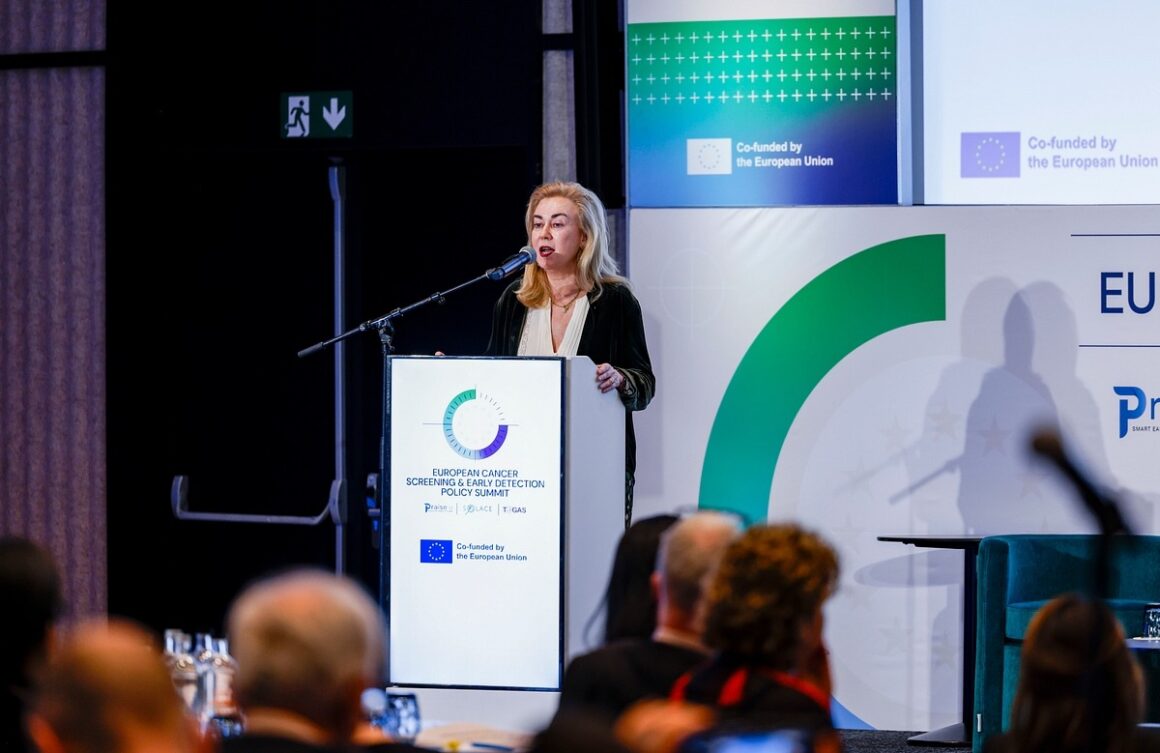
“If we help secure a strong, visible EU commitment to cancer in the next long-term budget, that would be a meaningful legacy,” she says.
Her ambition includes sustained investment, stronger coordination through a European Cancer Institute, and clearer data-driven accountability mechanisms. Most of all, she wants ECO to remain a trusted space for collaboration.
“I want it to be recognised as the place where cancer professionals, patients, and policymakers build the trust that makes political progress possible,” she says.
Leadership Grounded in Humanity
Despite her policy focus, Rubio’s leadership remains deeply personal, shaped by thousands of patient encounters.
“Listening to patients describe their fears, uncertainties, and how cancer disrupts their lives taught me the importance of empathy, communication, and trust,” she reflects.
That early promise to practise medicine differently now extends far beyond the clinic.
In Rubio’s vision, leadership in oncology is not about command, control, or charisma. It is measured not by authority or visibility, but by the ability to listen with intention, act with compassion, and make choices that honour cancer patients’ lived experiences.
In a Europe facing rising cancer incidence, fiscal pressure, and political uncertainty, her message is both simple and radical:
“Real progress begins when leadership chooses listening over hierarchy and equity over convenience.”
About the Author
Knarik Arakelyan (PhD) is a psychologist and communications professional with over 14 years of experience in public relations, health communication, and public awareness campaigns. She is currently the Managing Editor of “CancerWorld “ magazine, and serves as PR and Communications Officer at “EMERTÉ” Clinic.