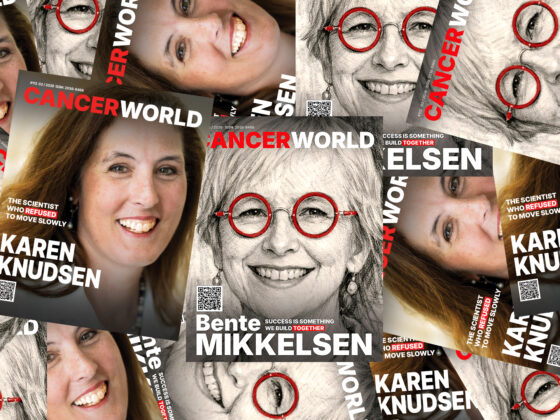
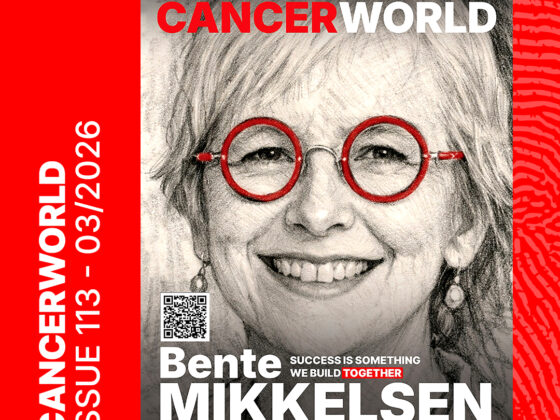
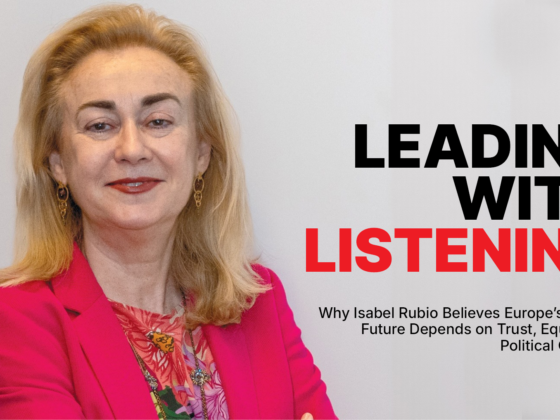
“I’m a scientist first and foremost. I don’t remember a time not thinking about being a scientist.”
What Karen Knudsen, the CEO of Parker Institute for Cancer Immunotherapy, remembers clearly is the pull not toward prestige or power, but toward understanding. “Curiosity toward improving human health,” she says. That phrase improving human health returns again and again, like a refrain, anchoring every turn of her journey.
Learning to Use Simple Systems to Solve Human Problems
Her first real encounter with cancer research came as an undergraduate in Washington, D.C., at George Washington University. It was the late 1980s, the AIDS epidemic was raging, and science was racing to understand retroviruses before they outpaced humanity.
A mentor noticed how much she loved the lab and nudged her toward the National Cancer Institute. “Why don’t you go there for the summer?” he suggested.
She did, and it changed everything.
At Frederick National Laboratories, she worked on Ty1 retrotransposition in yeast, a seemingly abstract system that, at the time, was one of the most powerful tools available to understand HIV and HIV-related cancers.
“I got a little bit addicted,” she admits, smiling “to this strategy of using the rigor of yeast genetics to solve human problems.”
That addiction became a philosophy.
When she went on to earn her doctorate at UC San Diego, she chose Schizosaccharomyces pombe, a yeast species evolutionarily distant from baker’s yeast, but remarkably similar to humans in how genes are spliced and regulated.
“This was the moment when all the cell-cycle genes were being identified,” she recalls.
She was handed a random radiosensitive mutant. Through complementation, she cloned Rad1, a key component of the 9-1-1 DNA damage checkpoint complex.
“That’s when I really started thinking about DNA damage checkpoints and how they relate to human disease,” she says. “And of course, cancer.”
The Pivot Toward Translation
The true pivot came during her fellowship with Dr. Webster K. Cavenee, a member of the National Academy of Sciences and one of the scientists who proved the existence of tumor suppressor genes through retinoblastoma.
“He wanted to start a prostate cancer program,” she explains. “And that put me on the path of translation.”
At the time, breast cancer advocacy was rightly transforming research funding. But Dr. Cavenee pointed out a glaring omission.
“Prostate cancer was the most commonly diagnosed malignancy in men in the U.S. and the second leading cause of cancer death, and yet it wasn’t being addressed.”
The challenge was clear: build a translational program that could actually change outcomes.
Karen Knudsen brought what she knew best—cell cycle control.
“In his lab, I identified how androgens control cell cycle and survival in prostate cancer,” she explains. “That led to targetable pathways.”
Those pathways followed her when she launched her own lab at the University of Cincinnati School of Medicine, where she doubled down on cell cycle, DNA damage response, and transcriptional regulation—the very machinery downstream of the androgen receptor that defines metastatic prostate cancer.
But something else was happening.
“I was working hand in hand with urology, medical oncology, radiation oncology, pathology,” she says. “Building teams.”
That, she realizes now, was the second great pivot of her career.
Building Teams to Accelerate Discovery
She was recruited to Jefferson Health with a clear mandate: take extraordinary individuals and turn them into a system.
“They had incredible people with prostate cancer,” she says. “But they needed someone to connect the science and the clinic—to make discovery faster, and benefit people. That’s what I care about.”
At Jefferson, her trajectory accelerated. She built the prostate cancer program, became Vice Provost, then Deputy Director, then Director of the NCI-designated cancer center, and Executive Vice President of Oncology Services.
Her lab never stopped, but her role evolved.
“I was converting science into patient care,” she says simply.
What she led, however, was anything but simple.
Under a highly entrepreneurial CEO, Jefferson grew from three hospitals into a 16-hospital, fully integrated system.
“I look back and wonder what I did with all my time,” she says, laughing.
Yet one principle remained constant: science must serve patients.
“The more we convert science into clinical trials for prevention, detection, and cure the better off our patients are.”
She pushed trials into the community. She built advanced care hubs before the model existed. Rare-disease scientists suddenly had access to real patient populations. Patients who would never travel downtown had access to innovation.
“I love health care,” she says. “And the science of converting science to people. That’s why you do science to help people.”
She thought she would do that forever.
The Call That Changed Everything
Then the phone rang.
A recruiter. A question no oncologist had ever been asked before.
Would she consider becoming CEO of the American Cancer Society?
At the time, ACS was struggling. Seven consecutive years of losses. Seven years of layoffs. A recent merger of dozens of federated organizations into one without a unifying vision.
“They were looking for someone who came from oncology,” she says. “And someone who understood merger and acquisition.”
She was the first.
What followed was one of the most ambitious transformations in modern cancer philanthropy.
“We redefined the mission. The vision. The structure,” she says. “All anchored around three pillars: research, advocacy, and patient support.”
They grew impact. They stabilized finances. They did it with 1, 000 fewer employees than ACS had ever had.
“It felt really good,” she says. “And I knew when it was time to hand it over.”
Because there was still one more pivot left.
“I wanted to be back in the engine of innovation,” she says. “Back to getting science to people.”
She was ready to sign elsewhere when Sean Parker called.
And everything aligned.
“Data-driven, hypothesis testing but on a quick timeline.”
When I ask Karen Knudsen what the key to her success is, she doesn’t reach for mythology. She reaches for the method.
“Well, you know,” she begins, “I think any person with a scientific background is running a business even if you’re just running a lab.”
It’s not a metaphor for her. It’s a fact.
“You have to have a strategy, your scientific strategy. You’re managing people and you’re managing budgets. You’re also very adept at data handling, hypothesis-generating all of the things that are key, I think, for business success.”
Then she gives the sentence that quietly summarizes her entire leadership philosophy:
“My approach to business is the same as my approach to science: data-driven, hypothesis testing but on a quick timeline.”
“Because we can cure cancer. And people need it.”
Dr. Knudsen is not a leader who worships strategy as if it were sacred text.
“Strategy is not something you build on one day and it’s etched in stone,” she says. “It’s a dynamic strategy that needs to bend through iteration.”
But flexibility, in her mind, is not weakness. It is a disciplined adaptation, anchored by a core that does not move.
“You have to hold fast to a core of what it is that you’re trying to achieve,” she says, “and inspire others to see that vision.”
And when she speaks about Parker Institute for Cancer Immunotherapy, she doesn’t speak in half-aims.
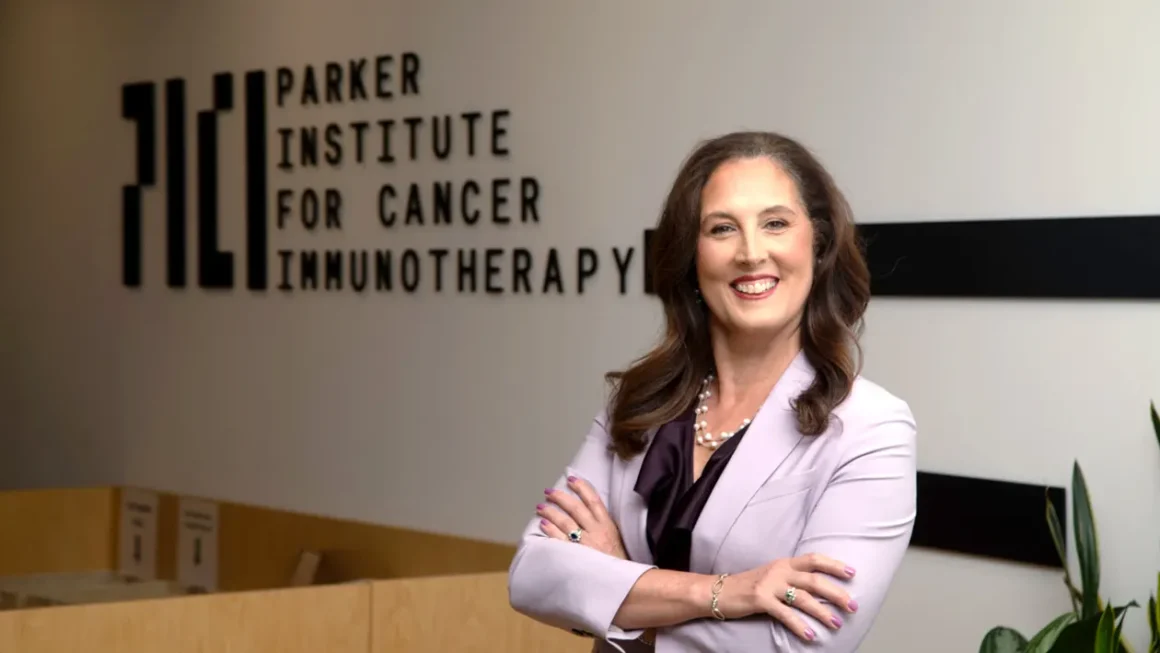
Parker Institute for Cancer Immunotherapy
“The more your teams can see the why—why are you doing what you do at the Parker Institute? Because we can cure cancer. And people need it.”
She doesn’t dilute the mission. She sharpens it.
“Our model lets us go faster. We are focused on therapy. We are focused on curative intent which is a really unique and bold place to be.”
Then she draws a line, unmistakably.
“We don’t balance our portfolio with incremental science,” she says. “It really is all about ambitious science.”
The formula, she tells me, is not complicated—just brutally honest.
“There’s having the right strategy. There’s having the ability to fund the strategy. And then there’s having the right people to execute that strategy.”
At Parker, she believes the foundation is already there.
“I’m very fortunate… we have a phenomenal team already in place,” she says, “and we’ll be doing some adding but a phenomenal team… to see this vision and execute on it.”
Mentors: The People Who Let You Become More Than You Thought You Were
When I ask her about mentors, she answers like someone who actually uses that word with reverence.
“They’re really important,” she says.
She begins with Dr. Cavenee—her postdoctoral mentor still reachable, still present.
“I haven’t worked for him since I was a kid showing up in the lab in cut-off jeans and braided hair, getting ready to go surfing after I was in the lab on Saturday,” she laughs.
But the bond never became obsolete.
“I could pick up the phone and call him right now and he would devote whatever time I needed.”
She calls him “a brilliant man” in scientific strategy, but what she’s really describing is something deeper: a mentor who stays.
Then she names the person who shaped her leadership most powerfully: Dr. Stephen K. Klasko, CEO of Jefferson Health and Thomas Jefferson University.
“He empowered me,” she says. “He told me I should run oncology like the CEO of cancer.”
And he didn’t just hand her responsibility he handed her authority.
“He was going to hold me accountable for the strategy I put in front of him,” she says, “but he was going to give me free rein to execute on that strategy, run the budget and if something got in my way, to contact him.”
In complex systems, trust is not a compliment—it’s a tool. Dr. Klasko gave her the tool.
What they built was not easy.
“It’s not so simple,” she says, “when you are acquiring health systems and cancer care units across two states that have very different views of how to manage quality cancer care and to get them to align to a single service line, single quality of care across the system.”
And then there was the other bold move: pushing advanced cancer care outward.
“If you’re going to put specialists and advanced care out into the community,” she says, “that’s a bold step too.”
She pauses, then says it plainly:
“We were entrepreneurs in this.”
“Be Bold. Think Differently. Do the Right Thing.”
At Jefferson, Dr. Klasko built something rare: a culture that could be repeated out loud.
“Doing the right thing was one of our core principles,” she says.
And not in the vague, motivational sense. In the operational sense.
“All 33,000 people… could tell you on any given day,” she says, “because it was everywhere.”
The principle had three parts:
“Be bold. Think differently. And do the right thing.”
Even performance reviews were built around it.
“That was what your performance review was like,” she tells me. “‘Karen—how were you bold this year? How did you think differently? Tell me how you did the right thing.’”
And when decisions were painful as they always are at scale, they returned to a single anchor:
“Is this doing the right thing by the patients who come to Jefferson Health?”
Telehealth, COVID, and the Lesson That Changed How She Sees the Future
Then she gives me a story that feels like a leadership case study, but it’s also something more: a warning against running an organization only for today.
Before COVID, telehealth was not mainstream. Reimbursement was weak. Adoption was slow. Most systems treated it like a side project.
Dr. Klasko didn’t.
“He knew this was going to come,” she says. “This was the medical delivery of the future.”
So he did something that sounds almost unreasonable until you realize how visionary it was:
“He required all providers at Jefferson Health irrespective of reimbursement to do one telehealth visit a month.”
One visit per month. No excuses. Build muscle.
“We set up the infrastructure for it,” she says. “One telehealth visit per month, period.”
Then COVID hit.
“People didn’t stop getting cancer during COVID,” she says, almost quietly because that sentence still carries weight.
But many smaller practices collapsed temporarily. One COVID-positive nurse could shut down an entire clinic.
And suddenly Jefferson became a lifeline.
“My patient base… 10,000 cancer cases per year,” she says, “grew phenomenally.”
Because they were ready.
They triaged what needed physical presence, shifted follow-ups to virtual, used community-based labs, and scaled care immediately.
“We were able to scale by the thousandfold,” she says, “immediately.”
Then comes the lesson she says she carries everywhere now:
“What’s true now is completely insufficient to run an organization,” she tells me. “It’s what’s going to be true five years from now and how do you make it happen earlier.”
“That’s the way I think,” she says. “And I think that way because of Dr. Klasko.”
Mentees: The Work Family You Never Stop Carrying
When I ask about mentees, she answers with pride, but also with the humility of someone who knows mentorship is never one-directional.
“I’m really fortunate,” she says, “with the trainees who came through my lab.”
She’s proud that almost all of her PhDs and fellows—MDs and PhDs are still in academic medicine or pharma, still in oncology.
And she’s still emotionally invested in their milestones.
“I heard from one of my fellows already this morning,” she tells me, “she was super excited because she just got her first big grant award.”
Then she says something that every scientist knows, but few say out loud:
“They’re like your work family. You spend more time with them than you do with your own family in science and medicine.”
Her other “mentees,” she says, are the executive teams she has led, especially at the American Cancer Society.
“We worked hard together,” she says. “Absolute sheer dedication to the mission.”
But she refuses the heroic framing.
“I learned from them as much as they learned from me,” she says. “All of us should be in the mode of two things: consistently learning from mentors and consistently giving back.”
Books: Science, Strategy, and the Quiet Rebellion of Strong Women
When I ask which book made the biggest impact, she hesitates not because she lacks answers, but because she has too many.
So she gives me more than one, because, as she admits, she’s “a big bookworm.”
For science and medicine, she recommends Deep Medicine by Eric Topol.
“It got me beyond therapeutic science,” she says. “Beyond cancer. Thinking about technologies that are going to change medicine in the future.”
And again she returns to her central obsession:
“What are the things that are really going to change us in the future, and how do we get there faster?”
Then she shifts into business mode almost amused that she’s admitting it.
“I’m kind of a business geek too,” she says. “I have an MBA and a PhD.”
She names Good to Great a classic and Playing to Win, which she calls “the best blueprint for strategy.”
But when she speaks about books that changed her life, she goes somewhere else entirely: Jane Austen.
Growing up, she says, she was the youngest, the only girl, in a military family “full of men.” She has sons now. She is still surrounded by men.
And as a child, she found something clarifying in Austen’s women.
“Her female characters are really strong,” she says. “They navigate an environment around them which expects them to have a very different role in life—right? To be pretty and get married.”
But Austen’s women do something radical in quiet ways.
“They find ways to follow their own dreams,” she says, “follow their own path and hold true to themselves.”
She smiles.
“She’s also quite funny,” she adds. “And I love comedy.”
So perhaps it makes sense: the leader who now runs a high-velocity, high-risk engine of immunotherapy innovation first learned something essential from novels about strength, humor, and refusing the role assigned to you.
“To Not Let Things Get In Your Way”
When I ask if people calling her “strong” are connected to her childhood, she doesn’t deny it.
“When you grow up in a military family,” she says, “you’re just meant to be tough and resilient.”
But her story is not the stereotype people expect.
“It’s not just any military family,” she says. “My father was a special forces first intelligence officer on Delta Force… Green Beret… black ops most of my life.”
Later, he ran security for the United Nations in Somalia.
“He’s no shrinking violet,” she says.
And then she flips the narrative.
“People usually think, oh, your dad must be the one you learn all this from.”
But she wants me to look at the person who kept the whole system alive.
“Think about the wife,” she says. “Moving every few years. Reinventing herself every time.”
Her mother, she says, is “a force of nature in all the right ways.”
“She had to reinvent herself… new occupation, new job, new way to think,” Karen says.
Eventually, when they stayed in one place long enough, her mother became a business executive one of the early executives at Williams-Sonoma, helping grow it from a small chain into something much larger.
From her mother, Karen Knudsen learned the kind of resilience that doesn’t announce itself:
“Being focused on having your personal life and your family be the most important thing,” she says, “but at the same time you can have a thriving professional career.”
And then she delivers the sentence that feels like inheritance:
“To not let things get in your way.”
“If I learned something from my mom,” she says—“who I still talk to every day”—“it’s to just not see obstacles.”
And when obstacles do appear?
“They’re just an opportunity to think differently.”
Advice to the Next Generation
Her advice is not trendy. It’s not performative. It’s simple and it comes from someone who has lived several careers inside one life.
“Follow your dream and your curiosity,” she says.
“When you love what you do, it doesn’t feel like work.”
She’s honest that the hours are long. But she’s more interested in direction than comfort.
“If you had asked me when I was 15… or 25… or maybe even 30 if these were the things I would do,” she says, “I would say absolutely no way.”
But opportunities arrived and each one made sense because she wasn’t chasing a title. She was chasing impact.
“Each time… I was following what really interested me,” she says, “and most importantly where I thought I could have a positive impact on people.”
“So,” she concludes, “I don’t sweat what the path is going to be. Just follow your desire.”
One Sentence
I ask her to describe herself in one sentence—the question you always ask.
She doesn’t hesitate long.
“Service-oriented,” she says, “and committed.”
Who Should I Interview Next?
Her answer comes with energy, almost relief, as if she’s been waiting for you to ask.
“I think you should interview Dr. Stephen K. Klasko,” she says.
Then she adds the caveat because she’s honest:
“He’s not in oncology.”
But she argues that sometimes the most important voices in cancer are not oncologists. They are the leaders who reshape the systems around care.
“There’s a reason why he’s such a big national figure,” she says. “He thinks differently.”
She sketches his trajectory like a portrait of relentless reinvention:
An OB-GYN who becomes a dean. Then a university president. Then president of Jefferson Health and Thomas Jefferson University. An MD-MBA from Wharton. And then, at 70, he decides to go to law school because he thinks entrepreneurship needs better lawyers.
“The guy’s not going to slow down—ever,” she says, smiling.
“He’s a model of one.”