Where progress is measured not just in science, but in vision, leadership, and care.
Every issue of CancerWorld explores people, policies, and practices shaping the future of oncology.
In our February issue of CancerWorld, we turn our attention to leadership, purpose, and the long-term thinking required to confront one of the world’s most complex health challenges. Progress in cancer control is shaped not only by scientific advances but by the people and institutions willing to adapt, collaborate, and invest in lasting change.
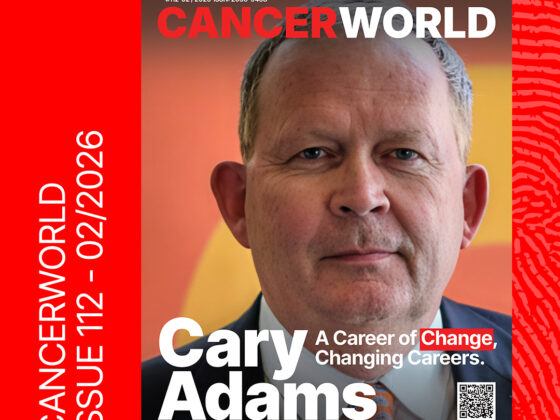
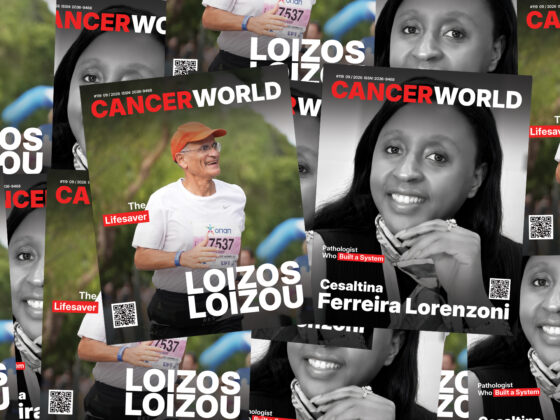
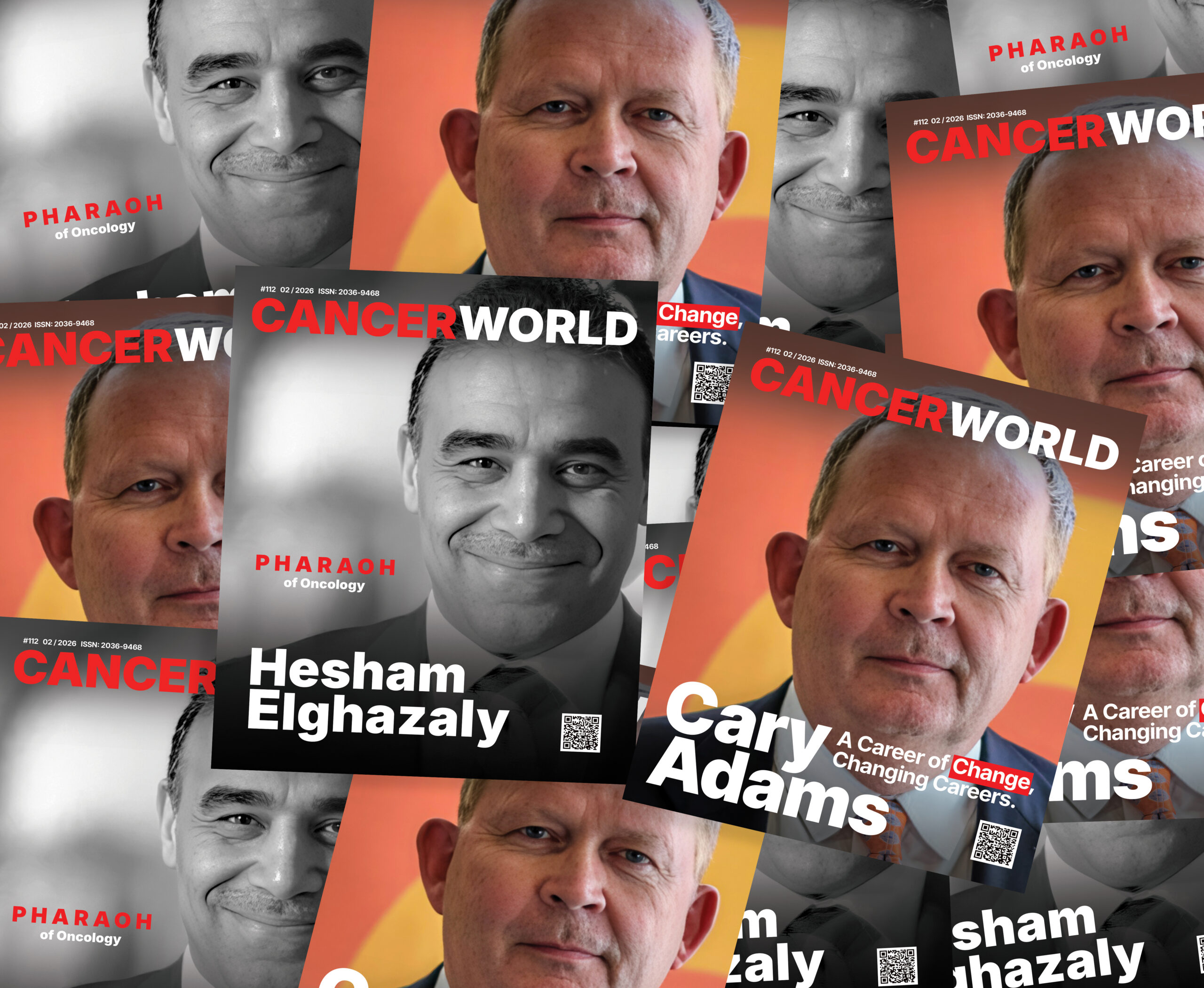
This issue we open with the life story of Cary Adams. Moving from international banking to lead the Union for International Cancer Control (UICC), his journey shows how openness to change, strategic vision, and a strong sense of purpose can reshape global health institutions. Arriving at UICC without a traditional oncology background, he invested deeply in learning and partnership-building, turning a “wild card” appointment into nearly two decades of organizational renewal. Under his leadership, UICC evolved into a global platform for collaboration, expanding its membership, influence, and ability to drive collective solutions to some of the most complex challenges in cancer control.
The second cover story is a portrait of leadership built on trust and persistence. It follows Professor Hesham Elghazaly—an oncologist whose influence is measured not by titles, but by the systems he has built and the lives those systems have changed. Through his work in Egypt, the story shows how personal determination, belief in team and self-power and coordinated collective effort can converge to deliver real declines in cancer mortality and why this human-centred approach may hold lessons far beyond one country.
Cancer remains one of Europe’s biggest health challenges, with rising cases and persistent inequalities. In this issue, the EU Commissioner for Health and Animal Welfare Olivér Várhelyi charts a clear path through Europe’s Beating Cancer Plan: empowering citizens, expanding screenings, and linking 100 high-standard cancer centres across the EU to improve care. Prevention, early detection, and equitable access are central—turning policy into real hope for millions.
Cancer Patients Europe (CPE) is pushing to end cancer inequalities across Europe. Today, where you live can still decide whether you survive, with huge gaps in vaccination, screening, treatment, and survivorship protections. In this issue, CancerWorld speaks with CPE about how the European Semester on Health can turn measurable, accountable action into real health equity for every patient.
In this issue, Janet Fricker examines new evidence suggesting CAR-NKT cell therapy may succeed where CAR-T has failed in pancreatic cancer. The approach combines deep tumour infiltration with resistance to exhaustion and antigen escape, while offering an off-the-shelf, lower-cost alternative. Together, the findings point to a more practical and potentially universal immunotherapy strategy now moving closer to the clinic.
Europe’s Mission on Cancer is at a decisive moment. In conversations with Hugo Soares and Anabela Isidro, co-coordinators of the ECHoS Project, CancerWorld explored how National Cancer Mission Hubs are moving from plans to action. Political support, collaboration, and patient engagement will determine whether these hubs transform cancer care—or remain ideas on paper.
As cancer treatments race ahead, the heart is often left behind. In this issue, CancerWorld speaks with Professor Arjun K. Ghosh, the UK’s first consultant in cardio-oncology. His aim is simple but radical: not to stop cancer therapy, but to help patients complete it safely. As survivorship grows, cardio-oncology is emerging as an essential part of modern cancer care.
At ABC8 in Lisbon, a decade of breakthroughs in advanced breast cancer met a stark reality: survival gains have not reached everyone. Dr Fatima Cardoso and patient advocate Claire Myerson warned that life-extending treatments mean little without equity, long-term support, and health systems that understand what it means to live with metastatic disease. Science has advanced, but care must catch up.
In this issue, Adrian Pogacian challenges us to move beyond slogans with “United by Unique,” showing how cancer compresses patients’ lives and leaves existential suffering often unaddressed. He urges oncology systems to embed psychosocial support and compassion alongside clinical care, taking into consideration individuality.
The stories in this issue underline a central truth: progress is more than innovation. It is leadership that listens, policies that deliver, and care that remembers the human behind every diagnosis. From global institutions to local health systems, the challenge is the same: turn knowledge into action, hope into results, and treatment into a life truly lived.