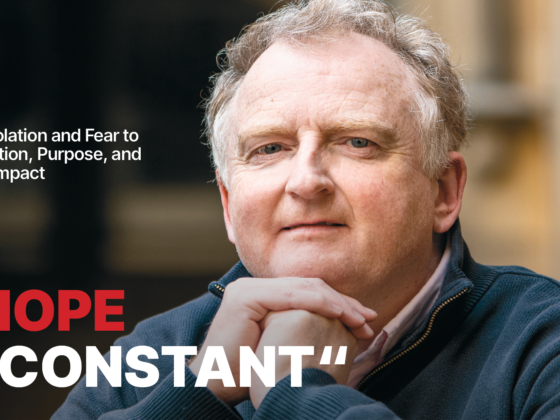
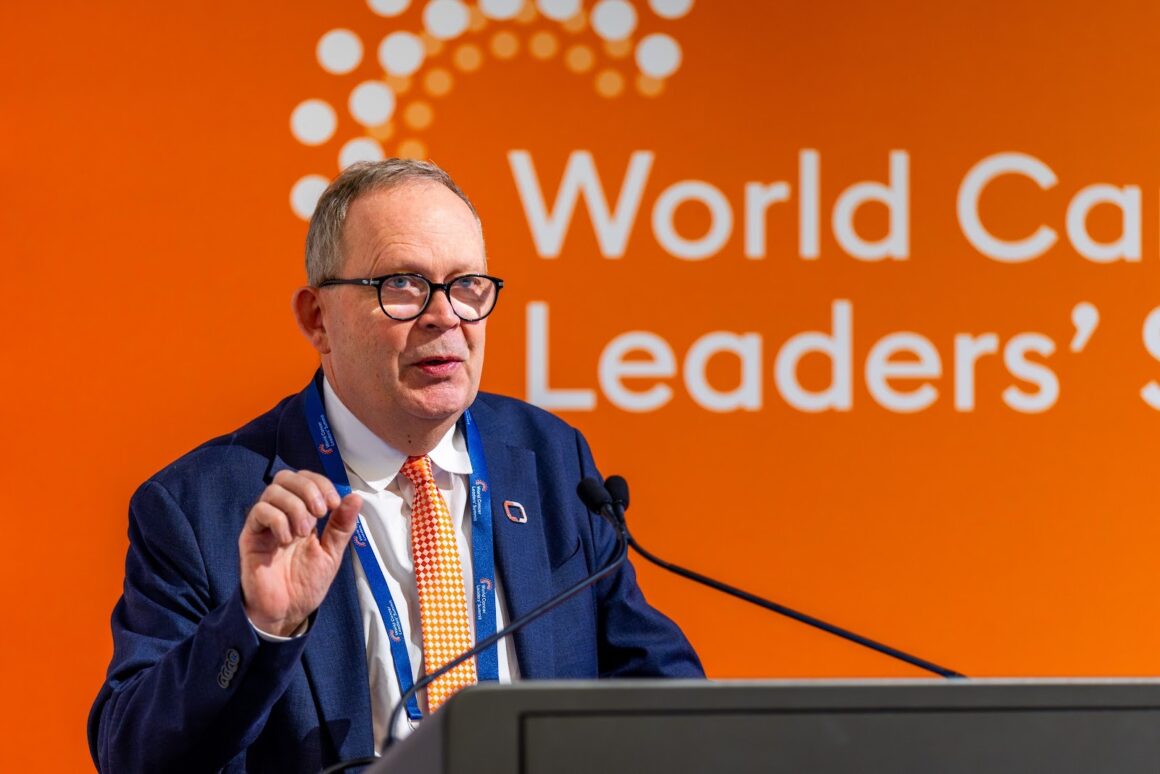
He is passionate about the mission of UICC.
***
When Cary Adams tells the story of how his career began, it doesn’t start with a calling in oncology. It starts with a teenage conversation about what might matter in the future, and a decision, in 1981, to study something that barely existed as a formal discipline.
“There weren’t many degrees in computing and econometrics in those days,” he recalls. Bath University was offering a new program in economics, computing, and statistics. He liked economics. He liked mathematics. And he sensed that knowledge of computing would become more important in the future years.
It was the first year that the course had ever run. And without knowing it, he had stepped onto a path that would lead him to one business sector for almost a quarter of a century, before the world changed, and he changed with it.
“You’ve Got No Chance.”
With his degree and computing background, banking was the obvious destination. Not just because banks were hiring, but because, even before the internet, he could see the banking sector would become a technology-driven business.
He stayed in that world for 24 years.
He progressed through roles that took him across countries and different business units, resulting in him leading multiple banks around the world from Geneva, and then serving as Deputy CEO and COO for a large group of international banks in the Lloyds TSB banking group.
Then came 2008.
The banking crisis didn’t just shake institutions; it forced personal recalculations. “For multiple years,” he says, “I’d been reflecting on whether I wanted to stay in banking, or go into something else.” He had invested in learning—an MBA, and he had attended programs at Harvard, Stanford, Henley, and London Business School. And each time he became more aware of other sectors and the people trying to improve society.
The ones, who were building impact outside banking, especially in the NGO and charity world.
When the banking crisis opened a door for many to leave banking, he also walked through that door.
The job advertisement for the UICC role came through a headhunter based in Geneva. He emailed Cary a two-page description. Cary read it at home in Devon, in the UK.
“By the end of the second page, I was so excited,” he says. He wrote to the recruiter immediately: I love this job. How do I get it?
The response was blunt: “You’ve got no chance.”
Not an oncologist. Not a UN insider. No global health background.
Cary asked for one thing: the opportunity to be interviewed as a wild card.
And he made a promise to the headhunter — he would study oncology for two months solidly until the first interviews came around.
He was on what he called “gardening leave,” not allowed to work. So, he treated preparation like a full-time job. He visited Cancer Research UK, Macmillan, the World Cancer Research Fund International and other organisations. He read everything he could find online. Ordered books. Watched a Livestrong Summit held in Dublin online. He analysed cancer control plans across Europe. He “deep dived” into the field, and the more people he met, the more he read, the more passionate he became about UICC and the role.
UICC gave him the interview.
He was offered the job. CEO of the Union for International Cancer Control.
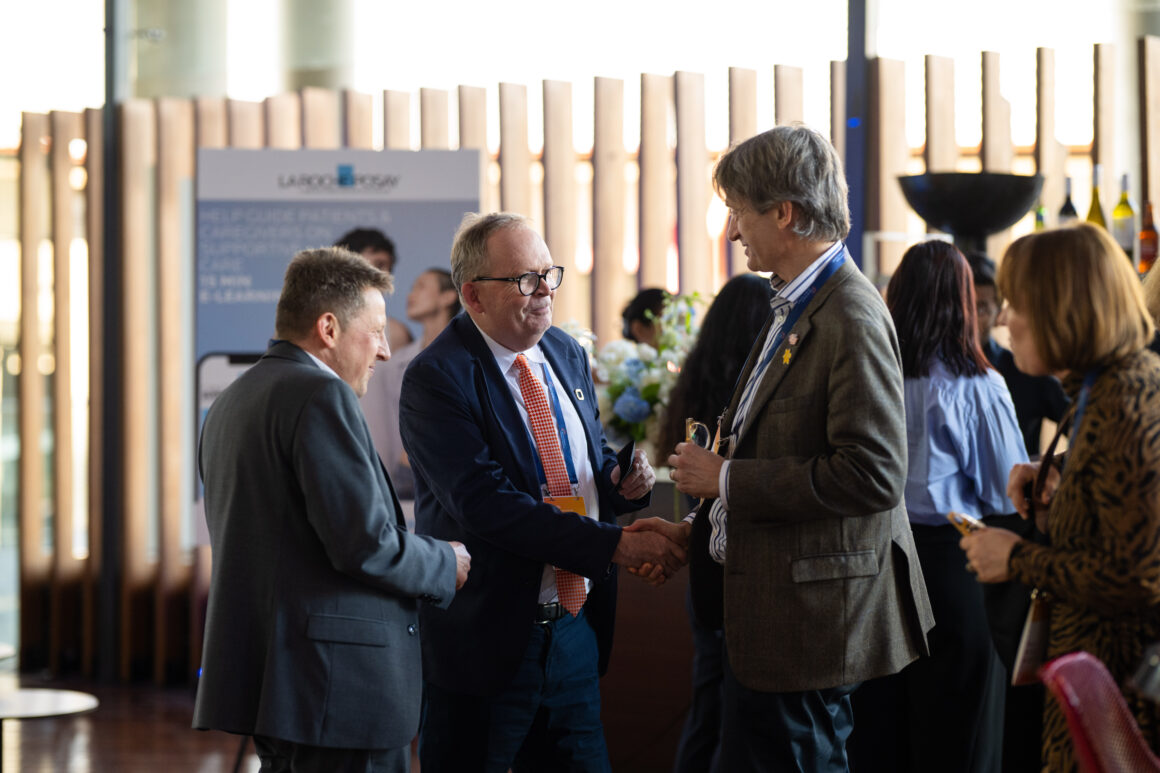
That was 16 years ago.
“In some ways,” he reflects, “my story is about luck at certain points, but also about making the most of an opportunity, when it arises.” Then he adds, with the kind of gratitude that never sounds rehearsed: “I love my job. I love the people I work with. I count myself very lucky.”
Rebuilding UICC From the Inside Out
When Cary arrived at UICC, it was respected and historic—founded in 1933, with major assets like the TNM manual and the International Journal of Cancer, but, in his view, it wasn’t structured to fulfill its own ambition.
Membership was around 350 organizations. The Geneva team functioned mainly as a secretariat supporting the board. Even some well-known member organisations, when he contacted them, had little to say about what UICC actually did for them. They were members, but didn’t feel part of a community.
So, he and the Board of Directors did something many organisations avoid: they had an open, honest conversation about what UICC should become within a 10-year period.
They created a 10-year plan: a “Roadmap,” divided into phases.
Phase one of the Roadmap was called “Getting Organised” and focused on restructuring the organisation— improving governance, changing the Constitution, developing the team, and even changing the organisation’s name from the International Union Against Cancer to The Union for International Cancer Control – matching the mission more clearly. Cary describes the original name as confusing for an outsider.
They restructured the team as well. “We had a great team in UICC, but we did not have the right skills or competencies to deliver the changes we needed to deliver in the Roadmap,” – the new mandate agreed with the Board needed a different kind of structure to grow influence and impact.
Then came the next two phases from 2011 to 2020—building momentum, increasing influence globally, and UICC started to grow the membership, its partner base, and develop a reputation for excellence around the world.
UICC’s membership passed 1,000 members – a membership base that felt like it was part of a growing community. The size of the UICC team doubled. Funding became more assured.
They also reshaped how the world gathers around cancer—re-engineering the World Cancer Congress, and creating the World Cancer Leaders’ Summit, which didn’t exist before.
Creating a New Future
Over the years, UICC also helped establish or spin off entities to fill gaps that needed dedicated, long-term, sustainable solutions to be truly impactful:
- The NCD Alliance, helping raise the global profile of noncommunicable diseases at a time when global health conversations were dominated by communicable diseases and maternal-child health.
- The McCabe Centre for Law on Cancer, built on a simple idea: cancer control cannot succeed without legal frameworks at a national level.
- City Cancer Challenge (C/Can), now working in 16 LMIC cities worldwide—born from an earlier strategic realization that the future of health systems may increasingly be shaped in large urban centers.
- The ATOM Coalition, developing commercial pathways to deliver cancer medicines into low- and lower-middle-income countries—work that Cary says will impact the lives of thousands of patients, who otherwise would not have had access.
For him, the organising principle is consistent: reduce the chances of cancer, and when cancer happens, ensure early detection, and there is access to good treatment. “Everything we’ve done,” he says, “has been about improving outcomes year after year after year.”
“Complex Problems Demand Complex Solutions”
When you ask Cary what has challenged him most in his role, he doesn’t point first to politics, funding, or global complexity. He starts with something personal.
He arrived in a world where he had no network, no shared language, no familiarity with how oncology and the UN system worked.
“It was completely weird and strange to me,” he says.
He credits people around him—staff, mentors, leaders and board members – who invested in him and helped him navigate a very complex world.
Then came the second challenge, which almost every NGO leader recognizes: securing credibility for the organization. In global health, funding and partnerships require trust, and trust requires a track record. If you start without one, you must earn it.
And then there is the central problem of global cancer control: almost nothing can be solved alone.
Cary’s instinct is collective solutions—bringing multiple partners around the table. But collective work has a price: every organization has its own ambition, its own incentives, its own internal pressures.
“It can be difficult,” he says, to align those forces. “Delivering impact with multiple partners from different sectors is not easy”.
Still, he insists that collective solutions are the ones that last. Sustainable cancer challenges require sustainable long-term answers, and those answers usually come from coalitions, not solo acts.
“And that,” he adds, “is where there’s the greatest challenge, the opportunity for the greatest impact and the greatest satisfaction.”
People and Governance with Purpose
Asked about the key to his success, Cary doesn’t think a minute—people and structure.
First: “I always have a great team around me.”
He learned early in banking that part of the leadership challenge is knowing your own and the organization’s strengths and being honest about the weaknesses. Then, building a team that can take the organization forward.
Second: “You have to get governance right”.
He speaks about UICC’s governance with pride: clear roles, strong oversight, engaged leadership, outstanding boards drawn from around the world, and presidents who have consistently elevated the organization’s profile and mission.
It’s not governance for its own sake. It’s governance focused on what matters: delivering the mission, having impact and addressing cancer control – governance with purpose.
“Who Will Replace Us in 20 Years?”
Cary believes leadership carries multiple obligations, but one of which he believes is developing others.
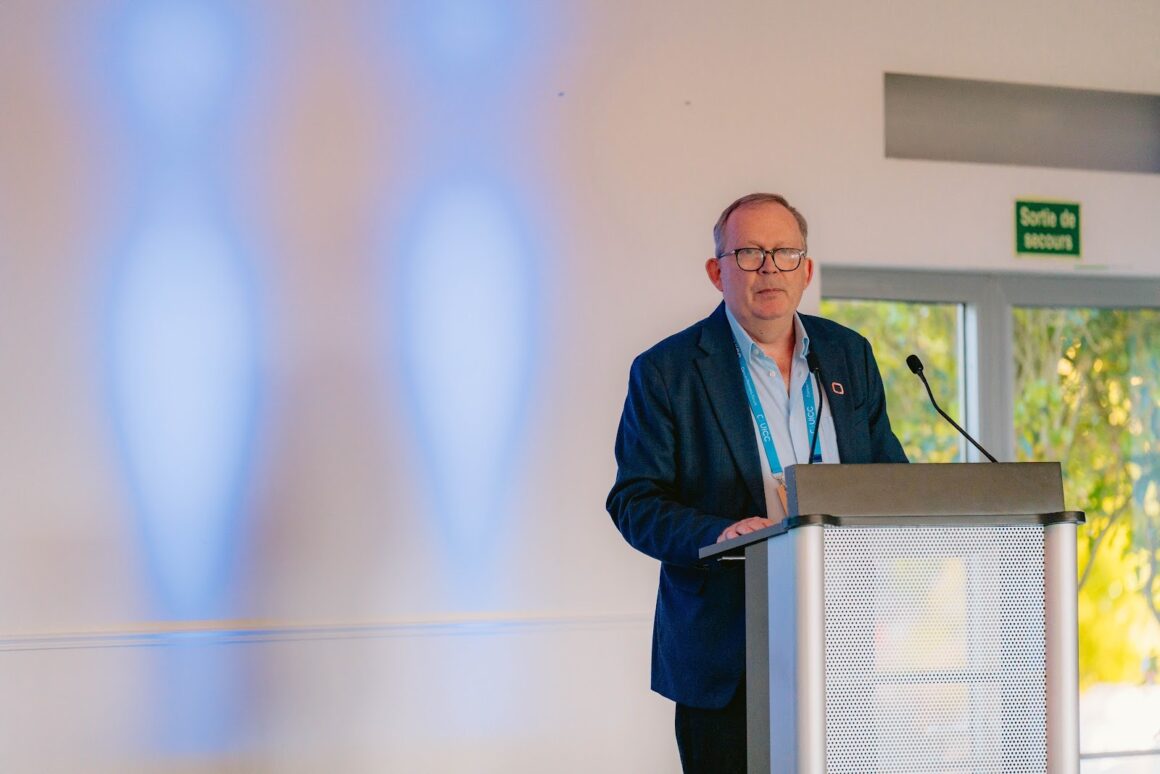
“You have two jobs as a leader,” he says. One is to lead the organisation. The other is investing in people, giving them opportunities, and sometimes helping them discover ambitions they didn’t know they could reach.
He traces this philosophy back to his early years in banking, when he joined a structured development program. There were only 12 recruits in his program in the year he joined. They received coaching, mentorship, training, and were given a long-term plan designed around a 20-year horizon—an almost unbelievable level of investment, which he feels incredibly grateful for today.
He carried that mindset into UICC.
The Young Leaders Program, he explains, was initiated by then-president Mary Gospodarowicz, shaped by a simple question: Who will replace us in 20 years?
So they built a pipeline—structured, intentional—identifying people with the potential to become global players in health within 10 to 20 years.
He names early participants with visible pride: Andre Ilbawi; Miriam Mutebi; Daniel Rodin; Gevorg , people who were recognized early on for their talent and potential to become global health leaders. And they have all become outstanding leaders in global health.
He also shares a moment that stayed with him: sitting in a meeting of CEOs of health organizations in Geneva last year, and realizing three of the other CEOs used to work at UICC. “I was really proud of that,” he says.
The World Changes, So Strategy Must Too
UICC, Cary explains, works with a rolling three-year business plan—currently setting direction through to the end of 2028.
But UICC maintains the same long-term thinking it believes in and every 4 years reconsiders what cancer control may look like in ten years’ time and how UICC should prepare for this.
Every four years, UICC conducts a strategic review—not a business plan refresh, but a “where is the world going?” exercise:
What will change in global health? What risks are coming? What opportunities are emerging? Where must the cancer community prepare early?
He gives concrete examples:
- AMR (antimicrobial resistance): UICC flagged it as a future cancer issue before many were discussing the connection, and it still educates the community on this threat to cancer patients.
- Urbanization: the growing importance of cities in LMICs helped shape UICC’s decision to launch the City Cancer Challenge Foundation.
- The growing inequity between high and LMICs prompted action on access to cancer medicines.
- And now, upcoming strategic questions which the Board is considering: How will cancer control be impacted by climate change, global health financing, technology breakthroughs and, AI, for example?
He’s honest: he can’t say yet exactly what UICC will look like in 10 years. But after the next strategy review in February, he expects that long-term ambition to sharpen his view on what is needed in the next few years.
The Story That Moves Him Most
When asked for one story that deeply impacted him, Cary says he could write a book, and he intends to write it when he leaves UICC.
But if he must choose one theme, it isn’t a single event.
It’s the people. The amazing people who work in cancer control worldwide.
On World Cancer Day, he describes sitting at his desk as the day “opens up” early from New Zealand onward, watching social media fill with activity, announcements, media coverage, and volunteer-driven momentum.
“I have nothing but pride in our community,” he says.
He’s astonished by how many people give their time voluntarily to help cancer patients. He’s moved by clinicians, who do their work, then do even more. He’s inspired by the volunteer backbone that supports UICC’s programs, sits on its congress committees and reviews all the fellowship applications.
He calls it extraordinary.
Who Is Cary Adams?
He jokes first: “An aging British man.”
Then he offers the real answer—a story from 1997, when he was losing his way in banking and read widely to find inspiration and direction. One book posed the question: What is your mantra? What are you about?
He realized he had been measuring his personal success in the wrong currency: scores, annual reviews, reports, promotions, salary increases, and bonuses.
So he wrote a new mantra, one he says still guides today:
“I want to have a positive impact on the lives of the people I meet.”
No hierarchy. No exceptions. Whether it’s a waiter, a colleague, a minister, or a friend.
“That,” he says, “is what I hope people feel I live every day.”
“It’s not always possible, but it has guided me very well over many years.”
Who Should You Interview Next?
Cary’s answer is immediate: Miriam Mutebi.
Because she represents the arc he believes in: a Young Leader, who became a UICC board member; a leader in Africa, who grew into a global health figure; a former AORTIC president; involved in Lancet commissions; a powerful presence on social media—yet, as he puts it, “beautifully humble,” and deeply committed to helping people.