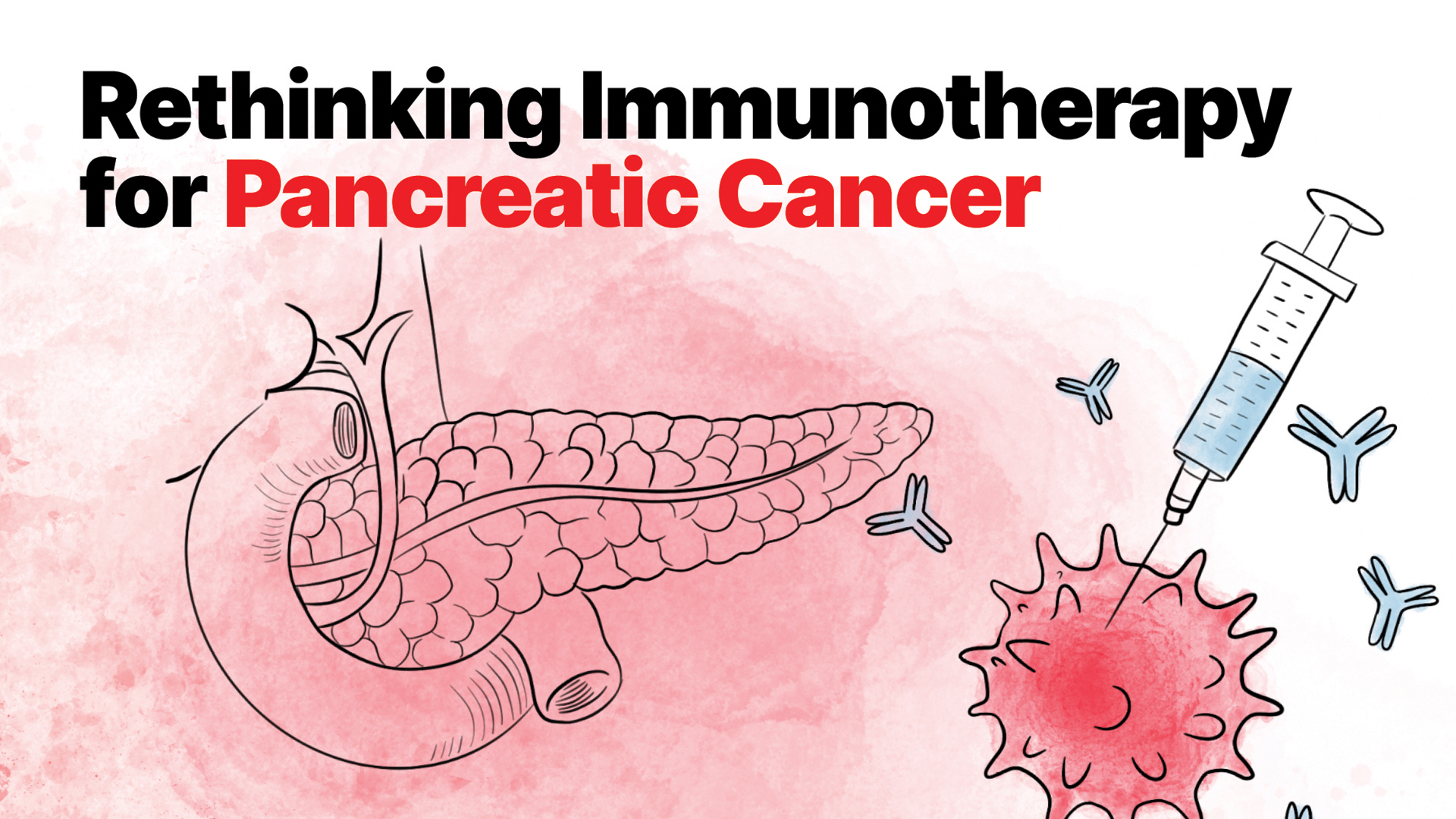
Chimeric antigen receptor natural killer T (CAR-NKT) cell therapy, a novel form of immunotherapy, is emerging as a promising ‘off-the-shelf’ treatment for patients with pancreatic cancer. In a study published in PNAS, November 21, 2025, U.S. investigators report that CAR-NKT cells can effectively track down and destroy pancreatic tumours, both within the pancreas and after metastasis to distant organs. This publication builds on earlier studies from the UCLA research team, also published last year, which demonstrated the therapeutic potential of CAR-NKT therapy in both ovarian and breast cancers.
“Taken together, the pancreatic, ovarian, and breast cancer studies lead to a clear and unifying conclusion that allogeneic, stem cell–derived CAR-NKT cells represent a broadly effective and scalable immunotherapy platform for solid tumours that have historically resisted CAR-T cell therapy,” the first author Yan-Ruide (Charlie) Li tells CancerWorld. “Across all three cancers, CAR-NKT cells achieved superior tumour control in orthotopic (tumours in their natural setting) and metastatic settings, demonstrating effective trafficking, deep tumour infiltration, and durable antitumour activity in hostile tumour microenvironments. In pancreatic and breast cancer, CAR-NKT cells suppressed both primary and metastatic disease; while in ovarian cancer, they achieved tumour eradication and long-term survival even under high tumour burden, repeated tumour challenge, and CAR antigen–loss conditions.” The therapy, adds Li ,can be mass-produced from donated blood stem cells and stored ready-to-use at an estimated cost of $5,000 per dose.
Why Doesn’t CAR-T Cell Therapy Work in Solid Tumours?
While CAR-T cell therapies have revolutionised the treatment of certain haematologic malignancies, they have not been effective in solid tumours, particularly pancreatic cancer, due to three fundamental biological barriers limiting durability and function. First, pancreatic tumours exhibit pronounced antigen heterogeneity and readily undergo antigen escape. Targets, such as mesothelin, are not uniformly expressed, and under selective pressure from CAR-T therapy, with tumour cells able to downregulate or lose antigen expression altogether. “Since conventional CAR-T cells rely almost exclusively on CAR–antigen recognition for cytotoxicity, antigen-negative tumour clones survive and expand, leading to treatment failure and relapse,” explains Li.
Second, the pancreatic tumour microenvironment is profoundly immunosuppressive and drives rapid CAR-T cell dysfunction. “Dense populations of suppressive myeloid cells, chronic inflammatory signalling, metabolic stress, and stromal-derived inhibitory factors promote CAR-T cell exhaustion, characterised by upregulation of checkpoint molecules (such as PD-1, LAG-3, and TIM-3) and a loss of effector cytokine production and cytotoxic capacity. As a result, even CAR-T cells that initially engage tumour cells often lose function and persistence within the tumour microenvironment,” says Li.
Third, CAR-T cells show poor trafficking, homing, and infiltration into solid pancreatic tumours. Pancreatic cancer is marked by a dense desmoplastic stroma and abnormal vasculature that physically restricts entry of immune cells. IIn addition, CAR-T cells frequently lack the chemokine receptor profiles required for efficient tumour-directed migration, leading them to accumulate in off-target organs, such as the liver, or to remain confined to peritumoral regions rather than penetrating the tumour core. Because effective cytotoxicity requires direct tumour contact, this failure of infiltration further limits therapeutic efficacy.
“Together, antigen escape, a highly suppressive tumour microenvironment, and inadequate tumour infiltration explain why CAR-T cell therapy has so far shown limited success in pancreatic cancer and other solid tumours,” says Li.
An additional limitation lies in the extended preparation timeline required for CAR-T cell therapy. The process involves harvesting a patient’s immune cells, transporting them to specialised facilities for genetic modification, and subsequently returning the engineered cells for reinfusion several weeks later. For patients with pancreatic cancer, such delays may be clinically inappropriate, as the aggressive nature of the disease often leaves little margin for extended treatment timelines.
NKT Cells Offer the Solution
For more than a decade, Lily Yang and colleagues at the Eli and Edythe Broad Center of Regenerative Medicine and Stem Cell Research at UCLA have been working on NKT cell biology. Early on, they recognised that NKT cells possessed several properties that conventional T cells lack. “They bridge innate and adaptive immunity, traffic efficiently to tissues, resist exhaustion, and—critically—do not cause graft-versus-host disease because they’re restricted by the non-polymorphic molecule CD1d rather than classical HLA,” explains Li. While these features made NKT cells conceptually attractive as a universal cell therapy platform, their extremely low frequency in peripheral blood represented a barrier to clinical translation.
To overcome this limitation, the team developed a strategy to generate NKT cells from human CD34⁺ hematopoietic stem and progenitor cells. In a paper published in Nature Biotechnology in 2025, Yang and colleagues reported how, by genetically engineering stem cells with an invariant NKT TCR, which can drive stem cell differentiation into mature NKT cells, and therapeutic transgenes, and then differentiating them using a clinically guided, feeder-free culture system, they were able to produce large numbers of highly uniform, functional NKT cells. “For the first time, we showed that NKT cells can be manufactured at true clinical and industrial scale with high purity, consistency, and economic feasibility, overcoming one of the biggest barriers in cellular immunotherapy,” says Li.
The paper also demonstrated the broad applicability of the NKT platform across multiple cancer types by generating CAR-NKT cells targeting tumour antigens, such as CD19, BCMA, GD2, GPC3, and EGFRvIII. “These targets correspond to a range of malignancies, including B- cell malignancies, multiple myeloma, neuroblastoma, liver cancer, and glioblastoma, highlighting the versatility of the platform rather than a single disease-restricted application,” says Li.
Three separate mechanisms allow CAR-NKT cells to function as a multimodal immune therapy:
- CAR-NKT cells kill tumour cells through CAR-dependent recognition. The engineered chimeric antigen receptor enables direct targeting and elimination of tumour cells expressing the intended surface antigen (such as mesothelin in pancreatic cancer). “This provides potent, antigen-specific cytotoxicity similar to CAR-T cells, with robust activation and effector function upon target engagement,” says Li.
- CAR-NKT cells retain a strong NK receptor (NKR)–mediated cytotoxicity, allowing them to recognise and kill tumour cells independently of CAR expression. “This enables CAR-NKT cells to eliminate antigen-low or antigen-negative tumour variants, directly addressing tumour heterogeneity and CAR antigen escape,” says Li.
- Invariant NKT cells possess a unique TCR-mediated recognition pathway that recognises lipid antigens presented by CD1d, which is expressed on some tumours and also immunosuppressive myeloid cells within the tumour microenvironment. “Through this mechanism, CAR-NKT cells can directly target CD1d⁺ tumour cells and simultaneously eliminate or reprogramme suppressive myeloid populations, thereby remodelling the tumour microenvironment in a way that supports sustained antitumor immunity,” says Li.
Latest Study in Pancreatic Cancer
For the current study, the team employed a set of complementary human pancreatic cancer xenograft models, each designed to reflect distinct clinical challenges associated with pancreatic cancer. The four systems included:
- The orthotopic ASPC-1 pancreatic cancer model, where human ASPC-1 tumour cells were surgically implanted into the pancreas of NSG mice to recapitulate the anatomical site, stromal density, and tumour microenvironment of human pancreatic cancer.
- The ASPC-1 intravenous metastasis model, in which tumour cells were injected intravenously and predominantly seeded in the lungs to model disseminated disease. “This model mimics hematogenous metastatic spread, which is a major cause of mortality in pancreatic cancer patients, and enabled us to test whether CAR-NKT cells could traffic to metastatic sites, control distal tumours, and prolong survival,” says Li.
- The Capan-2 subcutaneous xenograft model, expressing low or heterogeneous levels of mesothelin, was designed to evaluate antitumour activity in the context of low antigen expression and antigen escape, a major limitation of conventional CAR-T therapies in solid tumours.
- The Capan-2-MSLN subcutaneous model, where Capan-2 cells were engineered to overexpress mesothelin, enabled precise dissection of antigen specificity versus innate killing by CAR-NKT cells.
Taken together, the topline conclusion across all models was that CAR-NKT cells slowed tumour growth by three to four fold relative to CAR-T cells and extended survival substantially in metastatic disease, rather than producing only modest improvements. “The benefit was consistent across primary orthotopic tumours, metastatic disease, and both antigen-high and antigen-low settings, highlighting that CAR-NKT cells deliver stronger, more durable, and more broadly effective antitumor responses than conventional CAR-T cells in pancreatic cancer,” says Li.
In both orthotopic and metastatic pancreatic cancer models, tumour-infiltrating CAR-NKT cells showed markedly reduced expression of exhaustion markers (including PD-1, TIM-3, LAG-3, CTLA-4, and TIGIT) compared with conventional CAR-T cells. In addition, CAR-NKT cells displayed intrinsically low immunogenicity, characterised by stable, low expression of HLA class I and class II molecules both before and after infusion. “Together, the combination of low exhaustion and low immunogenicity supports sustained persistence and function of CAR-NKT cells in vivo and reinforces their suitability as a safe, off-the-shelf cellular immunotherapy platform for solid tumours such as pancreatic cancer,” says Li.
Earlier Studies in Breast and Ovarian Cancer
In a study published in J Hematol Oncol last October, the team demonstrated that allogeneic, stem cell–derived mesothelin-specific CAR-NKT cells could effectively control aggressive triple-negative breast cancer (TNBC) in vivo, outperforming conventional CAR-T cells in both efficacy and durability.
In a study published in Med, also last October, they showed that CAR-NKT cells achieved near-complete tumour eradication and long-term survival in a human ovarian cancer xenograft model in NSG mice, whereas conventional CAR-T cells showed only partial tumour control and limited survival benefits.
“These studies collectively demonstrate translational feasibility, and that a single, scalable manufacturing platform can generate high-purity CAR-NKT cells that are effective across multiple solid tumours,” says Li. “Together, the data support CAR-NKT cells as a next-generation, universal cellular immunotherapy platform with the potential to fundamentally change treatment paradigms for solid tumours such as pancreatic, ovarian, and triple-negative breast cancer.”
What Next?
Building on the preclinical results in pancreatic, ovarian, and breast cancer, the team is now focused on clinical translation and strategic expansion into additional solid tumour indications. “Overall, our strategy is to use a unified CAR-NKT platform to move efficiently from strong preclinical validation into clinical trials, while systematically expanding into additional solid tumours where durable, off-the-shelf immunotherapies are urgently needed,” says Li. The goal, he adds, is to enter the first-in-human clinical trial of CAR-NKT therapy in multiple myeloma by the end of 2026. “Beyond cancer, the intrinsic immunoregulatory functions of NKT cells make this platform well suited for autoimmune and inflammatory diseases, where targeted immune modulation rather than broad immune ablation is needed,” says Li.
The estimated cost of ~$5,000 per treatment is based on manufacturing economics enabled by the stem cell–derived, off-the-shelf CAR-NKT platform. “From a single cord blood donor, we can generate on the order of 1012 CAR-NKT cells, sufficient for approximately 1,000–10,000 doses, allowing manufacturing costs to be spread out across many patients,” says Li. The process is allogeneic, batch-based, feeder-free, and cryo-preservable, eliminating individualised leukapheresis, patient-specific manufacturing, and long vein-to-vein times that have dominated CAR-T costs.
About the AuthorJanet Fricker is a UK medical writer with an MA in Physiology from the University of Oxford. She is the News Editor of CancerWorld. Janet has worked for the Cancer Drug Development Forum, Cancer Research UK, Lancet Oncology, European Journal of Cancer, Molecular Oncology, Ecancer Medical Science, and European School of Oncology (where she wrote the Oncopaedia sections on breast cancer). She has written for consumer publications including The Times, The Economist, The Daily Mail, The Independent and Marie Claire.