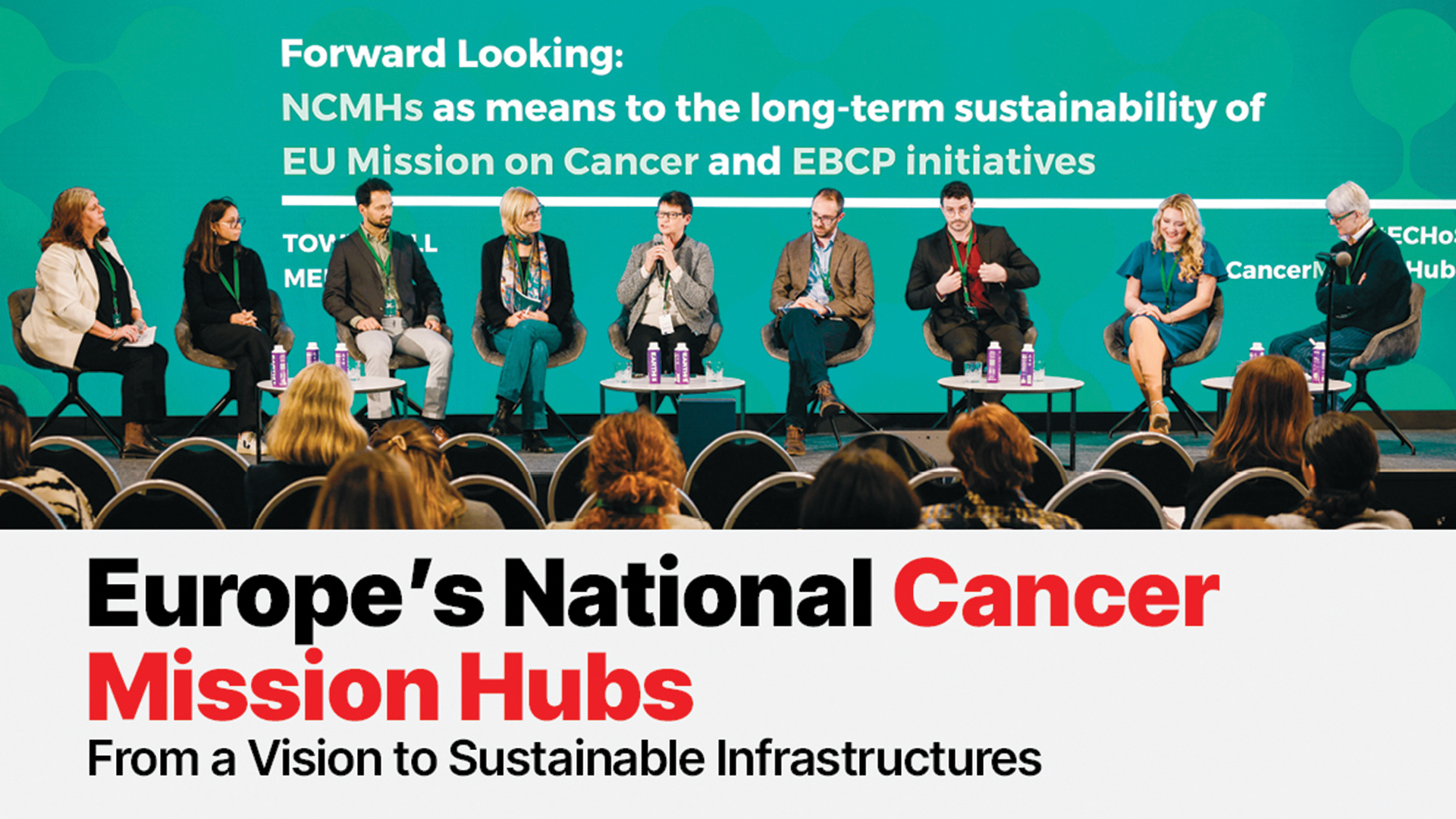
European cancer policy has entered a decisive phase. After years of strategy-building, consultation, and pilot projects, the question facing policymakers is no longer whether Europe has the right ambitions, but whether it can turn those ambitions into sustainable systems that deliver for patients. That question lay at the heart of the ECHoS Town Hall Meeting 2025, held in Brussels in November, where national representatives, European institutions, researchers, clinicians, patient organisations, and industry partners came together to take stock of progress under the EU Mission on Cancer.
The Town Hall marked a moment of transition. National Cancer Mission Hubs (NCMHs), once idealised structures supported by EU project funding, are now coming together to function as long-term governance mechanisms. The day’s discussions reflected both optimism and realism: optimism that meaningful implementation is possible, and realism about the political, financial, and cultural barriers that still remain.
What emerged most clearly was a shared understanding that Europe has moved beyond planning. The current challenge is sustainability.
Making the Mission Visible
Opening the meeting, Annika Nowak, Head of Sector of the Cancer Mission secretariat at DG Research and Innovation, framed the role of the Establishing of Cancer Mission Hubs: Networks and Synergies (ECHoS) project in terms of credibility and impact. For the European Commission, the EU Mission on Cancer must demonstrate not only ambition, but visibility and results.
“I think my role is really to emphasise how important this project is,” she said. “It is very important for us to make sure the mission is visible; the actions are becoming more visible.”
Visibility, she stressed, is not cosmetic. It is essential for sustaining political commitment and public trust.
“ECHoS is one crucial part to ensure that the mission can demonstrate the success and the impact it may have,” she noted.
That framing set the tone for the day. National Cancer Mission Hubs are no longer judged by their conceptual promise, but by whether they can show tangible progress across very different national health systems.
Human Care is a Human Right
For Hugo Soares, co-coordinator of the ECHoS project, visibility is inseparable from collaboration. In his opening remarks, he repeatedly returned to the idea that system change depends less on structures than on established relationships.
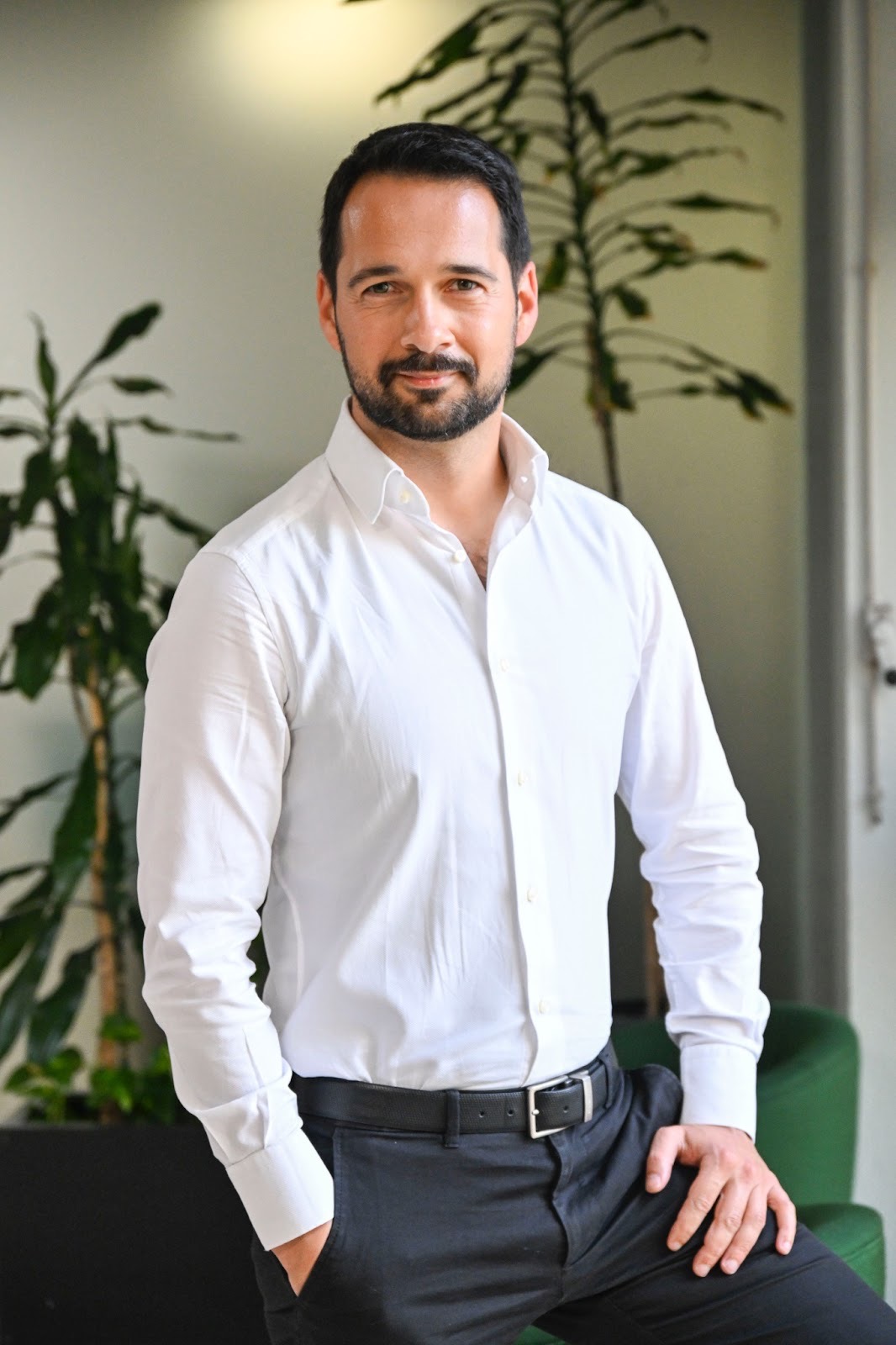
Hugo Soares, Co-Coordinator of the ECHoS Project
“This is what these kinds of events, face-to-face, are about,” he told participants. “To create this (trust) between us, because this is the one factor that matters when we talk about the multiplication effect.” That trust, he argued, is fragile and must be actively cultivated. Without it, initiatives remain fragmented and fail to scale.
“We have to do meaningful actions,” he said. “Something that might change the current procedures.”
Soares framed the EU Mission on Cancer not only as a health priority, but as a driver of broader change.
“Cancer is often referred to as the number two cause of death in Europe, the number one in some Member States,” he said. “But cancer is also a major driver of change.”
That change, in his view, must be grounded in values as much as in policy instruments.
He went further, connecting cancer policy to fundamental rights.
“Cancer care is human care,” he said. “And human care is a human right.”
From Pilots to Pillars
As discussions moved from vision to implementation, one question dominated: what conditions must be in place for NCMHs to become enduring pillars of national cancer systems rather than time-limited projects?
For Anabela Isidro, co-coordinator of the ECHoS, sustainability of such structures begins with political endorsement but does not end there.
“The main condition is that they have to have national support,” she explained. “A government endorsement, but also good funding, from governments, the private sector, EU funding, or other sources.”
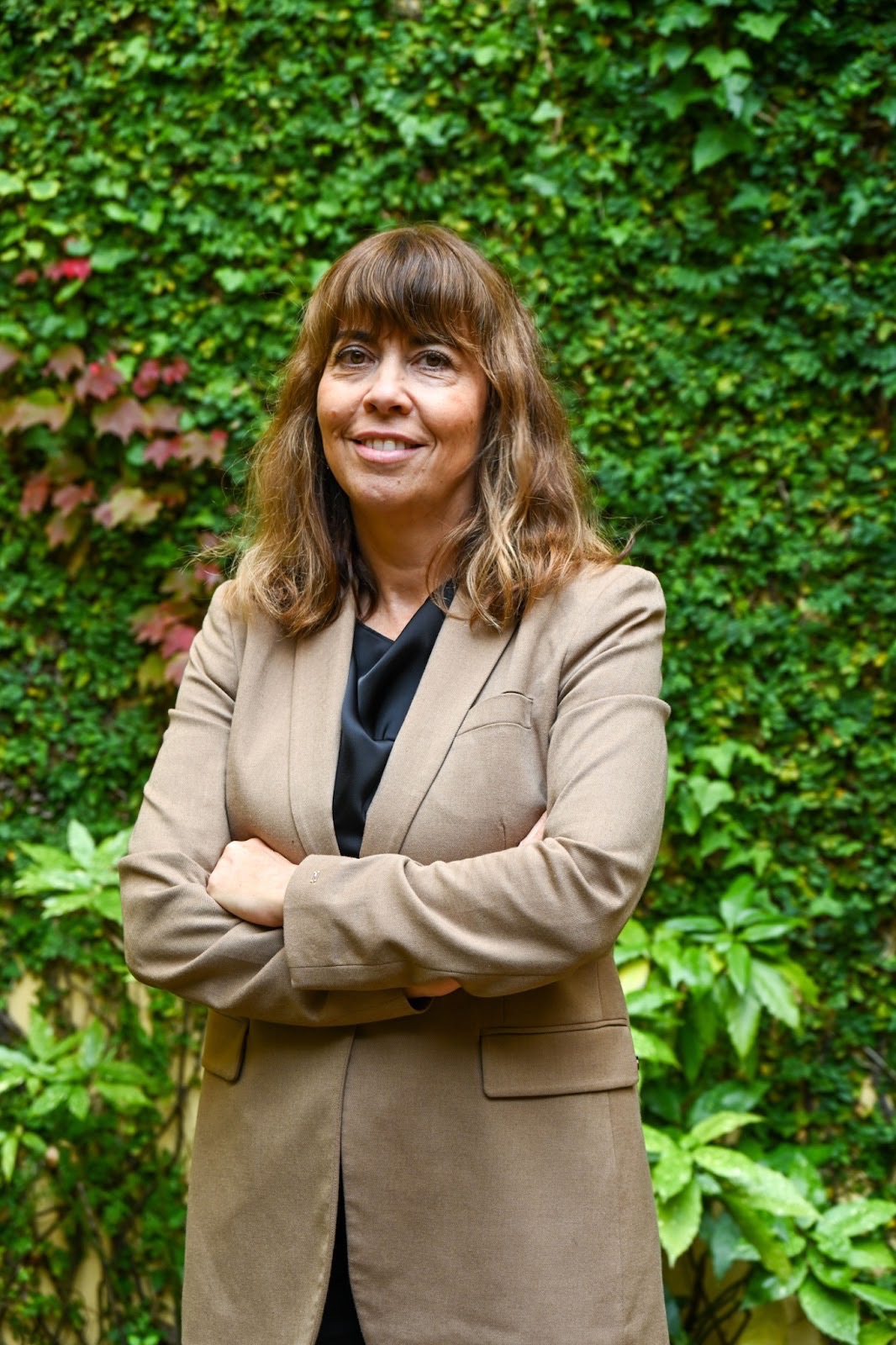
Anabela Isidro, Co-Coordinator of the ECHoS Project
Crucially, she cautioned against equating political goodwill with operational capacity.
“Governmental support without funding is good,” she said, “but it is very limited.”
Equally important are people.
“To be sustainable, you have to have dedicated human resources,” she added. “These networks need to be filled with activities to engage stakeholders. Otherwise, they fade away.”
Soares reinforced the point from a practical perspective. In countries where no one is formally tasked with implementation, NCMHs risk becoming discussion platforms rather than delivery mechanisms.
“When there is no one dedicated to implementation,” he said, “things stay at the discussion level.”
What distinguishes NCMHs from existing collaborative structures, he argued, is their mission-driven logic: co-creation, cross-sectoral collaboration, and a focus on translation rather than coordination for its own sake.
National Experiences: Implementation in Practice
The Town Hall session on national experiences brought those principles into focus, illustrating how different political and institutional contexts shape implementation.
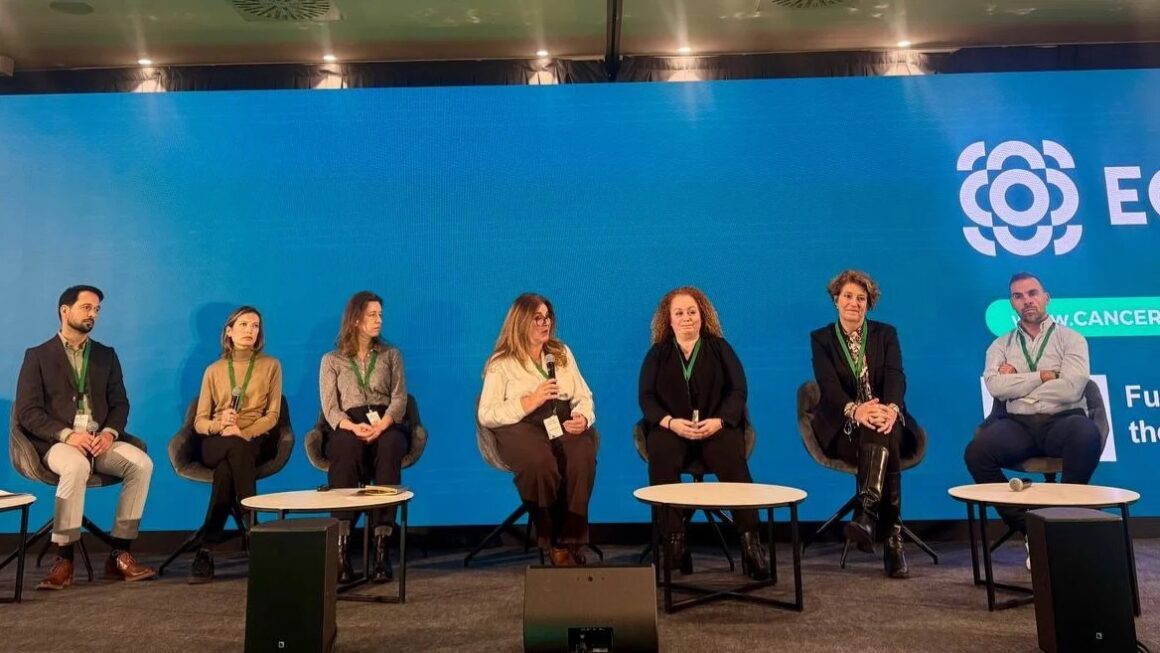
ECHoS Town Hall Meeting 2025: National Experiences in Establishing Cancer Mission Hubs
Malta: Alignment Delivers Momentum
Malta was repeatedly cited as a model of rapid, high-impact development. There, strong political commitment has been matched with sustained funding and complemented by private-sector engagement. Government investment has increased steadily, and the Malta NCMH has unified previously fragmented parts of the system.
As Isidro noted, Malta’s success lies in combining endorsement, resources, and ecosystem thinking. Ministries, researchers, hospitals, patient organisations, and Tech partners now operate within a single coordinated framework rather than in parallel silos.
The result is not only increased research capacity, but visible, citizen-facing initiatives, from mobile cancer awareness programmes to strengthened data infrastructure.
Portugal: Commitment Without Perfection
Portugal offers a different, more nuanced example. While the NCMH-like structure does not yet have dedicated operational funding, its launch was made possible through clear governmental backing and inter-institutional cooperation.
“The governmental support was crucial to start the hub,” Soares explained. “Even without dedicated operational funds, both coordinating organisations contributed with human resources.”
That contribution, he stressed, is often underestimated. Dedicated people can sustain momentum even when funding is imperfect, provided political endorsement is clear.
Sweden, Greece, Poland, and Italy: Different Paths, Shared Direction
Sweden’s challenge lies in governance complexity. With 21 autonomous regions, the task is not generating activity but aligning it. The Swedish NCMH aims to unite national actors, create a shared knowledge platform, and provide a space to test innovative approaches, while ensuring that sparsely populated regions are not left behind.
Greece’s experience highlights the growing role of patient organisations. After years of fragmentation, the Hellenic Cancer Federation (ELLOK) emerged as the natural coordinating body for the NCMH, building a multi-stakeholder structure spanning prevention, survivorship, digital health, access to innovation, and equity.
Poland has focused on trust-building through dialogue. Design-thinking workshops with patients, clinicians, researchers, industry, and policymakers have helped identify shared priorities and move from abstract strategy to concrete planning.
Italy, through the Alliance Against Cancer (ACC), demonstrated the advantages of scale and maturity. Ministerial endorsement, diversified funding, and national digital platforms have positioned the hub as a catalyst across the country’s regional health systems.
Across all cases, a common message emerged: countries are moving from planning to implementation, but sustainability depends on embedding these structures within national governance,rather than treating them as projects.
Collaboration
Collaboration was repeatedly described as both the greatest strength of the Mission and its most persistent challenge.
“At the European level, we are quite well connected,” Isidro observed. “Sometimes it is easier than at the national level.”
National collaboration must navigate entrenched institutional cultures, competing mandates, and divergent values.
“We do have good examples of all types of collaboration,” she said, citing research–clinical partnerships, patient involvement, and cross-border initiatives. “But if I have to name one area that still needs work, it is collaboration with the industrial sector.”
Industry engagement, she explained, is often constrained by differing incentives and timelines. Researchers and clinicians may be unaccustomed to working with industry outside clinical trials, while companies are focused on clearly defined objectives.
Recognising this, ECHoS is planning dedicated policy dialogues to address industry collaboration explicitly, creating structured spaces where agendas, constraints, and expectations can be discussed openly.
For Soares, the deeper challenge is not the absence of collaboration, but its fragmentation.
“We have very good examples here and there,” he said. “But what we are missing is that this becomes systemic.”
A major barrier to systemic collaboration is misalignment between top-management structures, such as policy and decision-making bodies.
He pointed out that alignment at the European level between DG Research & Innovation and DG SANTE was a turning point for the EU Mission on Cancer.
“When alignment happens at the top,” he said, “things align underneath. This is often lacking at the national level”
Portugal’s inter-ministerial order between the Ministry of Research and the Ministry of Health establishing its NCMH stands as a national example of that principle in action.
Working With Industry
Industry collaboration, while sensitive, was repeatedly framed as indispensable to translation.
“We are more at the level of governance,” Isidro explained, “but there are very practical ways industry can support our objectives.”
She pointed to familiar scenarios: a promising publicly funded discovery that requires industry partnership to move into clinical trials or scale production. National Cancer Mission Hubs can act as conveners, bringing together public researchers, clinicians, regulators, and industry partners.
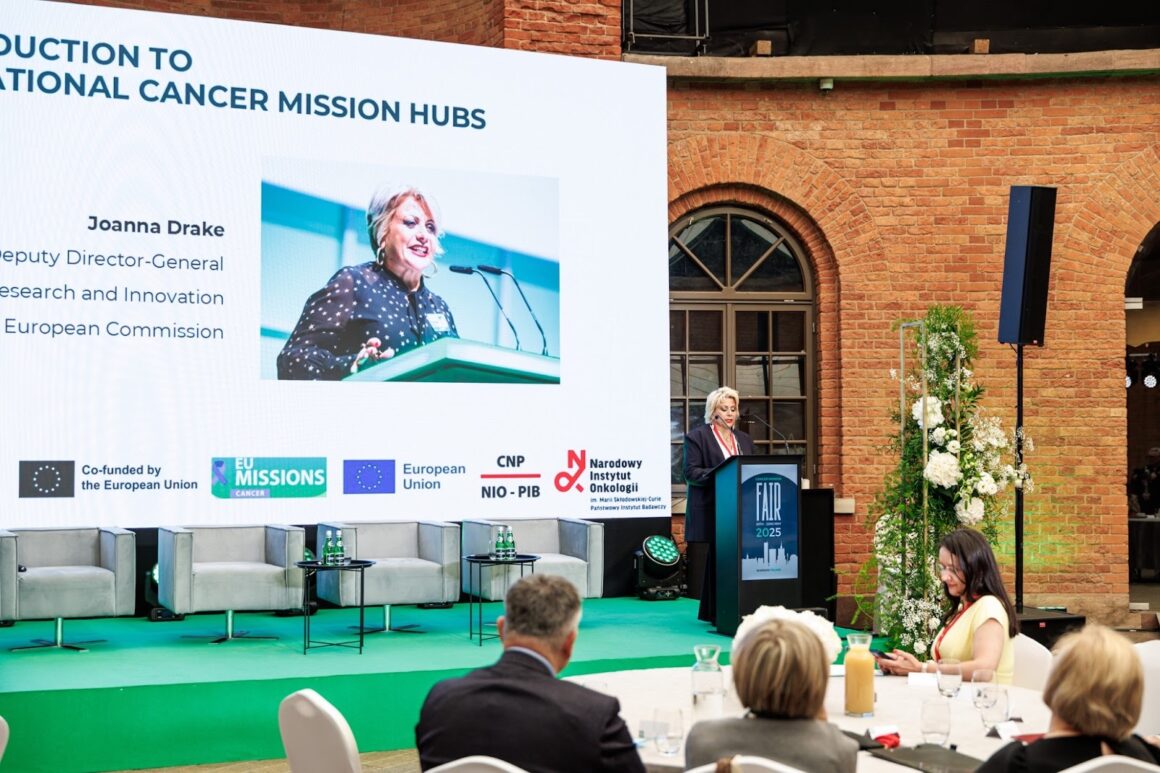
Joanna Drake, Deputy Director-General of the European Commission’s DG for Research and Innovation/Cancer Missions Fair
Such collaboration, she argued, could also be transnational, with multiple NCMHs and countries jointly supporting development pathways. Early initiatives are already emerging, one of which is led by the Polish NCMH, the first structure to be recognized as an NCMH by the ECHoS project.
Importantly, collaboration does not have to begin with high-stakes drug development. Support for events, workshops, and stakeholder convening can be equally transformative.
“Sometimes we lack support just to bring people together,” Isidro said. “These moments are essential.”
Yet she was candid about the limits of alignment.
“That’s our wish,” she said of broader industry support. “Not necessarily theirs.”
The implication was clear: successful collaboration requires clarity, trust, and realistic expectations on both sides.
Having a “Good Reputation”
Why, then, do some countries translate Mission goals into action while others remain stuck in planning?
Soares’ answer was direct.
“Countries with resources, staff, recognized leaders, and governmental support implement more meaningful activities,” he said. But this recipe is often incomplete in some way or another.
Implementation, he stressed, depends on the ability to convene those who understand needs with those who have the tools to respond, and to do so with political backing.
“It’s not just discussion,” he said. “It’s resources and endorsement.”
Isidro highlighted the role of the ECHoS network in supporting countries that struggle.
“We can support with bilateral visits and policy dialogues,” she said. “We can go to the national level and bring legitimacy.”
Involving trusted institutions, such as the European Observatory on Health Systems and Policies, can help open doors and create momentum.
“If you have a good reputation,” she noted, “people listen.”
Shared Values
The prominence of patient organisations across national presentations raised fundamental questions about leadership and power.
For Isidro, patient leadership reflects a broader shift toward co-creation.
“Patient organisations and stakeholders should be at the same level,” she said. “They are the ones most interested in success.”
Soares cautioned against replacing one form of dominance with another.
“The balance is always preferred to dominance,” he said. “Patient, clinician, political, or industry dominance, none of these fully work.”
Instead, he emphasised structured representation, guided by shared values of trust, transparency, and competence. Leadership matters less than how leadership is exercised.
“What matters,” he said, “is that the values are respected.”
What Transformation Would Look Like
Looking toward 2030, both speakers converged on a shared definition of success: equity.
“We see inequalities between countries and within countries,” Isidro said. “Access to core services is still uneven.”
National Cancer Mission Hubs, Soares argued, are not the solution in themselves, but instruments of translation.
“They were created for implementation,” he said. “Because disparities are still huge.”
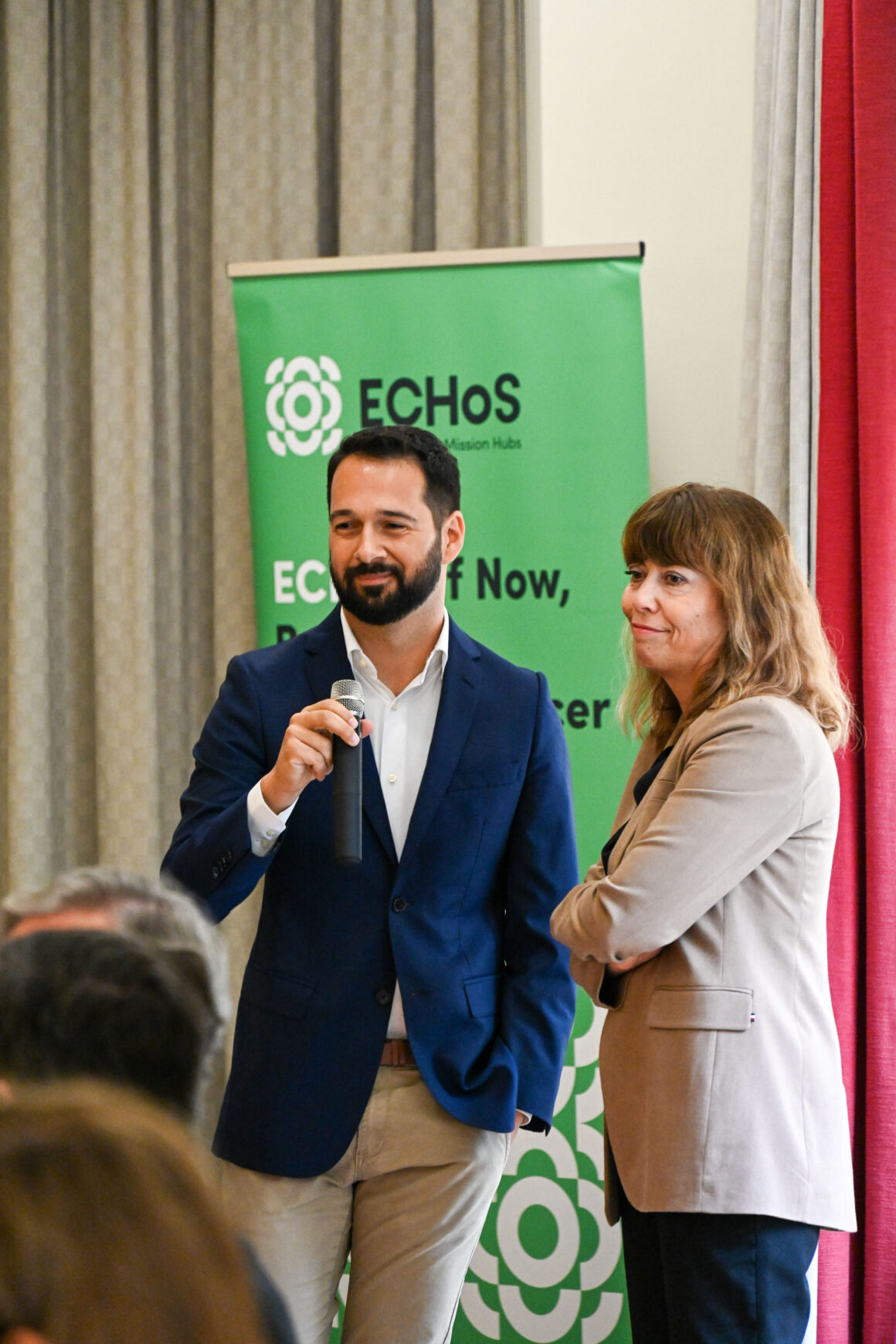
From Left to Right: Co-Coordinators of the ECHoS Project – Hugo Soares and Anabela Isidro
A genuinely transformational outcome would be a collaborative ecosystem where best practices are shared, adapted, and scaled, reducing duplication and accelerating progress.
“If collaboration becomes the norm,” Isidro added, “it accelerates progress in cancer research and care — and equity follows.”
From Promise to Proof
As the Town Hall closed, the mood was one of cautious optimism. Structures exist. Examples are multiplying. Yet the hardest work lies ahead: securing sustainable funding, embedding collaboration, fixing data foundations, and ensuring that implementation keeps pace with ambition.
The success of NCMHs will not be measured by their organisational charts, but by whether citizens experience tangible change.
As Soares reminded participants in his opening remarks, the stakes are deeply personal.
“Soon we might face a diagnosis like this,” he said. “So, we need to move. And we need to move fast.”
The coming years will determine whether Europe’s Mission on Cancer remains a promise or becomes proof.
***
Funded by the European Union. Views and opinions expressed are however those of the author(s) only and do not necessarily reflect those of the European Union or European Health and Digital Executive Agency (HaDEA). Neither the European Union nor the granting authority can be held responsible for them.