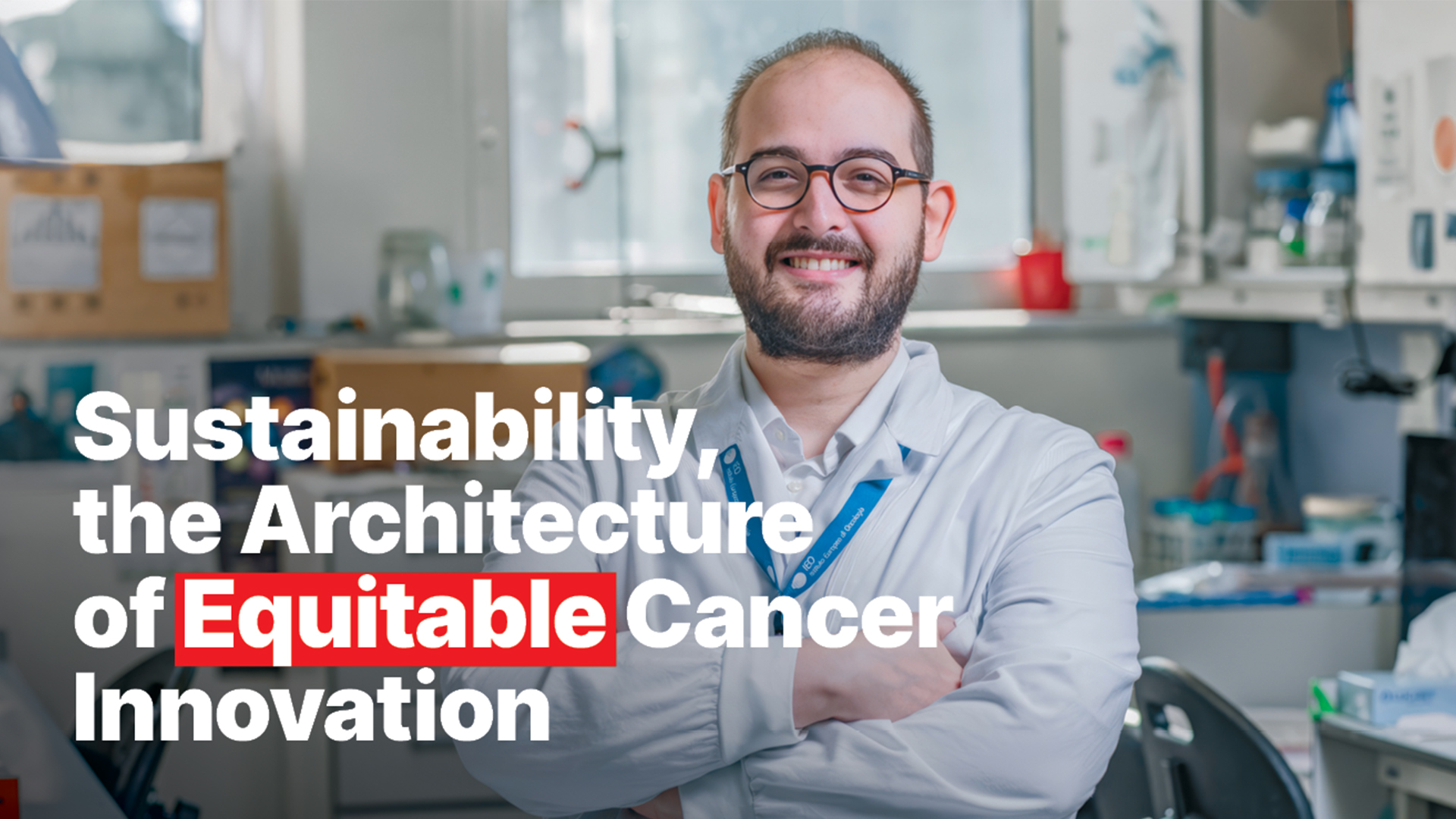
In oncology today, innovation advances at a breathtaking pace, yet the capacity to deliver it to all who need it lags behind. Each new therapeutic frontier exposes the same paradox: the deeper our biological insight becomes, the wider the gulf between discovery and delivery. The question is no longer whether we can treat cancer more effectively, but whether the fruits of innovation will be distributed with fairness and foresight. As a clinician engaged in global oncology, I encounter this dilemma quite often, in the faces of patients whose prognosis depends not only on science but on systems. As a researcher, I see how access, affordability, and sustainability form the hidden architecture of modern oncology, a structure too fragile to support the weight of our progress unless we rethink its foundations.
Mapping Inequality: The Geography of Access
The recent European Society for Medical Oncology (ESMO) Global Survey on Access to Cancer Medicines, the largest of its kind, offered a panoramic view of this imbalance. Conducted across 126 countries, it assessed formulary availability, out-of-pocket costs, and real accessibility of cancer medicines. The findings are empirical and ethical in their implications.
In high-income settings, patients can generally access essential and innovative therapies without major financial strain. But in low- and middle-income countries (LMICs), 40% of basic chemotherapeutics listed byWorld Health Organization (WHO) as Essential Medicines remains available only at full cost to patients. Access to newer, high-value therapies, those with proven benefit according to the ESMO-Magnitude of Clinical Benefit Scale (MCBS v2.0), is even more restricted – often, a privilege of selected high-income countries.
Such data draw a new geography of global oncology. They show that innovation has become a privilege of wealth, and that the correlation between a nation’s income, the political commitment to strategize cancer care and the efforts toward value-based decisions and its citizens’ chance of survival is as strong as ever. The survey’s goal, however, was not to despair but to diagnose: to create a “Global Reference” that can guide public accountability, inspire equitable policy, and transform access from aspiration to measurable duty.
Value as the Common Language of Sustainability
This brings us to the concept of value. Too often invoked, less commonly defined, value in oncology has become both a policy term and a moral compass. Value-based frameworks are not about restricting care but about restoring proportion, aligning the price of innovation with the magnitude of its clinical impact and the sustainability of the systems that must bear it. A value-based approach invites humility. It recognises that no therapy, however revolutionary, can be truly successful if it bankrupts the institutions meant to deliver it. It also demands intellectual courage: the willingness to question our assumptions about dose, duration, and necessity. This is where our work on dose optimisation and on defining new methodological approaches to the question of near-equivalent / more sustainable regimens become crucial. The principle is simple yet profound: if efficacy can be preserved at lower doses or shorter durations, access can expand without compromising outcomes. Rational use becomes an act of justice.
A Case Study: The Promise of Low-Dose Immunotherapy
Immune checkpoint inhibitors have transformed the therapeutic landscape, yet their price remains one of the major barriers to access, particularly in LMICs. To address this, a recent systematic review evaluated 32 studies exploring low-dose anti-PD-(L)1 regimens. The analysis revealed that, in selected settings, lower doses of nivolumab or pembrolizumab yielded encouraging radiological responses, sometimes comparable to standard dosing, while achieving cost savings exceeding 80%. These findings are preliminary, limited by heterogeneity, but they point to a rational frontier: a medicine that calibrates its intensity to its necessity. More robust data from the Indian randomized clinical trials in the space of head-and-neck cancer and the triple-negative breast cancer add scientific weight to this hypothesis, providing a new paradigm for cancer innovation: science-driven, evidence-based and sustainability-devoted. Both suggest that less may sometimes be enough, and that the optimisation of therapy can coexist with scientific rigour. Low-dose immunotherapy is not a shortcut but a question, a way of asking whether precision might also mean parsimony, and whether a smaller quantity of the same agent, properly validated, could democratise access globally. To turn such an approach from principle to praxis is, perhaps, the defining challenge of our time.
Modelling Affordability: Collaboration and Shared Responsibility
The issue of price cannot be solved by clinical science alone. Economic modelling is its necessary counterpart. In collaboration with the Medicines Patent Pool (MPP), an organisation that has revolutionised access to HIV and hepatitis treatments through voluntary licensing and technology transfer, we explored the cost-effectiveness of immune-checkpoint inhibitors in PD-L1-high advanced non-small cell lung cancer across two LMICs: India and South Africa. Using a standard economic modelling approach, we found that to meet conventional cost-effectiveness thresholds (at 1-3× GDP [Gross Domestic Product] per capita, a common metric of cost-effectiveness definition), acquisition costs for these therapies would need to fall by as much as 93%. Yet this target, while ambitious, is not unprecedented. Comparable reductions have been achieved for monoclonal antibodies such as trastuzumab through the introduction of biosimilars and price-volume agreements. This analysis identified three synergistic levers: accelerated biosimilar uptake as they will emerge, dose and duration optimisation based on innovative methodologies, and voluntary licensing in eligible jurisdictions. Together, they can re-engineer the economics of access. This, ultimately, is what sustainability means in practice: not denial of innovation, but design of systems that make innovation endurable.
The Moral Architecture of Access
The pursuit of access is not solely a technical or economic exercise; it is a philosophical esprit. What we define as “affordable” reflects what we value as a society. When a drug is priced beyond the reach of most patients, it is not only the market that has failed, but the moral imagination that sustains it.
Oncology as a whole must learn to think systemically, to integrate clinical, economic, and ethical dimensions into a coherent policy narrative. The WHO Essential Medicines List now includes several immunotherapies, signalling an institutional recognition of their transformative role. Yet inclusion alone is insufficient without mechanisms for sustainable provision, as outlined in the recent WHO report on essential cancer medicines and defined in WHO guidelines on pricing approaches for cancer medicines.
The integration of value-based health technology assessment, outcome-based reimbursement and other efficiency-oriented mechanisms, and real-world data registries can help create a dynamic equilibrium, where innovation is rewarded, but access remains universal. Such an approach requires coordination between regulators, payers, and clinicians, as part of international cooperation and solidarity.
Common Sense as a Guiding Principle
The Common-Sense Oncology movement, of which I am a part since the very beginning, seeks precisely this equilibrium: an oncology that is intelligent in its innovation, prudent in its use of resources, and profoundly human in its intent. Common sense here does not mean simplicity; it means proportionality. It means resisting both the excess of nihilism and the excess of enthusiasm, reclaiming a medicine that is guided by evidence and empathy in equal measure. Sustainability, in this sense, is not a constraint on progress but its ethical refinement. To sustain something is not to limit it, but to carry it forward without collapse.
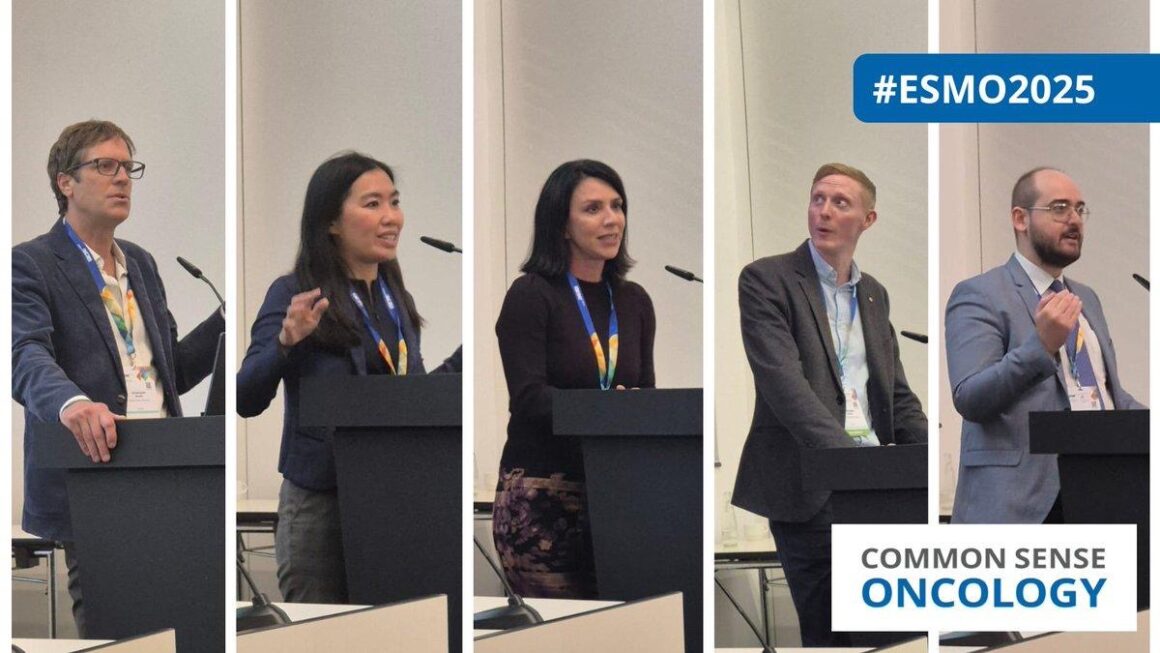
CSO session at ESMO Berlin, 2025
From Vision to Implementation
The next frontier of global oncology will not be defined solely by the discovery of new molecules, but by our capacity to govern them wisely. Dose optimisation, biosimilar integration, economic modelling, and collaborative frameworks such as those developed by ESMO are not marginal details; they are the structural beams of a more just architecture.
If we can align evidence with equity, and value with vision, we will not only improve access; we will redefine what progress means.
The future of cancer care lies in a shared act of responsibility: between science and policy, innovation and prudence, the individual and the collective. To build that future, we must transform sustainability from a technical goal into a moral one. Only then will the promise of precision medicine become a universal right, not an accident of geography.
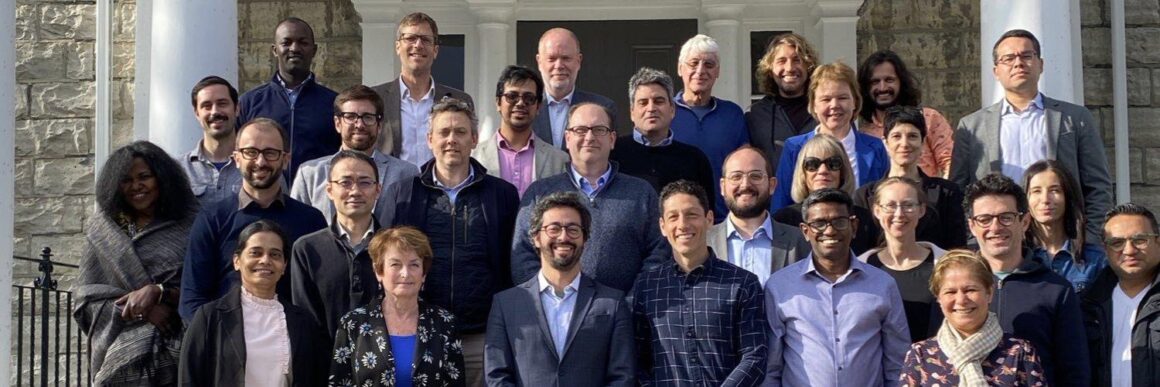
CSO working group – core team, Kingston, Canada
About the Author
Dario Trapani is a medical oncologist from Milan, working at the intersection of clinical cancer care and global cancer control, inspired by people and committed to high-value medicine as a foundation for equity in oncology.