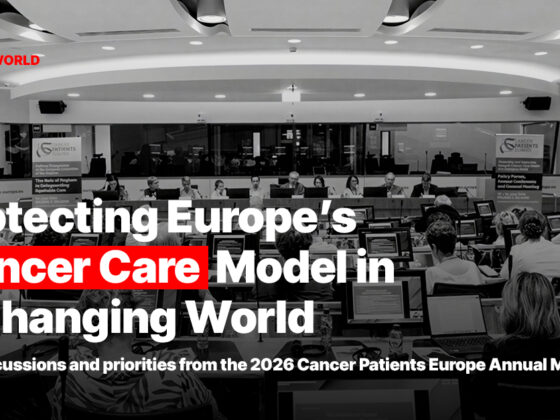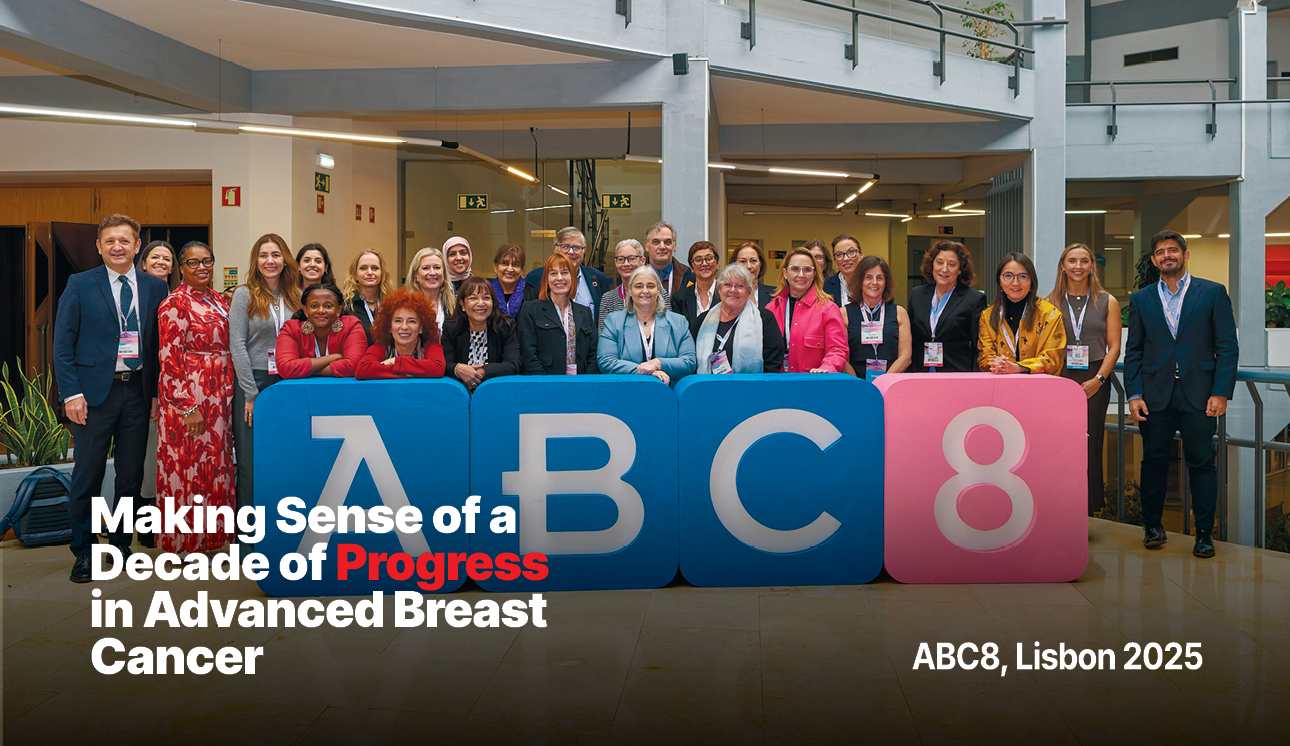
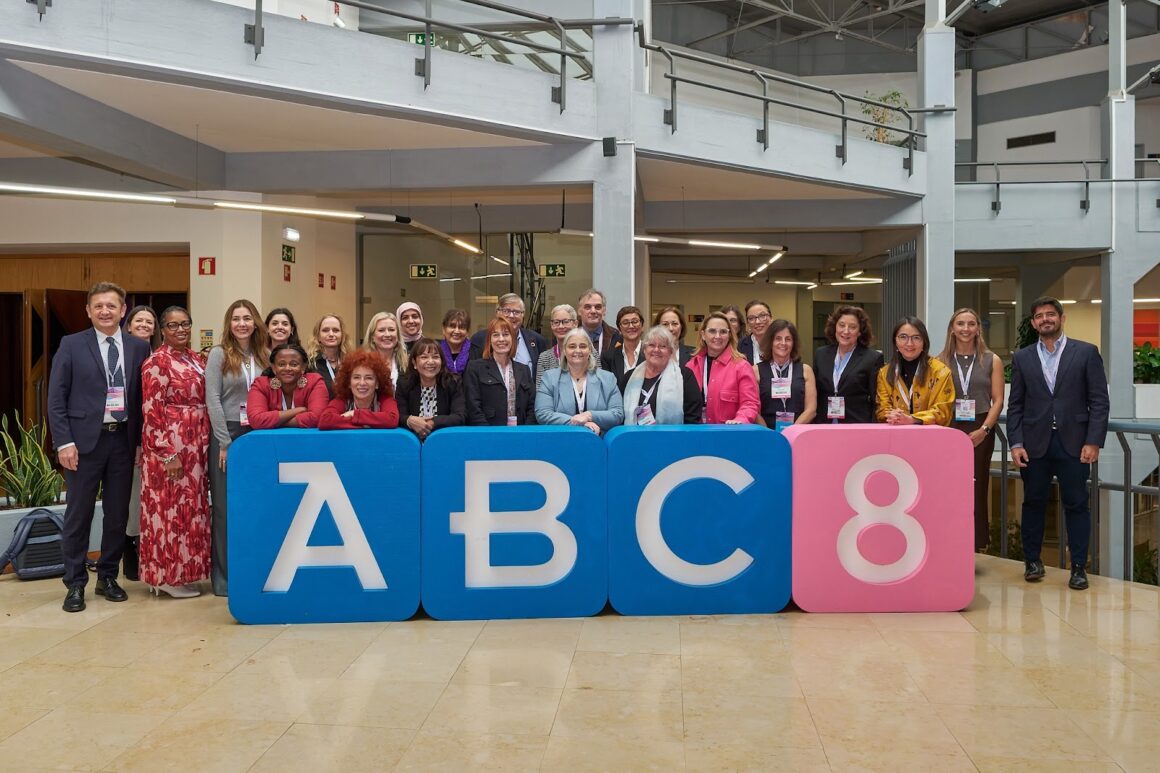
The 8th ABC International Consensus Conference (ABC8), Lisbon 2025
Over the past decade, the landscape of advanced breast cancer has changed more rapidly than at any time since systemic therapy became standard. New drug classes, more refined biomarkers, and increasingly sophisticated trial designs have reshaped what clinicians can offer, and what patients can reasonably hope for.
Yet turning scientific momentum into meaningful, equitable improvement in people’s lives remains far from straightforward. Each advance raises new questions: how best to sequence therapies, how to balance survival gains with quality of life, how to ensure patients are not left behind by cost, geography, or fragmented systems of care.
It is precisely these questions that bring clinicians, researchers, patients, and advocates together every two years at the Advanced Breast Cancer (ABC) International Consensus Conference. Rather than showcasing individual breakthroughs, ABC meetings are designed to take a step back, examining how evidence, experience, and patient priorities should translate into everyday practice, policy, and advocacy.
The 8th ABC International Consensus Conference (ABC8), held in Lisbon on 6-8 November 2025, was a particularly reflective moment. It marked ten years since the creation of the ABC Global Alliance, offering an opportunity not only to assess progress, but also to confront the uncomfortable reality that gains in survival have not been matched by gains in access, data visibility, or long-term support for people living with metastatic disease.
As the discussions at ABC8 made clear, the challenge for the next decade is no longer whether advanced breast cancer outcomes can improve, but whether health systems, research frameworks, and political will can evolve quickly enough to ensure those improvements reach everyone who needs them.
Why ABC Matters
For many participants, the ABC conference remains a highlight of an increasingly crowded conference calendar for several reasons. It was the first cancer meeting, and it remains one of the few, focused exclusively on the needs of patients with advanced disease. Its launch challenged the once-dominant narrative that these patients were effectively beyond help, and affirmed that survival and quality of life can be improved through investing in research, evidence-based guidelines, and supportive care.
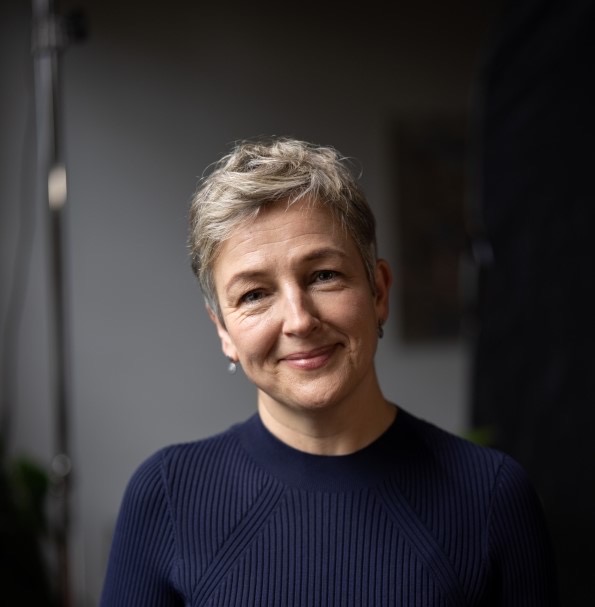
Claire Myerson, a patient living with advanced breast cancer and a patient advocate
A signature of ABC conferences is the presence of patients and advocates not as observers, but as contributors. That creates conversations that are unusually candid and sometimes uncomfortable. Claire Myerson, a patient living with advanced breast cancer and a patient advocate, sees that as the point. “Those patient sessions are what is unique about ABC. You should come to ABC to hear the patient’s voice.”
Making Sense of Progress: Why “PFS is Not Enough”
Dr. Fatima Cardoso, the Founder and President of the Advanced Breast Cancer (ABC) Global Alliance, argues that one of the most important shifts of the past decade is not a single drug class, but a shift in ambition, what she calls “aiming higher” for metastatic cancer.
“I do not consider that we should be happy with just improvements in PFS… We don’t want just to control the disease… We should aim higher… truly improving survival as well as improving quality of life.”
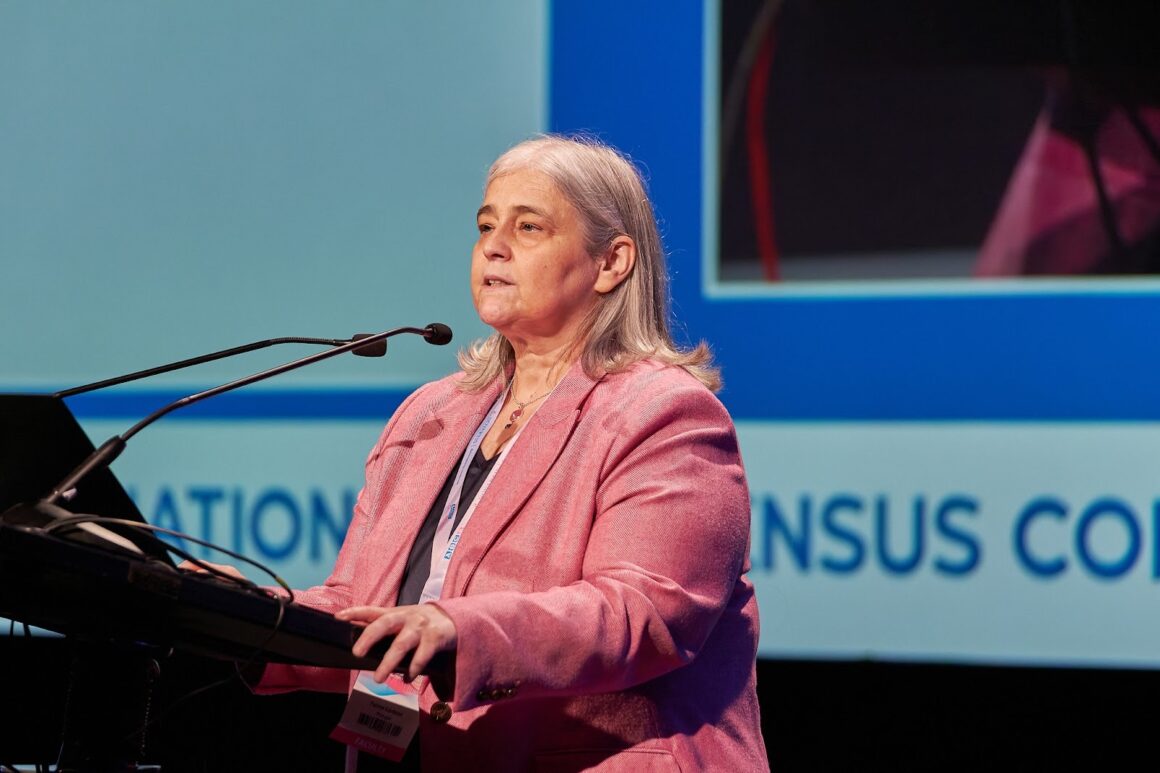
Dr. Fatima Cardoso, the Founder and President of the Advanced Breast Cancer (ABC) Global Alliance
She places ABC’s first global goal in that context: doubling median survival. “When we set that goal, the vast majority of people said that that would be a dream.”
Yet she points to a landmark reality at the end of the decade: survival-improving therapies now exist across the metastatic subtypes. And the gains are most obvious where targeted options are abundant. “This decade, we now have treatments that improve survival in the three subtypes. And it’s the first time we have seen that… We went from two to three years median survival ten years ago, to five years now for both HER2-positive and ER-positive HER2-negative.”
But she is blunt about what has not moved fast enough. “We are not there yet for triple negatives. Unfortunately, we still have a median survival of about 13 months.”
The Decade Report’s Most Uncomfortable Finding: Inequality has Deepened
If improved survival is the achievement Dr. Cardoso speaks of with the greatest pride, the findings on equity are the ones she returns to with visible frustration. The Global Decade Report 2015–2025, presented at ABC8, makes clear that progress has not been shared evenly, and that, in some respects, the gap has widened rather than narrowed.
“The inequalities have increased,” Cardoso said. “Not only were we not able to decrease them, but they are worse now.”
What is striking, she explained, is that this widening gap operates on more than one level. Differences between high-income and low- and middle-income countries remain stark, but increasingly, inequity is also playing out within individual countries, fragmenting access along socioeconomic lines.
“They are worse between low- and middle-income countries and high-income countries,” she said. “But they are worse inside each country.”
In the United States, she noted, this reality has long been embedded in the structure of the healthcare system, where access to cancer treatment is closely tied to insurance status. “It depends on your insurance,” she said. “Your coverage determines what type of treatment you receive.”
What troubles her most, however, is that this logic, once seen as a feature of insurance-based systems, is now becoming normalised elsewhere. “In Europe, I was not used to treating patients differently according to their ability to pay,” she said. “But now it has become the norm in Europe and around the world.”
Cardoso links this shift directly to the growing mismatch between innovation and affordability. Even countries with long-established national health systems are struggling to absorb the cumulative cost of successive new therapies.
“No national health system can sustain so many new treatments at the prices they have,” she stressed.
For Cardoso, this is not simply a policy failure but a structural one. Without changes to how drugs are developed, priced, and financed, she argues, the very advances that have extended survival risk becoming drivers of deeper inequality, determining not just how long patients live, but which patients are allowed to benefit at all.
“The System is Broken”: Why Innovation Fails to Reach Patients
Fatima Cardoso is careful to avoid framing the access crisis as a simple battle between patients and pharmaceutical companies. Her critique, sharpened by a decade of global data and hands-on advocacy, is directed at something broader and more entrenched: a development and financing system that now undermines its own purpose.
“For me, the system of drug development and drug financing is broken,” she said.
At the heart of that failure, she argues, is the way modern cancer drugs are developed. Clinical trials have become increasingly complex, slow, and expensive, not because patient safety demands it, but because regulatory requirements have expanded far beyond what is clinically meaningful.
“To do a clinical trial is terribly expensive because of all the bureaucracy,” she said. Much of that burden, she believes, generates little value.
“About 70–80% of what we collect in a clinical trial is never analyzed,” she said. “We collect it because the regulations say that we need to collect it.”
The consequence is not only financial. Cardoso warns that excessive bureaucracy is steadily eroding academic research, narrowing innovation to what large pharmaceutical companies alone can afford to pursue.
“That is killing academic research and making any clinical trial very expensive,” she said. Those costs inevitably resurface in pricing, and it is here that Cardoso’s language becomes unusually blunt for a senior global oncology leader. “I am always amazed that you can ask ten thousand dollars for a pill,” she said.
She is not dismissive of the complexity involved in manufacturing biologics or antibody–drug conjugates, but she finds the pricing of simple oral agents indefensible.
“The prices for a simple pill are, for me, shameful,” she said.
To illustrate how out of step oncology has become with other sectors, Cardoso reaches for an analogy that resonates far beyond medicine.
“What did they do with smartphones? They dropped the price. Everybody started buying them,” she said. “But we don’t do that for cancer treatments.”
The result, she argues, is a system that succeeds scientifically while failing functionally. “A new treatment developed today is only reaching about ten percent of cancer patients, who could benefit from it,” she said.
From a humanitarian perspective, that is devastating. From a business perspective, she suggests, it is irrational.
“Why develop a product and leave out ninety percent?” she asked. “Because only ten percent can afford it.”
For clinicians, this abstract failure translates into daily moral distress.“It is heartbreaking to know that there is a treatment and you cannot treat your patient,” Cardoso said, “because the patient doesn’t have enough resources.”
From the patient side, Claire Myerson experiences the same system failure not as a policy problem, but as a constant uncertainty layered onto an already unstable disease.
“When you live with advanced cancer, you are always planning in chapters,” she said. “You don’t just need access to a drug, you need to know the support won’t disappear halfway through your life.”
Her message to policymakers and funders is deliberately framed in terms they understand. “Patients like me need support, and we need support that lasts,” she said. “Invest in us, we are worth investing in.”
Short-term access schemes, fragmented reimbursement decisions, and delays in approval may look manageable on paper. For patients living year after year with metastatic disease, Myerson argues, they translate into chronic insecurity.
“You cannot build a life around treatments that might be taken away,” she said. “Stability matters as much as innovation.”
Where Cardoso sees a system that fails to deliver on its scientific promise, Myerson sees one that fails to recognise the reality of long-term survivorship in advanced disease.
“We are living longer,” she said. “But the systems around us still behave as if we are temporary.”
Together, their perspectives underline one of ABC8’s most sobering conclusions: progress in drug development has outpaced progress in thinking about how patients actually live with those drugs. Without structural reform of trials, pricing, reimbursement, and long-term support, the very advances that have extended survival risk deepening inequality and instability for the people they were meant to help.
“We Count the Dead Very Well. We Don’t Count the Living”
One of the most persistent and consequential themes running through ABC8, particularly when viewed through the lens of the Global Decade Report, is the failure to properly measure the population living with advanced breast cancer. Without accurate data, speakers repeatedly warned, health systems are left planning in the dark.
For Claire Myerson, this is not an abstract methodological flaw but a structural injustice that shapes every downstream decision.
“We count the dead very well,” she said. “We don’t count the living.” Cancer registries in many countries still focus primarily on incidence and mortality, capturing when a person is diagnosed and when they die, but not what happens in between. Relapse, progression, years lived with metastatic disease, repeated lines of treatment, and long-term support needs often disappear from official records.
“That means people like me become invisible,” Myerson said during the conference. “And if you are invisible in the data, you are invisible in policy.” Crucially, she rejects the idea that this problem is technically complex or prohibitively expensive to fix.“It’s not complex technology,” she said. “It’s not putting people on the moon.”
Where direct identification of metastatic status is difficult, Myerson argues that health systems can, and should, start with pragmatic solutions. One option is proxy counting, using prescribing and reimbursement data that already exist within most systems. “If you went and asked how many women are on the drug that I’m taking,” she said, “you would be able to do that. You can count it.”
These numbers, she argues, would immediately shift conversations with policymakers and payers, moving advocacy from moral appeal to economic rationale. Her argument aligns closely with Fatima Cardoso’s system-level analysis: without reliable data, inequalities remain hidden, services remain underfunded, and long-term survivors remain an afterthought rather than a population to be planned for. “If you don’t measure patient populations,” Myerson said, “you don’t build systems for them.”
Making Care Better: Evidence-Based, Multidisciplinary, and Not “Eminence-Based”
From the outset, the ABC conference has focused not only on which treatments are used in advanced breast cancer, but on how care decisions are made. For Fatima Cardoso, one of the ABC Global Alliance’s most enduring priorities has been to move metastatic care away from individual, ad hoc judgment toward consistent, multidisciplinary, guideline-based practice.
“Access to specialised teams and treating according to guidelines is very important,” she said. “Sometimes, as a joke, we say not eminence-based but evidence-based medicine.”
The humour masks a serious concern. In many settings, patients with advanced breast cancer are still treated outside specialist centres, without multidisciplinary input or systematic application of consensus guidelines, a variability that Cardoso sees as a direct contributor to inequity in outcomes.
At the same time, she cautions against applying clinical trial data uncritically to real-world practice.“Patients in trials are very selected,” she said. “In real life, they are often older, have comorbidities, and the impact of treatment is not exactly the same.
This gap underscores the need for experienced teams that can interpret evidence in context, balancing efficacy, toxicity, quality of life, and patient priorities rather than rigidly following protocols.
For Claire Myerson, who has lived for several years with advanced breast cancer, this distinction is not theoretical.
“Guidelines are essential,” she said, “but they only work when clinicians understand the person sitting in front of them.”
She sees multidisciplinary care as a safeguard against fragmentation.
“When care isn’t coordinated, patients end up carrying the burden, emotionally and practically,” she said. “That shouldn’t be our responsibility.”
Honouring the Foundations of Progress: The Lifetime Achievement Award
Amid the forward-looking focus of ABC8, new targets, new data, and new frameworks for care, the conference also paused to acknowledge the intellectual foundations on which much of today’s progress rests. This was marked by the presentation of the ABC Lifetime Achievement Award to Dr. Larry Norton, a figure whose work has shaped modern breast cancer treatment for decades.
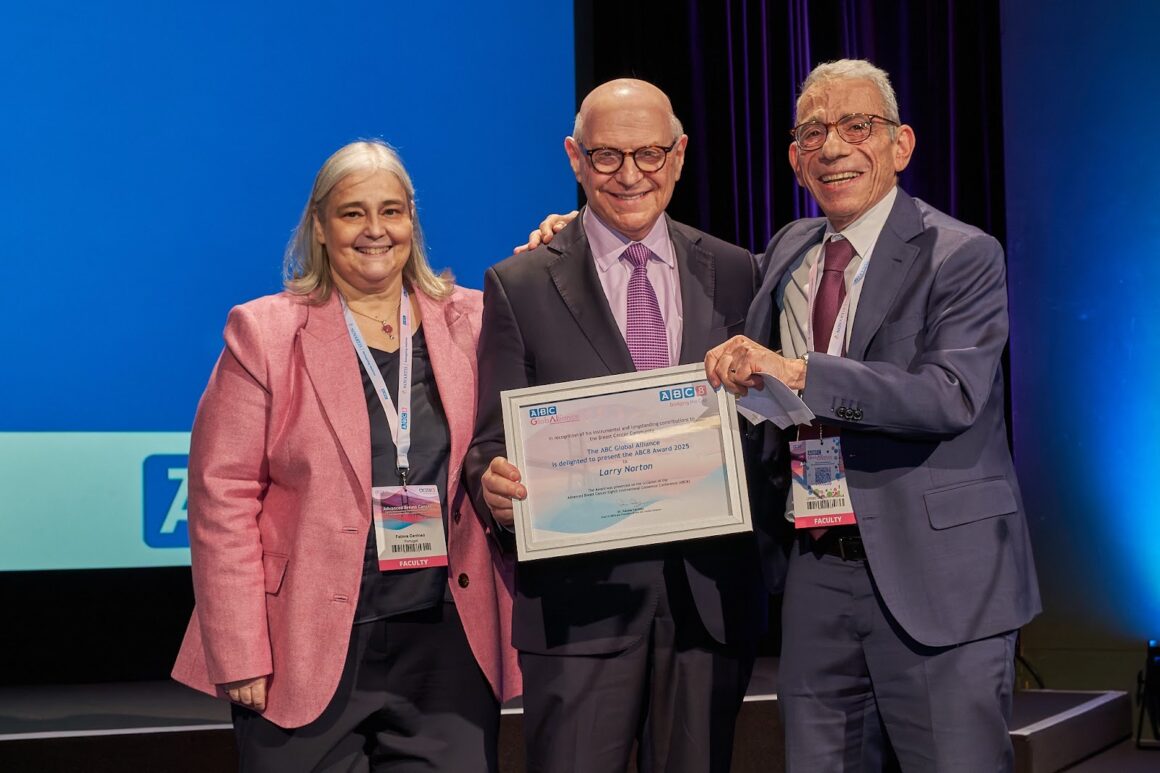
ABC Lifetime Achievement Award to Dr. Larry Norton
For Fatima Cardoso, recognising Norton’s contribution was not simply ceremonial. It was a reminder that advances in advanced breast cancer have been cumulative, built through sustained scientific commitment long before survival gains became visible in population-level data.
“Larry Norton has dedicated his entire career to improving the lives of people with breast cancer,” she said.
Norton is best known for developing the concept of dose-dense chemotherapy, grounded in mathematical modelling of tumour growth and resistance. At a time when metastatic disease was still largely viewed as uniformly fatal, his work challenged assumptions about treatment scheduling and demonstrated that altering timing, not just drugs, could improve outcomes without increasing toxicity.
That willingness to question established thinking resonates strongly with the philosophy that later came to define the ABC movement.
“He was always someone who aimed higher,” Cardoso noted, “who didn’t accept that controlling disease was enough.”
Beyond his scientific contributions, Norton has also played a crucial role in sustaining independent academic research. Through the Breast Cancer Research Foundation, he helped create a funding model that enabled global collaboration at moments when traditional public investment was limited, ensuring that innovation did not stall simply because it was difficult or unfashionable. “Larry has supported ABC from the very beginning,” Cardoso said. “In science, in advocacy, and in spirit.”
The award underscored a central theme of ABC8: that today’s improvements in survival did not appear suddenly, nor were they inevitable. They are the result of decades of persistence, of individuals willing to challenge complacency, and of a research culture that insisted advanced breast cancer deserved the same ambition as early disease.
For patient advocates like Claire Myerson, that historical perspective matters. Living with advanced breast cancer for many years has made her acutely aware that progress is fragile and that it depends on sustained commitment rather than short-term wins. “Nothing about where we are now was guaranteed,” she said. “People fought for this progress.”
Honouring figures like Norton, she argues, is not about nostalgia, but about accountability. “If we forget how hard it was to get here,” she said, “we risk settling too easily for where we are.”
In that sense, the Lifetime Achievement Award functioned as more than a tribute. It served as a reminder of the conference’s core message: ambition must be protected, whether it is directed at improving survival, reshaping systems, or ensuring that future breakthroughs reach every patient who needs them.
The ABC Global Charter 2025–2035: Ambition Tested Against Lived Reality
The launch of the ABC Global Charter 2025–2035 at ABC8 marked a pivotal moment, not a reset, but a reckoning. After a decade of real progress in survival, the updated Charter reflects a growing recognition that extending life is only part of the task. The harder challenge is ensuring that longer lives are livable, supported, and equitably planned for.
For Fatima Cardoso, the Charter’s ten goals were deliberately designed to move beyond a narrow clinical focus. “Every goal matters,” she said, “because they cover the whole life of a person, not just the cancer itself.”
The accompanying Global Decade Report makes clear why this broader framing is necessary: survival gains have not been shared evenly, and without structural change, innovation risks widening inequality rather than reducing it.
For Claire Myerson, the Charter is essential, but incomplete. From the perspective of someone living long-term with advanced breast cancer, what remains underdeveloped is recognition of durability. “Advanced breast cancer isn’t a moment,” she said. “It’s a long-term condition.”
She argues that systems remain oriented toward acute illness, even as more patients live for many years with metastatic disease. “We talk about access and quality of life,” she said, “but not enough about what happens five or ten years in.”
What she would add is an explicit commitment to sustained support, including employment protection, insurance continuity, mental health care, and financial stability over time. “Support shouldn’t disappear just because you didn’t die on schedule,” she said.
Myerson also stresses accountability, particularly around data. “If you don’t measure patient numbers properly,” she said, “you can’t design services for them, protect them at work, or fund what they actually need.”
Taken together, the Charter and the patient response to it capture the central tension of ABC8. The ambition is clear and the roadmap articulated. What remains uncertain is whether health systems and policymakers are willing to follow through, adapting structures built for short-term illness to a reality in which advanced breast cancer is increasingly a long-term condition. As Cardoso put it, “We now know that improvement is possible.”
Myerson’s addition makes clear what that knowledge demands: “If we are going to live longer,” she said, “then the system has to learn how to live with us.”