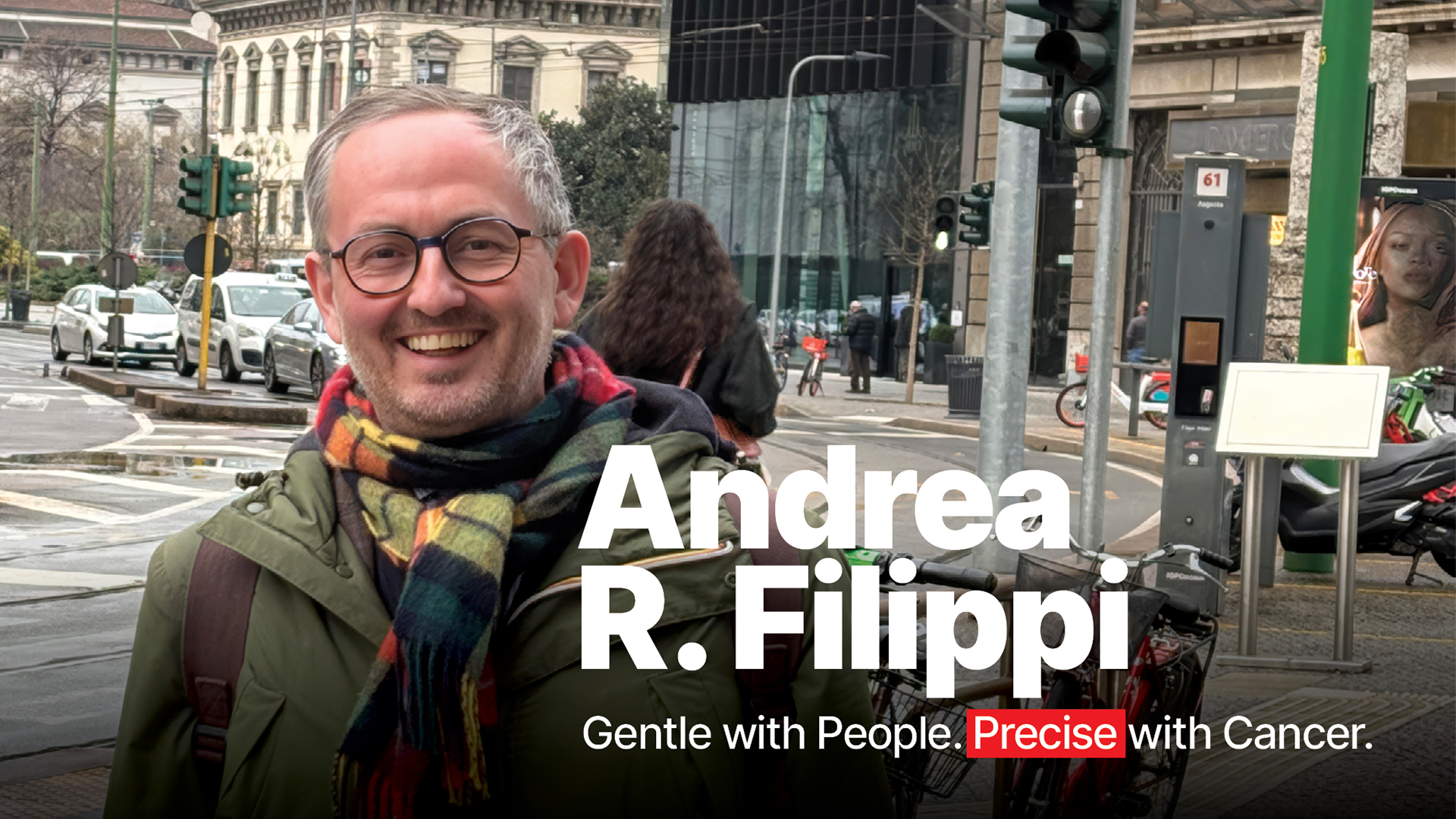
Each evening, after a day leading one of Italy’s busiest radiotherapy departments, Prof. Andrea Filippi, Head of the Radiation Oncology Unit at the Istituto Nazionale dei Tumori in Milan, and the Associate Professor of Radiation Oncology in the Department of Oncology at the University of Milan, walks from the cancer center to the station in Milan, earphones in, cello or piano in his ears.
“I listen to classical music while walking to the train,” he says. “It’s my way of distracting from the clinical part and all the issues of chairing a department.”
Minimalist composers like Philip Glass and Wim Mertens keep him company on the commute back to Turin. It’s a quiet ritual that hints at how he survives a job that demands emotional stamina, intellectual flexibility, and constant decision-making.
From Architecture to Oncology
Medicine was not the obvious destiny.
“Until eighteen years old, I thought I would become an architect,” he recalls. His father was an engineer, his mother had studied architecture; the path seemed set. Then a friend suggested he sit the medical school admission test “just to see.”
“I tried the test for medical school, and I was admitted with one of the highest scores,” he says. “My friend told me, ‘You got this score; you need to do medicine.’ So he convinced me.”
The eye for structure, for space, for design never left. It simply shifted from buildings to bodies, from plans on paper to plans on treatment consoles.
Stanford and the Realisation that Research and Care Can Be One
A summer at Stanford University changed not only how he saw radiotherapy, but how he saw the entire ecosystem around it.
“I saw a very different approach to patients,” he says. “It was normal to enroll patients in clinical trials during routine clinic. Research and clinical activity were not separate at all.”
“When I came back, I tried to find something similar,” he says. “It changed my perception: I realised I could do research while seeing patients and offer them new approaches, not only standard care, but something more.”
Back in Italy, working with mentors like Prof. Umberto Ricardi at the University of Turin, one of the first to introduce techniques such as stereotactic radiotherapy in Europe and Italy, especially focusing on lung cancer. Two decades later, he says, “What we now deliver in Europe and Milan is very similar to Houston, Stanford, or Boston.”
Italy, once more a follower, especially on the technological side, has become a hub.
“Less Is More”: Bringing Fragile Patients into the Center
Filippi’s most distinctive work has focused on patients who rarely sit at the center of clinical innovation: elderly, frail, comorbid people with lung cancer.
“It happened to me to meet many fragile patients doing the lung cancer radiotherapy clinic in Turin at the start of my career,” he says, “patients that most of the time are excluded from other clinical trials, and are also excluded from the standard of care because they cannot tolerate aggressive treatments, for example, concurrent chemo-radiation for an operable patient with stage III… They are often neglected, while they are willing to be treated with curative intent”
This philosophy went through the years, when he moved to Pavia in 2018 and then Milan in 2023, shaping the companion phase 2 trials DUART and DEDALUS. “We were driven by the idea that less is more,” he explains.
DUART tested radiotherapy plus immunotherapy, without chemotherapy, in very elderly or comorbid patients with unresectable lung cancer, some treated at doses traditionally considered palliative. The result: overall survival doubled compared with radiotherapy alone, with low severe toxicity.
One finding moved him deeply: “Elderly and fragile patients want to be included in clinical trials… I never heard a patient say, ‘I’m not interested.’ They want to get the best available treatment.”
DEDALUS explored an induction phase with chemo-immunotherapy followed by reduced-dose radiotherapy. “They are companion trials,” he says, “because the focus is on de-escalating treatment while maintaining efficacy and improving quality of life.”
The Future Topology of Radiotherapy
For Prof. Filippi, radiotherapy’s next evolution is defined by precision, not expansion. “We are moving away from very large fields and extensive prophylactic irradiation. Instead, we’re treating only primary tumors and involved nodes, through advanced image-guidance and hypofractionation.”
What will unlock the next leap, he believes, is the convergence with nuclear medicine. “Molecular imaging and radioligands are moving very fast. With cancer-specific tracers and PET-guided treatment, we can target metastases that light up because we’re using the right tracer. This will transform the field.”
Improved imaging allows for more targeted treatment. “You don’t need to be aggressive with radiation volumes and doses like before. You can be more precise, using radiation as a non-invasive, intelligent drug that you can deliver locally, adjusting the dose and volumes for each patient.”
Immunotherapy and Radiotherapy: A New Space of Combinations
His energy brightens when discussing systemic therapy. “There is enormous potential in combining many classes of immunomodulators with radiation therapy,” he says. First checkpoint inhibitors were a revolution, but only the beginning.
Oncology, he argues, is entering “a new revolution” driven by bispecific and trispecific antibodies and T-cell engagers for solid tumours, CAR-T cells, vaccines, agents far more refined than early immunotherapies. But he is clear-eyed: “We don’t know what will be the ideal combination… we need to wait.”
Still, he works with companies to explore radiation-drug combinations through nimble, focused trials. “They don’t need to be huge clinical trials; we need to find the best combination for single indications in smaller cohorts, and if the first findings are clearly promising, we can move forward with larger trials.”
Early signals are compelling. In different cancers, such as lung or head and neck, bispecific dual checkpoint inhibitors such as anti-PD(L1) + anti-TIGIT or anti-CTLA-4 (with many others under development) administered after RT showed promising effects, enhancing the immune response and, hopefully, also leading to dose reduction, as the synergy between radiation and the immune system might be optimized and allow for de-escalation.
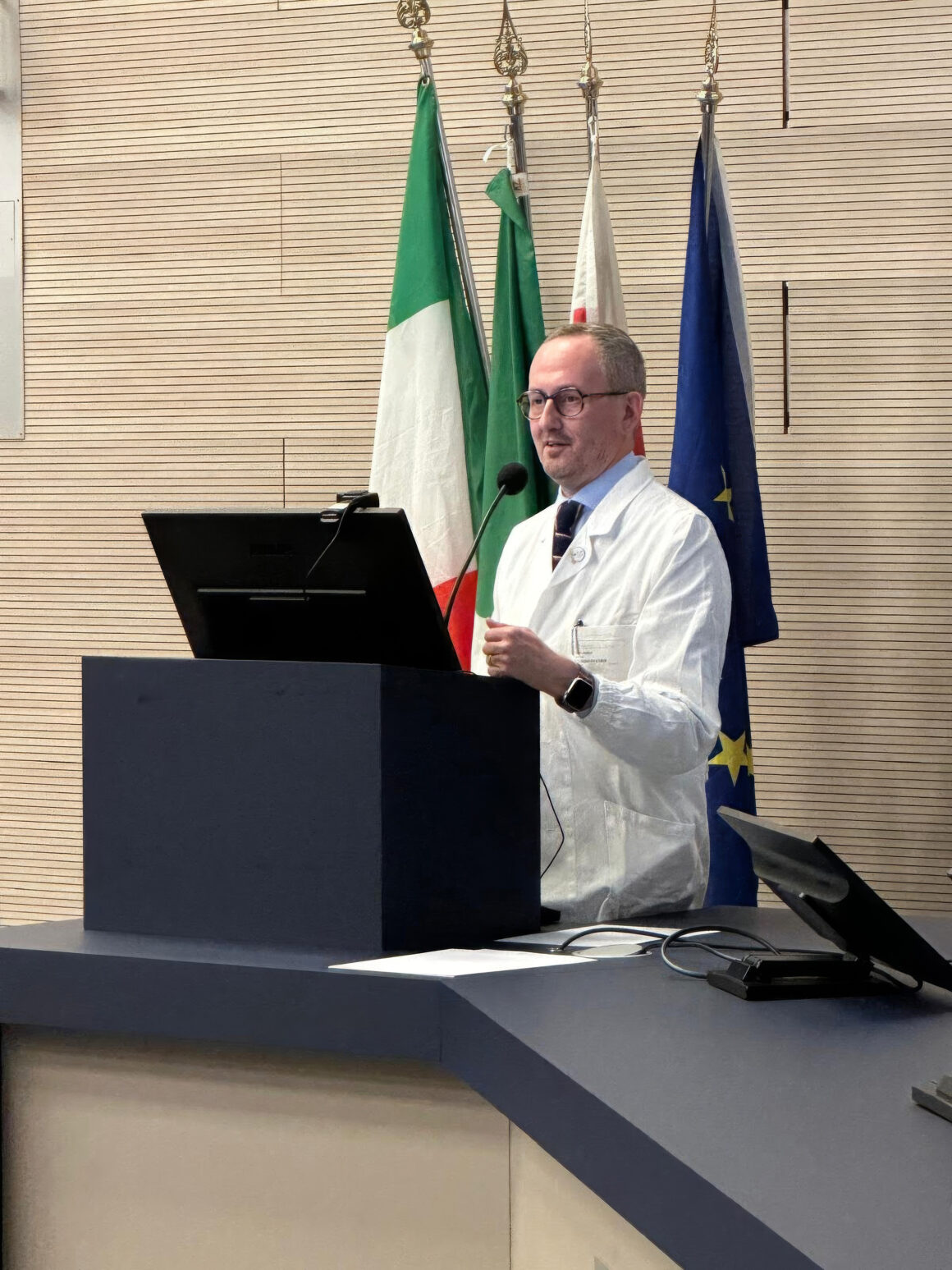
The challenge now is not only about ideas but also about building a platform for the radiation-drug development. “We have so many classes of new drugs, so many possible combinations, that you need a disease-specific, rational strategy focused on unmet needs.” Academic–industry partnership, he says, is essential: “Ninety percent of oncology research is driven by industry. We need to work together, and convince them to explore new combinations. That’s why we created inside ESTRO, the European Society for Radiation Oncology, a focus group dedicated to new radiotherapy-drug combinations, that I have the honor and pleasure to coordinate starting next year.”
AI in the Department: Faster, Smarter, but Not in Charge
Artificial intelligence is not something Prof. Filippi approaches with hesitation. Instead, he sees it as an accelerating force that will subtly, but decisively, reshape the daily mechanics of radiotherapy. In his view, the coming years will bring a quieter revolution inside treatment rooms, planning consoles, and tumour boards.
He imagines a workflow where many of today’s bottlenecks dissolve.
“AI will probably fasten and standardize the patient flow to the Radiation Oncology Department,” he says.
He envisions a workflow where automated contouring swiftly identifies targets, and machine-learning tools create treatment plans with significantly less manual effort. Delivery, whether through protons or photons, will become “very focused and able to dynamically target the tumors and to spare a lot of surrounding healthy organs.”
The integration of imaging and AI will revolutionize how we deliver radiation, but the fundamental principle remains unchanged. The main goal continues to be destroying cancer cells or modifying the microenvironment to improve the efficacy of systemic agents.
Radiation oncology, he argues, is utilizing only 5-10% of AI’s potential. The frontier lies in decision-making: determining who needs a specific combination, in what sequence, and when. “We need a deep understanding of what AI agents will tell us, and probably we need to be trained on how to use them, but this is a significant issue for the entire field of medicine, not just Radiation Oncology.”
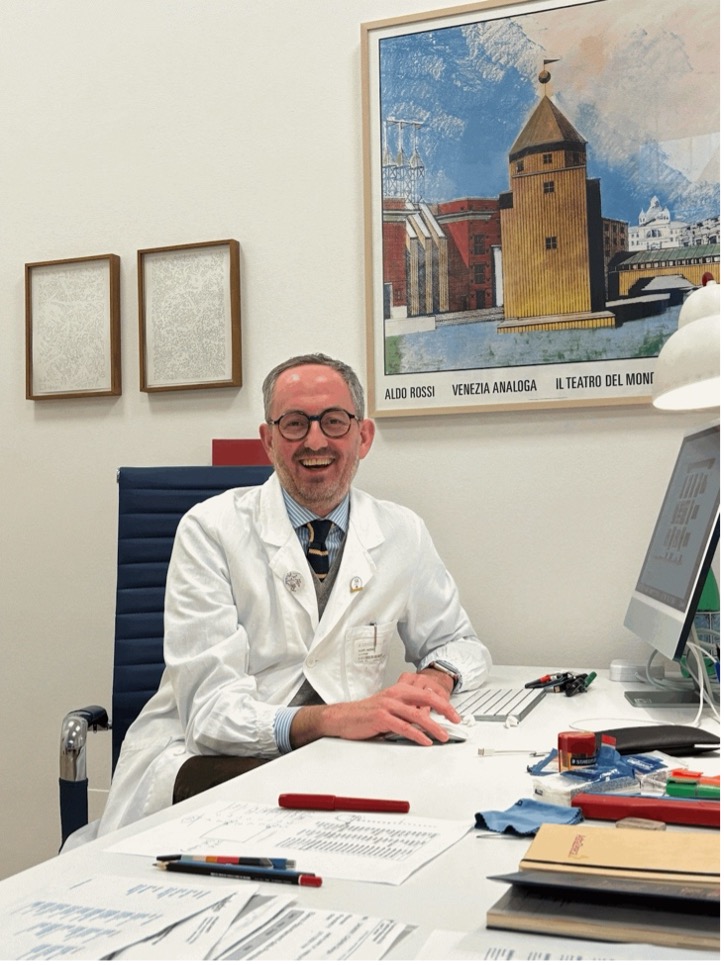
He sees AI as an assistant, never the lead clinician.
“It’s a co-pilot. It’s AI working with humans to change how we practice oncology and conduct research.” He is especially interested in virtual clinical trials, where AI creates a real-world control group for comparison. “At the end, you’re treating your experimental arm A, and you’re comparing it with a virtual control arm B… 100% of your patients will receive the new drug… it’s one of the many exciting innovations we hope to see soon,” he said.
Leadership as Dialogue
As the department head, he describes leadership as one of the most challenging and rewarding responsibilities. He states, “I love mentoring young oncologists. I am also an associate professor at the Oncology Department of the University of Milan, but you need to listen to more experienced colleagues too, and balance the team; it’s not easy”
Mentorship, in his view, is reciprocal. “The dialogue between different generations is beneficial because you learn a lot… You are not simply transferring knowledge from the older to the younger. In the end, you achieve something more. It’s a continuous dialogue.”
Clinical cases, he says, are the best shared language. “I try to make all my medical staff comfortable in discussing cases, and just knocking at the door if they have doubts… Oncology is becoming very difficult, and super-specialized: we all work in multidisciplinary teams dedicated to a single tumor entity, but sometimes there are specific issues related to your field, in my case radiotherapy, that may require complex answers.”
He encourages young colleagues to bring embryonic ideas. “Let’s write it down and think about it. Every idea is good in principle; then I can help find weaknesses and move it forward.”
What he refuses to accept is the culture of constant publication as an end in itself.
“In my opinion, excellence is not based on a competition between researchers over the number or frequency of publications; we all know that real progress needs constant effort, long times, discussing, rethinking, and then ending up in important clinical trials or translational research programs. This makes the quality and matters to science and patients: then all metrics will follow,” he says.
At the start of a career, he advises them, “Don’t think about publishing soon, but focus on pursuing the right project, working with scientists you trust most, traveling, seeking dialogue, creating networks, enjoying yourself, and then high-profile projects and publications will come.”
Clinical research, he adds, is also about timing and luck. “Sometimes a trial goes the right way, and it starts something new, sometimes not, but if they are of quality, they always help in moving forward.”
We Need a Global Strategy
When he speaks about global cancer care, his tone sharpens. The world is innovating rapidly, but unevenly. “We are talking about wonderful progress in the Western world and Asia… but half the world is completely out of that. It’s unfair.”
Real change, he argues, requires political commitment. Screening programs, infrastructures, HPV vaccination, and tobacco control cannot be delivered without international leadership. “I would put oncology among the top issues at the global political level.”
True progress relies on two key partnerships: industry–academia collaboration and patient-advocacy involvement. “For sure, it will be positive,” he says of deeper alignment. “Our job is to collaborate in designing a global strategy.”
The Blitz Round: Who is Prof. Andrea Filippi?
A quote you live by?
“The true elegance is simply to be gentle with people.”
Favourite book and movie?
Here, his Italian roots surface effortlessly. His favourite book is Ferito a Morte, Raffaele La Capria’s atmospheric novel of Naples, “a wonderful book,” and his favourite film is La Dolce Vita, Fellini’s iconic meditation on modern Italy.
A quality you most value in colleagues?
“Humour,” he says without hesitation.
The biggest myth about radiotherapy you’d like to dispel?
“That radiotherapy is more toxic than other treatments. Probably because we have the word radiation,” he says. “Even after thirty years of progress, colleagues still talk as if it’s more dangerous, when chemo or immunotherapy also have many complications.You just need to have good knowledge and clinical skills, interdisciplinary collaboration, and you can manage many side effects and deliver radiation in a very safe way.”
If not a doctor, what would you be?
He smiles. “An architect.”
Three words that describe you best?
“Gentle, creative… and I admit being a little bit absent-minded sometimes.”
Best piece of advice you ever received?
“To try to be courageous in medicine and sometimes take a little bit of risk to reach the best.”
Most inspiring people you have met in oncology?
He names two: Prof. Corrado Tarella, the haematologist from the University of Turin who taught him “how to imagine new solutions for patients when the guidelines don’t tell you anything,” and Roberto Orecchia, scientific director of the European Institute of Oncology in Milan“a radiation oncologist who has a great vision, placing radiation therapy in the right context and looking at what happens around.”
One thing people would be surprised to learn about you?
“I read a lot of poetry, and I’m also very interested in philosophy.” It sounds far from medicine, he admits, but for him, it isn’t.
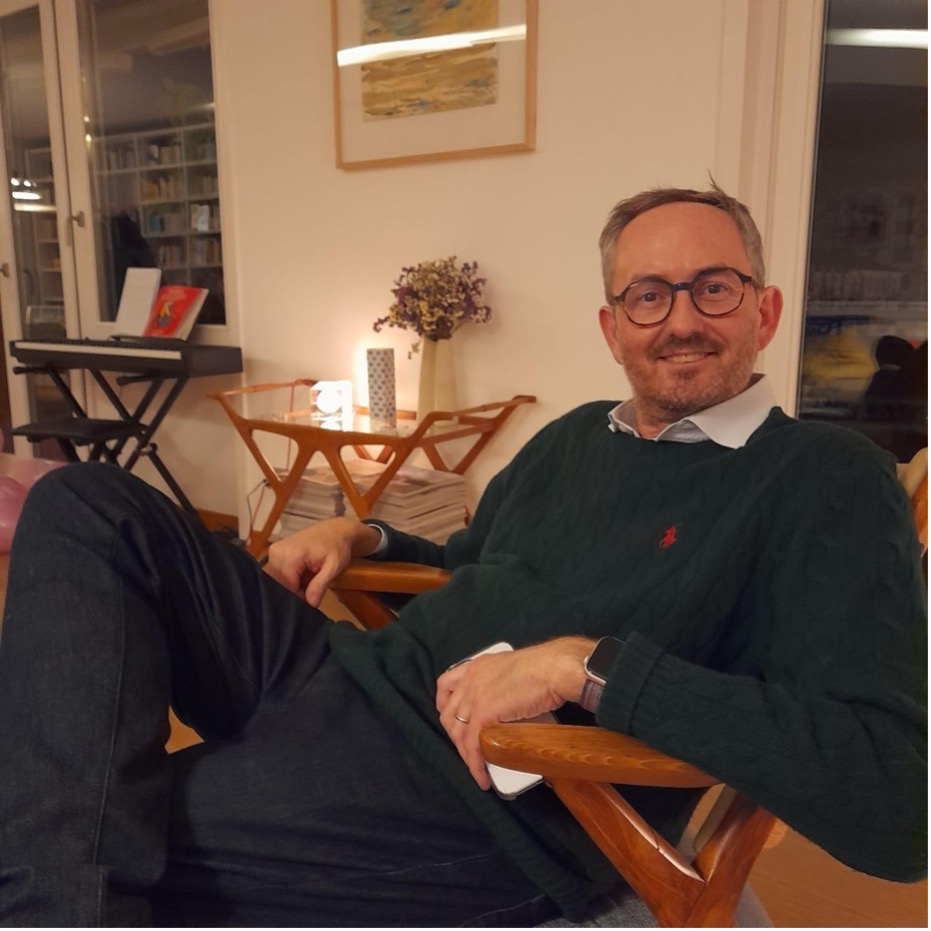
Prof. Andrea Filippi’s work steadily pushes radiotherapy toward a future that is lighter, more precise, and more inclusive of those who have been left at the margins.
He could have become an architect of buildings. Instead, he became an architect of care, designing treatments where, as he puts it, “less is more,” and where “you can be gentle in treatment, just as you can be gentle with people.”