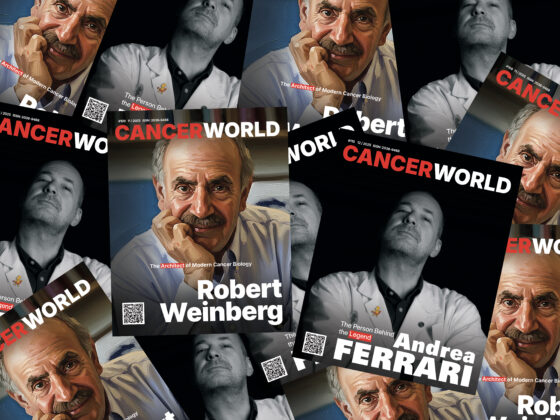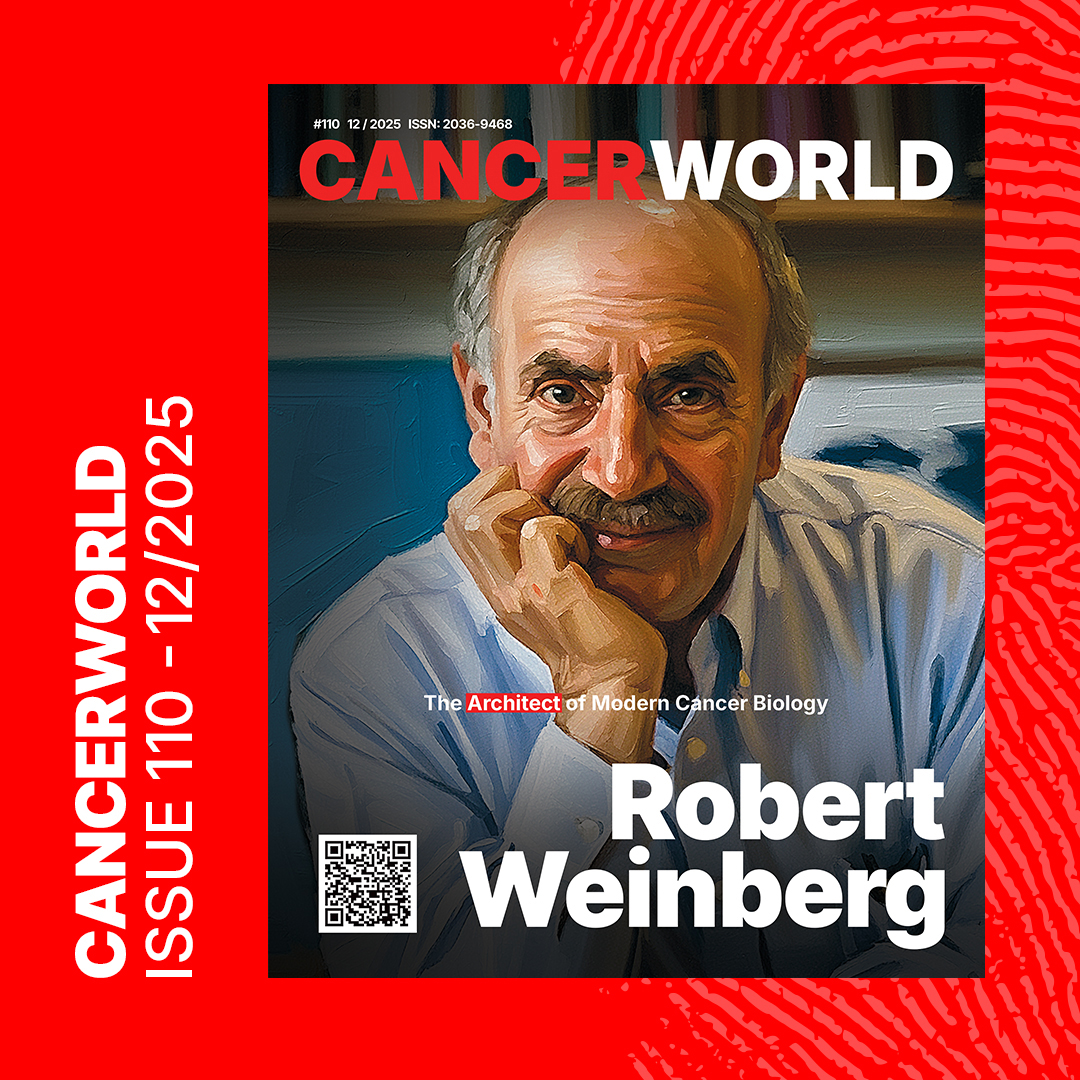
If you ask Robert Weinberg how his career began, he will not tell you a story of grand plans or carefully plotted ambition. He will tell you it was “a series of accidents.”
“Most people have a series of goals in life,” he says. “I just take one step after another.”
Those steps, taken almost casually, reshaped how the world understands cancer.
From Pittsburgh to MIT, and into the Molecular Revolution
Weinberg grew up in Pittsburgh, Pennsylvania, the child of German Jewish refugees who escaped Nazi Germany in 1938. His first language was not English but Eastern Westphalian German. “I spoke that long before I spoke English,” he recalls. To this day, when he speaks with relatives, he often still switches to German.
His path to science did not begin with a childhood dream of the lab. It began with parents watching their friends send their children to a school in Boston.
“Children of friends of ours sent their kids to MIT for undergraduate education,” he says. “My parents said, why don’t you try MIT. So I was admitted.”
At MIT, he found an environment that would define his life. There were many interesting things to learn, but one thing stood out above all. “Most importantly, I experienced the molecular revolution of biology as it was occurring in the mid-1960s,” he says. “That explains much of how I ended where I am.”
Early Science, “Unambitious Problems,” and the Road to Oncogenes
Weinberg tells the story of his early scientific work without embellishment. “I worked on some rather unambitious, uninteresting molecular biological problems,” he says, “like what was the structure of mammalian RNA.”
He then turned to studying tumor viruses, not out of an interest in cancer itself, but because of the viruses’ utility as tools. “I worked on different tumor viruses, not because they cause cancer, but because they have interesting molecular biological attributes,” he explains. They were a way to study messenger RNA and other molecules in a more tractable system.
The real turn toward cancer came later. “In the late 1970s, I became interested increasingly in cancers that were not induced by viral infection, but rather induced by certain mutagenic exposures,” he says. That curiosity led his lab, in 1978, to start looking for genes mutated in cells exposed to chemical carcinogens.
What happened next is now written into the canon of modern biology. “In 1979, for the first time, we were able to show that in certain cells that had been transformed from a normal to a neoplastic state, one could find mutated genes that were responsible for the neoplastic phenotype,” he recalls. Those genes could be considered what we now call oncogenes.
“That was my entrance with both feet into the field of molecular oncology,” Weinberg says. “And by the way, the most important thing I ever did in my career. Everything else was relatively minor in my opinion compared with that 1979 work, which is a bit depressing given the fact that it is already 45 years ago.”
MIT
Asked what was key to his success, Weinberg does not talk first about his own intelligence or originality. He talks about where he worked.
“One thing that was key to my success was being recruited back to MIT,” he says. “In the end, the big difference between successful and not so successful laboratories is not the characters of the individual scientists who are leading the labs, obviously that helps, but their ability to recruit smart, ambitious, hardworking young people.”
Here, he says bluntly, the playing field is not level. “If you are at MIT, it is easy to recruit excellent young researchers. If you are working in the middle of the United States, for example, the flyover countries as they call themselves, it is much more difficult.” Being at MIT meant he was “poised to be able to recruit some very smart young people,” and, he adds, “that made all the difference.”
Many of the truly original ideas did not come from him. “Indeed, many of the good ideas in my lab did not come from my brain, but from the brain of the young people whom I was fortunate enough to recruit,” he says.
“Good People to Work With”
Weinberg did not go out into the world to hunt for trainees. They came to him. “People wrote to me,” he says, “and then I began to do some research into them.”
He looked for signs of “intelligence and originality,” but there was another criterion that mattered just as much. “Equally important was that they were actually good people to work with,” he explains. “They were pleasant people. They were not disruptive. They were not so enamored by their own intellects as to disrupt the actions and the interactions within the laboratory.”
“Often, I received letters that said, this person is very smart and has gotten this and that done,” he recalls. “I called back the person who wrote the letter and said, that is all very good, but I do not sense any indication about his or her personality. How easy are they to get along with?”
For Weinberg, science has always been “a social activity.” The prospect of retirement does not make him worry about losing titles or positions, but about losing people. “To the extent that I retire, which will happen soon, it will mean that I miss the interactions with the young people who make and who have made my life interesting and enjoyable,” he says.
Over the decades, he estimates he has mentored “maybe altogether a hundred” scientists. “They are scattered across the world, all the way from China to Israel to Europe, majority in the United States,” he says. Most went into preclinical cancer research, some into clinical medicine, and others into teaching biology at universities. They form, in many ways, his real scientific legacy.
“Watson and Crick, I Stood on Their Shoulders”
“Already in the 1940s, scientists had begun to speculate that cancer cells were mutant cells,” he says when I ask whose shoulders he stands on. “Obviously, Watson and Crick, I stood on their shoulders. That is, DNA is a genetic material. Watson, in fact, lived until this year. He found the double helix in 1953 and just died now in 2025. Quite remarkable.”
Equally important was the generation of molecular biologists who, by the mid-1960s and into the 1970s, “characterized the molecular biology of mammalian cells.” Their work, he says, “enabled certain experiments to be undertaken that really distinguished them from prokaryotic cells.”
Here again, place mattered. “There was a whole field of science which I was surrounded by,” he says. “And I should add a second feature of being in a place like MIT. Not only could I recruit good people, but I could also learn from my colleagues around me at MIT from other laboratories. There was a lot of cross-fertilization going on.”
That cross-fertilization is not left to chance in his own group. “To this day, I force people in my laboratory to attend weekly meetings where we learn what is going on in other laboratories,” he says. “It is an obligation to go every week, whether they like it or not. I want my people to become generalists rather than simply deeply enmeshed in what they have been working on.”
The Hallmarks of Cancer, from Volcano Path to Global Reference
Every oncologist knows the title. Many have cited it more times than they can count. But The Hallmarks of Cancer did not begin as a commission. It began as a conversation on the side of a volcano.
Douglas Hanahan and Weinberg, both alumni of MIT, had been raised in an intellectual culture that expected fields of science to be built on simple, unifying principles. Physics had its laws. Chemistry had its rules. Biology seemed, by contrast, “a hodgepodge of different phenomena.”
“One elderly, cynical cancer researcher said to me, a Brit he was, he said to me, do not ever confuse cancer research with science,” Weinberg recalls. “The reason he said that was because it was a large collection of disparate, diverse phenomenologies.”
At a meeting in Hawaii, Hanahan and Weinberg slipped away and climbed up the side of a dormant volcano. “We began to have this conversation,” Weinberg says, “and during this trip, we said, maybe there are some principles of cancer that we could also enunciate that would be as important as, for example, Newtonian laws for physics.”
The idea remained an idea until 1999, when the editor of Cell invited Weinberg to write a review article for the new millennium. That invitation became the platform for the Hallmarks.
“When one writes a review article such as the Hallmarks of Cancer, one typically expects that the review article will disappear, as I often say, like a stone thrown in a quiet pond,” he reflects. “But much to my amazement, it and its successor, Hallmarks of Cancer 2011, actually attracted a lot of interest, maybe even 50,000 citations.”
He is not entirely sure why. “One may debate whether it was because it was such a fundamental innovation in thinking, or because it had so much information in it that it spared many authors the pain of having to cite a whole series of papers in the literature by just citing one paper,” he says. “I cannot know. In any case, it is certainly flattering to know that it actually caught people’s attention.”
Cancer Research “Stuck in the Mud,” and the Hope of Immuno-Oncology
With all the knowledge gathered since those landmark papers, where does Weinberg see the field today?
“Cancer research, and therefore also, to state the obvious, clinical cancer, is kind of, for the moment, stuck in the mud,” he says. Many cancers that were life-threatening a quarter century ago remain life-threatening now. “We know an enormous amount about what propels these cancers forward,” he says, “but we still have rather limited means to actually cure them.”
Perhaps we can “delay the inevitable death” in many cases, he says, but “never achieving a cure” in cancers such as pancreatic cancer, many kinds of stomach cancers, esophageal cancer and others. “In that sense, it is a bit frustrating.”
He does see one area that offers genuine hope. “The one hope I have for the future is that immune-oncology, that is, the ability to treat cancers with various kinds of immunotherapies, offers hope for the future,” he says. “So I think that is, for me, the most exciting area because of its continuing innovations.”
Data Without Insight, and what Science Should Really Aim for
Weinberg is not impressed by large datasets for their own sake. He is troubled by the gap between the volume of data and the clarity of understanding.
“You are pointing out a great disparity, a disconnect in modern current biomedical research,” he says when asked about the pace of real discovery. “I often ask people why they work on this problem or that problem, and they say, well, I can get lots of data. I can accumulate large amounts of information about this cancer or that cancer.”
Then he asks a second question. “What are the take-home lessons. What have you learned from these enormous data sets?”
The answers, too often, are vague. “There they mumble a little bit and walk away without answering,” he says, “because often our increasing knowledge does not lead to concomitant increased insights.”
For Weinberg, an insight is not a heat map or a network diagram. “For me, an insight is something that you can explain, a take-home lesson that you can explain in two or three sentences,” he says. “Many of those insights are few and far between at present.”
Advice to Young Scientists
Does he have advice for the next generation, the young scientists who grew up reading his work and want to become the next “Bob Weinberg”?
“I would not wish on them becoming the next Bob Weinberg,” he says quickly. “They should become themselves. Bob Weinberg is no paradigm for a goal.”
But he does have a clear view of what their science should aim for. “I would urge them to think about the following, that their science and their experiments should be dedicated to generating new insights that can be articulated in two or three sentences,” he says. “As I said before, you can explain what you have learned.”
If all one does is generate large datasets, he finds that “a bit unsatisfying.” It is not always possible to reach deep insights quickly, he acknowledges, but “those should really be the end goal of science, even if they cannot arrive at them instantaneously.”
“People need to be motivated to choose experimental paths that will allow them to generate new insights that can actually be described in prose, or as I call them, take-home lessons,” he says.
About Family
When the conversation turns to his family history, Weinberg draws an unexpected line of connection.
“I belong to an ethnic group like the Armenians that has been chased across the globe in various epochs,” he says. “In fact, it is said that the Armenians and the Jews look a lot alike. I cannot comment on that, but simply to say that I came from a family of German Jews who got out of Germany in 1938.”
He grew up in Pittsburgh, speaking Eastern Westphalian German at home. When he thinks about the history of Armenians in Turkey, he says, “I can think of a very similar kind of fate, that is referring to the Armenian Holocaust, which was grim and also probably led to the deaths of a significant proportion of the Armenians in the Middle East.”
“There are similar histories, obviously propagated from different ideas and in different settings,” he says, “but it is not an altogether happy thing to think about.”
He is deeply invested in understanding his own ancestors. “I am very invested in what my ancestors’ lives were like in Germany over the last 300 years, and why they suffered ultimately the fate that they did,” he says, “something I still cannot understand to this day.”
Building a cabin, learning with his hands, and discovering intelligence outside academia
Outside the lab, Weinberg’s great passion is not a hobby in the conventional sense. It is a place he built.
“In 1975, when I met my wife, I showed her a piece of land that I had just bought in New Hampshire,” he recalls. “I pointed to a spot, and I said, on this spot here, we are going to build a cabin. She looked at me as if I was a wild man.”
They built it anyway. As the cabin grew, so did his skills. “I learned skills of carpentry and electrical work and plumbing and roofing and installing windows,” he says. “So if you need a house built, Weinberg should be your man, an expert in the skills of home building.”
He added gardening to this second life. “After 50 years, we actually have a pretty nice place in the woods of New Hampshire, which is my passion,” he says.
He is convinced that without this escape, he would have been a very different person. “It is good to be able to escape from one’s profession and move into an entirely different world that demands different skills and different types of interactions with people,” he says.
Those interactions also changed how he sees intelligence. “One of the things that it taught me was, actually, there are lots of people in this world who are highly intelligent, very competent, as indicated by the way they build, they use their hands,” he says, “but they do not show up in academia, which is a humbling idea.”
Books
On books, Weinberg is not eager to promote himself, yet he is honest about what he thinks matters.
“Maybe The Double Helix by Watson and Crick,” he suggests first. Then he mentions his own textbook. “I actually published a textbook, The Biology of Cancer, that has been well received,” he says. “I do not mean to promote that because that would seem to be a little self-aggrandising, but I am giving you an honest assessment.”
What he really wants to emphasize is the need for rigorous foundations. “In order to do good cancer research, people need to have a pre-existing rigorous education in molecular biology and cell biology and genetics,” he says. “Simply jumping in with both feet is not going to land them into a very propitious position where they can really start advancing quickly.”
“There needs to be a pre-existing, underlying and highly cultivated expertise in biochemistry, cell biology, genetics, and all the other aspects of modern biology,” he insists.
On Leadership
Weinberg resists the label of leader. He tells a story from MIT to illustrate it.
“Years ago, a vice president of MIT said to me, Bob, why don’t you move yourself into a leadership position,” he recalls. “I said to him, he had a thick Greek accent, I said, Constantine, I am not a leader of men.”
The vice president looked at him and, with a sense of humor, replied, “What are you then, a leader of women?”
To the extent that Weinberg has a leadership style, it is quiet and systematic. “When somebody comes new to my lab, I ask them to sit at work, talk with everybody in the laboratory, and then come back to me two or three weeks later and ask them what would they like to work on,” he says.
The ideas that come back fall into categories. “In one, I will say, that is totally unworkable, it will not happen. Or I will say, somebody else in the lab is already working on it, there will be competition,” he explains. “Or I will say, actually, that is very original. It may be rather challenging, but let us see what happens over the next six months.”
He does this intentionally. “I allow them to develop their own research trajectory, so that they can take ownership of what they are doing,” he says.
That ownership does not end when they leave. “When people leave my lab, they take their projects with them,” he emphasizes. “Because they have worked on them, and they own them, in my eyes.”
The long-term goal is not papers but people. “That is part of my style of leadership, which in the end has the goal of making the people who leave my laboratory into independent researchers,” he says. “If I do not succeed with one of my trainees or another, then I think of myself as having failed.”
***
If he has to describe himself in one sentence, Weinberg replies quickly.
“A short, stocky, noisy Jew,”
For a scientist who never set out to be a giant, Robert Weinberg has spent a lifetime showing that the real work of science lies not in the size of the data, but in the clarity of the insight, and in the generations of people you empower to think for themselves.