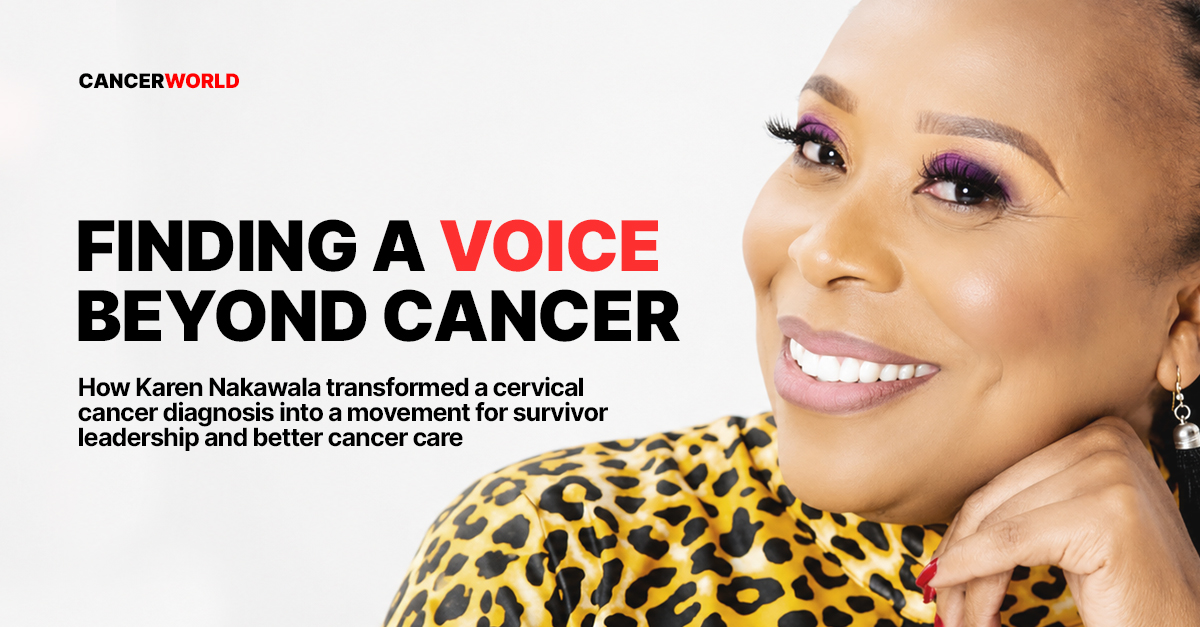
Karen Nakawala spent decades telling other people’s stories.
As one of Zambia’s well-known broadcasters, she knew how to command a microphone, connect with audiences and give voice to people whose experiences might otherwise go unheard. Whether presenting a live radio programme, hosting national events or championing Zambia’s fashion industry, storytelling had always been at the heart of her life.
Then, in 2019, she became the story herself.
A diagnosis of cervical cancer divided her life into what she now calls two chapters: before and after.
“My first thought wasn’t treatment,” she recalls. “It was that I was going to die and leave my children without a mother.”
During the difficult months that followed, Nakawala searched for another woman who had survived cervical cancer—someone who understood the fear, uncertainty and loneliness that come with hearing the words you have cancer.
She found almost no one.
Today, as founder of Teal Sisters, Nakawala has become one of Africa’s leading voices for cervical cancer awareness. Her organisation has helped hundreds of thousands of women find information, support and, perhaps most importantly, the confidence to tell their own stories. Recently, Karen received the President’s Insignia of Honour for her work in cervical cancer advocacy in Zambia and beyond.
But before she became an advocate, she first had to find her own voice.
Learning to Find Her Voice
Nakawala traces the foundations of her advocacy back to her childhood.
Raised by a single mother, a teacher whose life was grounded in faith, resilience and service to others, she learned early that difficult circumstances should never define a person’s future.
“My mother always said there is no circumstance bigger than any person,” she recalls. “Sometimes all people need is a push in the right direction.”
Her maternal grandfather reinforced those same lessons, teaching perseverance, compassion and hope.
As a child, Karen imagined a very different future.
She loved singing, dancing and fashion. Her mother designed many of her dresses, encouraging her creativity and imagination. Looking through magazines, she dreamed of one day living a glamorous life.
“I thought I was going to be a singer,” she says with a laugh.
In many ways she was right.
She would spend much of her life on stage.
Just not the stage she expected.
One moment in primary school changed everything.
A classmate failed to appear for drama rehearsal, and Karen’s teacher asked her to step in.
She had a stammer.
She had never imagined speaking before an audience.
“I was terrified,” she remembers.
The teacher gave her one instruction.
“Just use your own words.”
She did.
From that moment she became the student chosen to perform in school plays, deliver speeches during national celebrations and represent her school before large audiences.
Without realising it, she had discovered the gift that would shape every chapter of her life.
A Communicator Before She Became an Advocate
Although many assume she studied journalism, Nakawala never trained as a journalist.
“I think journalism found me,” she says.
In 2003, while working for a private company, she was asked to present a radio programme explaining a new product. After hearing only a couple of broadcasts, the owner of one of Zambia’s largest private radio stations approached her with an unexpected offer.
“I want you on the radio.“
He recognised her natural ability to communicate, connect with callers and tell stories.
More than twenty years later, she still presents her weekly Sunday programme.
Communication became more than a profession.
It became the way she built relationships and connected with communities.
At the same time, she established herself as an entrepreneur, leaving formal employment at the age of 38 to create what became Zambia’s largest fashion event.
“You can’t keep a creative mind in a box,” she says.
She travelled across Africa promoting local designers and proudly wore Zambian fashion.
“I literally became a walking billboard.“
Looking back, she sees that both journalism and fashion had prepared her for something much bigger.
Both were about creating platforms for voices that deserved to be heard.
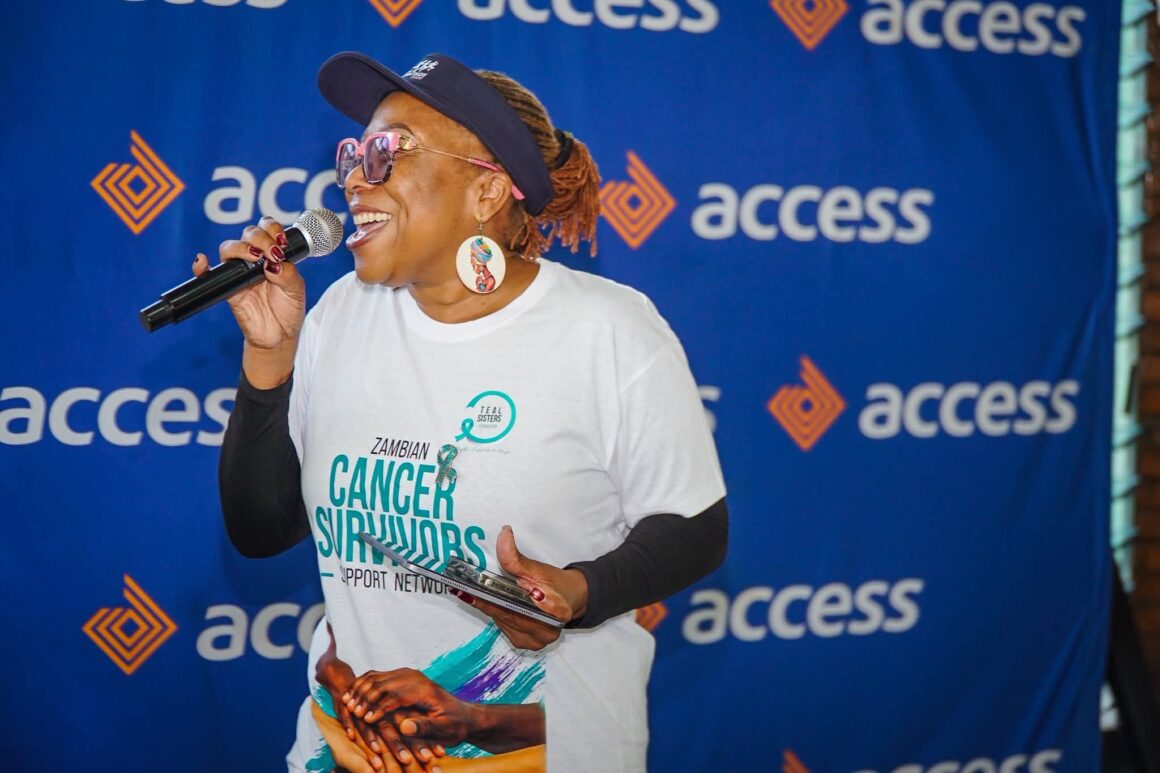
Talking to survivors
When Life Changed
Before her own diagnosis, Nakawala knew very little about cervical cancer.
“I had very little information,” she says. “And for someone like me, being in the media, that was sad.“
Like many women, she knew the disease existed, but never imagined it would affect her.
Then, in 2019, everything changed.
The words you have cervical cancer stopped time.
“It was like being in a time capsule,” she says. “The world just stopped moving.“
Fear, anger, uncertainty and disbelief followed.
Cancer, she says, divides life into two parts.
“The before and the after.“
Her greatest fear was not treatment. It was leaving her daughters without a mother.
Fortunately, her cancer was diagnosed early and treatment was successful. But the emotional journey proved far more difficult.
She searched for another cervical cancer survivor who could help her understand what lay ahead.
“There weren’t many women who came out and said, ‘I’m a cervical cancer survivor,’” she says. “Cancer can be a very lonely journey.“
Later she discovered something that transformed her grief into purpose.
Cervical cancer is largely preventable.
“There is actually a vaccine,” she says. “I just said, ‘I have to let women know.’“
She also realised why so many women remained silent.
“In Africa, anything below the belt, you don’t talk about freely.“
Many women blamed themselves. Others delayed seeking care because symptoms were attributed to myths, shame or even witchcraft.
Nakawala understood that silence was costing lives.
“I realised that if I was going to help anybody, I had to tell my story. I couldn’t tell it to one person. I had to tell it to many people.”
Building Teal Sisters
The idea was simple.
Encouraged by her doctor, Nakawala created a Facebook page where women affected by cervical cancer could ask questions and support one another.
She expected perhaps 50 women to join. The following morning there were already more than 1,000. Within two weeks, membership exceeded 60,000. Within a month, more than 100,000 women had joined.
“They were asking where they could get screened, what the symptoms meant and how they could protect their daughters,” she recalls.
Searching for a name, she looked up the colour associated with cervical cancer awareness.
Teal.
The Facebook page became Teal Sisters.
Soon it became much more than an online community.
Recognising that many women living in rural Zambia had little access to social media, Nakawala registered Teal Sisters as a foundation, expanding its work into awareness campaigns, survivor support, community outreach and policy advocacy.
“It wasn’t enough to reach the women online,” she says. “We had to reach the women who were never going to see Facebook.”
From Survivor to System Changer
One day a hospital called with unexpected news.
“Karen,” they told her, “you’ve created a very big problem.“
Women inspired by Teal Sisters were arriving for cervical cancer screening in such large numbers that the hospital was running out of screening supplies.
She smiles remembering the conversation.
“For me, that’s a good problem.“
Another moment has stayed with her ever since.
A woman approached her in a shopping mall, fighting back tears.
After watching Nakawala speak about her symptoms in a video, she recognised the same warning signs in herself and sought medical care immediately.
Her cancer was diagnosed early.
“You saved my life,” the woman told her.
For Nakawala, those encounters remain the greatest reward.
Today, her work extends far beyond awareness campaigns.
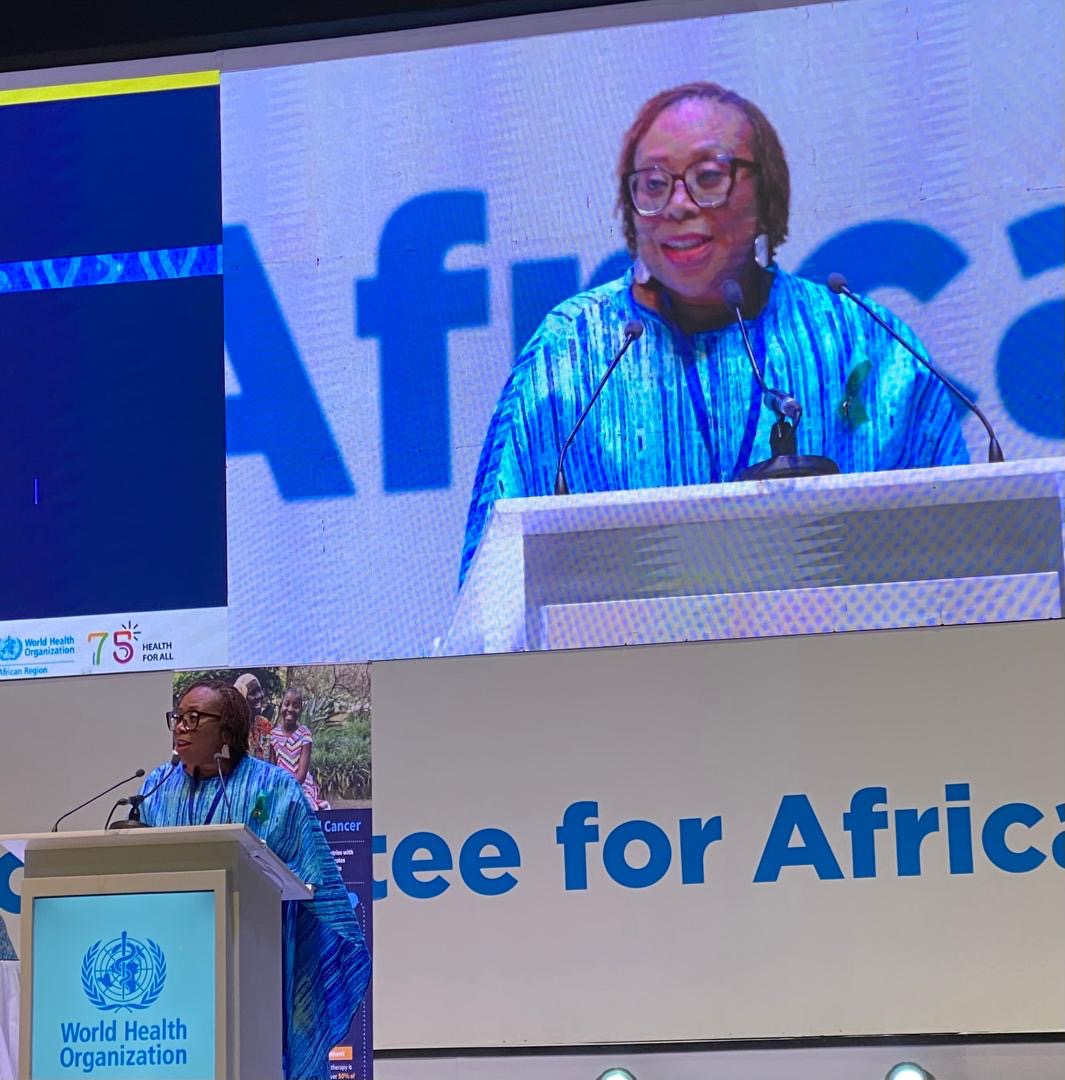
WHO 75th Regional Meeting
She collaborates with government, healthcare institutions and international organisations to improve cervical cancer prevention, survivor representation and patient-centred care.
“The story is no longer my story,” she says. “It’s the story of millions of women.“
She believes health systems must listen more carefully to patients.
“We talk about graphs. We talk about numbers. But sometimes we forget the human cost.“
For Nakawala, better cancer care cannot be designed without the people who experience it.
“The solutions have to be rooted in the lived experiences of the people they’re meant to serve.“
She also believes care must be culturally grounded.
Communities differ.
Beliefs differ.
Messages that work in one place may fail in another.
Listening, she argues, is as important as educating.
Today she mentors other survivors, encouraging them to become storytellers themselves.
“I want them to become storytellers and agents of change.“
Looking Forward
Success, Nakawala says, is not measured by recognition.
It is measured by a future where no woman dies from a cancer that can be prevented.
A future where girls receive HPV vaccination, women have access to timely screening and treatment, and geography no longer determines survival.
She also remembers the woman who gave her hope when she needed it most—American cervical cancer survivor and advocate Tamika Felder, whose online rvivor community became her lifeline during treatment.
“If it wasn’t for her,” Nakawala says, “I think I would have had a very, very long journey.“
Years ago, Karen Nakawala searched desperately for another woman willing to say, “I survived cervical cancer.”
She found almost no one.
Today, through Teal Sisters, thousands of women no longer have to search alone.
“I decided I needed to become the person I was looking for.”
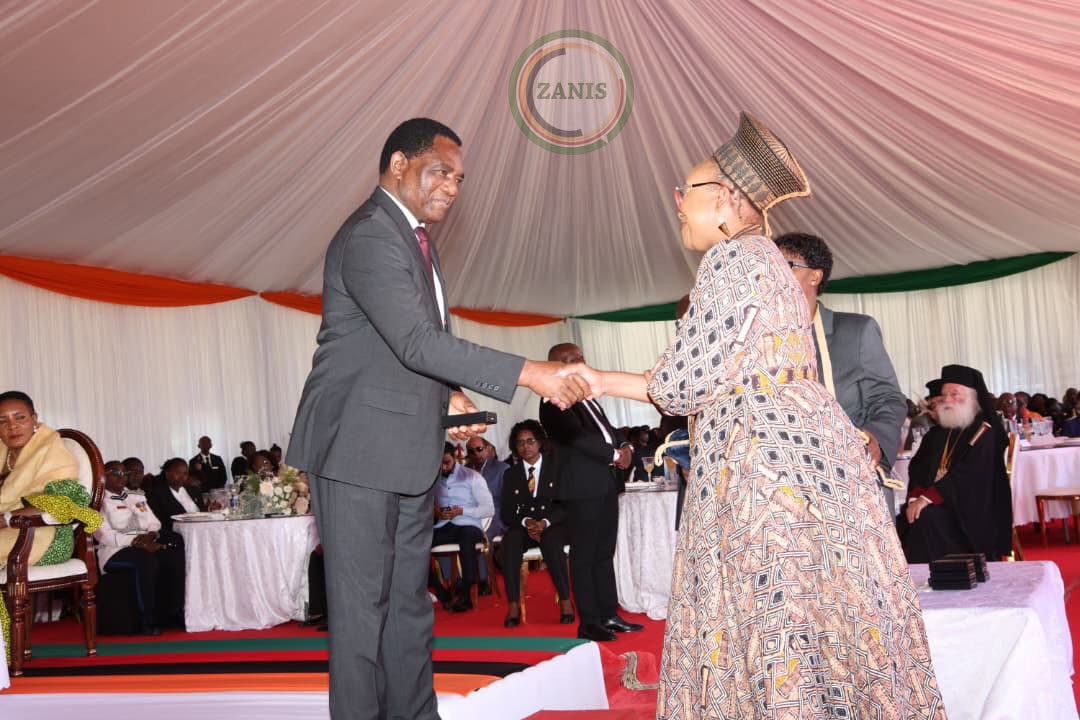
President Hakainde Hichilema presents an award to Karen Nakawala during the Africa Freedom Day investiture ceremony at State House
In doing so, she transformed her own diagnosis into something much larger: a movement that is changing how women understand cervical cancer, how survivors support one another, and how health systems begin to recognise that the most meaningful solutions are often found by listening to those who have lived the experience.
About the Author
Knarik Arakelyan, PhD, is a psychologist and communications professional with over 14 years of experience in public relations, health communication, and public awareness campaigns. She is currently the Managing Editor of “CancerWorld“ magazine, Head of the “OncoDaily TV,” and serves as PR and Communications Officer at “EMERTÉ” Clinic.