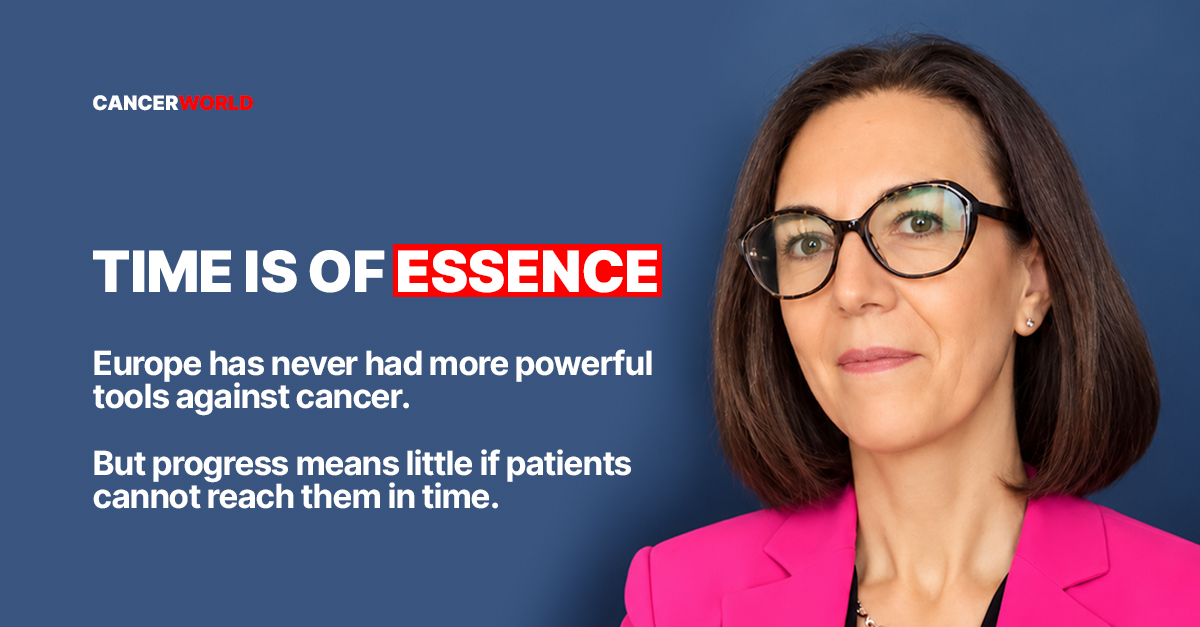
Europe has never had more powerful tools against cancer. But progress means little if patients cannot reach them in time.
Cancer has never moved at the speed of bureaucracy.
Today, science can identify molecular alterations that were once invisible. Biomarker testing can help determine treatment choices. New therapies are expanding possibilities for patients, while cancer has secured an increasingly prominent place on Europe’s political agenda.
And yet a patient can still live in the wrong country for a test.
Wait too long for a diagnosis.
Never be told that biomarker testing exists.
Be unable to access a treatment already made possible by science.
Or survive cancer only to discover that the healthcare system designed to save their life has far less to offer them afterwards.
This is one of the defining contradictions of cancer care today.
We know more. We can do more. But not everyone can benefit equally from what we know and what we can do.
For Antonella Cardone, CEO of Cancer Patients Europe, this is where the real measure of progress begins.
“So many people do not feel the benefits of progress in cancer care in their everyday life.”
And when asked what she wishes every policymaker understood about being a cancer patient, Cardone reduces an extraordinarily complex policy challenge to four words:
“Time is of essence.”
Because behind every discussion about screening coverage, reimbursement, biomarker testing, health technology assessment or access to innovation is something much less abstract.
There is a person waiting.
Becoming an Advocate by Decision
Cardone did not enter patient advocacy because of her own diagnosis.
She chose it.
An engineer with an MBA, she encountered the voluntary sector in Italy almost by chance. What began with volunteering developed into professional work within one of the country’s largest voluntary organisations, followed by international work on social and health issues, including tobacco control.
Her career later took her to the American Cancer Society and eventually into cancer patient advocacy.
But Cardone makes an important distinction about how that journey began.
“I became a patient advocate, not by chance, not because I had a condition, but by decision.”
Over time, however, the professional became deeply personal.
Her mother was diagnosed with cancer and died within six months. Later, her sister developed cancer and recovered. Then, two years ago, a serious accident placed Cardone herself inside the healthcare system in a different way.
Being an advocate, being a caregiver and becoming a patient gave her different perspectives on the same system.
And they reinforced a lesson that no policy document can fully capture:
“Every patient is unique. So, there is no standard patient, no standard decisions.”
It is a simple statement with profound implications for healthcare.
A diagnosis may be clinically defined, but the person receiving it cannot be reduced to a diagnosis.
Age, family, work, finances, geography, personal priorities and the particular moment in life when cancer arrives all influence what matters to an individual patient.
Cardone is equally clear about another assumption healthcare must confront: professionals cannot automatically speak on behalf of patients simply because they understand their disease.
Patient organisations face the same responsibility. Even when advocating collectively, she says, generalisation is difficult because every person brings different circumstances and preferences.
Expertise about cancer is not the same as expertise about another person’s life.
When Progress Exists, But Patients Cannot Feel It
Europe has made cancer a major political priority.
Cardone describes Europe’s Beating Cancer Plan and the Cancer Mission as groundbreaking achievements. Yet the distance between political ambition and everyday reality remains substantial.
Persistent inequalities affect access to screening, early diagnosis, biomarker testing, treatment and survivorship care.
“The implementation is uneven and often under-resourced at the European level.”
Screening illustrates the problem.
Targets for timely diagnosis exist, yet patients in some countries still encounter later detection, longer waiting times and fragmented pathways. Cardone points to a nine-fold variation in breast cancer screening uptake across countries, with particularly low uptake in Bulgaria and Romania and much higher uptake in Portugal, Sweden and Finland.
The same divide is becoming increasingly important as oncology moves towards precision and personalised care.
Science is advancing.
Access is not advancing equally.
“We have very important new treatments, but they are not always accessible.”
Biomarker testing, genomic profiling and digital tools may be available in principle, Cardone says, but they remain far from routine across all countries and regions.
Sometimes patients do not even know the option exists.
Cancer Patients Europe recently conducted a survey looking specifically at ESR1, a mutation relevant in metastatic breast cancer. According to Cardone, 70% of respondents were unaware of biomarker testing.
That figure exposes something larger than an information gap.
A test may exist.
A treatment may exist.
A scientific breakthrough may exist.
But unless the patient who needs it can actually reach it, the journey from discovery to impact remains unfinished.
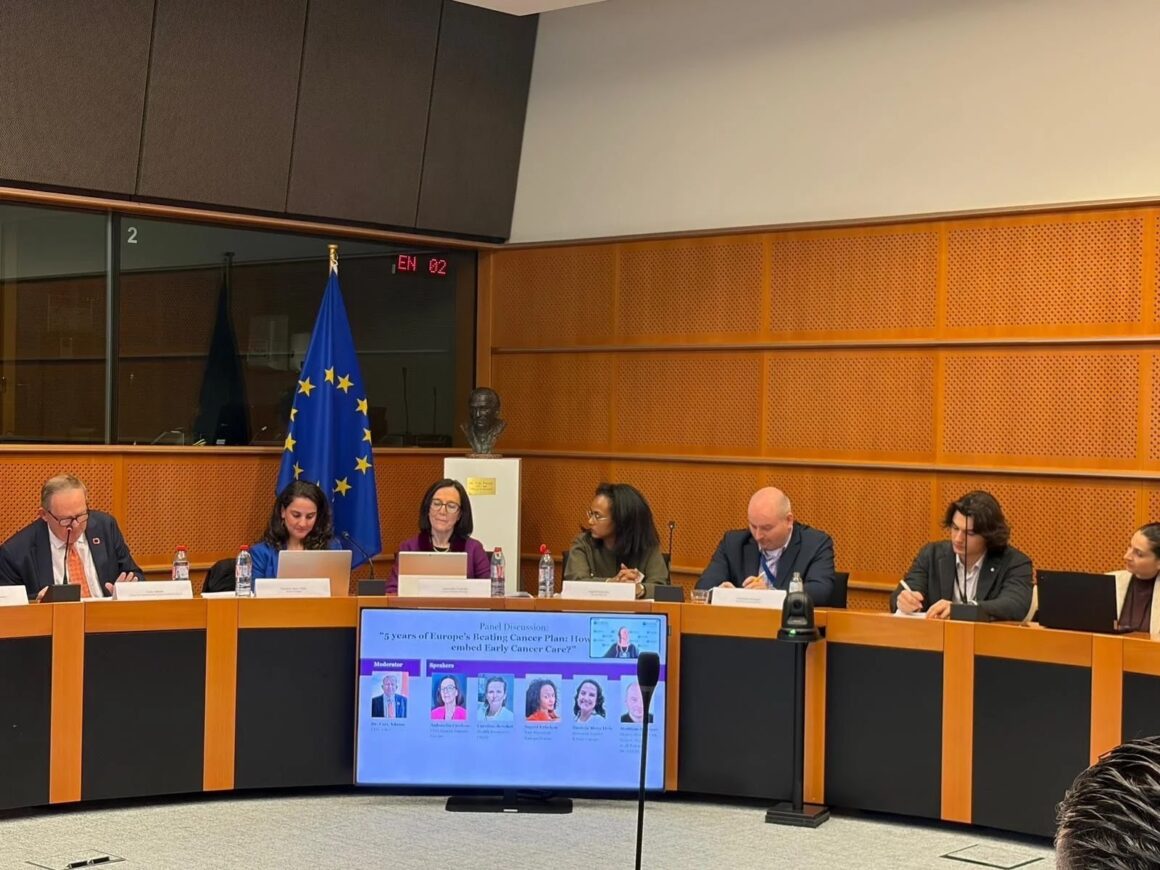
Round table organised by Mission Early: “Beating Cancer Early: From Evidence to Action”
Why Geography Still Determines Opportunity
Cancer inequality does not have a single cause.
European health systems differ substantially in funding, organisation and capacity. Investment in prevention and early detection varies. Some countries have robust screening and awareness programmes; others have more limited coverage.
Innovation also travels at different speeds.
EMA-approved therapies, biomarker tests and digital tools can reach patients at very different times depending on national reimbursement arrangements and infrastructure.
Then there are the circumstances surrounding healthcare itself.
Poverty, education and geography can influence awareness, the ability to reach healthcare facilities, adherence to treatment and a person’s capacity to navigate increasingly complex systems.
Cancer inequality is therefore rarely one barrier.
It is often one barrier layered upon another.
Cancer Patients Europe is working across several of these areas. Cardone points to its involvement in Joint Clinical Assessments and Joint Scientific Consultations, where the organisation contributes patient perspectives and advocates for changes to the system.
The organisation is also addressing international pricing approaches that, it argues, could delay access to innovative treatments in countries with lower purchasing capacity and consequently widen existing inequalities.
For Cardone, however, Europe must also confront another question:
How will today’s cancer ambitions survive tomorrow’s political cycle?
What Happens after Europe’s Beating Cancer Plan?
Europe’s Beating Cancer Plan has mobilised political attention, resources, initiatives and data.
But plans have timelines.
Cardone is concerned about what happens to that accumulated work when the current resources and implementation period come to an end.
“What’s going to happen with the incredible legacy to cancer, to all the work that has been put into its development and implementation?”
One proposal being advanced by Cancer Patients Europe is greater attention to health within the European Semester, beginning with cancer.
The attraction, Cardone argues, is that Europe does not need to invent an entirely new mechanism.
Much of the information already exists.
The European Cancer Inequalities Registry and other European-level sources have generated substantial data. National cancer plans already provide frameworks that could help monitor implementation and indicators.
“There is no need to create new data. The mechanism is there.”
The question is whether Europe can turn existing knowledge into sustained accountability.
Because the success of a cancer strategy should ultimately be measured not by how ambitious it was when announced, but by what remains after the programme itself has ended.
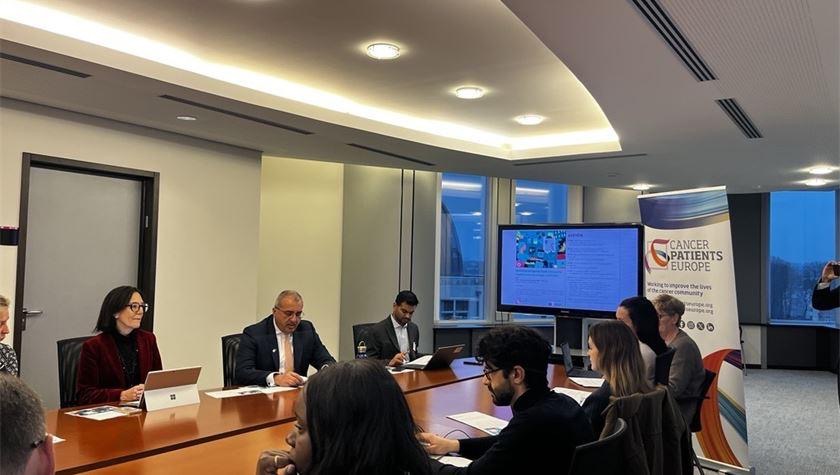
A high-level policy event at the European Parliament in Brussels organised by Cancer Patients Europe (CPE)
Patients Should be There Before the Decisions are Made
Few phrases in modern healthcare are used more frequently than putting patients at the centre.
But Cardone draws a sharp distinction between saying patients are central and giving them genuine influence.
For her, meaningful involvement means co-design.
“Patients should be involved from the start in designing policies, pathways, research priorities and evaluation frameworks, not only asked for feedback at the end when we do not even know how this feedback is taken into consideration.”
That distinction changes everything.
Consultation asks patients to comment on something someone else has already created.
Co-design allows them to help determine what should be created in the first place.
Cardone argues that patient advocates and organisations need recognition, formal representation and clearly defined roles.
And she goes further:
“Involvement in decision making should be mandatory and not voluntary.”
Too often, she says, patient involvement remains symbolic, fragmented or concentrated around awareness campaigns rather than the decisions that determine how care is designed and delivered.
She describes some of what still happens as a “tick-the-box exercise.”
That suggests a different test for institutions claiming meaningful patient involvement.
The question should no longer simply be:
Were patients consulted?
It should be:
What changed because patients were there?
Survival Cannot be the Only Measure of Success
For decades, survival has been one of oncology’s defining measures of progress.
It remains fundamental.
But it cannot describe the whole experience of cancer.
A person may survive and still struggle with psychological consequences.
They may be unable to return to work.
They may experience financial toxicity.
They may live with long-term or late effects that change their independence and participation in society.
They may need supportive or palliative care long before the end of life.
If healthcare systems genuinely want to know whether people are living well during and after cancer, Cardone argues, they need to look beyond survival.
Cancer Patients Europe has worked across quality of life, nutrition, mental health and psychological well-being, the right to be forgotten, return to work and other aspects of survivorship.
Cardone points to initiatives in Belgium and the Netherlands that help patients and survivors return to employment during and after treatment as examples of more person-centred support.
Long-term and late effects must also be taken seriously because of their impact on social participation and autonomy.
And palliative care, she stresses, must not be treated as something reserved for the final days of life.
“Access to palliative and supportive care is crucial. Not to be considered just as end-of-life support, but throughout the treatment.”
The implication is fundamental.
Saving a life and enabling someone to live that life are not the same outcome.
A truly patient-centred cancer system must be capable of doing both.
If She Could Change One Thing Tomorrow
If Cardone could change one thing in European cancer policy tomorrow, what would make the greatest difference?
Her answer is clear:
“Access to innovation.”
Not innovation alone.
Access.
Because the scientific existence of a treatment means little to the person who cannot receive it.
And Cardone sees access as a continuum.
It begins with diagnostics. It extends through treatment. And it continues into survivorship.
“Access to innovation really gives hope to patients.”
This may become one of the defining tests of European oncology in the coming decade.
Scientific innovation will continue.
New diagnostics will emerge. New treatments will reach regulators. Precision oncology will become increasingly sophisticated.
But the question facing healthcare systems is different:
How quickly and how equitably can those advances reach the people for whom they were created?
When asked what frustrates her most about the pace of change in cancer care, Cardone points to:
“The administrative burden that cannot keep up with the speed of innovation.”
It is a revealing diagnosis of the problem.
Science is accelerating.
Cancer does not wait.
Patients cannot wait.
But systems still do.
The Day Advocacy Becomes Less Necessary
Perhaps the most striking part of Cardone’s vision for the future is that success would eventually make some of her own work less necessary.
Looking ten years ahead, she imagines cancer patients becoming active partners throughout their entire pathway—from research into new treatments through prevention, diagnosis, treatment, access and survivorship.
And how would we know that genuine patient-centred care had finally been achieved?
Because advocates would no longer have to fight so hard to secure a place for the patient voice.
“Advocacy is fundamental to speak up for the patients. We are there to cover this role. When patient centred care will be achieved, there would be no need for advocacy anymore.”
Or, she adds, advocacy would have a much smaller role.
Today, reality is very different.
“We now are extremely busy, so busy. And the reason being that we’re not there yet.”
There is something powerful in that measure of success.
The ultimate achievement of patient advocacy is not that advocacy organisations become permanently indispensable.
It is that healthcare systems absorb the principles advocates have spent years demanding.
That patients are listened to without having to fight to be heard.
That their priorities enter decisions before those decisions are made.
That geography does not determine whether innovation reaches them.
That survivorship means more than being alive.
That access is considered part of innovation rather than an afterthought to it.
And that patient-centred care eventually becomes so embedded in healthcare that the phrase itself no longer needs constant explanation.
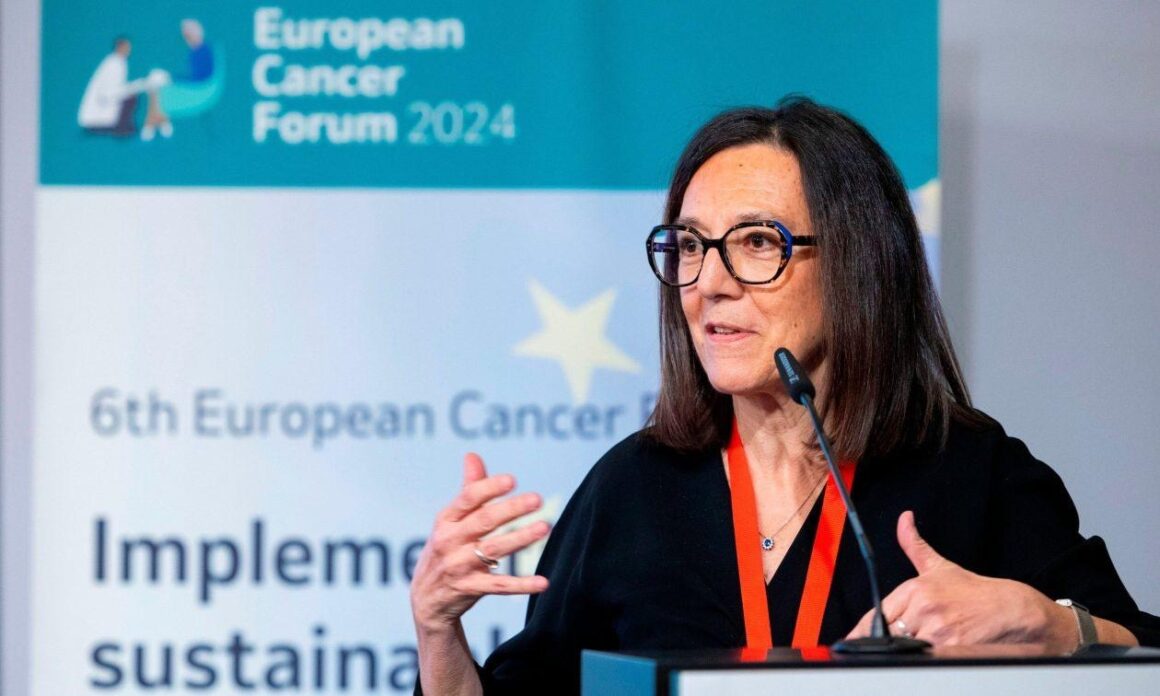
Antonella Cardone
What Matters Most
After years spent in cancer policy and advocacy, Cardone says she remains committed because she can see the impact of the work and improvements for cancer patients.
Asked to define good leadership in one word, she chooses:
“Empathy.”
The best advice she remembers receiving:
“To be diplomatic and prudent.”
What has working with cancer patients taught her about life?
“Live the present in full.”
What gives her hope for the future of cancer care?
Awareness among different stakeholders of the role each can play across the cancer continuum.
What barrier would she remove tomorrow?
“Access to the right treatment.”
And what does putting patients first actually mean?
“Prioritising on what matters most to the patients.”
Perhaps that is also the simplest standard against which the next decade of European cancer policy should be judged.
Europe does not lack scientific ambition.
It does not lack cancer strategies.
It does not lack data.
And increasingly, it does not lack innovation.
The unfinished task is making sure that progress reaches the person for whom all of it exists.
Because to that person, policy is not abstract.
Access is not a statistic.
A waiting list is not an administrative problem.
And a delay is not simply a delay.
It is part of life.
Time is of essence.
About the Author
Knarik Arakelyan, PhD, is a psychologist and communications professional with over 14 years of experience in public relations, health communication, and public awareness campaigns. She is currently the Managing Editor of “CancerWorld“ magazine, Chief of Staff of OncoDaily, and serves as PR and Communications Officer at “EMERTÉ” Clinic.