To patients and oncologists alike:
Are there questions living inside you that you have not been asking out loud?
Could it be that you do not even know what questions to ask?
Are there answers you have arrived at privately but never felt permission to share, for fear they might sound strange, naïve, unscientific, or somehow inappropriate?
Are you still searching for answers outside yourself?
These are the questions that gave birth to this series.
After years in oncology—and years of personal and professional transformation—I have come to believe that while questions and answers both matter, some of the most important moments in medicine happen in the space between them.
The pause before a patient answers. The hesitation before a doctor speaks. The story that almost gets told but doesn’t. The sensation in the body that appears before language. The nervous system response is hidden beneath a symptom, a diagnosis, a treatment decision, or a prognosis.
This series is about that space.
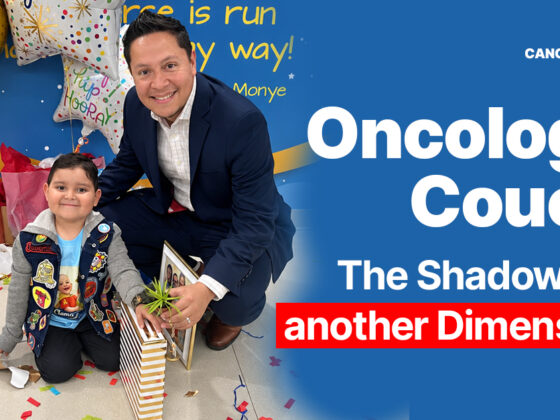
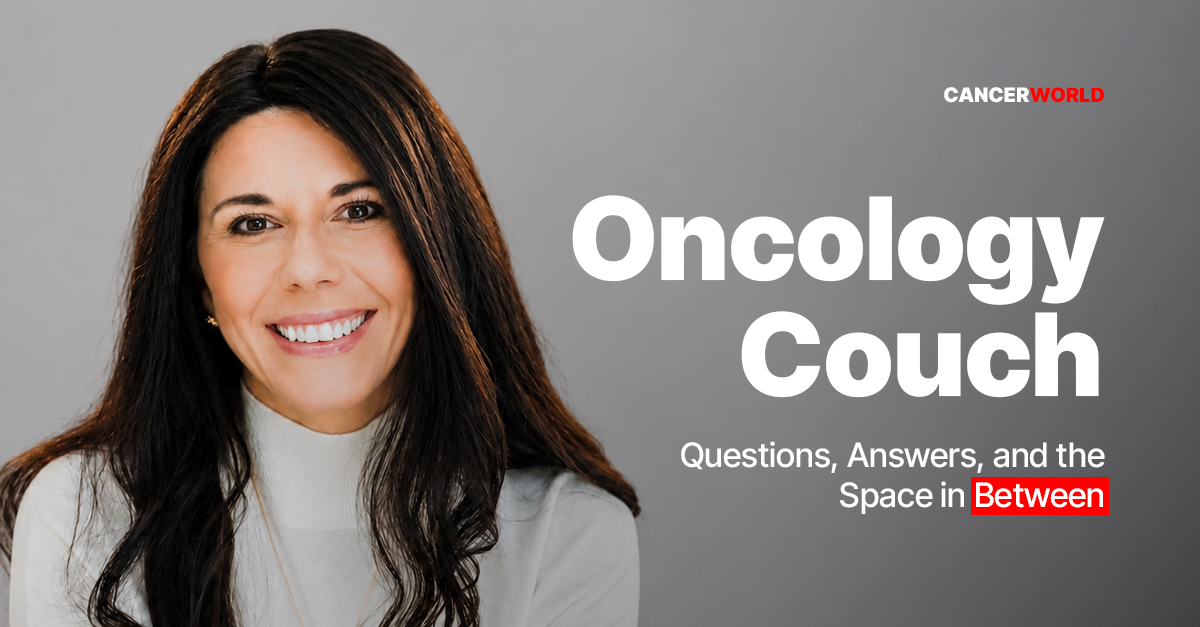
It is called Oncology Couch: Questions, Answers, and the Space in Between because every clinical encounter contains far more than what appears in the medical record.
Long before a patient enters the consulting room, they have already arrived carrying an entire lifetime.
Every experience they have lived through has shaped their nervous system, their biology, their beliefs, and their sense of identity. The same is true of the doctor sitting opposite them.
Patients do not arrive as scans and blood tests.
Doctors do not arrive as degrees and white coats.
Both arrive carrying lives that extend far beyond the consultation room.
Some of those experiences brought an oncologist into medicine.
Others brought a patient into a cancer clinic.
And then the two meet.
A patient walks through hospital corridors lined with wheelchairs and stretchers, hearing snippets of conversations, medical alarms, and the whispered advice of well-meaning strangers. They enter a room illuminated by artificial light, carrying fears about scan results, blood tests, treatment plans, and the life they are desperately trying to continue living.
The oncologist may arrive carrying fifty unanswered emails, multiple deadlines, administrative burdens, and only fifteen minutes for the consultation.
Yet somehow, within that compressed moment, something profoundly human is expected to happen.
More Than a Blood Test and a Scan
One of the most revealing questions in medicine is also one of the simplest.
How are you today?
Most of us ask it automatically.
Few of us are prepared to hear the long version of the answer.
Perhaps that is exactly where healing begins.
Not in the scan. Not in the blood result. Not even in the treatment plan.
But in creating enough safety for a person to tell the truth about what is happening.
My work gradually evolved beyond conventional oncology and into the exploration of nervous-system regulation, neurosomatic intelligence, and whole-health medicine. Readers familiar with my previous CancerWorld profile, “A More Excellent Way”, will recognise this journey and the experiences that shaped it.
My own health challenges, my patients, and countless conversations gradually revealed a truth that medicine does not always teach us: treatment and healing are not necessarily the same thing.
Healing requires relationship.
Healing requires safety.
Healing requires meaning.
And all three begin with questions.
“I Hope I Never Need You”
People often say to me, “I hope I never need you.”
It is one of the occupational peculiarities of being an oncologist.
People accept your business card with kindness and sincerity, then immediately tell you they hope never to call.
Of course, I would never wish illness upon anyone.
Yet my mother, who is also a breast cancer oncologist, taught me something important. She often says:
“You are not coming to me only when you are unwell. You come so that I can confirm that you are well.”
Most people engage with medicine when the house is already on fire.
We wait until something is broken.
Until intervention becomes necessary.
Until symptoms become impossible to ignore.
But what if healthcare could also be a place where wellness is recognised, reflected, strengthened, and sustained?
What if we stopped waiting for catastrophe to grant ourselves permission to pay attention?
Many people tell me they are fine.
Often, they are fine in the way a swan is fine on a lake.
Graceful above the surface. Furiously paddling underneath.
Much of healing begins by helping the whole system settle.
The Nervous System and the Story
People often ask why I place such emphasis on the nervous system.
Because the nervous system and the story are inseparable.
Every experience leaves traces—not only psychologically, but biologically.
For some people, the doorway into healing is storytelling. For others, storytelling feels overwhelming, and practical tools offer a safer place to begin.
Eventually, both pathways meet.
The story shapes the nervous system, just as the nervous system shapes the story.
They are different expressions of the same reality.
This work is not mystical.
It is deeply practical.
It is about understanding why certain symptoms persist, why certain behaviours repeat, why some people find rest impossible, why uncertainty feels unbearable, and why safety can sometimes feel more frightening than stress.
One of the most surprising discoveries in this work is that rest is not always experienced as rest.
For a highly activated nervous system, rest may feel like vulnerability—a gap in protection.
Many people are not afraid of resting because they are lazy; they are afraid because stillness feels unsafe.
Understanding this changes everything.
Care Is More Than Chemo
Cancer treatment focuses on the tumour. It should.
Chemotherapy targets cancer. Surgery removes it. Radiation destroys it.
Targeted therapies, immunotherapies, and countless advances in modern oncology save lives every day.
Yet treatment and care are not synonymous. Treatment focuses on the tumour. Care focuses on the person. That distinction matters.
A diagnosis often becomes the centre of gravity around which everything else revolves. Yet the diagnosis itself may be asking us to look deeper.
Not because cancer is caused by psychology.
Not because treatment should be replaced by introspection.
But because illness frequently exposes truths that have long remained hidden.
One of the most powerful questions I have encountered comes from the work of Dr Steve Bierman:
Why now?
Not why me.
Why now?
The question is not asked to assign blame.
It is asked to cultivate curiosity. To create space for reflection.
To wonder whether there are unmet needs, exhausted resources, unspoken truths, or long-neglected parts of ourselves asking for attention.
Sometimes a diagnosis grants people permission to acknowledge needs they have been unable to acknowledge for decades.
The diagnosis is not a gift. But occasionally it reveals where gifts have been missing.
The Power of Words
Medicine often underestimates the biological impact of language.
Yet every oncologist has witnessed words that changed a patient’s life.
A prognosis. A diagnosis. A single sentence.
The science of noetic medicine explores something clinicians intuitively know: words are never just information.
Patients enter clinics during moments of vulnerability. They naturally assign authority to those caring for them.
What we say matters. How we say it matters. Tone matters. Pace matters. Eye contact matters. Presence matters.
Even the question, “How are you?”, carries consequences depending on whether it is asked from obligation or genuine curiosity.
Communication is not an accessory to treatment. Communication is part of treatment.
The goal is not merely to deliver information. The goal is to empower healing.
The Questions Patients Rarely Ask
One question I wish more people would ask is:
How good can it get?
Patients are often encouraged to prepare for the worst. To anticipate complications. To expect challenges.
Few are invited to imagine the best possible outcome.
Few ask: “What if it all works out?”
Another question lies beneath many consultations, though it is rarely voiced.
Do I still have permission to live? Can I travel? Can I fall in love? Can I plan a future? Can I book a holiday? Can I laugh? Can I still be myself?
Too often, a diagnosis becomes synonymous with putting life on hold.
Yet sometimes the experience of illness becomes the very thing that finally teaches people how to live.
Identity and Healing
Perhaps the deepest question of all is:
Who am I?
Most people answer with roles.
I am a doctor. I am a mother. I am a husband. I am an engineer. But these are roles.
Over time, identities form around them.
Identities also form around illness, perfectionism, over-functioning, self-sacrifice, caretaking, achievement, and suffering.
Eventually, we stop responding to life itself. We respond through those identities.
Healing therefore involves more than reducing symptoms.
It involves examining who we have become around those symptoms.
When identity shifts, entire areas of life often begin to reorganise themselves.
The symptom may be the visible expression.
The identity is often the deeper architecture beneath it.
The Space in Between
As medicine becomes increasingly technological, an unexpected opportunity is emerging. Artificial intelligence will remember more facts than any of us. Algorithms will analyse more data than any individual clinician.
The future does not require doctors to become better databases. It invites us to become more human.
Technology can help us diagnose, analyse, and make decisions. But it cannot replace presence. It cannot replace curiosity. It cannot replace compassion.
And it cannot replace what happens in the space between two human beings sitting across from one another in a consultation room.
That space remains sacred.
It is where stories are told.
Where identities shift.
Where meaning emerges.
Where healing begins.
That is the space this series will continue to explore.
About the Author
Aleksandra Filipović, MD, PhD, is a medical oncologist, cancer cell biology scientist, drug developer, and educator. She earned her PhD at Imperial College London and now serves as Head of Oncology and Chief Medical Officer within the biotech sector. Dr Filipović practices and teaches integrative oncology internationally and hosts the OncoDaily TV podcast “Into the Body, with Dr Aleks”.