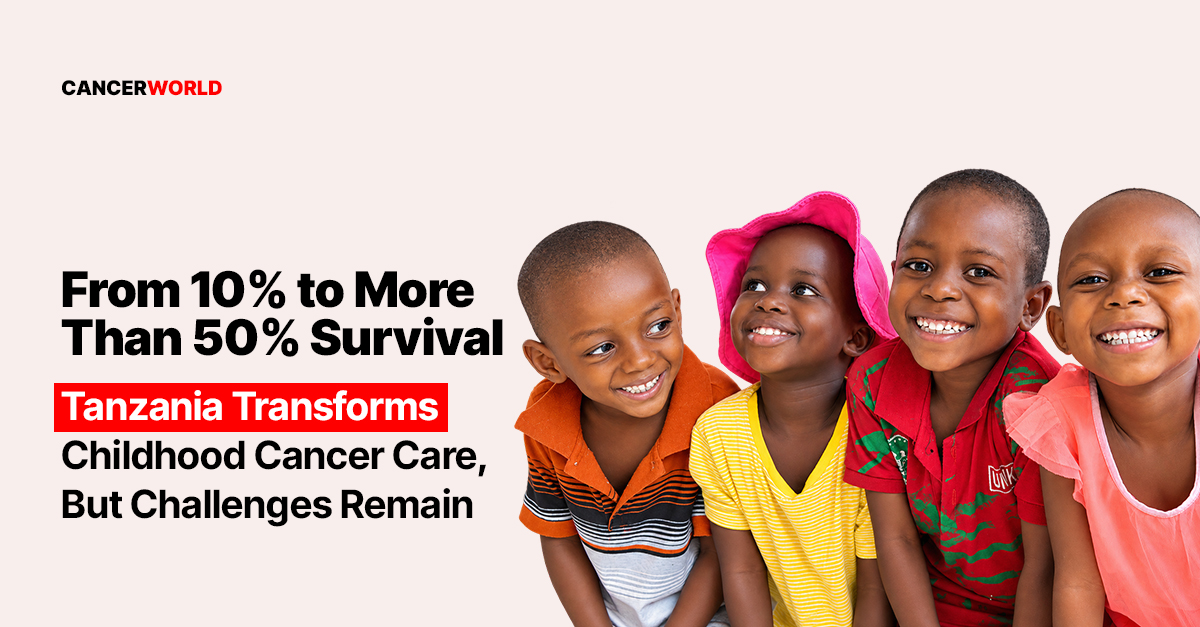
In Tanzania in the early 2000s, healthcare for children with cancer was very limited. The majority of affected children never reached a treatment centre and 90% of those who did, ultimately died1. Today, childhood cancer care has been transformed with more than 50% of children who present to hospital surviving long-term.
One of the people driving this improvement is Dr Trish Scanlan, an Irish paediatrician who has worked in Tanzania for the last two decades and is CEO of the Tanzanian children’s cancer charity Tumaini la Maisha, TLM. Dr Scanlan first visited the country in 2006 while completing a Master’s degree in International Health. At the time of her arrival, the survival rate for most types of childhood cancer in Tanzania was less than 10%.
“At that time, in the rest of the world you were looking at overall survival probably around 80–85% in places that had what was needed to care for these kids. So, the gap was enormous,” said Dr Scanlan.
In 2005, the first dedicated pediatric oncology ward opened at Ocean Road Cancer Institute in the largest city, Dar es Salaam. But there was limited provision of drugs and other resources to support the children’s care.
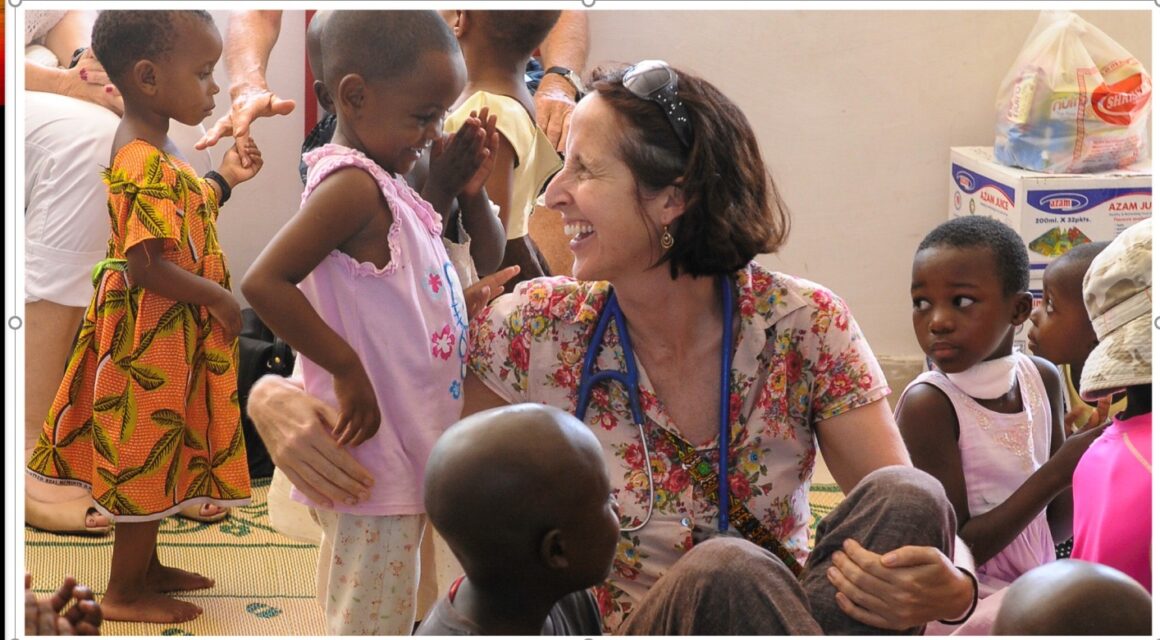
Dr Trish Scanlan |Photo credit to Leslie Henderson
“The team of one doctor and three nurses were completely dedicated to the children. They were really beautiful human beings who cared deeply. However, they didn’t have much in the way of drugs and resources were tight. You simply cannot cure kids with cancer if you don’t have funds and drugs,” said Dr Scanlan.
An international collaboration offered reliable access to chemotherapy in 2004 to treat a common type of cancer called Burkitt lymphoma. With chemotherapy, this small team had raised survival for this cancer from 10% to almost 70% in just a couple of years, showing the significant potential for improving outcomes for children with other cancers.
But the low survival rate was not the only concern. In 2005, only 120 children with cancer presented to the Ocean Road Cancer Institute, a tiny proportion of the expected 3,000+ cases per year nationally. Two decades later, almost 1,000 children are treated annually, with more than half surviving. Numerous changes have contributed to this significant progress.
“The first things we did were the things that cost no money. We went from doing a ward round once a week to once a day, and then twice a day. We made sure every child was weighed. We made sure that antibiotics and IV fluids were available throughout the day and night. We wrote and followed simple protocols. If a child needed blood and there was none in the hospital, we went to the central blood bank and got it,” said Dr Scanlan.
When “Free” Care Was Not Enough
The Tanzanian government had already pledged to make cancer care free for all Tanzanians, which was a vital step. But the allocated funds were not sufficient to cover the enormous need.
“People could stay on the ward without a fee. Anything available in the hospital was free. But there wasn’t enough chemo to last more than a few months. Cupboards would be bare, and families would be given prescriptions and asked to bring back drugs. They often came back with one or two of the four drugs a child needed, and it was really hard to watch,” said Dr Scanlan.
At that time, children in high-income countries had seen incredible improvements in survival due to treatment protocols refined over several decades of clinical trials, including through careful optimization of drug timing and dosing. The lack of reliable availability of chemotherapy drugs in Tanzania made improving survival rates incredibly difficult.
“One day on the ward we just decided to make chemo free for everyone. We racked up bills of about $50,000 in a few months with no way of paying it and we gave the chemo to the kids. The kids started to get better. And the mood on the ward changed. Visitors noticed and wanted to help,” said Dr Scanlan.
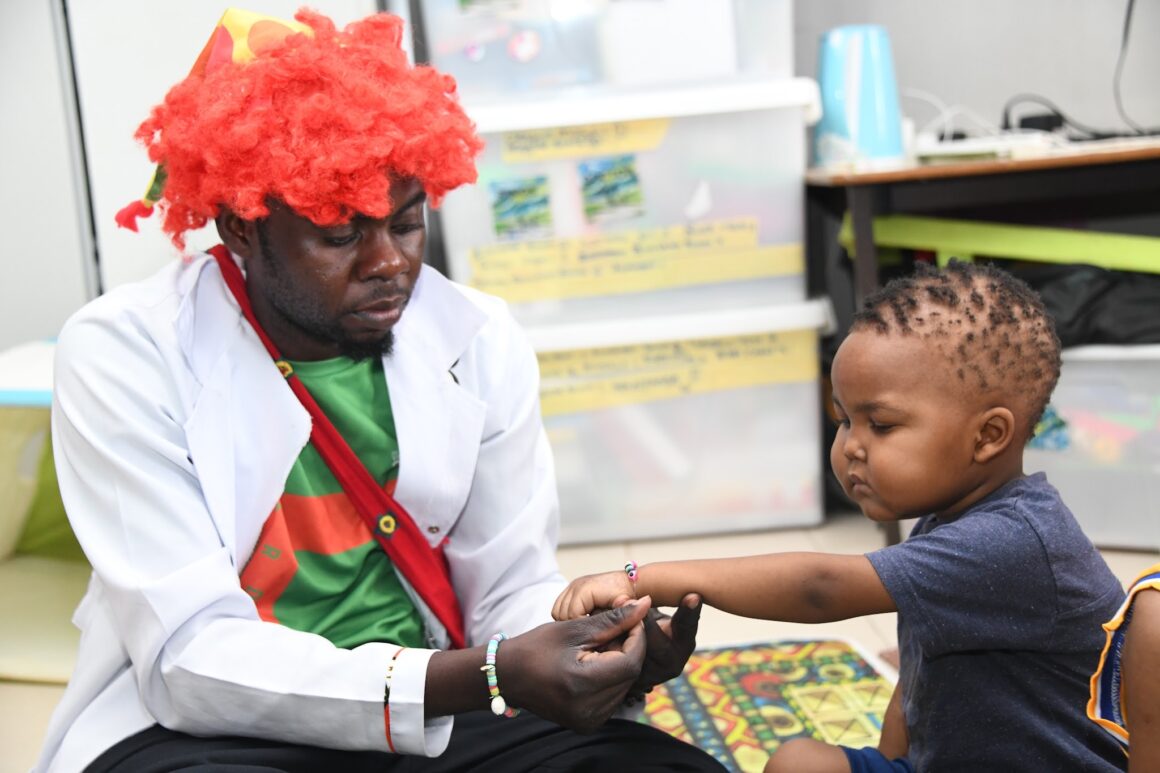
Child On Ward | Photo credit to “We are TLM”
Building a System That Could Cure Children
The bills were ultimately paid by donors and partnerships including the Irish government and key non-profits in Ireland and the U.K. providing consistent access to chemotherapy drugs which started driving longer-term survival. In 2012, pediatric cancer treatment moved to Muhimbili National Hospital, with further expansion and renovation of the children’s cancer facilities in the following years.
“When the government moved the children into the main national pediatric hospital, automatically they had access to dialysis, surgery, piped oxygen, 24-hour labs, CT, MRI—literally everything for children with complex needs. It made a massive difference overnight,” said Dr Scanlan.
For several years, Dar es Salaam was home to Tanzania’s only comprehensive childhood cancer treatment centre, a significant barrier to care in a country more than twice the size of California with approximately 71 million people. Challenging infrastructure and poverty meant that simply reaching the centre for treatment was not possible for many families with sick children. So, a national network of hospitals was connected with the aim of no family needing to travel for more than 4 hours to be seen by a clinician trained to identify cancer and either treat the child or rapidly refer them to another facility in the network.
“We now have 22 hospitals in our network and hope to reach around 30 soon. The vision is that all hospitals will join the network and know exactly what to do when they see a child with suspected cancer. The aim is that every child will get the same drugs, the same protocol, the same assessments, no matter what hospital they walk into. It’s one team, one voice, even though it’s many hospitals,” said Dr Scanlan.
The centers are now also connected by a data-sharing initiative, making it easier for clinicians to access data and coordinate care for their patients. Other provisions include nutrition, a hostel, play therapy, child-life program, schooling in hospitals as well as a locally run fellowship pediatric oncology training program for pediatricians. Palliative care navigation is also provided for children with incurable disease.
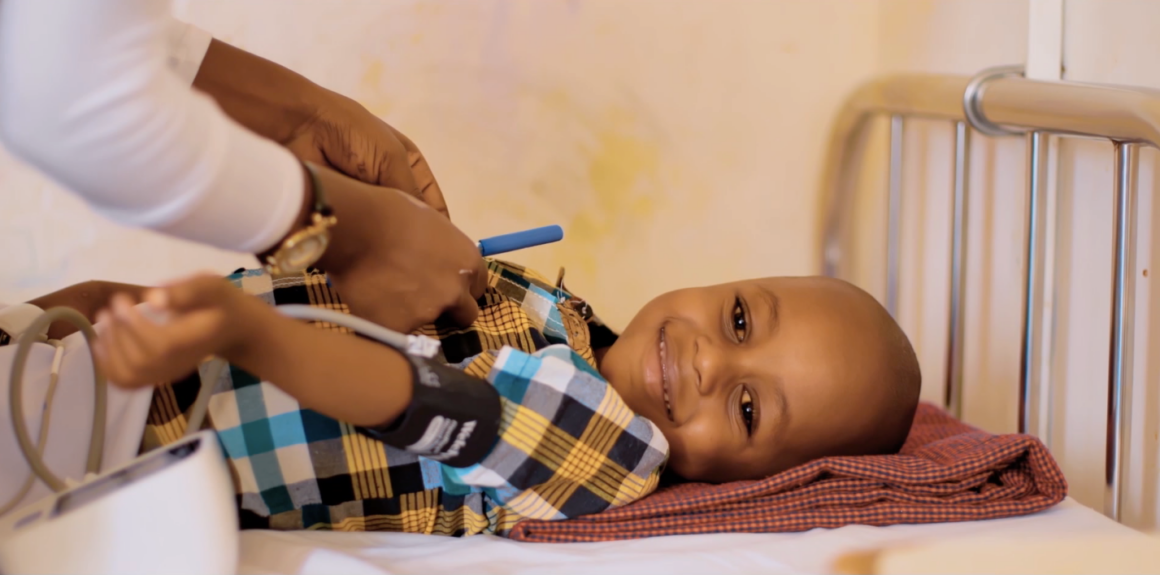
Child On Ward | Photo credit to “We are TLM”
The Challenge That Progress Has Not Yet Solved
However, one very significant barrier still remains. Many children still present to centres with late-stage disease, which is in most cases incurable.
“In 2005, 30% of children arrived at our door needing palliative care; in 2025, 30% still arrived with palliative disease. For most diseases, if they come in at stage four, it almost doesn’t matter what diagnosis they have—they’re going to die. The actual numbers of children seen overall have vastly improved, but the proportion with incurable disease is the same,” said Dr Scanlan.
Dr Scanlan explained that several community outreach initiatives are underway to try to spread the word about what childhood cancer looks like as well as the availability of care to help more families reach healthcare facilities before it is too late for the children.
“They have to reach help at earlier stages, and that means early-warning sign education, public health messaging, training community health workers and smaller hospitals, and engaging traditional healers and religious leaders,” said Dr Scanlan.
One initiative in its infancy involves trying to work with community health workers and possibly traditional healers in communities. The aim is to help them identify children with cancer, collaborate to coordinate care back in the community and to provide palliative care when needed.
“Community health workers and traditional healers are where patients first present, and where they go back for end-of-life care if treatment fails. If we can gain their trust and respect, they could be an army of allies in early recognition and palliative care,” said Dr Scanlan.
The clinical work across the entire network is now solely led and managed by Tanzanian specialists and teams and a growing research and education ecosystem is present, linking Tanzanian work and training with international communities.
“On the ground, in the hospitals, the experts in medicine, nursing, lab, pharmacy—everybody is Tanzanian, as it absolutely should be. I’m very proud to have witnessed the transformation and to see how they’ve become world experts in their field,” said Dr Scanlan.
Reference
1. Our Story. Their Lives Matter | We Are TLM. Accessed August 25, 2026. https://www.wearetlm.org/about/our-story-2/
About the Author
Victoria Forster, PhD is a cancer research scientist, childhood leukemia survivor and health writer. Passionate about engaging patients in research and healthcare systems, she earned her PhD in cancer biology in the U.K. and now works as the head of Patient Engagement at an academic hospital in Toronto, Canada.