Cancerworld Magazine
  • About the Magazine
    • About us
    • Editorial Team
    • Events
    • Archive
    • Contacts
  • Articles
    • Policy
    • Practice Points
    • Delivery of Care
    • Biology basic
    • Medicine
    • Featured
  • Contents
    • News
    • Editorials
    • Interviews to the Expert
    • In the Hot Seat
    • Profiles
    • Obituaries
    • Voices
  • ESO College Corner
SUBSCRIBE FOR FREE
Facebook
Twitter
LinkedIn
Cancerworld Magazine
  • About the Magazine
    • About us
    • Editorial Team
    • Events
    • Archive
    • Contacts
  • Articles
    • Policy
    • Practice Points
    • Delivery of Care
    • Biology basic
    • Medicine
    • Featured
  • Contents
    • News
    • Editorials
    • Interviews to the Expert
    • In the Hot Seat
    • Profiles
    • Obituaries
    • Voices
  • ESO College Corner
Cancerworld Magazine > Articles > Umberto Veronesi and the European School Of Oncology
  • Articles
  • Profiles

Umberto Veronesi and the European School Of Oncology

  • 7 November 2025
  • Alberto Costa
Umberto Veronesi and the European School Of Oncology
Total
0
Shares
0
0
0
0
0

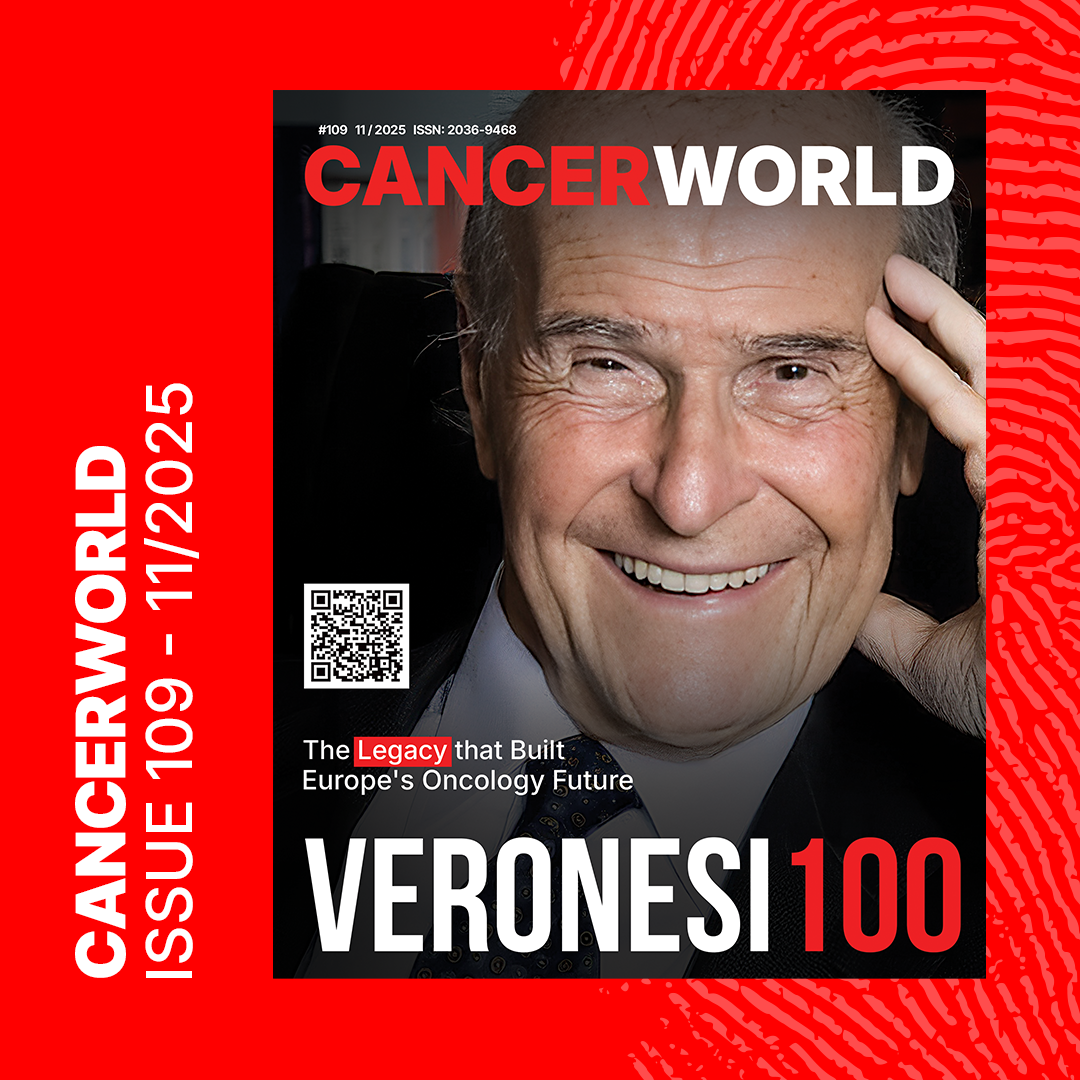
The idea of ​​creating a “European School of Oncology” came to Umberto Veronesi in the mid-1970s, when the Americans announced the effective implementation of the strategic plan against cancer signed by President Nixon in 1973, the National Cancer Act. He presented his project for the first time in 1981 at the General Assembly of ESSO in Lausanne.

The United States believed then that if they had managed to land on the moon, they could also conquer cancer, because they believed it was just a matter of investment and organization. Instead of dispersing investments among individual states, they concentrated all resources in a single federal research institute, the legendary NCI (National Cancer Institute), headquartered in Bethesda, a suburb of Washington.

The influx of government investment was so massive that within a few years, Bethesda became the world capital of cancer research and began to drain brainpower from every corner of the planet. 

The Europeans lacked the political and administrative structure to do the same (the Brussels Commission was infinitely weaker than it is today in terms of coordinating investments), but European oncologists understood the message, especially because they had been making significant contributions to cancer research in those years. The British and French were far ahead in the development of new drugs, but the Italians also played their part, discovering the most powerful anti-tumor drug for breast cancer, Adriamycin, produced by Farmitalia; inventing the concept of adjuvant chemotherapy (Gianni Bonadonna) and revolutionizing breast cancer surgery by confirming the possibility of conserving the breast (Umberto Veronesi, 1980).

Talk began of joining forces and creating a “European oncology”. The British immediately got started, creating the main communication tool, a monthly journal called the “European Journal of Cancer,” which quickly became the main point of reference for the publication of the most important scientific results. The French, Belgians, Dutch, and Italians (Silvio Garattini) established a joint clinical research center in Brussels, the EORTC (European Organization for Research and Treatment of Cancer), which has just celebrated its 60th anniversary. The Germans offered the Heidelberg laboratories to host the EMBO (European Molecular Biology Organization), which concentrated much of the experimental research and led its leader, Harold zur Hausen, to the Nobel Prize for the discovery of the viral origin (human papillomavirus) of certain types of cancer.

Veronesi immediately understood that Italy was in danger of remaining too far behind in this process of “Europeanization” of oncology, and he was quick to propose the establishment of a European School. Everyone recognized Italy as having created the first medical universities (Padua, Bologna, Pavia).

The final push, as often happens, came from a woman. The Roman Princess Laudomia (Domietta) Del Drago discovered only after arriving in London for surgery that Milan was the place where she could be treated while preserving her breast. It was the same English surgeon, very honest, who advised her to return home. Everything went well, and when Domietta asked Veronesi what he could do to “Repay her debt,” Umberto told her of his dream of a European School of Oncology.

As a worldly woman, Domietta Del Drago immediately approved the initiative, donated the first 200 million lire to get it started, and signed before a notary in October 1982 the constitution of a non-profit association called the European School of Oncology (ESO).

The foundation was joined by English radiotherapist Michael Peckham, Belgian urologist Louis Denis, Dutch oncologist Bob Pinedo, and the leader of Swiss oncology, Franco Cavalli.

The first pilot course was held a couple of years later at Pomerio castle on Lake Como. Veronesi was very keen on the concept of “residential” teaching and wanted teachers and students to spend as much time together as possible to ensure the maximum “transfer of knowledge” from one brain to the other, as Umberto used to say.

The rest is history, and in a few years, in 2031, ESO will celebrate its 50th anniversary. The legacy of the Necchi Campiglio family ensures its full financial independence and makes the School the only European oncology training institution completely independent of any form of commercial sponsorship.

ESO’s alumni now number over 15,000, many of whom are members of its Alumni College, and many have since become directors of oncology departments or even institute directors. The School has always made every effort to maintain gender equality among its students, a multidisciplinary approach (surgeons, radiologists, physicians, psychologists, nurses, pathologists, etc.), and an equal distribution between the Western and Eastern parts of the Old Continent.

From the very beginning, ESO’s motto has been “learning to care,” indicating its firm commitment to teaching human medicine and not just the treatment of the disease. This was always the will of its founder and creator, Umberto Veronesi, who dedicated every possible effort and attention to the School until the end of his days.
Total
0
Shares
Share 0
Tweet 0
Share 0
Share 0
Share 0
Related Topics
  • adjuvant chemotherapy Gianni Bonadonna
  • Adriamycin discovery
  • Bob Pinedo
  • Bologna medical school
  • breast cancer surgery history
  • cancer education legacy
  • cancer research Europe
  • cancer research history
  • cancer training Europe
  • Domietta Del Drago
  • EORTC
  • ESO 50th anniversary
  • ESO history
  • European cancer collaboration
  • European Journal of Cancer
  • European oncology
  • European School of Oncology
  • Franco Cavalli
  • Harold zur Hausen HPV
  • independent medical education
  • learning to care ESO
  • Louis Denis
  • Michael Peckham
  • multidisciplinary oncology training
  • NCI National Cancer Institute
  • oncodaily
  • oncology education Europe
  • oncology innovation history
  • oncology leadership Europe
  • oncology mentorship
  • oncology pioneers Europe
  • Padua medical history
  • Pavia university medicine
  • Umberto Veronesi
Alberto Costa

Previous Article
  • Articles
  • Profiles

Princess Ghida: Where Hope Wears a Crown

  • 7 November 2025
  • Yeva Margaryan
View Post
Next Article
  • Articles
  • Policy

Prevent, Treat, Support: An Interview with MEP Tilly Metz

  • 10 November 2025
  • Yeva Margaryan
View Post
You May Also Like
View Post
  • Articles
  • Delivery of Care

Surviving Childhood Cancer in Uganda: The Dual Battle for Life and Fertility

  • Esther Nakkazi
  • 27 November 2025
View Post
  • Articles
  • Featured

The Other Fight: Confronting Workplace Discrimination Against Cancer Survivors

  • Zhanna Chakhalyan
  • 25 November 2025
View Post
  • Articles
  • Voices

Shrenik Shah: The Voice That Transcends Sound

  • Shrenik Shah
  • 24 November 2025
View Post
  • Articles
  • Biology basic
  • Science

Meet the Man Decoding the Origins of Cancer

  • Victoria Forster
  • 17 November 2025
View Post
  • Articles
  • News

AI Model Shows Promise in Identifying Breast Cancer Patients Who Can Safely Avoid Sentinel Node Biopsy

  • Janet Fricker
  • 14 November 2025
View Post
  • Articles
  • Delivery of Care

AI in Oncology Clinical Decision Support

  • Amil Družić
  • 13 November 2025
View Post
  • Articles
  • Delivery of Care

To Stand, To Move, To Live: Musculoskeletal Health as part of the Cancer Journey

  • Christos Tsagkaris
  • 11 November 2025
View Post
  • Articles
  • Policy

Prevent, Treat, Support: An Interview with MEP Tilly Metz

  • Yeva Margaryan
  • 10 November 2025
search
CancerWorld #109 Download CancerWorld #108 Download CancerWorld #107 Download CancerWorld #106 Download CancerWorld #105 Download CancerWorld #104 Download CancerWorld #103 Download CancerWorld #102 Download CancerWorld #101 Download or search in Cancerworld archive
Newsletter

Subscribe free to
Cancerworld!

We'll keep you informed of the latest features and news with a fortnightly email

Subscribe now
Latest News
  • AI Model Shows Promise in Identifying Breast Cancer Patients Who Can Safely Avoid Sentinel Node Biopsy
    • 14 November 2025
  • The Oral Microbiome as a Non-Invasive Biomarker for Early Detection of Pancreatic Cancer Risk
    • 11 November 2025
  • CancerWorld #109 (November 2025)
    • 7 November 2025
  • Respiratory Infections Trigger Metastatic Breast Cancer in the Lungs
    • 5 November 2025
  • Artificial Sweetener Reduces Response to Immunotherapy
    • 15 October 2025
Article
  • Surviving Childhood Cancer in Uganda: The Dual Battle for Life and Fertility
    • 27 November 2025
  • The Other Fight: Confronting Workplace Discrimination Against Cancer Survivors
    • 25 November 2025
  • Shrenik Shah: The Voice That Transcends Sound
    • 24 November 2025
Social

Would you follow us ?

Contents
  • Shrenik Shah: The Voice That Transcends Sound
    • 24 November 2025
  • Umberto Veronesi and the European School Of Oncology
    • 7 November 2025
  • Princess Ghida: Where Hope Wears a Crown
    • 7 November 2025
MENU
  • About the Magazine
    • About us
    • Editorial Team
    • Events
    • Archive
    • Contacts
  • Articles
    • Policy
    • Practice Points
    • Delivery of Care
    • Biology basic
    • Medicine
    • Featured
  • Contents
    • News
    • Editorials
    • Interviews to the Expert
    • In the Hot Seat
    • Profiles
    • Obituaries
    • Voices
  • ESO College Corner
Cancerworld Magazine
  • About us
  • Articles
  • Media Corner
  • Privacy Policy
  • Cookie Policy

Cancerworld is published by OncoDaily (P53 Inc.) | Mailing Address: 867 Boylston st, 5th floor, Ste 1094 Boston, MA 02116, United States | [email protected]

Archivio Cancerworld

Input your search keywords and press Enter.