Scientific discovery drives oncology forward, but progress only truly begins when knowledge is turned into action.
Every issue of CancerWorld explores the people, ideas, and systems shaping the future of oncology. Scientific breakthroughs remain essential, but their true value emerges only when they are put into practice through leadership, policy, and care that reach patients everywhere.
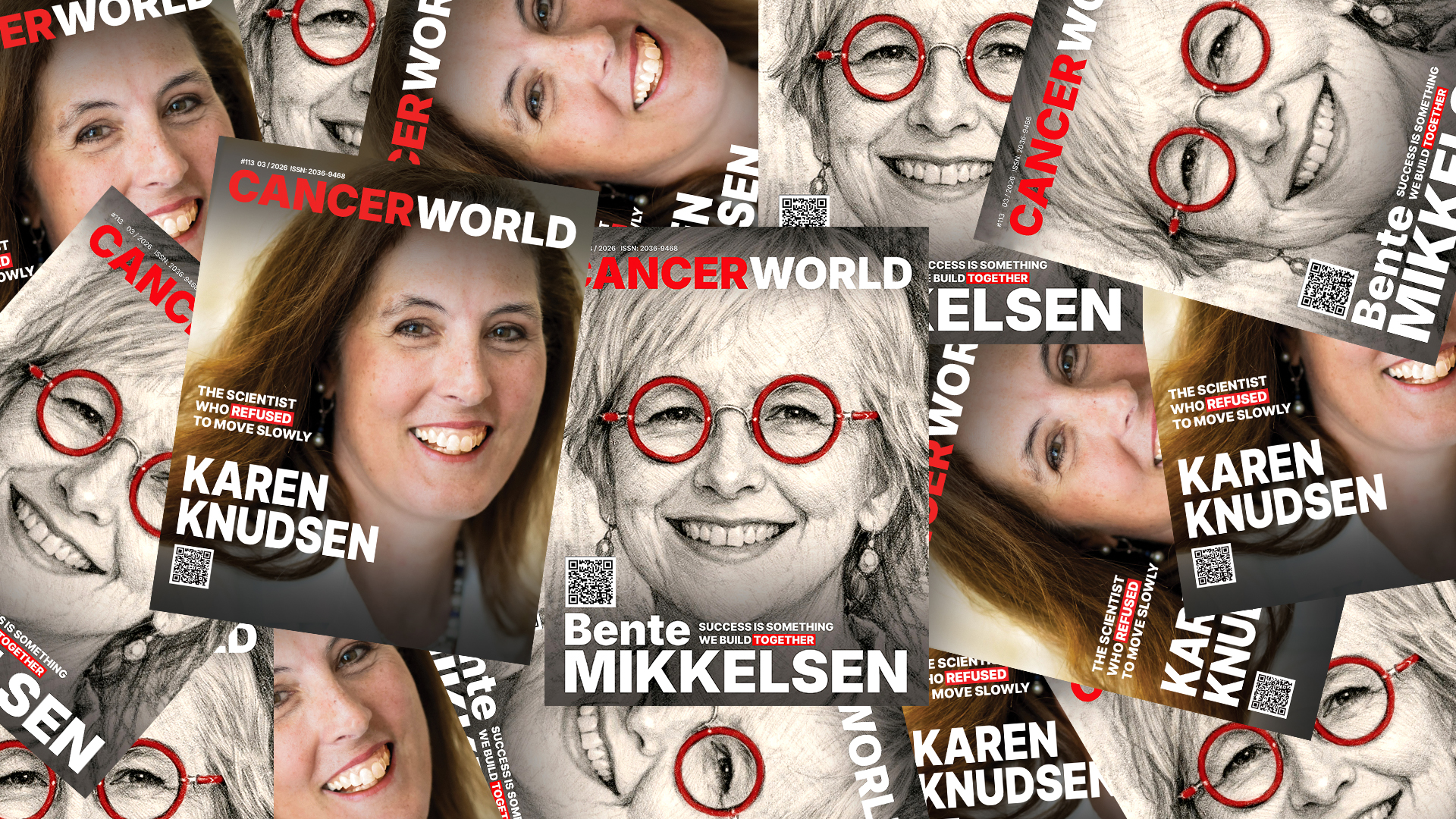
The March issue opens with the career story of Dr. Karen Knudsen, whose work reflects a singular conviction: science must move at the speed of patients’ needs. From early work in yeast genetics to leading major translational programmes in prostate cancer, and now heading the Parker Institute for Cancer Immunotherapy, Knudsen has repeatedly stepped into complex institutions and rebuilt them around measurable impact. Her philosophy rejects incrementalism in favour of ambitious, curative goals guided by rigorous data, strategic discipline, and the belief that progress need not be slow.
Our second cover story follows the remarkable path of Dr. Bente Mikkelsen, whose career trajectory from sociology student and medical leader in Norway to obstetrician and health system reformer laid the foundation for her global influence. At the World Health Organization, she turned vision into concrete policy, driving initiatives on non-communicable diseases, championing childhood cancer, and forging unprecedented collaborations across public and private sectors. Now at St. Jude Children’s Research Hospital, Mikkelsen continues to transform pediatric oncology worldwide, advancing equity, strengthening health systems, and delivering tangible results that save children’s lives.
Leadership remains a central theme throughout this edition. Dr. Isabel Rubio, President of the European Cancer Organisation, argues that Europe’s cancer future will depend not only on scientific advances but on leaders capable of building trust, closing persistent inequities, and converting policy into meaningful change. Drawing on decades of clinical experience and advocacy at the European level, she highlights the importance of listening, collaboration, and courage in shaping the next phase of cancer control.
Innovation in oncology also requires balance. CancerWorld profiles Dr. Michael Gnant, whose four decades of work in breast cancer surgery, mentorship, and global clinical trials demonstrate how progress often lies in refinement rather than escalation. Through evidence-based de-escalation, patient-centred decision-making, and systems thinking, Gnant illustrates how modern oncology can advance while preserving the human core of clinical care.
Global disparities remain one of the field’s most pressing challenges. Dr. Mohammed Safi reflects on cancer care across diverse healthcare systems from China and the United States to Yemen highlighting how scientific advances must be adapted to local realities if they are to benefit patients worldwide.
Scientific developments featured in these pages point to promising new directions. Our news editor Janet Fricker reports on research into pancreatic cancer detection using a four-biomarker blood panel that significantly improves early diagnosis. If validated further, this approach could bring new hope for earlier intervention in one of oncology’s most difficult diseases.
Meanwhile, the evolving therapeutic landscape raises critical questions about access. Dr. Amalya Sargsyan explores a quiet revolution in oncology as Nivolumab, the landmark PD-1 inhibitor, moves off patent. She reveals how biosimilars could widen access, challenge healthcare systems, and potentially mark the beginning of a truly global immunotherapy revolution turning a scientific breakthrough into a fight for equity in oncology.
Elsewhere, the magazine highlights how expertise and commitment at the local level can reshape national cancer care. Dr. Fatjona Kraja’s professional path from advanced training across Europe and the United States to leadership in Albania demonstrates how international knowledge can be transformed into sustainable, patient-centred radiation oncology services.
Beyond policy and science, this edition also reflects on the human experience of cancer. Adrian Pogacian offers a powerful reflection on the emotional journey patients face, underscoring the importance of empathy, honest communication, and psychosocial care alongside clinical treatment.
Finally, Kevin Donaghy, author of the book Stories of Cancer and Hope, traces his personal story from diagnosis with advanced melanoma through isolation, psychological struggle, and ultimately renewed purpose. His account demonstrates how connection, shared experience, and patient-led advocacy can transform individual survival into collective impact, redefining hope as both a personal and global force.
The stories in this issue remind us that progress against cancer is never the result of science alone. It is built through leadership that challenges systems, policies that expand access, and care that never loses sight of the person behind the diagnosis.
Across laboratories, clinics, and communities, the task remains the same: to turn discovery into action and ambition into lives saved.