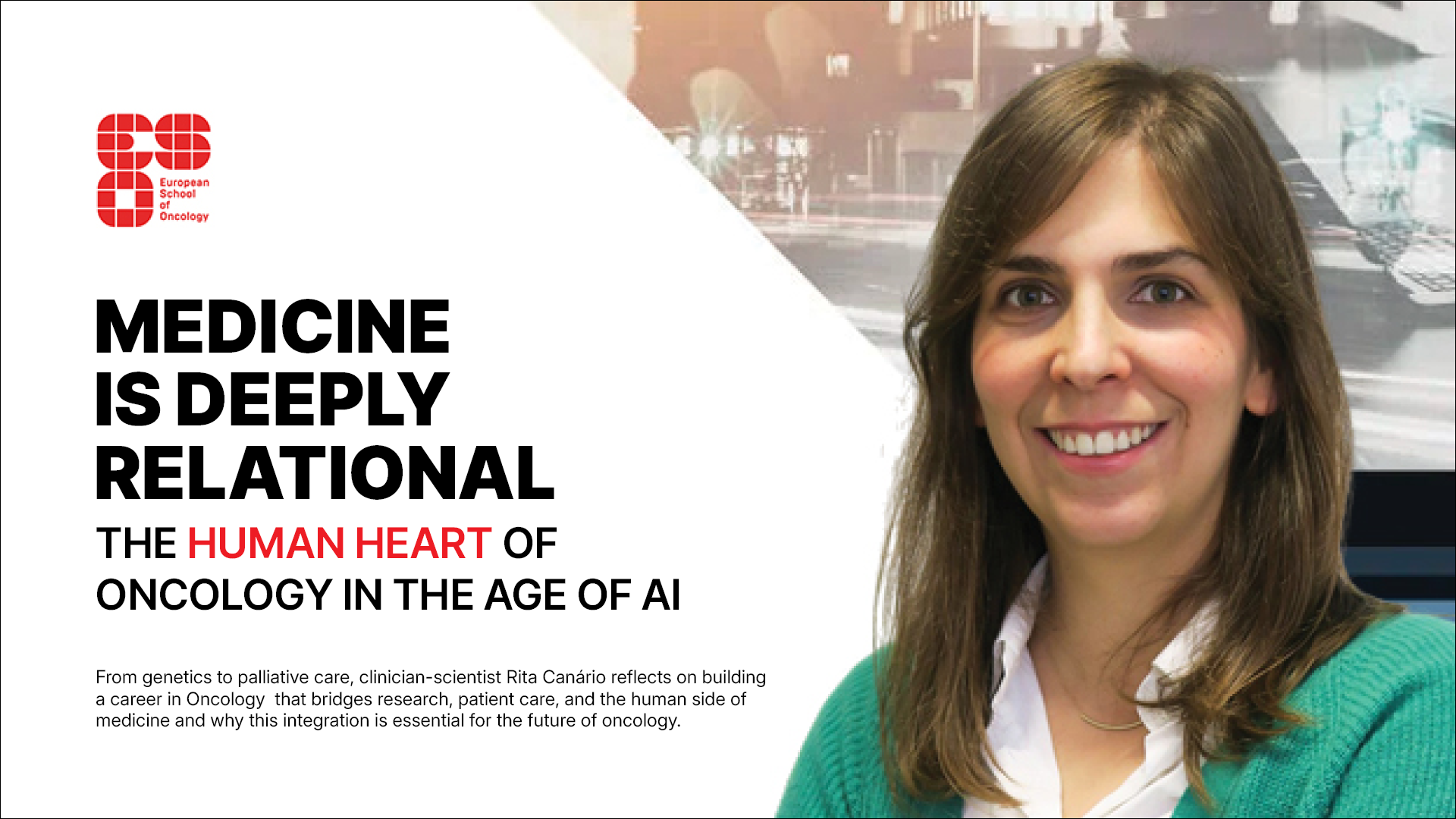
From genetics to palliative care, clinician-scientist Rita Canário reflects on building a career in Oncology that bridges research, patient care, and the human side of medicine and why this integration is essential for the future of oncology.
“I was never the type who always wanted to be a doctor,” she says. “I had very eclectic interests from arts to science and choosing a path at 15 felt far too early.”
Initially drawn to genetics, she imagined a future in research. But a formative volunteering experience helping stroke patients during mealtimes shifted her perspective.
“I realised I enjoyed listening to people’s stories and helping them… and that I felt comfortable in the hospital.”
Medicine offered something unique: the possibility of combining scientific inquiry with direct human impact. Oncology, in turn, brought this duality into its most intense and meaningful form.
“It is an area where we combine cutting-edge research with deep human connection.”
A Career Shaped Between Disciplines
Canário’s professional identity today spans clinical oncology, hereditary cancer research, and palliative care—a combination that reflects both intention and necessity.
Her early fascination with genetics naturally led her to hereditary cancer. But it was during medical school and oncology training that she recognised a critical gap in palliative care particularly in Portugal, where services were still underdeveloped.
“I felt the need to become more skilled in end-of-life care,” she explains. This led her to the UK, where she undertook advanced training in palliative care, with the aim of bringing those competencies back into her oncology practice.
For Canário, integrating these domains is not optional; it is fundamental to quality care.
“Combining research with clinical care is the cornerstone of good oncology practice. My end goal is always to improve patients’ lives.”
Her work is guided not only by scientific curiosity, but by the realities patients face.
“Patients centre me. They guide the questions I ask in research.”
The Art of Medicine in a Technological Age
Alongside her scientific training, Canário’s background in the arts has played a defining role in shaping how she practices medicine.
Having attended an artistic school from an early age, she developed a sensitivity to narrative, expression, and human experience skills she now considers essential in oncology.
“Medicine is an art. We must know the science but to deal with people, we cannot neglect emotional intelligence and culture.”
Now teaching at the School of Medicine – University of Minho, she is part of a curriculum that places medical humanities at its core, an approach she believes is increasingly urgent.
“We are living in a fast-paced world where AI will, hopefully, replace us in several mechanical tasks,” she says. “What will remain is empathy, kindness and the human touch.”
Listening, in this context, becomes a clinical skill as much as a human one.
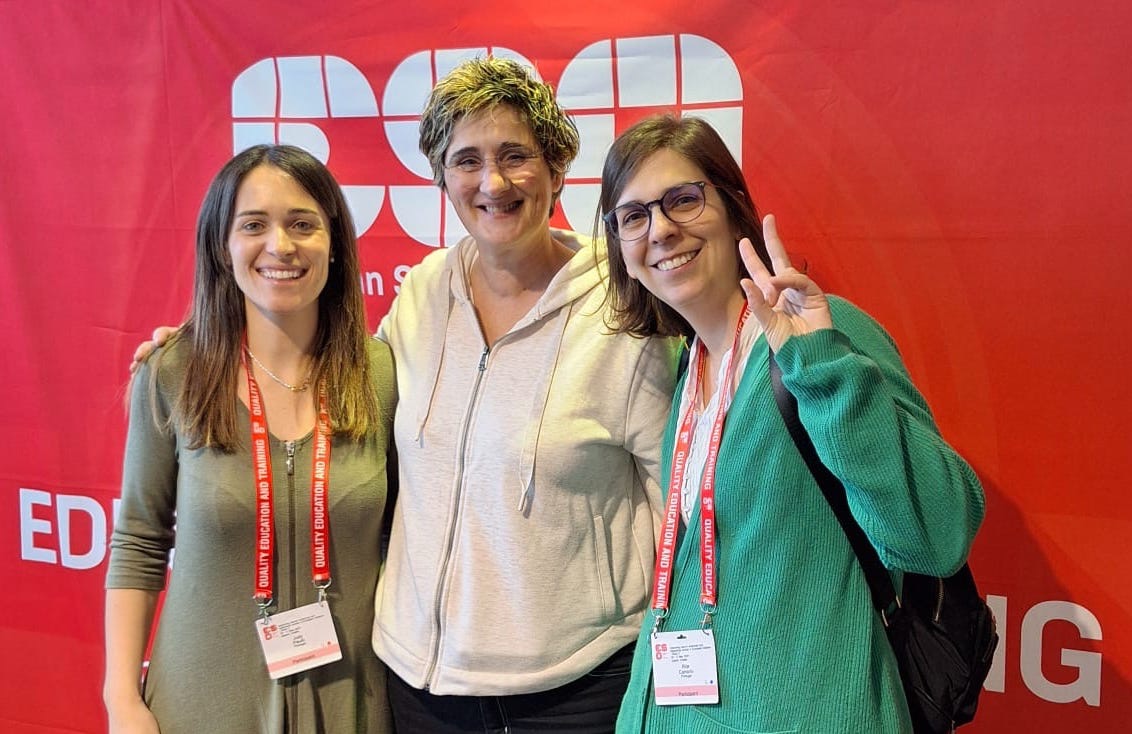
From left to right Dr Judy Paulo–Medical oncologist, Prof. Zacharoula Sidiropoulou– Oncologic Surgeon, Dr Rita Canário: ESO Improving outcomes & leadership course in Zagreb, 2025
“When we truly listen to patients’ stories, we are not only building relationships, we are also improving diagnosis and understanding their priorities.”
This, she argues, is the foundation of genuinely personalised medicine: not only tailoring treatment to tumour biology, but to the individual person.
Challenging the Research–Clinic Divide
Despite the clear benefits of integrating research and clinical care, structural barriers remain. In Portugal, there is still no defined pathway for clinician-scientists—a reality that continues to shape Canário’s career.
“I am still struggling to tailor my path and advocating for this career to exist,” she says.
A pivotal moment came during her fellowship at the Royal Marsden Hospital in London, where she saw a different model in action.
“There were colleagues doing research and still seeing patients. That was when I realised this path was possible and meaningful.”
“When we conduct research, we are ‘obliged’ to stay updated and to think methodologically. It improves the care we provide,” noted Dr Canário.
Yet the challenges are tangible: slower progression, less stability, and financial trade-offs. Even so, she remains committed.
“Passion is a great fuel, it helps to overcome obstacles.”
She is also clear that not every clinician needs to follow this path. Strong oncology teams, she argues, depend on diversity of roles, but they must include individuals who can bridge disciplines.
The Value of Networks, Mentorship and the European School of Oncology
Throughout her career, international exposure and collaboration have played a crucial role, particularly through her long-standing engagement with the European School of Oncology.
From early e-learning initiatives well ahead of their time to masterclasses, fellowships, and structured mentorship programmes, ESO provided opportunities that extended far beyond national training structures. For Canário, these experiences were not only educational, but transformative in shaping both her clinical perspective and her professional trajectory.
“The Clinical Training Centres Fellowship was life changing. It showed me that combining research and clinical care was not only possible, but impactful.”
Mentorship, in particular, proved decisive.
“The mentorship programme came at a crucial time, during the final stage of my PhD. Having Fedro A. Peccatori as a mentor helped me clarify my career goals and navigate uncertainty. It’s something I now strongly advocate for both receiving and providing mentorship.”
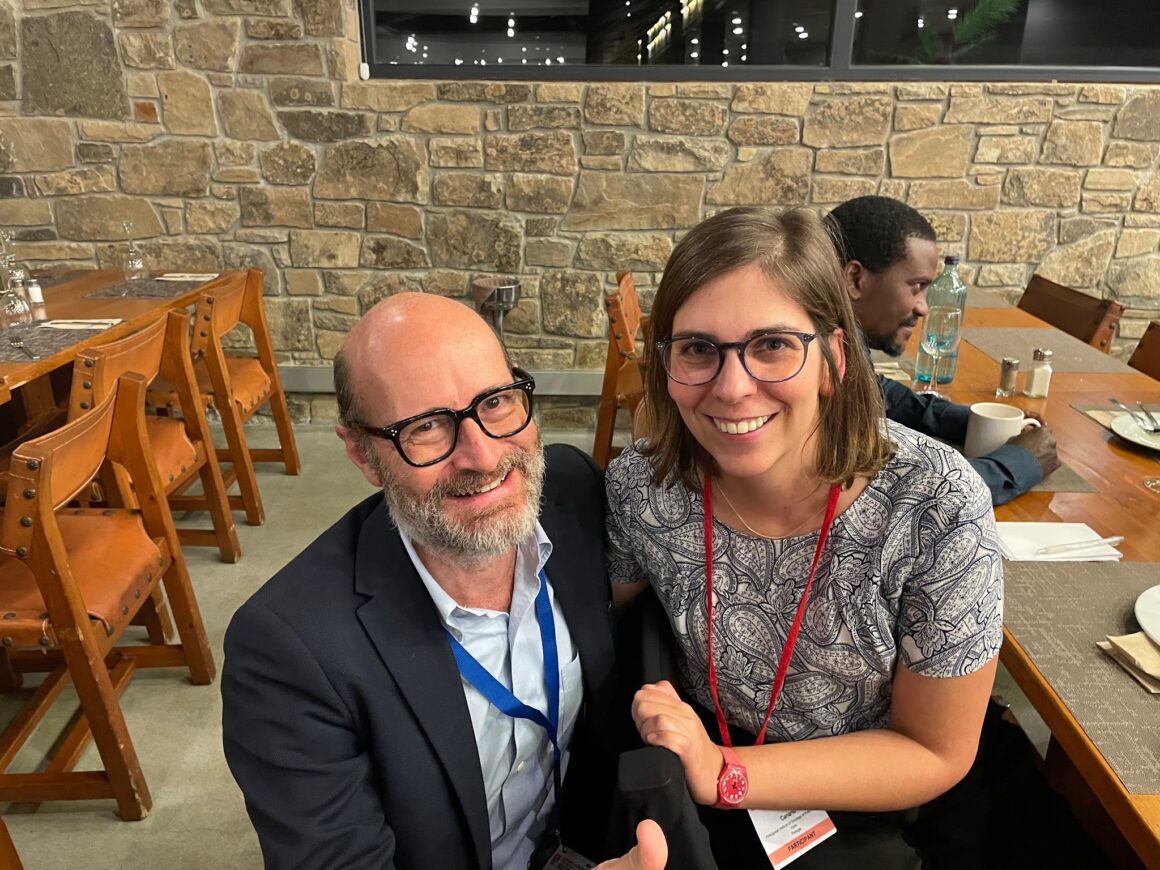
Dr Canário with her ESO mentor Fedro A. Peccatory at ESO masterclass in Barcelona, 2022
“One of the most important lessons from ESO is the value of mentorship and the responsibility to mentor others,” she added.
Beyond individual development, she emphasises the power of networks in shaping sustainable careers and enabling meaningful impact.
“ESO shows that you don’t necessarily need to leave your country to grow. You can build international collaborations and bring change locally, supported by a strong network.”
In this sense, ESO is not just an educational platform, but a framework for professional identity, one that reinforces the integration of research, clinical practice, and mentorship as interconnected pillars of modern oncology.
When Research and Care Inform Each Other
In her daily work, the interplay between research and clinical practice is constant.
Advances in genetic testing, next-generation sequencing, and digital pathology are transforming oncology, but they also demand clinicians who can critically interpret and integrate complex data.
“Being involved in research allows me to analyse results more deeply and to communicate effectively with colleagues across disciplines,” she says. “Clinician-scientists connect worlds that should never have been separated.”
Equally, clinical experience reshapes research questions.
“When designing studies, I bring a different perspective—understanding disease trajectories, treatment timing, and patient realities. This improves the quality of research design.”
The Emotional Dimension of Oncology
Oncology is as emotionally demanding as it is intellectually complex. For Canário, maintaining empathy requires conscious balance.
“I am deeply involved with my patients, and that is precisely why I don’t want to do full-time clinics,” she says. Research and teaching act as “buffers” that sustain her emotional availability.
Beyond professional structure, personal life plays a critical role. Family, friendships, and creative outlets—including a long-standing book club—are essential sources of resilience.
She also speaks candidly about the challenges of combining motherhood with an academic career.
“I had my son during my PhD, and it was very challenging to return to full performance,” she says. “I often felt that we cannot have it all.”
Rather than individualising the issue, she sees it as systemic—one that future generations must address more effectively.
Rethinking What Patient-Centred Care Means
For Canário, patient-centred care is often misunderstood as a soft concept, when in fact it requires rigor and evidence.
“Evidence-based practice applies to everything—from the drugs we prescribe to the words we say.”
Communication, empathy, and relational skills are not innate traits, but competencies that must be developed and continuously refined.
“Nothing is negligible in the medical–patient relationship,” she emphasises.
Looking Ahead
As oncology evolves, Canário sees integration not specialisation alone as the defining challenge.
“We cannot separate research, patient care, and teaching.” she says. “This is the only way forward.”
In a future shaped by artificial intelligence, the uniquely human aspects of medicine will become even more valuable.
“What will remain uniquely ours is the ability to connect, to understand, and to care.”
For Canário, success is not measured in titles or recognition, but in contribution.
“My idea of success is to leave the world a bit better for the next generations,” she says.
That includes advocating for clinician-scientist career pathways, mentoring future professionals, and reinforcing a principle she believes must never be lost:
“The patient–doctor relationship is not an optional part of the deal. It is the foundation of everything we do.”
About the Author
Knarik Arakelyan (PhD) is a psychologist and communications professional with over 14 years of experience in public relations, health communication, and public awareness campaigns. She is currently the Managing Editor of “CancerWorld “ magazine, and serves as PR and Communications Officer at “EMERTÉ” Clinic.