The launch of World Psycho-Oncology Day signals growing momentum behind psychosocial care in cancer, but without structural change, millions of patients will continue to go without the support they need.
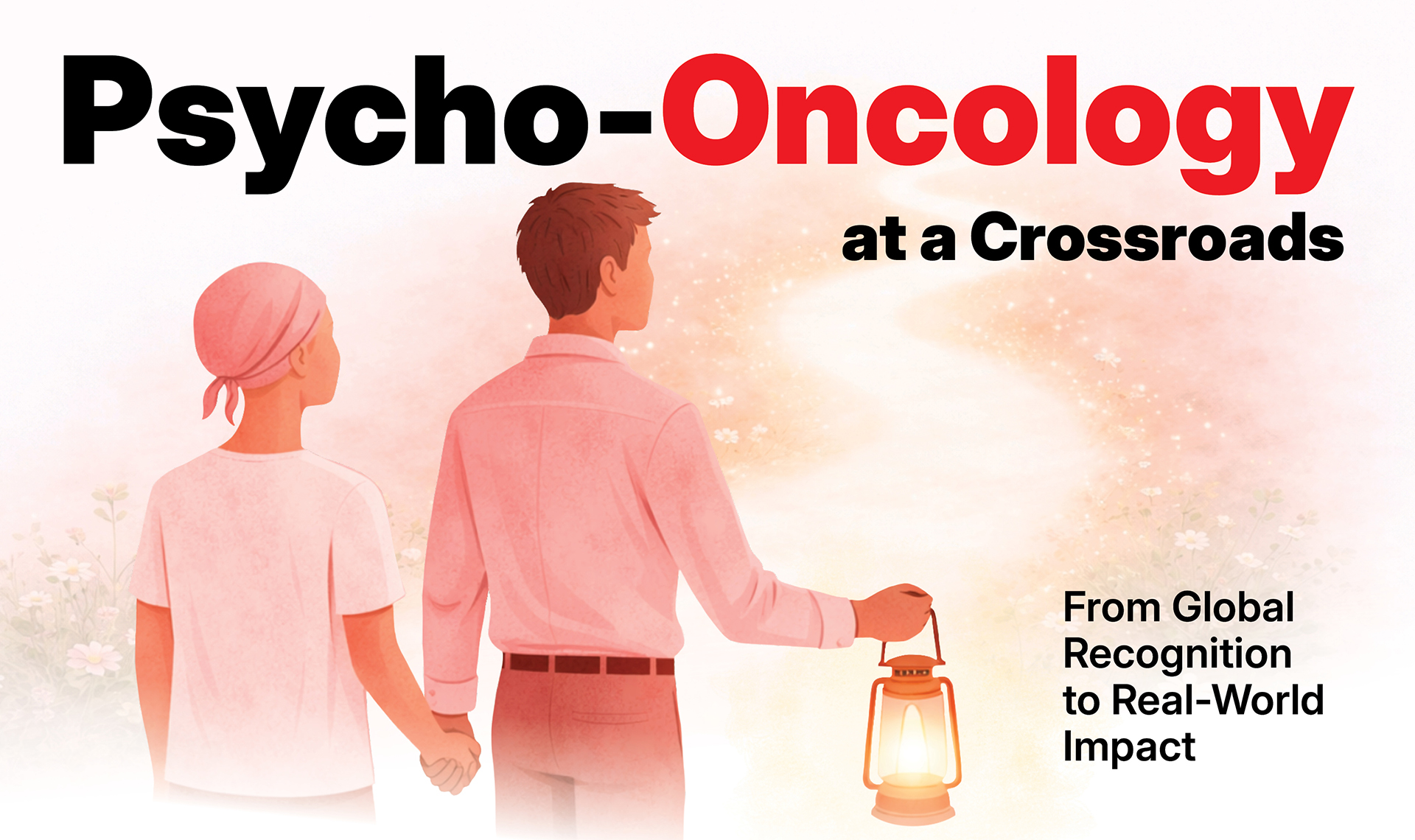
With the announcement of World Psycho-Oncology Day (WPOD), to be observed annually on April 9 starting in 2025, the International Psycho-Oncology Society (IPOS) has issued a timely call to action. At its core, the initiative reflects a growing recognition that cancer care cannot be considered complete without addressing its psychological and emotional toll. Yet recognition alone is not enough.
The Revolution that Redefined Cancer Care, But Never Fully Took Hold
Psycho-oncology, a discipline formally shaped in 1977 by Dr Jimmie Holland, transformed how the oncology community understands cancer. By shifting attention beyond tumours to the lived experience of patients, it challenged the dominance of a purely biomedical model and redefined the meaning of care.
More than four decades later, its influence is undeniable, but its integration remains incomplete. Across healthcare systems, psychosocial care is still too often treated as an optional add-on rather than a core component. At a time when oncology is advancing rapidly through innovation and technology, the human dimension risks being left behind.
A Silent Global Failure: Psychosocial Care Still Out of Reach
“One of the most pressing global challenges in psycho-oncology is the persistent inequity in access to psychosocial care,” says Dr Darren Haywood, Co-Chair of the IPOS Early Career Professionals in Psycho-Oncology Committee. Despite clear evidence linking psychosocial support to treatment adherence, quality of life, and even clinical outcomes, access remains fragmented and under-resourced.
The gap is most visible in low- and middle-income countries, where patients often face cancer without structured psychological or social support. But the problem is not confined to resource-limited settings. Even in high-income systems, psychosocial care is inconsistently embedded in routine practice.
Closing this gap requires more than awareness. It demands structural reform: embedding psychosocial care into standard cancer pathways, strengthening workforce capacity, and developing resource-stratified guidelines that can be implemented across diverse healthcare contexts. “Care must be realistic, adaptable, and equitable,” Haywood notes, emphasising the importance of engaging communities to ensure culturally appropriate, person-centred approaches.
Beyond Awareness: Can Systems Deliver on What Patients Need?
For Dr Rodbin Campos, a psycho-oncologist in Costa Rica’s public healthcare system and Regional Director for Latin America and Central America at IPOS, the challenge is both systemic and urgent. Psychosocial care, he argues, remains undervalued despite its proven impact. “No patient should face cancer without emotional, psychological, and social support,” he says.
Practical solutions are within reach: making psychosocial distress screening a universal standard, integrating psycho-oncology professionals into multidisciplinary teams, strengthening interdisciplinary training, and embedding psychosocial care into national cancer control plans. Yet implementation continues to lag behind evidence.
World Psycho-Oncology Day could help shift this dynamic. By mobilising professionals, institutions, and communities, it offers a platform to translate advocacy into action. Coordinated campaigns both local and global have the potential to raise visibility and push psychosocial care higher up the policy agenda.
The evolution of cancer care over the past half-century has been profound, moving from a near-automatic association with death to an era of advanced therapies and multidisciplinary treatment. But progress cannot be measured by survival alone. Quality of life and the experience of care must carry equal weight.
In this context, psycho-oncology is not a luxury. It is a necessity. The challenge now is not to prove its value, but to ensure its delivery.
About the Author
Adrian Pogacian, PhD, is a licensed clinical psychologist with advanced training in psycho-oncology. His expertise is in Coping with Cancer, Complicated Grief, Posttraumatic Growth and Meaning-Centered therapy approach.