The conversation starts with a small detail that quickly becomes memorable.
There is no coffee.
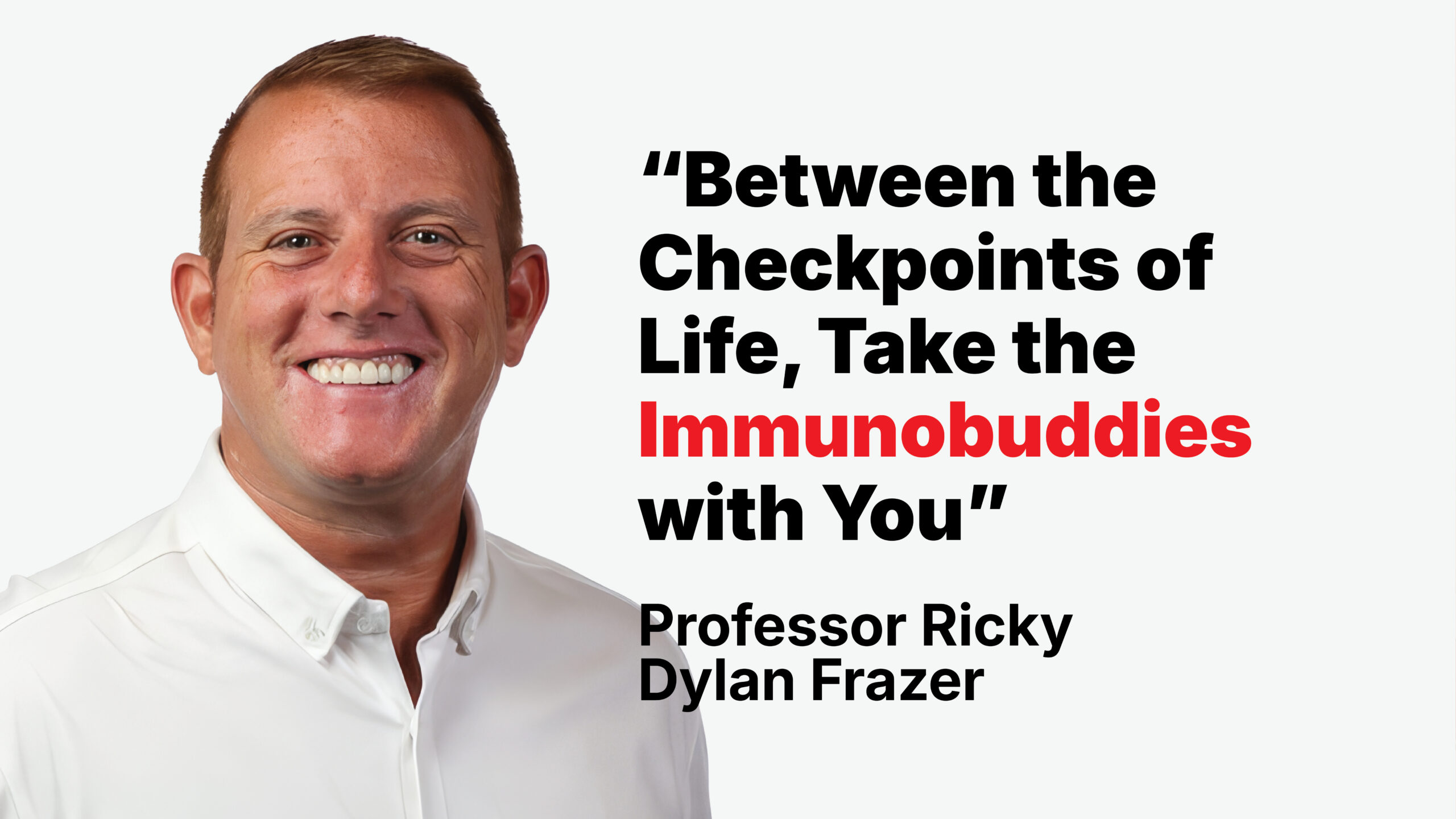
On a podcast built around conversations over coffee, Professor Ricky Dylan Frazer, Consultant Medical Oncologist at Velindre Cancer Centre, Deputy CEO of the Immuno-Oncology Clinical Network, Co-Founder of The Immunobuddies Podcast, and Honorary Lecturer at Cardiff University, joins with a glass of water and mentions, almost in passing, that he has never tried coffee or tea. It is early, he jokes (or not), too early for cider.
From there, the discussion moves quickly into his clinical work, which sits at the intersection of immunotherapy, acute oncology, and complex cancer care. When asked how he arrived at this focus, his answer is direct.
“I just absolutely love it,” he says.
For Ricky, immunotherapy represents a way of practicing oncology that requires continuous problem-solving. Unlike more traditional pathways, it involves multiple organ systems, uncertain presentations, and the need to make decisions without always having clear precedent. It is, as he describes it, a space that rewards clinicians who are comfortable thinking through complexity.
At the same time, it is also a field defined by a significant shift in outcomes. The possibility of long-term survival in metastatic disease has changed not only treatment strategies but also the nature of conversations with patients.
“We’ve got a chance here of durability,” he explains.
A Conversation That Turned into a Network
Ricky remembers standing in Paris during a European Society for Medical Oncology Congress meeting, talking with his colleague and close collaborator, Anna Olsson-Brown. Around them, immunotherapy was already gaining momentum, but something felt incomplete. The treatments were advancing rapidly, but the structures around them — the shared knowledge, the guidance, the support — were not keeping pace.
“It was a community that was developing,” he says. “But it needed something more.”
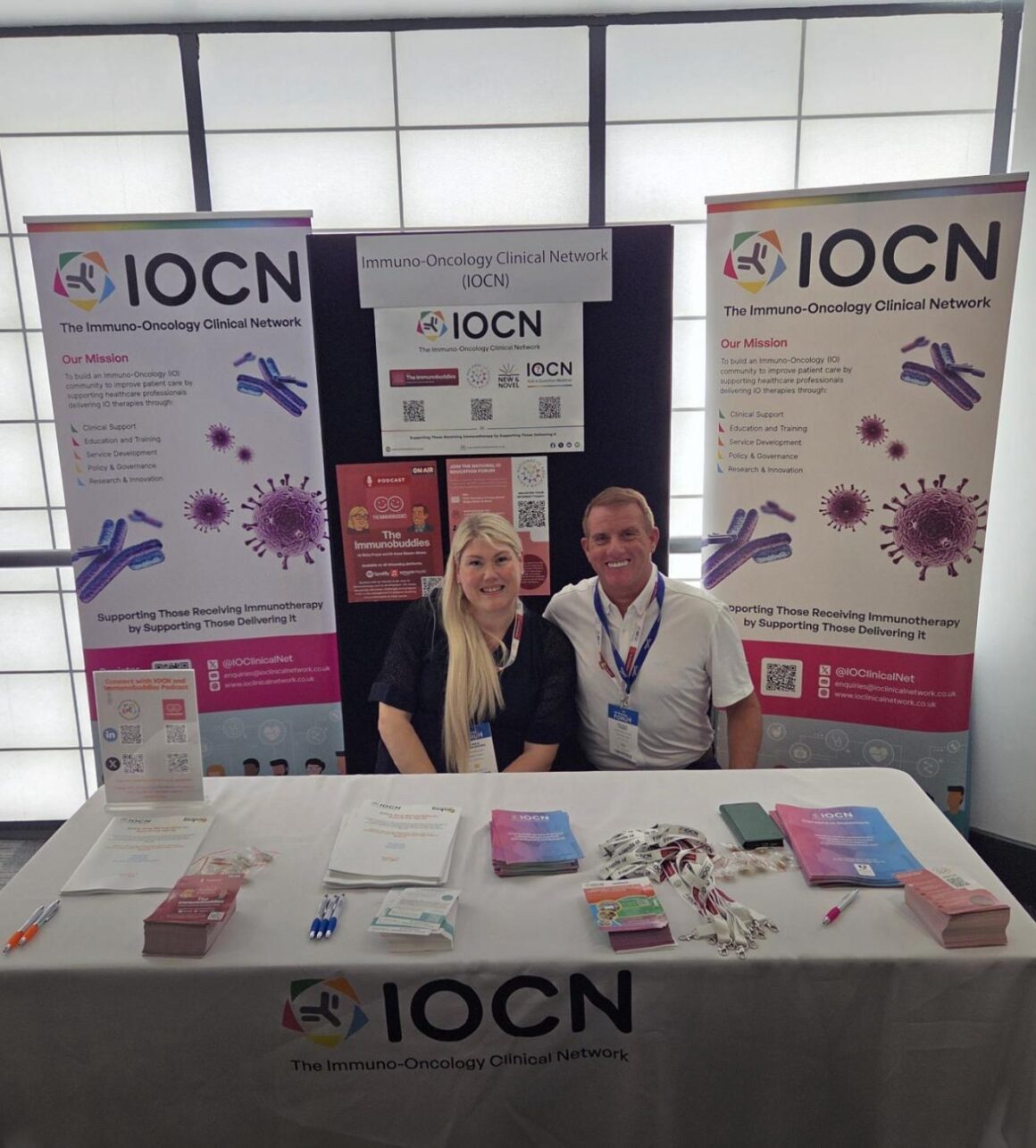
With Professor Anna Olsson-Brown
What followed was not a formal plan, at least not at the beginning. It was a question. What if there were a way to bring people together, to create a space where clinicians could learn from each other in real time, where uncertainty could be shared rather than carried alone?
That question became the foundation of the Immuno-Oncology Clinical Network led by Ricky’s best friend Anna Olsson-Brown.
Looking back, what is striking is how naturally he describes it, not as a major initiative or achievement, but as a response to a need that felt obvious once it was named.
What began as conversations between colleagues has evolved into one of the largest immuno-oncology educational communities in the UK, connecting thousands of clinicians through webinars, case discussions, podcasts and practical guidance
When Progress Outpaces Structure
As the field expanded, so did the challenges. And many of them, Ricky explains, were not about the drugs themselves.
Immunotherapy introduced a new kind of duality. On one side, there was the possibility of long-term survival, even a cure, in settings where that had once seemed impossible. On the other, there were toxicities that did not fit neatly into existing frameworks, complications that could affect almost any organ system and often required expertise beyond oncology alone.
“You can have patients who do incredibly well,” he says, “but patients can also die from their toxicity.”
That tension between promise and risk created gaps — in education, in research, in guidelines. Clinicians were often navigating unfamiliar territory, borrowing approaches from other specialties, making decisions without robust evidence, and doing so under pressure.
For many, these cases were rare but high-stakes.
“You might only see one or two,” he says. “But when you do, you need to know what to do.”
The network, in that sense, became less about knowledge in the abstract and more about access to experience, to advice, to a community that could respond quickly when needed.
Work That Exists Outside the Clock
What he doesn’t romanticize, however, is the effort required to build something like that.
“It’s a lot of work,” he says, and this time there is a trace of fatigue in the honesty.
Much of the work happens before clinics begin and long after they end — not because anyone asked for it, but because the field still needs building.
“6:30 this morning,” he mentions in passing, referring to a meeting with Anna to plan the week ahead.
There is no complaint in the way he says it. If anything, there is a sense that this is simply what the work demands.
“It’s a labor of love.”
And then, almost immediately: “I absolutely love it.”
A Different Kind of Conversation With Patients
If there is one place where the impact of immunotherapy becomes most visible, it is not in guidelines or networks, but in the consultation room.
Ricky reflects on how those conversations have changed over time, particularly in diseases like melanoma. There was a time when the discussion, while difficult, was relatively straightforward: limited options, limited expectations.
Now, the landscape is entirely different.
“I can say to patients with stage IV disease that there’s about a 50% chance they’ll be alive in 10 years.”
He pauses, as if weighing the significance of that shift.
“It’s a wonderful problem to have,” he says. “But it’s a challenge.”
Because hope, while powerful, introduces complexity. It requires careful framing, ongoing communication, and a system that can support both success and complication. It also requires bringing others — intensive care teams, primary care, non-oncology colleagues — into that new reality.
“This isn’t something we can just teach once,” he says. “We have to keep doing it.”
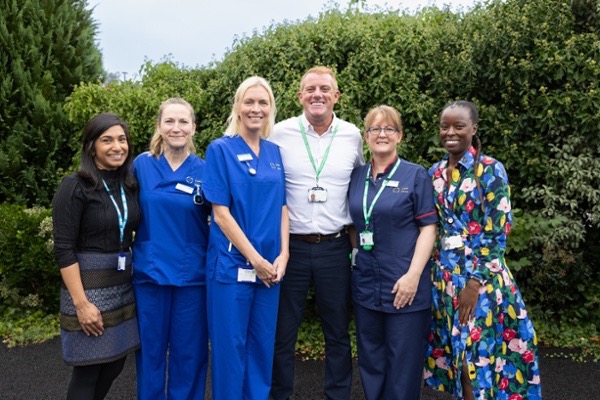
The South East Wales Immunotherapy Toxicity Service
Still Learning
One of the most striking parts of the conversation comes when he speaks about uncertainty, not as a limitation, but as a constant.
“I still underestimate how complex this can be.”
It is not a statement you hear often from someone so deeply involved in a field. But he says it without hesitation.
New toxicities continue to emerge. Conditions he has not thought about since medical school resurface in unexpected ways. Cases arrive that do not fit established patterns.
And in those moments, the response is not to retreat into certainty, but to reach outward.
“I’ve had emails this morning from colleagues asking what I would do.”
There is a quiet sense of responsibility in the way he describes it, but also something else — a recognition that no one is navigating this alone.
Seeing Medicine From the Other Side
A significant turning point in Frazer’s perspective came when he became a patient himself, following a diagnosis of Guillain-Barré syndrome. He spent several months in hospital, experiencing care from the other side of the system.
“I went from being almost a consultant to being bedbound,” he says.
What stayed with him were not only the major clinical decisions, but the details, the routines that structure a patient’s day and that often go unnoticed by those providing care.
The early morning water jug.
The effort it takes to get out of bed.
The uncertainty of not knowing a test result.
“I used to write, ‘patient not in bed, will review tomorrow,’” he reflects. “Only later did I understand how much effort it may already have taken for that patient simply to stand up, wash, or leave the room.”
It is a quiet realization, but a powerful one. That much of a patient’s experience exists outside the moments clinicians are present. And those moments still matter.
What Comes Next
Looking ahead, Ricky does not speak about the future of oncology in terms of individual breakthroughs. Instead, he describes something broader, a shift in what it means to be an oncologist.
Science is becoming more complex. The systems are becoming more interconnected. The role itself is expanding beyond clinical care into leadership, collaboration, and change.
“We’re going to need a different skill set,” he says.
And perhaps, more than anything else, a different mindset. The future, he suggests, will belong to oncologists who can combine scientific expertise with systems leadership, collaboration and communication
“Remain curious,” he says, when asked what matters most. “And never die wondering.”
Between the Checkpoints
At the end of the conversation, I asked him how he would describe his life in a single line. He pauses for a moment, then answers with something that feels both personal and quietly symbolic.
“Between the checkpoints of life, take the immunobuddies with you.”
It is a phrase that stays with you. Because it captures something essential about the way he works: not alone, but alongside others. Not building knowledge in isolation, but sharing it, shaping it, and passing it forward.
In a field that continues to grow more complex by the day, that may be one of the most important contributions of all.
In a field growing more complex by the day, perhaps that is the point. Not advancing oncology alone — but making sure nobody has to navigate it alone.
Take www.theimmunobuddies.com with you too!
About the Author
Vahe Grigoryan is a final-year medical student at Yerevan State Medical University, Assistant Managing Editor at “OncoDaily,” and host of the “ONCOFFEE” podcast. He hopes to pursue a career in oncology, with a strong interest in science, people, and stories behind cancer medicine.