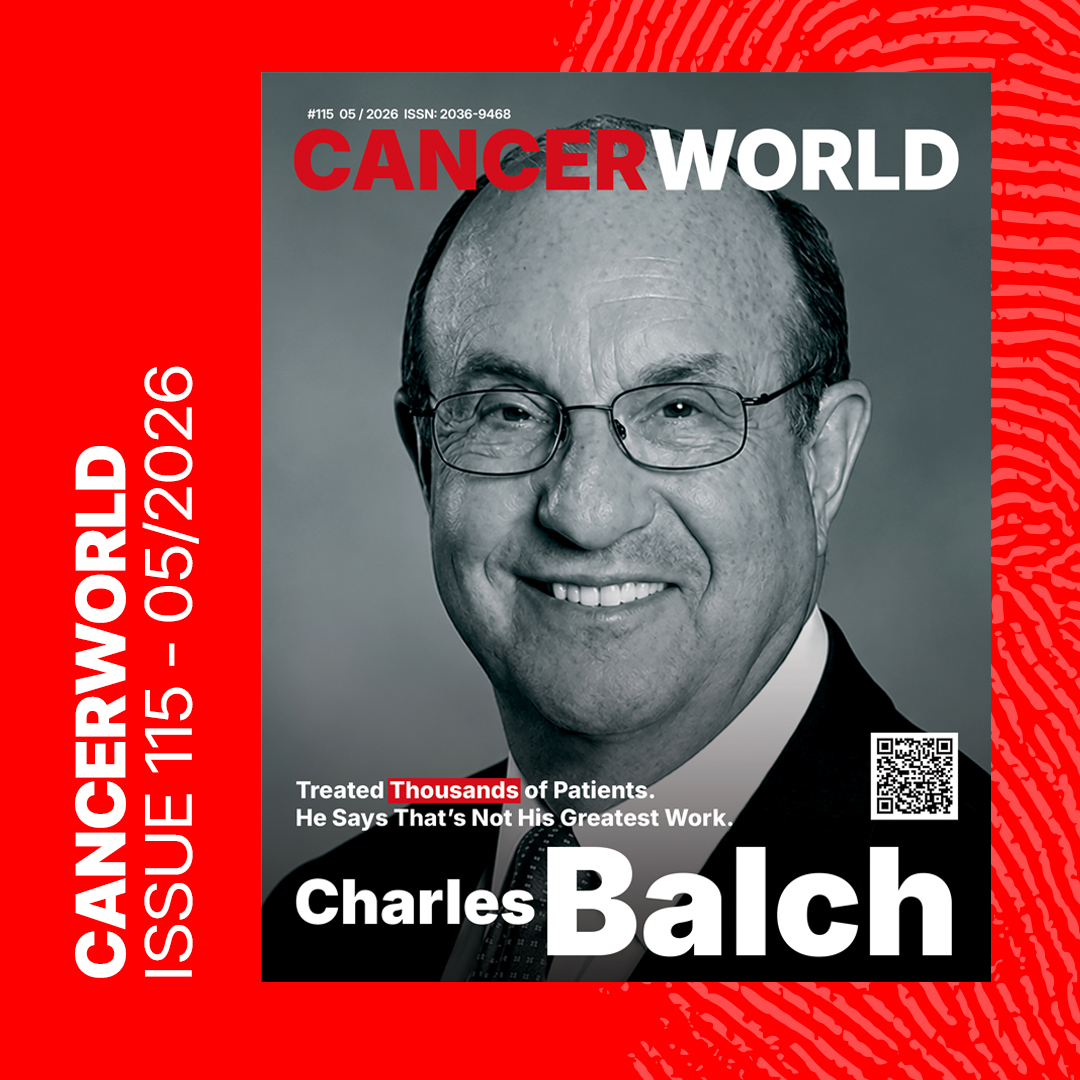
If you try to list everything Charles Balch has done, you quickly realize the list does not help you understand the man.
He has led some of the most important institutions in oncology. He has built systems that are now standard across the world. But when he speaks about his life, he does not begin with titles. He does not begin with what he built. He begins with what he inherited. He begins with his father.
“I was a war baby,” he says. “My father was a research chemical engineer during the war. He invented the commercial production of rayon, because they couldn’t get nylon anymore.”
A wartime problem. A practical solution. A legacy built not from ambition alone, but from necessity needing imagination.
Later, his father would build a company that developed the commercial production of saccharin, then move into academia, becoming an engineering department chair and a dean. But what stayed with Charles Balch was not the positions—it was the pattern beneath them.
“He had a vision. He started things that had value to society. And he left behind a real legacy.”
That idea — that work should outlast the individual — is not a philosophy he arrived at. It is one he was born into. Fifty years later, it remains the standard against which he measures everything…Including himself.
“You Won’t Know Unless You Try”
Charles Balch grew up in Toledo, Ohio, far from the centers of academic power. He worked hard, excelled, but stayed within what seemed realistic.
Until a mentor said something that took about four seconds and changed everything.
“I was applying to local medical schools,” he recalls. “And a surgeon I worked with said, why don’t you apply to Harvard and Columbia?”
Charles laughed. “I said, I’d never get in.”
The answer came back without hesitation.
“You won’t know unless you try.”
He tried.
He got in.
“That,” he says, “was transformational.”
It would not be the last time. Throughout his career, at every critical turn, someone would appear who could see further down the road than he could.
It was a pattern he would eventually recognize as one of the quiet gifts of mentorship: being seen more clearly than you see yourself.
What it really taught him was this: the ceiling is usually someone else’s assumption, not your own limit.
It is a conviction he would later find already waiting for him — embedded in the DNA of the institution he would help define, in the words of a man he considers among the greatest in the history of oncology.
R. Lee Clark — MD Anderson’s founding President — left behind a mandate as simple and as demanding as anything in medicine: “Make no small plans.”
Falling into the Future Before it was Visible
His early career followed the academic training script precisely—surgery at Duke University, then the National Institute of Health.
But at NIH, something shifted.
“I took master’s courses in immunology,” he says. “And my mentor was Nobel laureate Baruj Benacerraf.”
The field was young. Uncertain. Not yet central to oncology.
“It was just intuitive,” he says. “I really liked it.”
No grand strategy. No calculated pivot. Just curiosity, pulling him somewhere he hadn’t planned to go.
At Scripps Clinic, he overturned an assumption the field had held for years — demonstrating that T lymphocytes originated not from the thymus, as most assumed, but from the bone marrow. The work would later be recognized as foundational to modern immunology and cancer immunotherapy.
And yet, for all the pull of the laboratory, something older and deeper kept drawing him back.
Cardiovascular surgery had been the plan for years — a distinguished, demanding, certain future. Then it wasn’t.
“I was slated to be a cardiovascular surgeon,” he says. “But I fell in love with general surgery and surgical oncology.”
Some detours, it turns out, become the main road.
Building a Field that Didn’t Yet Exist
When Charles Balch entered surgical oncology, he was, quite literally, entering a surgical specialty that did not yet exist.
“My chairman wasn’t sure it was a legitimate specialty,” he recalls.
“So, for two years, I did transplantation half the time and surgical oncology the other half—in case it failed.”
It did not fail. It became so fundamental to cancer care that the original skepticism now seems like a historical curiosity
Prof. Balch became one of the central figures defining what surgical oncology should be.
He led transformational changes in the Society of Surgical Oncology and founded its journal, the Annals of Surgical Oncology. Now the largest and most prestigious in the field.
“We had to define what a surgical oncologist actually was,” he says. “Because it didn’t exist formally.”
What began as a fight for legitimacy became the architecture of a discipline — the definitions and certification standards that would determine, for generations of surgeons after him, what it meant to treat cancer rather than simply operate on it.
Fifty years later, it is impossible to imagine oncology without its surgical perspective. The integration of surgery into the broader oncology team — alongside medical and radiation oncologists, guided by evidence rather than tradition — is now simply how cancer care works.
At the time, none of it was certain. Not the discipline. Not its future. Not the young surgeon betting his career on both.
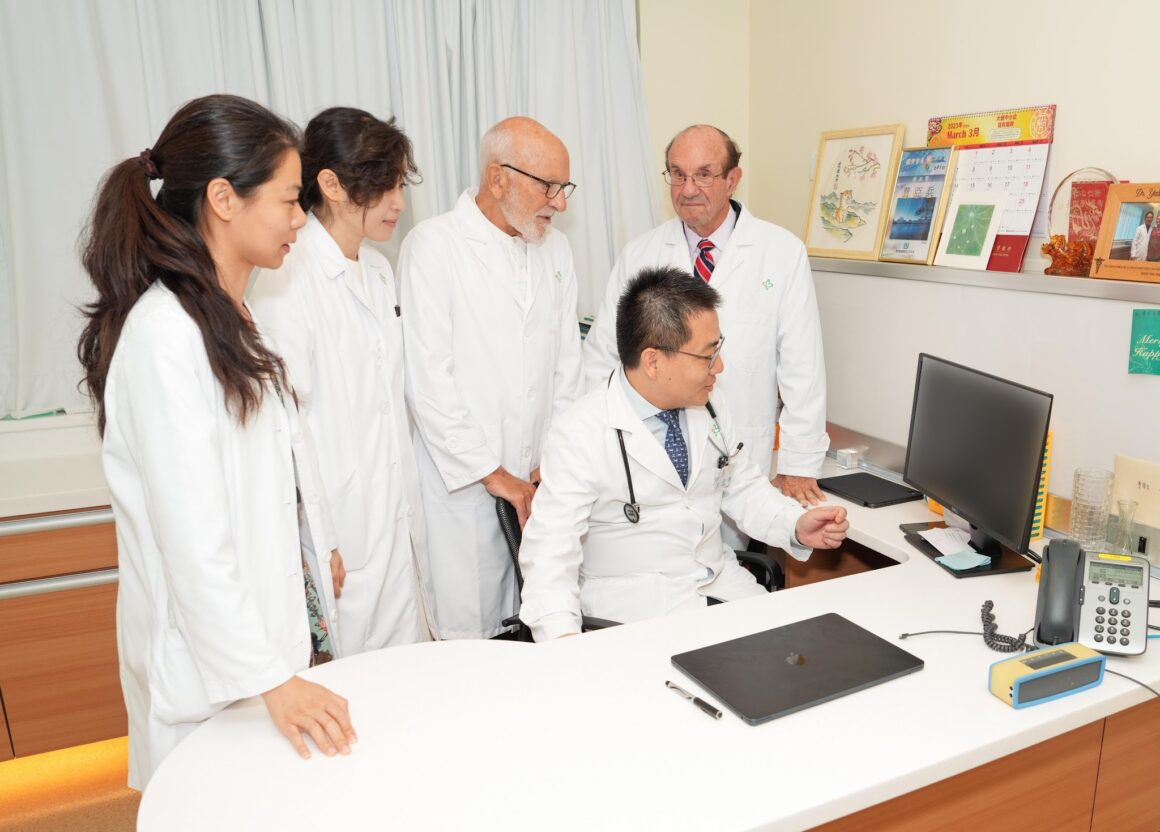
Professors Charles Balch and Armando Giuliano (back row, first and second from right) exchange ideas with the oncology and breast surgery teams | Photo source: KIANG WU HOSPITAL’s official webpage
At MD Anderson
He had already transformed the surgical programs, established new specialty departments, and launched research and training initiatives across the multiple surgery departments. He thought he understood the trajectory of his career at MD Anderson.
Then came the Saturday morning phone call.
“The president called me,” he says. “He said, starting Monday, I want you to run the hospital and clinics.”
There was no long preparation. No gradual transition. Just responsibility — handed across a desk on a Saturday, effective immediately.
“I was surprised,” he admits. “But we gathered a great team and what we built together became a model other institutions would spend years replicating.“
Rebuilding the System Around the Patient
For decades, the hospital was organized around its own convenience. Patients moved through it like visitors who hadn’t been invited — from clinic to clinic, department to department, carrying their records and repeating their stories to each new face.
Charles Balch and his team reversed that logic.
“We reorganized the entire delivery system around diseases,” he says.
Instead of moving the patient from clinic to clinic, the system moved to the patient.
What seems like common sense now was, at the time, an act of institutional courage.
“The patient comes to one site,” he explains. “And every doctor, nurse, therapist—everyone—is there focused on managing that one type of cancer.”
“The patients loved it,” he says simply.
The structural change was visible. The cultural change ran deeper.
“A hospital should be a hotel for sick people,” he says — a place where compassionate care, human dignity, and genuine hospitality are extended as naturally as medical treatment. Because a person with cancer does not arrive alone. They arrive with fear, with family, with a life that has been violently interrupted.
The disease is only part of what walks through the door.
What followed would reshape how cancer care is delivered at the largest cancer center in the world, and far beyond it.
Leadership without Pretense
Charles Balch does not romanticize leadership.
He dissects it.
“My success is not about me,” he says. “It’s about the team.”
“My role is vision and strategy,” he explains. “I’m not as strong in the details of implementation.”
He says it without apology. Without qualification. As a fact about himself that he discovered early and has never found reason to hide.
Some leaders deny that the gap exists. He treats it as the first item on the org chart.
“You hire to your weakness,” he says. “And then the team moves forward.”
There is no attempt to do everything.
Only to hire talent, build successful programs, and create organizational structure that is sustainable.
The institutions, the standards, the people he trained — none of them require his presence to keep moving forward. He planned it that way.
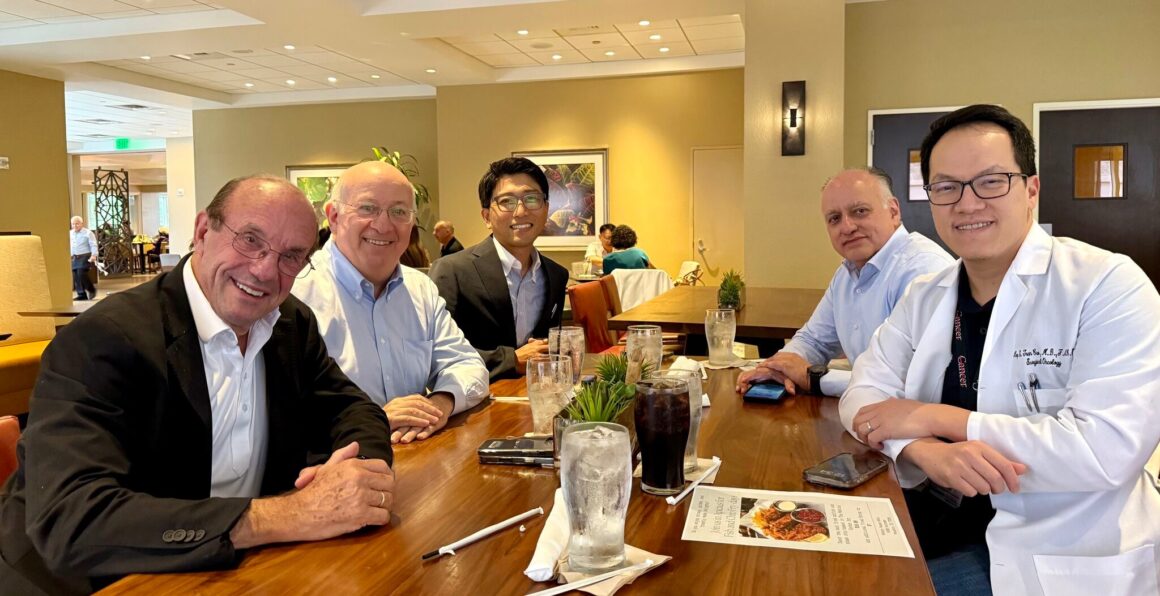
Having lunch at UT MD Anderson Cancer Center Department of Surgical Oncology | Photo source: LinkedIn
From Radical Surgery to No Surgery
Prof. Balch describes oncology not as a field, but as a succession of disruptions — each one displacing the habits of generations, each one demanding rigorous evidence before it could become a standard of care.
He spent decades building that evidentiary foundation. Now he is watching it bear fruit in ways that would have seemed implausible when he began.
“When I started,” he says, “surgery was the primary treatment.”
Then came targeted therapy. Immunotherapy. Precision oncology. Each one a revolution. Each one, eventually, a new baseline.
Now, another shift is happening.
“In melanoma,” he says, “we went from radical surgery to no surgery in selected patients after only 6 weeks of combination immunotherapy.”
He lets that sit for a moment.
The man who spent decades perfecting surgical technique has lived long enough to watch surgery itself being outpaced — not by a bigger operation, but by a treatment that makes the radical operation unnecessary.
“That’s revolutionary.”
The Problem that Worries Him Most
For all the progress, Charles Balch sees something coming that science alone cannot stop.
Not a failure at the frontiers of science. About something happening right now, in every country, to people in the middle of their lives.
“Cancer is increasing in young and middle-aged individuals,” he says.
Not at the edges of life. In the middle of it.
“These are our workforce,” he says. “Our teachers. Our parents. Our workforce… the vanguard of the economy.”
The causes converge from every direction, such as — what we eat, what we breathe, how our bodies carry decades of chronic inflammation, and what we inherited without ever knowing it. They interact in ways medicine is only beginning to understand, and they are accelerating.
But the impact is clear.
“The productivity loss is going to affect every economy,” he says. “But before it’s an economic problem — it’s a human one affecting families and financial stability.“
If He Could Redesign the Fight Against Cancer
When asked what he would prioritize, his answer is immediate.
“I think everyone needs to know their inherited risk for cancer, heart disease and diabetes,” he says.
“And genetics,” he quickly adds. “The knowledge of what your own biology is quietly planning, decades before it announces itself.”
“We have discovered large and small mutations that allow us to identify the young people at high risk who are more likely to develop cancer BEFORE they qualify for the current screening protocols.”
It’s about targeted early detection…because the window for saving a life is almost always earlier than anyone acts on it
“Cancer is a silent killer,” he says. “If you wait for symptoms, it’s too late.”
“Of course, we need to focus on lifestyle,” he says. “The type of food we eat. The air we breathe with tobacco products.”
Then vaccines — a tool already in existence, still vastly under deployed.
“Cancer prevention vaccines could save a million lives,” he says. “We already have the tools. We are not using them at scale.”
He imagines a future where this is not science fiction. Every element of it already exists. What is missing is the will to make it universal.
“Every person will know their genetic risk,” he says. “It will be protected information, used by healthcare providers just like we know and use their blood type.”
Not as a burden. As a head start.
Information that arrives in advance, not at diagnosis. That, he believes, is where the fight against cancer first begins.
From ASCO to the World
As CEO of American Society of Clinical Oncology, already one of the most influential organizations in America, Charles Balch helped expand its identity.
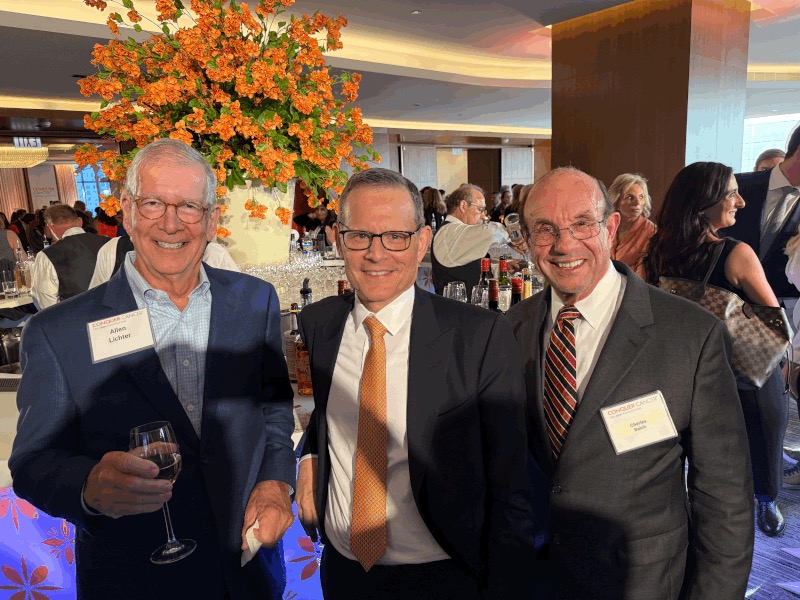
Celebrating 25 years of CEO leadership at ASCO, June, 2025 | Photo source: LinkedIn
“At the time, we were the American society,” he says. “But there was a global need.”
Then, with the quiet conviction that would define his tenure: “Cancer doesn’t recognize borders. And neither should we.“
Together with the elected volunteer leaders, he pushed outward—Africa, Asia, Europe, Latin America.
Into places where oncology infrastructure was thin and the need was greatest.
“We put a globe inside the ‘O’ of ASCO,” he says. “As a statement of our global strategy.”
It was a small design change with an explicit declaration embedded in it.
He traveled extensively, championing collaborations across specialties, helping organize and grow oncology societies in Latin America, Africa and Asia.
He urged surgeons to think beyond the operating room — to embrace oncology principles, join forces with medical and radiation oncologists, and commit to the clinical trials that would generate the evidence the field needed.
Today, that shift defines a vital mission of the organization impacting almost every country.
The experience changed not just the organization. It changed how he understood himself.
What he gave ASCO, ASCO gave back — in a different form.
“Over my career,” he says, “I transformed from a general surgeon to a surgical oncologist. After my experience with ASCO, I consider myself an oncologist who is also a surgeon.”
It is a distinction that sounds subtle. It is not.
It represents a fundamental reordering of identity — from the instrument first, to the patient first…from the operation to the outcome.
ISOPT: A Different Kind of Mission
After half a century of building institutions, Charles Balch is building something that looks nothing like an institution.
Everything he has built until now required walls, hierarchies, budgets, gatekeepers. What he is building now requires none of those things.
Education. Prevention. Early Detection. Intervention.
Not treatment first. Everything that comes before it.
Through the International Society of Oncology Prevention and Treatment, he is building something deliberately open… designed from the beginning to reach the people before they ever enter the realm of oncology institutions.
Not for those already inside the system. For everyone outside it.
“I wanted free access to information — virtually,” he says. “And in multiple languages, ensuring that all the innovation and science of early detection, genetic testing, risk-based screening, and multidisciplinary cancer treatments are available on every continent and in every major language.”
For most of medical history, knowledge traveled slowly — and unevenly — across language barriers. That constraint, he believes, has just been removed.
Technology has handed him something previous generations of global health advocates never had: the ability to collapse language as a barrier entirely.
“I embrace these advances in artificial intelligence. I use it every day.”
“Now you can hear me with AI talk about cancer prevention in Chinese, Spanish, Portuguese,” he says. “That’s the future.”
And beneath the technology, the architecture, and the multilingual reach, the mandate reduces to a single uncomfortable truth.
“Fifty percent of cancers could be prevented or cured with what we already know,” he says.
“Research and technology advances over the past three decades have provided the tools and information needed to prevent half the world’s cancers.”
“That knowledge already exists — in journals, in guidelines, in genetics, in the hands of trained oncologists. It simply isn’t reaching all the people who need it most.”
The challenge is not discovery.
It is distribution.
What Matters in the End
When Charles Balch takes stock of fifty years in medicine, the ledger defies summary.
“I’ve treated thousands of patients,” he says. “Published many highly cited papers.”
He says it not with pride, but with the quiet accuracy of someone taking inventory before moving to what actually matters.
Then he pauses.
“But the biggest impact is mentoring.”
He thinks about the surgeons, oncologists, and researchers he trained — now leading cancer centers, building their own programs, training their own next generations across six continents.
“The next generation is my real legacy,” he says.
“My publications will be superseded. The patients I’ve cared for are the reason I came to work every day. But the people I trained and mentored are building the future and that future belongs to them.“
It is the most accurate accounting of what a life in medicine can mean, when it is spent not just treating disease, but multiplying the number of people capable of doing so.
A Life of Continuous Reinvention
He has been asked for career advice many times. The answer has not changed. It has only deepened.
“Work hard,” he says. “Have strategic goals. Be adaptable to change.”
He pauses. “And reinvent yourself — not once, but continuously. Because the field you enter will not be the field you retire from.”
“Above all else,” he says,” remain a student. Of medicine. Of the world. Of your own assumptions. The moment you believe you have fully arrived is the moment you begin to fall behind.”
“You need to see the world from different perspectives and look for a better future,” he says. “Without that, you’re just executing. With it, you’re contributing something that wasn’t there before.”
And then, as he always does, he returns to the seven words that changed the direction of his life before it had fully begun. Spoken by a surgeon in Toledo, Ohio, decades ago, to a young man who had already decided what was possible for him.
“You won’t know unless you try.”
He has spent fifty years trying it. The young man from Toledo, Ohio, who almost didn’t apply is still reinventing himself, medicine, and focused on saving lives globally. He would not recognize the distance traveled.
***
Charles Balch did not simply build a career in oncology.
He helped build its structures—its systems, its collaborations, its future direction.
And if there is one idea that runs through everything he says, it is this:
“Progress in oncology will not be defined by what we can do at the edges of science, but by how early we act, how widely we share what we already know, how well we build across borders and specialties, and how honestly we reckon with the risks that real change has always required of those who lead it.”
He has spent fifty years proving that conviction right.
He is not finished.