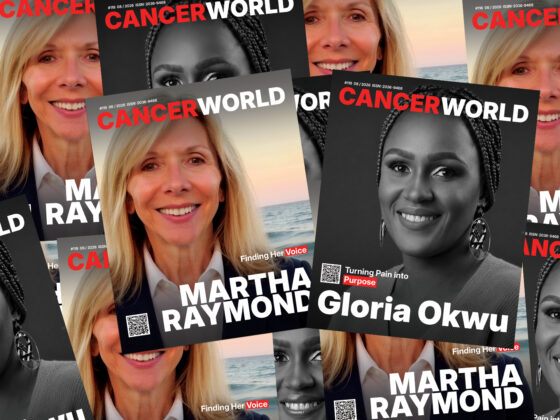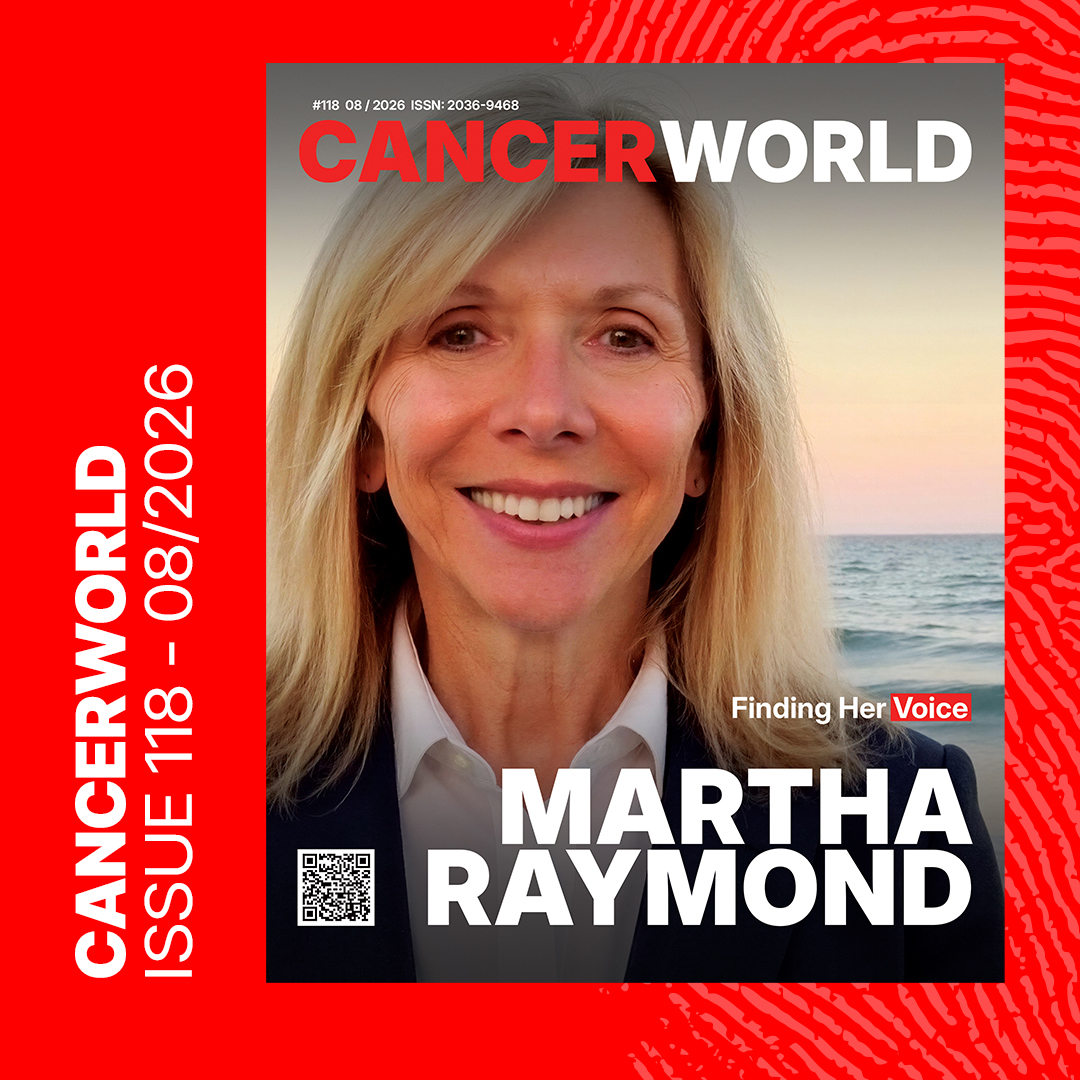
When Martha Raymond, the Founder and CEO of the GI Cancers Alliance and the Raymond Foundation, was seven years old, she lost her father to colon cancer. Years later, her mother’s illness would change the course of her own life. Between those two losses, she discovered something that would shape the next four decades: the courage to speak about cancer openly. That voice would help redefine patient advocacy in gastrointestinal oncology—not by speaking for patients, but by reminding medicine that patients had voices all along. The challenge was learning to listen.
The Questions That Changed Everything
“What happened to your father?”
It was the question waiting for Martha Raymond when she returned to school.
She was seven years old. Her father had died from colon cancer, and she suddenly found herself trying to explain a disease that many adults still avoided naming. It was the late 1960s. Cancer was often wrapped in silence. Her classmates, however, simply wanted answers.
Her mother encouraged her to give them.
Every conversation became a lesson in honesty rather than fear.
Not everyone welcomed those conversations. One parent even complained that Martha was talking about cancer with other children and suggested she should stop. Her mother disagreed. She believed people needed to understand that cancer could happen to any family, and she was proud of her daughter for trying to help others even while their own family was grieving. Afterwards, she took Martha out for ice cream covered in colourful sprinkles—a small ritual that transformed painful moments into acts of quiet courage.
Looking back, Raymond recognises those conversations as the beginning of everything that followed.
“I found my voice,“ she says.
At the time, she could not have imagined where that voice would lead. What began as a child’s attempt to answer difficult questions would become the foundation of a lifetime dedicated to ensuring that patients were heard.
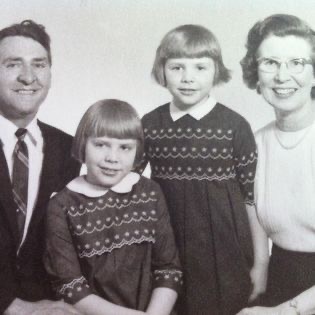
Raymond Family
When Care Continues After Treatment
Years later, another experience would give that voice its purpose.
As life slowly settled into a new normal after losing her father, Raymond found another way to process grief. Her mother introduced her to Broadway musicals, and music became both an escape and a source of confidence. Off stage she remained painfully shy; on stage she discovered a voice she had never known she possessed. She studied vocal performance, earned scholarships and eventually moved to New York to pursue a career in music. She believed she knew what her future would be—until cancer changed its course once again.
Martha was in college and advocacy was nowhere in her career plans until her mother was also diagnosed with colon cancer
Like countless families, they learned the language of oncology together—appointments, test results, treatment options, hope followed by uncertainty. Not long after her mother’s diagnosis, Raymond accompanied her to her first oncology appointment, hoping for reassurance but fearing the worst.
When Raymond asked about treatment options, the physician dismissed her question with a laugh and a roll of his eyes. Sitting beside her, her mother lowered her head.
In that instant, the advocate in her emerged.
Raymond stood up and told the physician they were leaving. They would find another doctor—one who would provide not only expert care, but humanity and respect.
“My mother had always stood up for me,” she says. “Now it was my turn to stand up for her.”
That moment changed Raymond’s understanding of care forever.
Treatment may end. Care cannot.
“I had absolutely no idea what I was doing,” she recalls of her first steps into advocacy. “I simply knew that patients and families needed someone beside them.”
She began visiting oncology centres and academic institutions, speaking with physicians, nurses, researchers and social workers. But, as she puts it, “most importantly, I listened.” Patients told her what was missing. Families described where they felt abandoned, frightened or unheard. Those conversations became the foundation of every programme and initiative she would go on to build.
What began as volunteering soon became a vocation.
There was no roadmap for this work. Patients were seldom involved in decisions about research, treatment planning or quality of life. Much of what she built came directly from listening to the people she hoped to serve. Those conversations—with clinicians, families and, above all, patients themselves—shaped the programmes and partnerships that followed.
Over the next four decades, Raymond helped transform the role of patients in gastrointestinal oncology, working alongside clinicians, researchers, professional societies and policymakers to ensure that lived experience became part of how cancer care is designed and delivered.
She has never described that work as giving patients a voice.
Patients, she believes, have always had one.
The real challenge was helping healthcare learn to listen.
A Different Story of Progress
The story of modern oncology is often told through scientific breakthroughs.
New medicines. New technologies. New discoveries.
Raymond tells the story of oncology differently. Not through milestones in science alone, but through the gradual recognition that patients belong in the conversations shaping their own care.
It is a transformation she has witnessed firsthand over more than four decades.
Patients as Partners
When Martha Raymond began working in patient advocacy, patients were rarely invited into the conversations that shaped cancer care. Decisions about research, policy and clinical trials were made largely without the people living with the disease. Over the next four decades, Raymond would become one of the people helping to change that reality.
Patients became partners in research, contributors to clinical trial design, advisers to regulatory agencies and collaborators in healthcare policy. What was once considered exceptional is now increasingly recognised as essential.
For Raymond, however, the greatest transformation is not where patients sit.
It is how they are perceived.
Raymond believes scientific evidence and lived experience answer different questions. One explains the disease. The other explains what it is like to live with it. Neither, she argues, is complete without the other.
“Patients have always had voices,” she says. “What they too often lacked was a system prepared to listen.”
That simple observation has guided her life’s work.
Listening is not a gesture of compassion. It is the beginning of better medicine.
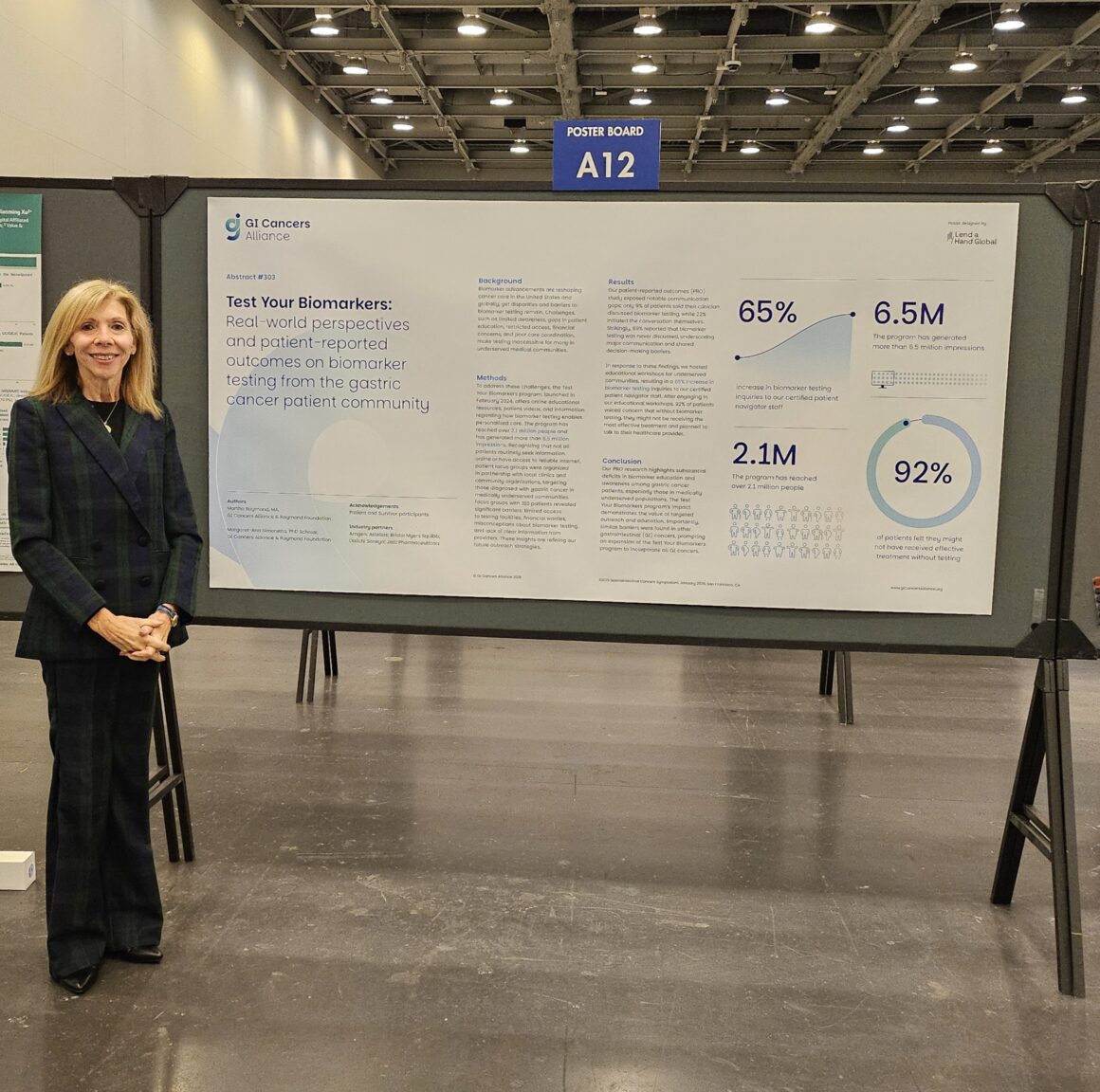
Communication is Care
Few ideas have shaped Raymond’s philosophy more profoundly than communication.
She has witnessed extraordinary scientific advances transform cancer treatment, yet she believes some of the most important moments in oncology still happen without technology.
They happen in conversation.
It is a lesson that reaches back to her own childhood, when difficult conversations became the beginning of understanding rather than something to avoid.
Patients may not remember every statistic they are given, but they remember how difficult news was delivered. They remember whether someone paused long enough to let the silence settle, whether they felt able to ask another question, and whether they were treated as individuals rather than diagnoses.
Those moments influence trust every bit as much as treatment itself.
“Communication is not simply how we deliver care,” Raymond says. “Communication is care.”
The distinction matters.
Communication is often viewed as a skill that supports medicine.
Raymond sees it as medicine.
The most effective treatment cannot achieve its full potential if patients do not understand it, trust it or feel confident enough to participate in the decisions surrounding their care.
As oncology becomes increasingly sophisticated, the human conversation becomes more—not less—important.
Every advance in science raises new questions for patients and families. Helping them navigate those questions with honesty, empathy and clarity is not separate from clinical care; it is an essential part of it.
From Representation to Partnership
The language of patient advocacy has evolved alongside oncology.
For years, the goal was often described as giving patients a voice.
Raymond has never been comfortable with that expression.
Patients already have voices, she says.
The responsibility lies with healthcare to hear them.
That distinction reflects one of the most significant cultural shifts in modern oncology.
Raymond has watched patient advocacy evolve from representation to genuine partnership. Increasingly, it means involving people with lived experience from the very beginning—when research priorities are defined, clinical trials are designed and healthcare policies are developed.
The result is better science. Research questions become more relevant. Clinical trials become more patient-centred. Outcomes become more meaningful. Innovation becomes more closely connected to the realities of living with cancer.
For Raymond, this is not simply better advocacy.
It is better oncology.
The transformation, she has witnessed, extends far beyond patient representation. It reflects a broader recognition that scientific excellence and lived experience are complementary forms of knowledge.
As oncology enters an era shaped by precision medicine, artificial intelligence and increasingly personalised care, Raymond believes the challenge is no longer whether patients should be included, but how every innovation can be developed in partnership with the people it is ultimately meant to serve.
That conviction naturally leads to the next question not how oncology has changed, but where it is going next.
Precision Must Include Equity
After spending more than four decades helping shape patient advocacy, Martha Raymond has earned the rare privilege of looking both backward and forward at the same time.
She has seen multidisciplinary care become the norm, precision medicine redefine treatment, and immunotherapy transform outcomes once thought impossible. Today, artificial intelligence promises to reshape everything from diagnosis to clinical decision-making.
Each advance, she believes, brings oncology closer to truly personalised care.
But only if it reaches the people who need it.
“Precision medicine fulfils its promise only when precision is accompanied by equity.”
For Raymond, that is one of the defining challenges of modern cancer care.
Scientific breakthroughs have little meaning if access depends on where a patient lives, which healthcare system they belong to, or whether the necessary diagnostics and treatments are available. Innovation and equity are not competing priorities—they are inseparable.
“The future is incredibly exciting,” she says. “But we have to ensure that innovation benefits all patients, not just those fortunate enough to live in the right place or access the right healthcare system.”
Throughout her career, Raymond has advocated not only for scientific progress, but also for ensuring that progress reaches every patient. For her, the success of precision medicine will ultimately be measured not only by its discoveries, but by its accessibility.
Technology Should Create More Time to Care
For Raymond, the promise of artificial intelligence is surprisingly human. Used thoughtfully, she believes, it can accelerate research, support clinical decision-making and reduce the administrative burden that often keeps healthcare professionals away from what matters most: people.
“The future of oncology depends on bringing technological innovation and human connection together,” she says. “If innovation allows clinicians to spend more time listening, explaining and building trust with patients, then technology will have fulfilled one of its greatest purposes.”
That perspective reflects a philosophy she has carried throughout her career.
Technology should never replace the human relationship at the centre of medicine.
It should strengthen it.
As cancer care becomes increasingly sophisticated, the need for empathy, trust and meaningful conversation only grows. If artificial intelligence can return time to clinicians—time to listen, to explain and to reassure—then it will have achieved something that extends far beyond efficiency.
Its greatest contribution may not be making medicine faster. It may be making medicine more human.
Stewardship Over Ownership
The future Raymond envisions depends not only on innovation, but on collaboration.
Cancer care has become too complex for any one discipline or any one organisation to advance alone. Progress now relies on clinicians, researchers, nurses, patient advocates, policymakers, industry and professional societies working together, each contributing a different perspective to a shared mission.
Raymond describes that responsibility with a single word:
Stewardship.
“The future of oncology will not be shaped by ownership,” she says. “It will be shaped by stewardship.”
Ownership implies control.
Stewardship implies responsibility to share knowledge, build partnerships and leave the field stronger than we found it.
It is also how she defines leadership.
The leaders she most admires are not remembered because they dominated conversations, but because they encouraged others to contribute.
“The most enduring leaders are remembered not because they had the loudest voices, but because they helped others find theirs.”
Those words echo the journey that began with a seven-year-old girl answering questions about her father’s death.
The voice she found as a child became a lifelong commitment to helping others be heard.
Now, as oncology enters a new era, Raymond believes its greatest advances will come not only from laboratories or algorithms, but from people willing to learn from one another, work across disciplines and keep patients at the centre of every decision.
That, she believes, is how the next chapter of oncology will be written.
Hope in the Next Generation
Ask Martha Raymond what gives her hope, and she does not begin with technology.
She speaks about people.
She sees a new generation of clinicians, researchers and patient advocates entering oncology with a different mindset—one in which collaboration is expected, patient engagement is increasingly embedded in research and care, and communication is recognised not as an optional skill but as an essential part of medicine.
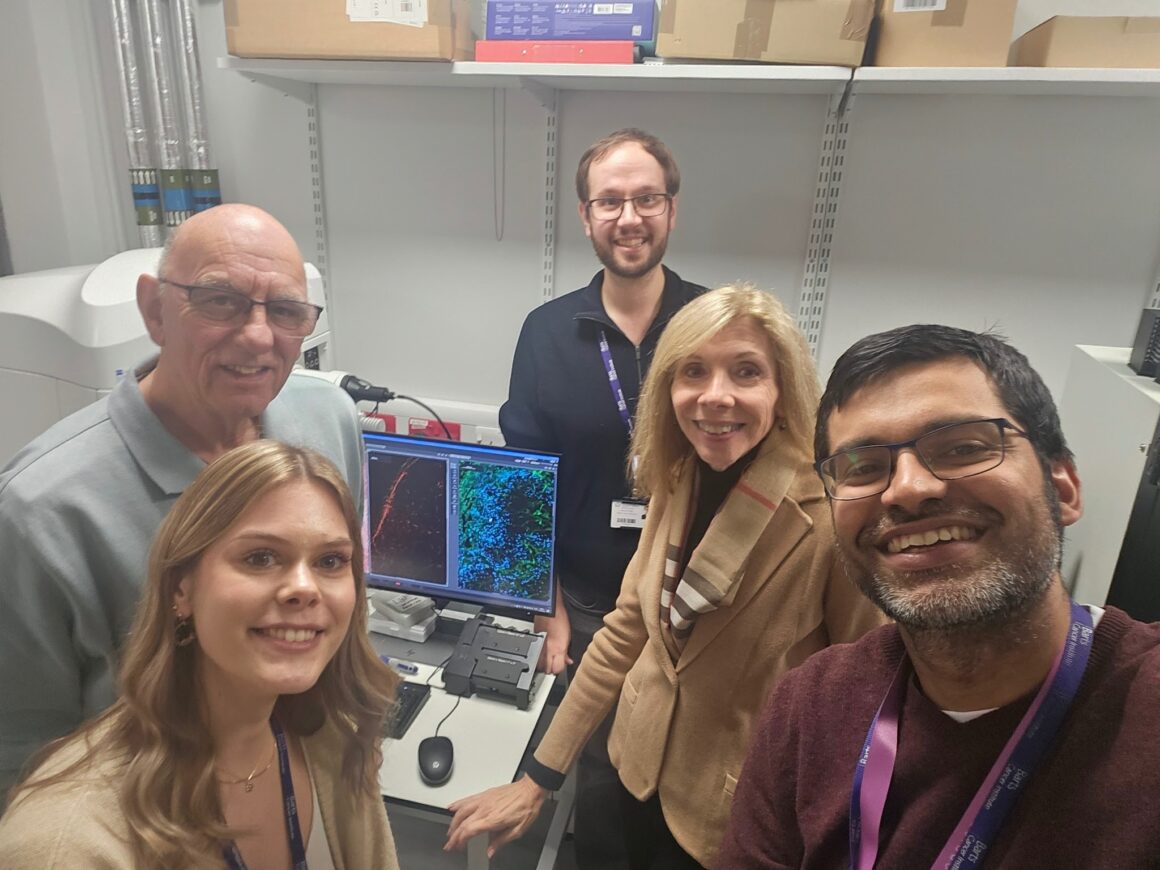
Barts Cancer Institute Queen Mary University of London, 2025
When Raymond began her journey more than forty years ago, much of this was still aspirational.
Today, it is becoming part of oncology’s culture.
“The next generation brings new ideas, new perspectives and a genuine openness to collaboration,” she says. “That gives me tremendous hope for where oncology is going.”
Young advocates often ask Raymond how to sustain themselves emotionally in this work. Her answer rarely changes. “Never forget your ‘why,'” she tells them. Every programme, every initiative and every conversation should begin with the human experience that first inspired them to care.
Hope, she believes, is built not only through scientific discovery, but through curiosity, trust and a willingness to keep learning—from colleagues, from patients and from one another.
After more than four decades of advocacy, Raymond measures progress not only by new treatments, but by a fundamental shift in how cancer care is delivered. For Raymond, one of the greatest changes she has witnessed is that patients are increasingly recognised not simply as recipients of care, but as partners whose experiences help shape research, policy and clinical practice.
For Raymond, that cultural transformation may prove to be one of oncology’s most enduring achievements.
Finding Her Voice
Throughout our conversation, Raymond rarely spoke about personal accomplishments.
Instead, she spoke about the people who inspired her, patients who shared their stories, colleagues who became lifelong partners, and young advocates whose voices continue to strengthen the field.
Perhaps that is why the word that best describes her career is not achievement, but connection.
For more than forty years, she has worked to bridge worlds that once stood apart: patients and professionals, science and lived experience, innovation and compassion. In doing so, she has helped shape a culture in which listening is no longer seen as a courtesy, but as a responsibility.
Nearly half a century has passed since a seven-year-old girl returned to school after losing her father.
“What happened to your father?”
Her classmates asked the question that many adults were afraid to ask.
Her mother encouraged her to answer.
Those conversations followed by ice cream covered in colourful sprinkles did not erase grief. But they taught her that honesty could replace fear, and that even the hardest conversations become easier when someone is willing to begin them.
Years later, sitting beside her mother’s hospital bed, she learned a second lesson.
Treatment may come to an end. Care does not.
Everything that followed grew from those two experiences.
The little girl who learned to speak openly about cancer became an advocate for patients around the world. The daughter who searched for guidance after treatment ended helped oncology recognise that lived experience is a form of expertise. And the woman who found her own voice spent the next four decades helping others ensure theirs were heard.
Oncology will continue to evolve. New therapies will emerge. Artificial intelligence will reshape clinical practice. Yet Martha Raymond believes progress will always depend on something far older than technology: the willingness to listen.
Because patients never lacked a voice. Medicine simply had to learn to hear it.
About the Author
Knarik Arakelyan, PhD, is a psychologist and communications professional with over 14 years of experience in public relations, health communication, and public awareness campaigns. She is currently the Managing Editor of “CancerWorld“ magazine, Head of the “OncoDaily TV,” and serves as PR and Communications Officer at “EMERTÉ” Clinic.