From the bedside to global reform, and why equity must be engineered, not hoped for
“I think I chose medicine because it gave all the opportunities to address people, both at a national level, but also internationally. And it’s a great way of acquiring tools that actually can help people and reduce inequities in any country.”
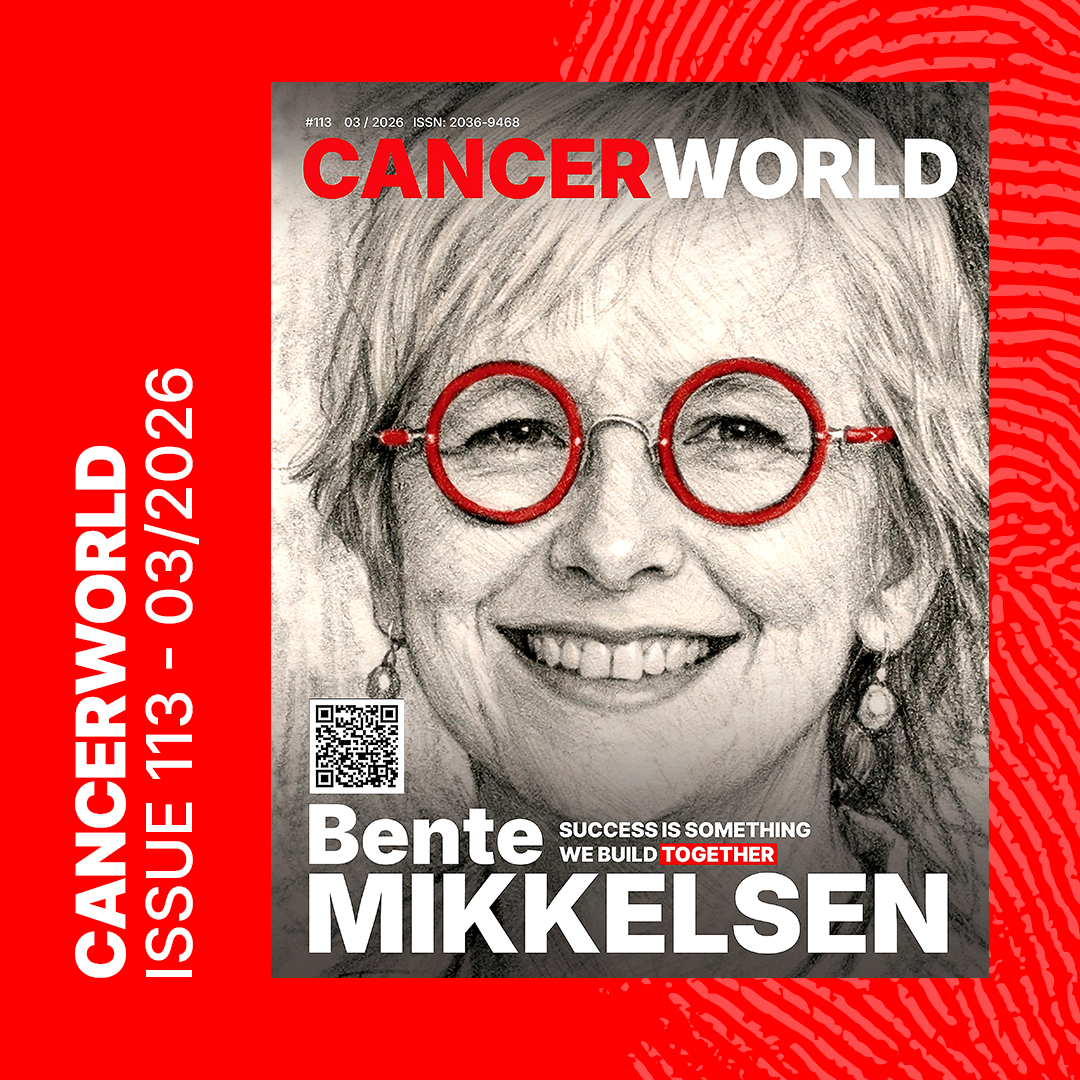
Today, Bente Mikkelsen serves as Director of Global Engagement Strategies at St. Jude Children’s Research Hospital, the world’s most influential center dedicated to pediatric cancer and catastrophic diseases in children. After decades of service across national and global health systems, most recently as Director of the Noncommunicable Diseases Department at the World Health Organization, where she led the shaping of the global NCD agenda, she has now brought that experience to St. Jude. Her focus is clear: to accelerate the global development of pediatric oncology and translate international commitment into measurable progress for children with cancer worldwide.
…but medicine was not her first academic choice.
Before medical school, she studied sociology, a decision that would quietly shape everything that followed. “That was a very important part of my education,” she explains. “It gives you a framework to understand global public health better.”
From the beginning, she believed in a dual responsibility.
“You have one job, and then you actually have another job as well, and that is to try to improve the world from whatever position you’re in.”
Early Days of the Reformer
That belief led her early into student politics, and then into the Norwegian Medical Association: as a leader and reformer.
“I negotiated salaries for doctors. I was part of the leadership of the young doctors,” she recalls. “And we set up leadership programs, especially for female medical doctors.”
Together with a small group of like-minded colleagues, she helped create something that did not exist before: a structured pathway allowing medical students to pursue research and PhDs during training.
“It was possible to do a lot of changes through the medical association in Norway,” she says. “Because it’s both a society and a union at the same time.”
Then came clinical medicine, and one of its most demanding forms.
Obstetrics: Where Uncertainty Trains Leaders
Dr. Mikkelsen trained as an obstetrician and gynecologist, a specialty she describes with both affection and realism.
“It was absolutely fabulous,” she says. “There was so much new development; early laparoscopy, minimal surgery, but also very little technology to help you in emergencies.”
Obstetrics, she explains, is where judgment is learned in real time.
“You have to make informed decisions, but you can never be 100% certain.”
That constant proximity to uncertainty, she believes, is why so many obstetricians end up in leadership roles. “It’s part of the training,” she notes.
Alongside clinical work, Bente became deeply involved in caring for women who had experienced sexual abuse, helping them navigate pregnancy and childbirth with dignity and support.
At the same time, she led the development of national training curricula for gynecology and obstetrics and went further, founding a European Network for Fellows in Training for Gynecology and Obstetrics, creating a shared professional identity across borders.
“It was very rewarding,” she says simply.
“Every Dollar has to Work for Equity”
Her visibility and her insistence on change did not go unnoticed.
When Norway embarked on a major health reform, Bente Mikkelsen was recruited as Vice President of a regional health authority, tasked with leading a full transformation program. Soon after, she became the CEO.
Following a merger, that authority came to represent half of the Norwegian healthcare system.
She would remain in the system for eleven years, seven as CEO, years that reshaped her understanding of leadership.
“That taught me a lot about business, about boards, about economy and about the importance of economy as a quality indicator, if it’s used to improve services.”
Her philosophy was consistent “Every dollar has to work for equity, both in access and in outcomes.”
The resistance was intense.
“These kinds of changes are perceived as painful both for doctors and for nurses,” she recalls.
But she found unexpected allies.
“The most optimistic group was actually the patients. My best allies were the patients. They saw the need to change.”
Many of the strategic frameworks introduced during those years, she notes, are still guiding the system today.
Making Research and Innovation Non-Negotiable
One of her proudest achievements during that period was shifting how healthcare systems value knowledge.
She doubled research funding from 1.5% to 3% of the total health budget and helped establish a major innovation hub through institutional mergers.
“It was at the same level as Karolinska Institute,” she says, referencing the Scandinavian benchmark.
Crucially, this was not limited to university hospitals.
“It helped doctors and nurses across all hospitals feel they were part of a big improvement process,” she explains. “It stimulated their eagerness to produce knowledge.”
From National Reform to Global Health
After stepping down, she was seconded by the Norwegian government to the World Health Organization, at a pivotal moment.
Following the UN Political Declaration on Non-Communicable Diseases, WHO faced a gap between ambition and execution.
“They realized they needed someone with experience implementing big political decisions, not just in Geneva, but at the country level.”
She was selected.
Initially planned as a short assignment it became something more. Encouraged by then WHO Director-General Margaret Chan she took on leadership of the NCD Global Coordination Mechanism, an unprecedented effort to bring governments, civil society, philanthropies, and even the private sector into the same conversation.
“At that time, it was almost like a complete firewall or a complete segregation between public and private sectors,” she says.
It required inventing new safeguards, early conflict-of-interest frameworks and, eventually, WHO’s formal approach to engagement with non-state actors.
Europe, Equity, and Scale
Her next chapter took her to WHO Europe – 52 countries, vast inequities, and immense opportunity.
“Many Eastern European countries had health systems shaped by the Soviet model,” she explains. “That meant you could work on change across several countries at the same time.”
From cervical cancer initiatives in Central Asia to hypertension programs in Eastern Europe she worked directly with countries, while also navigating the complexity of the European Commission.
Her final WHO role brought her back to the global stage as Director for Non-Communicable Diseases, Rehabilitation, and Disability, overseeing 20 programs and shepherding more than a dozen resolutions through global governance.
COVID-19 changed everything.
“It wasn’t only COVID itself that killed people. It was to a great extent people with heart disease, cancer, diabetes, lung disease.”
For the first time governments saw unmistakably the cost of neglecting NCDs.
“It gave us an opportunity to readdress the whole agenda,” she says. “Prevention, but also health system strengthening and the need to include NCDs into preparedness and response to humanitarian crises and pandemics.”
Cancer, Childhood, and the Power of Partnership
Her transition to St. Jude Children’s Research Hospital was not accidental.
At WHO, she had led three global cancer initiatives: continuing cervical cancer elimination, launching the global breast cancer initiative, and advancing childhood cancer as a global priority.
The partnership with St. Jude was different.
“It had all the components necessary for success: global leadership, regional strengthening, and real country-level implementation.”
When Carlos Rodríguez-Galindo asked her to join St. Jude, the decision was immediate.
“That was a very easy choice,” Bente says. “And a great honor.”
What draws her most is something deeply personal.
“The fact that it’s possible to see results within a time frame that I myself will be able to see.”
She pauses, then adds:
“In five years, we will see great changes.”
And with that, she smiles, as if already planning the work ahead.
From Declarations to Momentum: Moving Childhood Cancer onto the World Stage
When the discussion turns to the recent United Nations General Assembly, Bente Mikkelsen speaks with a calm, almost amused awareness of how prominent the moment became.
“It may look easy, but it wasn’t accidental,” she says, then immediately explains why it only looks that way. “There was so much work going into childhood cancer and also sickle cell disease, for many, many years. And it had a proven effect.”
What happened at UNGA was not improvisation. It was the result of sustained groundwork finally meeting political readiness.

“We were not asking,” she emphasizes. “We were supporting member states to propose real paragraphs on childhood cancer, and mentioning sickle cell disease in the political declaration.”
The response surprised even seasoned observers.
“It was surprisingly easy,” she admits. “So many member states rallied behind this.”
What followed was momentum and accountability.
“With all the support from civil society, including palliative care organizations, and using our St. Jude Global Alliance, it became a very powerful paragraph,” she says. “Even with a target of survival above 60%.”
That detail matters. Targets are rarely embraced in today’s political climate.
“Many governments don’t want to set targets,” she says plainly. “Because it’s measurable accountability.”
That this one passed in today’s geopolitical environment, still strikes her as extraordinary.
“I’m extremely happy that we saw this coming true.”
The side event itself became a signal.
“It was the most popular side event of the UNGA,” she recalls. “There were lines of people trying to get in. Over 20 Ministers of Health wanted to speak. We had eight First Ladies attending.”
She pauses, then offers credit where she believes leadership truly mattered.
“I owe Uzbekistan, the First Lady and the Zamin Foundation, a lot of gratitude. This was a combination of governments willing to lead, strong scientific grounding, proven implementation, and civil society joining forces.”
She calls it a formula, and one she hopes to replicate.
“That’s a recipe for success. I hope we can take it further. I hope that next year, at the G20, we can gain even more support.”
But ambition, for her, must translate into tools clinicians can recognize.
“Survival is critical,” she says. “But we also need indicators that speak to clinical work: reduction in suffering, quality of care, like we did in the Global Diabetes Compact.”
Then she smiles.
“The sky’s the limit. I think we can make it.”
“Nothing Is Stronger Than Success”
Asked what underpins her ability to move systems at scale, Bente Mikkelsen does not claim singular credit.
“I’ve been extremely privileged,” she says. “I come from a safe, inspiring upbringing: two chemists, with international connections.”
But privilege alone, she insists, explains nothing without people.
“I’ve been lucky to meet dedicated, fabulous people. You can never do this alone.”
What gives her the greatest satisfaction is collective ownership.
“When we mobilize as a group, set goals together, and nobody remembers whose idea it was, that’s the best result,” she says. “We just rally behind it and do it.”
Global Health Priorities: Making Health Non-Negotiable
When I asked about today’s global health priorities, she does not hesitate, but she does widen the frame.
“We must continue to advocate for health as one of the most important things in the world.”
The challenge, she notes, is not ignorance, it is displacement.
“With geopolitical stress and security concerns, governments feel pressure to prioritize military capacity. But without a healthy population societies are extremely vulnerable.”
She worries about how fragile health’s position has become.
“Public health is often the first thing to be down-prioritized,” she says. “And we cannot allow that anymore.”
The task ahead, in her view, is twofold.
“First, we must clearly show the consequences of inaction in a sensible, evidence-based way.
And second, we must prove that change is possible.”
She returns to a principle she has lived by.
“Nothing is stronger than success.”
The Next Generation
When the conversation turns to youth, her tone sharpens, not with criticism, but with urgency.
“The younger generation is the hope,” she says. “But too often they are treated as tokens.”
If institutions are serious about youth leadership, she argues, they must be willing to step back.
“We need to let young people be leaders and help them recognize themselves as leaders.”

She believes this requires structural change, not slogans.
“We should encourage youth leadership across all decision-making bodies. Youth at every table. They own the future, the solutions and are the hope for a better world where everyone has equitable access to prevention and the health care services needed. We very seldom do that seriously.”