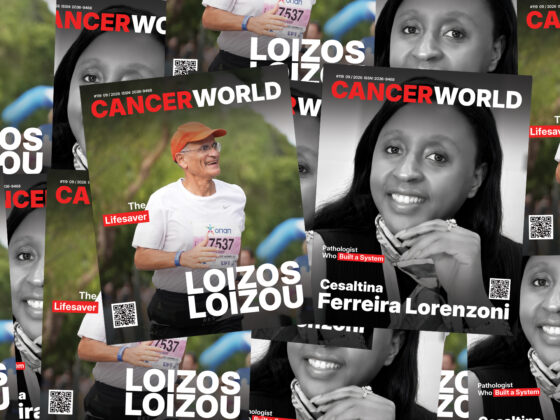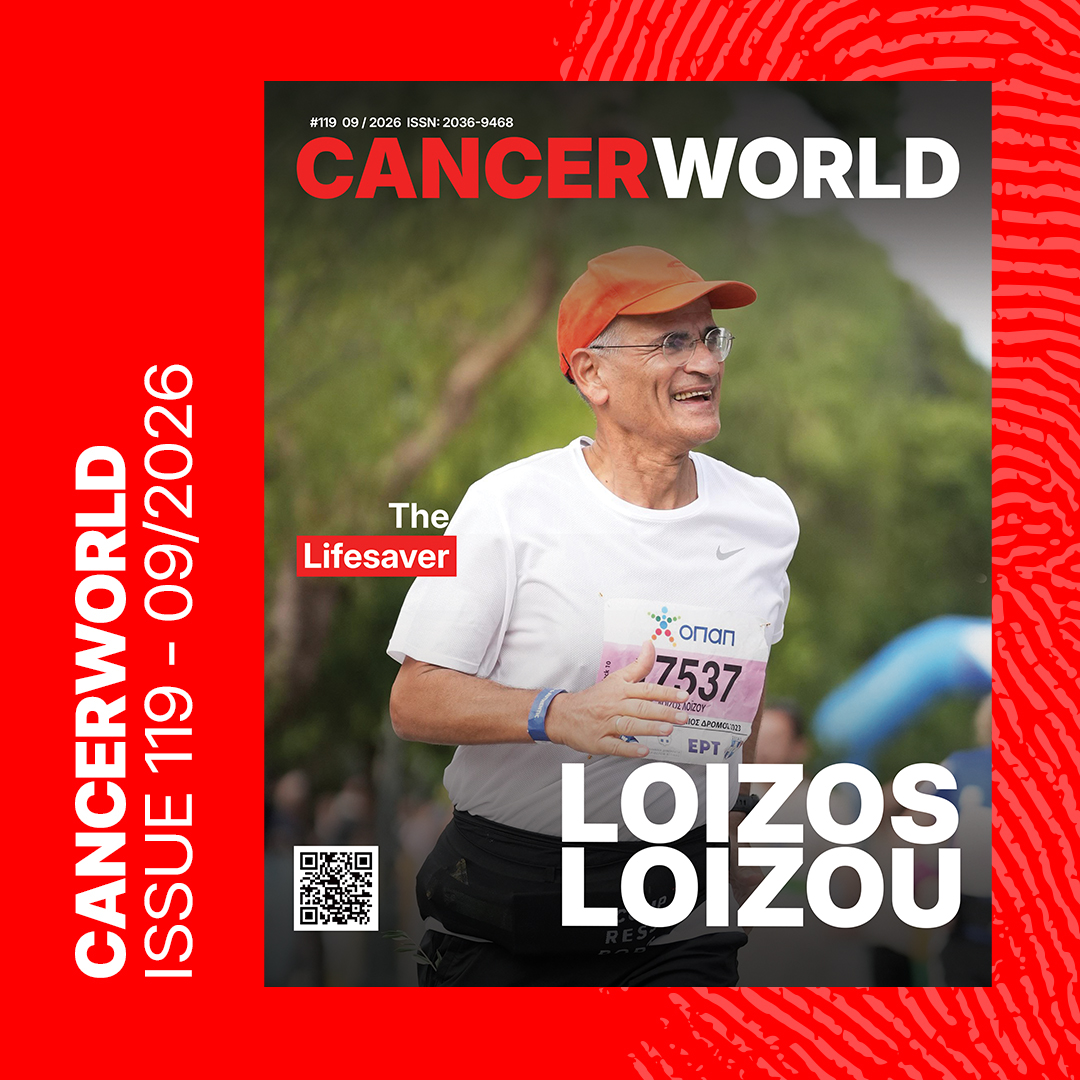
How Loizos Loizou helped build pediatric oncology in Cyprus from almost nothing—and why decades later, he is turning that experience outward.
For more than four decades, Prof. Loizos Loizou has stood on the front line of pediatric oncology.
But when he returned to Cyprus around 1990, there was hardly a front line to stand on.
“There was no diagnostic service. Children were not well managed. Nothing existed, actually.”
Cyprus was still living with the consequences of war and division. Childhood cancer care was fragmented. There was no registry, no dedicated system, limited access to medicines, and little specialized expertise.
Loizos Loizou had come home to build almost everything from zero.
More than three decades later, Cyprus has a modern pediatric oncology service, a population-based cancer registry and survival outcomes approaching those of the most advanced centers.
And now, having once depended on help from abroad, Prof. Loizou is trying to make Cyprus a country that gives it back.
“We received help from many countries,” he says. “Now we try to help the way we received.”
A Lifesaver Before Medicine
Loizos Loizou was born in Larnaca, Cyprus.
Long before medicine became a profession, helping people had already become part of his character.
“When the time came to study, I wanted to do something that would be useful to people,” he says. “I always had the tendency to be helpful to people. It’s in my mentality.”
As a teenager, he even worked as a lifesaver in Larnaca and trained in first aid.
“I was very interested in medical issues. So when the time came to choose, I chose medicine.”
He studied medicine in Belgium, in Brussels, before continuing his pediatric training in France.
Pediatrics came first. Pediatric oncology came later.
During his specialization, after working in neonatal medicine and intensive care, he encountered a growing need for physicians willing to enter pediatric oncology.
He was already carrying one image with him.
“I remember when I was in the fourth year of medicine, I saw a young adolescent girl who had been amputated because of an osteosarcoma,” he recalls. “It was quite shocking. I had an interest in cancer in general.”
So when the opportunity appeared, he took it.
“For the last more than 40 years, I’m on the first line in pediatric oncology. I never regretted it.”
Why?
“Because I feel that we’re doing something difficult, but something challenging. It’s challenging psychologically. It’s challenging medically and scientifically.”
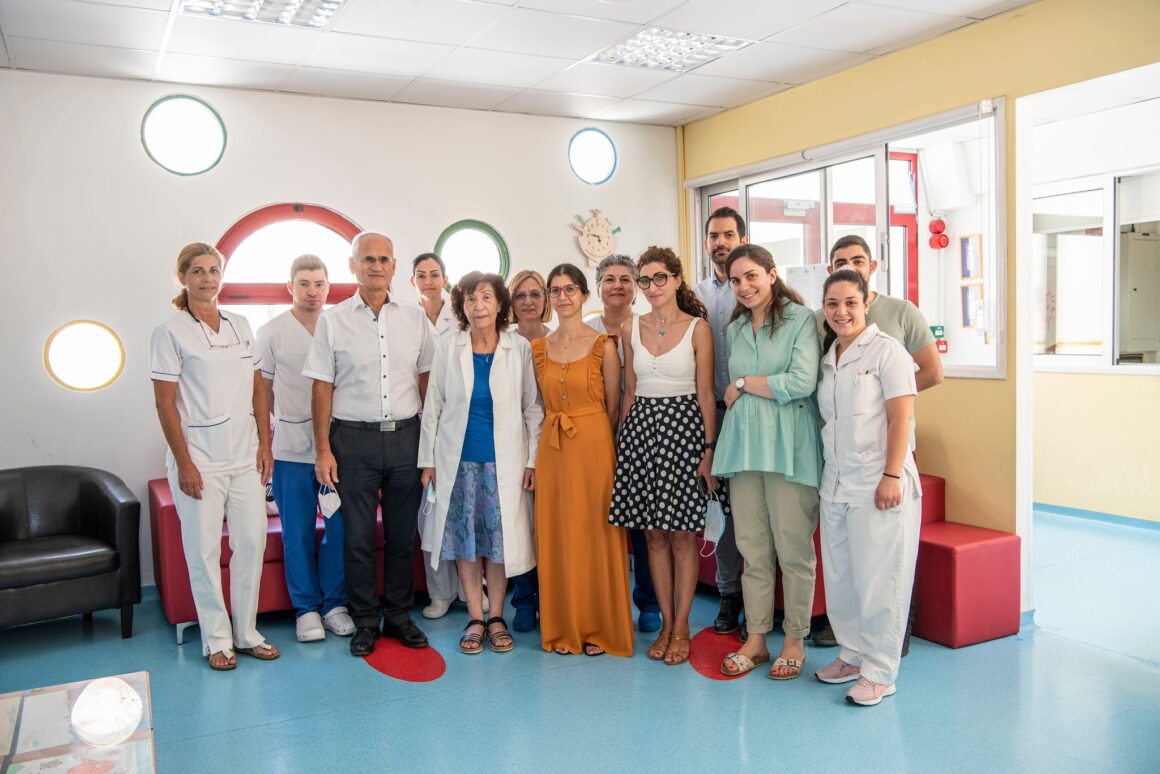
Prof. Loizos Loizou with a team
Starting From Zero
While training in France, Loizos always intended to return home.
He followed developments in Cyprus through a weekly newspaper. One thing became increasingly clear: children with cancer needed a dedicated service.
“It didn’t exist in Cyprus,” he says. “It was a completely unorganized situation.”
When he returned in late 1989–1990, the scale of the task became obvious.
“There were low survival rates, no diagnostic facilities, no medicines the way they should be, no registries. Nobody knew what was happening.”
For Prof. Loizos, that experience would later shape the way he looked at childhood cancer in low- and middle-income countries.
“Cyprus was in that situation at that time,” he says. “Imagine Cyprus of the 1980s and 1990s. It was a few years after the war and the Turkish occupation of almost half of the island. The situation was not good.”
He began with the basics.
“Immediately, I realized that there was a need to train nurses, doctors, pathologists, surgeons, anesthetists—actually, from scratch.”
He also pushed for children with cancer to be treated in one centralized pediatric oncology unit.
“Everything was concentrated in a single unit,” he says. “So we gained more expertise, because these are rare diseases. This was fundamental.”
But building a service inside the public system required resources and flexibility that the system itself could not always provide.
That was why, in 1990–1991, he created the Elpida Foundation.
“It was difficult to convince the public service,” he says. “By creating Elpida, I had the financial capacity.”
Through philanthropy and fundraising, the foundation began supporting the development of pediatric oncology—training professionals, financing education abroad and strengthening the system around the hospital.
“We were able to send nurses and doctors to the United Kingdom and elsewhere—more than 100 doctors and nurses—and we’re continuing that through the Elpida Foundation.”
It was never one intervention.
“It was a holistic approach,” he says. “A multi-pronged approach.”
And it was slow.
“Things didn’t happen from one day to the other. It was a very slow evolution.”
The Numbers Had to Come First
One of the achievements Prof. Loizou speaks about with particular pride is not a new drug or a new building.
It is data.
“First of all, we have been able to build a pediatric oncology registry—population-based, very robust.”
The registry was developed in cooperation with Newcastle University, with the first two decades of data, from 1998 to 2017, published and the next decade now being prepared.
For Loizos Loizou, the distinction between a hospital registry and a population-based registry matters.
“If we manage a problem without knowing what happens, we wouldn’t know what was happening.”
He points to quality indicators including more than 95% microscopic verification, zero cases registered only from death certificates, and external quality checking.
“We are proud that we have been able, first of all, to establish a registry.”
At the same time, the clinical service continued to develop.
Today, Cyprus has a modern pediatric oncology unit capable of delivering most treatments locally. When highly specialized procedures are required—such as allogeneic bone marrow transplantation or complex brain surgery—children can be referred to centers in countries such as Germany or France.
The results improved with the system.
“If you compare the survival rate of the first decade with the second decade, the rates are much better in the second decade,” he says.
The reason, he argues, was not a single breakthrough.
“We built it slowly, slowly—experience, modern medicines, prophylactic antimicrobials, growth factors, everything.”
And, crucially, international help.
The People on the Other End of the Phone
For many years, Loizos was the only pediatric oncologist in Cyprus.
He knew he could not know everything.
So he built an international multidisciplinary team before such language became fashionable.
“My mentor was Professor Danielle Olive-Sommelet, my professor of pediatric oncology in Nancy, France,” he says. “She trained me in pediatric oncology, and when I came back to Cyprus, many times I was calling her.”
But she was only one of many.
“I have to express a lot of gratefulness and thanks to many colleagues because I was alone as a pediatric oncologist in Cyprus for many years.”
He remembers specialists abroad telling him: call us, even at three o’clock in the morning.
“I couldn’t know everything. I needed help, and there was no help in Cyprus.”
He sought different experts for different diseases—leukemias, Wilms tumor, brain tumors.
Among them was Eric Bouffet.
When Prof. Bouffet moved to Canada, distance did not end the collaboration.
“With the means of those times, we used ISDN lines in my department,” Loizos recalls. “We made video conferences. I showed the children, we saw the CT scans and MRIs, and he advised me.”
Cyprus and Canada were separated by thousands of kilometers and several time zones.
But for a child with a brain tumor in Nicosia, expertise could suddenly enter the room.
“I received a lot of help, especially in the first 15 years,” he says. “That was substantial.”
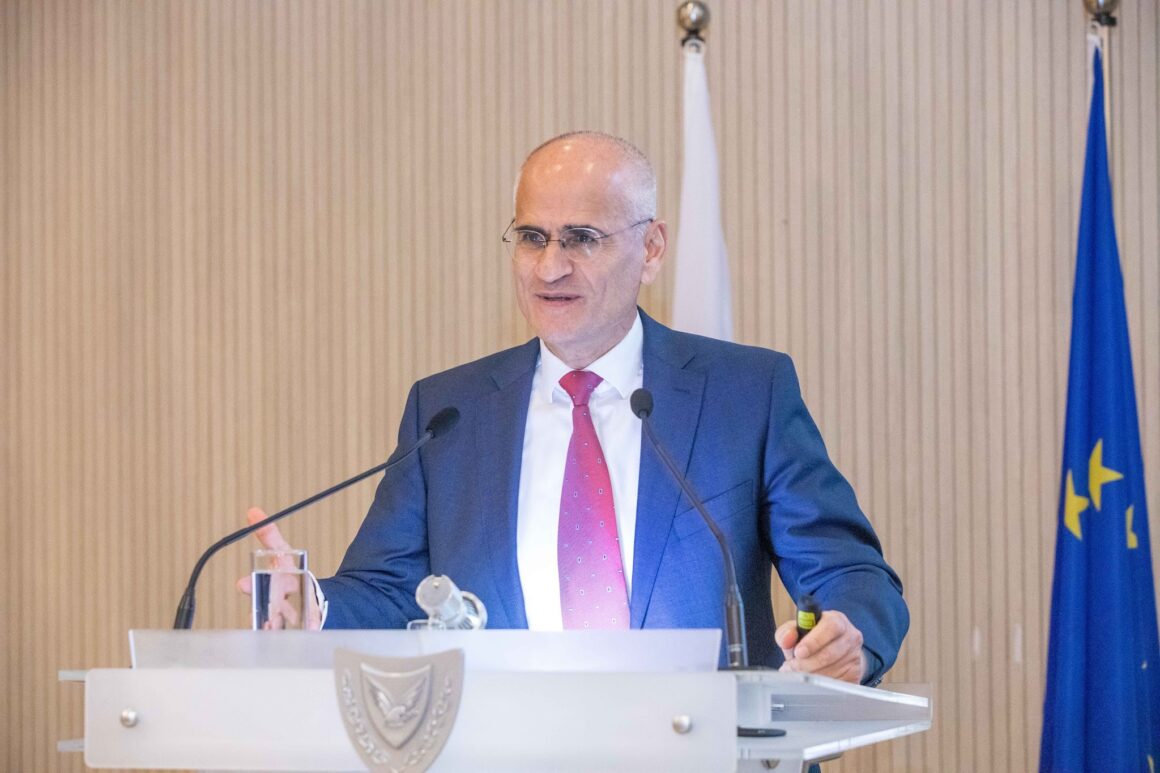
Prof. Loizos Loizou
“You Mean Now I’m Finished?”
More than 40 years in pediatric oncology creates a difficult archive of memory.
Asked which patients stayed with him, Loizos pauses.
“This question is very difficult for me, because each child has so much to teach us, and we get attached to them.”
One memory comes from the early 1990s.
A highly intelligent adolescent boy had aggressive leukemia. He went through first-line therapy, second-line treatment and transplantation, but the disease kept progressing.
“He always wanted to speak with me alone, man-to-man,” Loizos recalls. “He didn’t want anybody else. And he was putting me very difficult questions because he understood everything.”
Then came the question no physician wants to hear.
“At a certain moment, he saw me in the eyes and said to me, ‘My friend doctor, you mean now I’m finished? I have no hope?’”
Loizos still remembers it.
“When an adolescent of 16 or 17 asks you that—it was really heartbreaking. I will never forget.”
And then there are the patients who survived because medicine changed just in time.
The Drug That Arrived by Air
Around the mid-1990s, an adolescent arrived at Makarios Hospital with acute promyelocytic leukemia.
At the time, the disease could be catastrophic.
“As soon as you started therapy, they had huge hemorrhage and you lost the patient.”
But Loizos had been following emerging evidence around ATRA-based treatment.
“I knew that if you gave it with chemotherapy, like we do now, they survived,” he says. “At that moment, I just knew it was experimental. I didn’t even know if it was approved, but I knew it was successful.”
He went to the Minister of Health.
“I said, ‘We have to do it.’”
Calls were made. The national airline became involved. The drug was located and transported to Cyprus within days.
“We started the therapy.”
The boy survived.
“He is an adult now. I see him sometimes. He is working at the airport. I’m always so glad to meet him.”
For Prof. Loizou, the story is about more than one medicine.
“That’s an example of how a new therapy saves lives,” he says. “We should always remember how important it is to be continuously updated.”
One Joke Before Every Examination
Another patient taught Loizos something different.
She was 15, undergoing cancer treatment and struggling deeply after losing her hair.
“She was very depressed in the beginning,” he says. “I always try to make the children laugh, give them a nickname, and make a special bond.”
He tried jokes.
At first, he could only get a small smile.
Then one day she stopped him during rounds.
“She said, ‘Doctor, from now on, I will never allow you to examine me.’”
He was stunned.
Then came the condition.
“‘You have to tell me a joke every day. Whenever you enter the room, you tell me a joke, and then you examine me.’”
“Deal,” he replied.
Then he went out and bought a book of jokes.
Today, she is a lawyer.
“She’s a bright adult woman. She’s a friend of mine now.”
For him, the story represents another side of oncology.
“Psychology is important,” he says. “The treating physician also has to make contact with the child. I believe the holistic approach is of cardinal importance.”
“The Patient Must Be Your King”
Asked about the best advice he ever received, Loizos does not offer a famous quotation.
He goes back to his parents.
“My parents taught me to love people. Each person, no matter the color, is a person that we should help and love. That’s the basis of my education.”
And then he gives the advice he now passes to younger doctors.
“The patient must be your king.”
He repeats it deliberately.
“You are at the service of people, and not the contrary. We are there to support people.”
There is one behavior he particularly dislikes.
“Never show that you are in a hurry in front of patients.”
For pediatric oncology, he makes it even more specific.
“The child and their parents must be your king. That means you are at their service.”
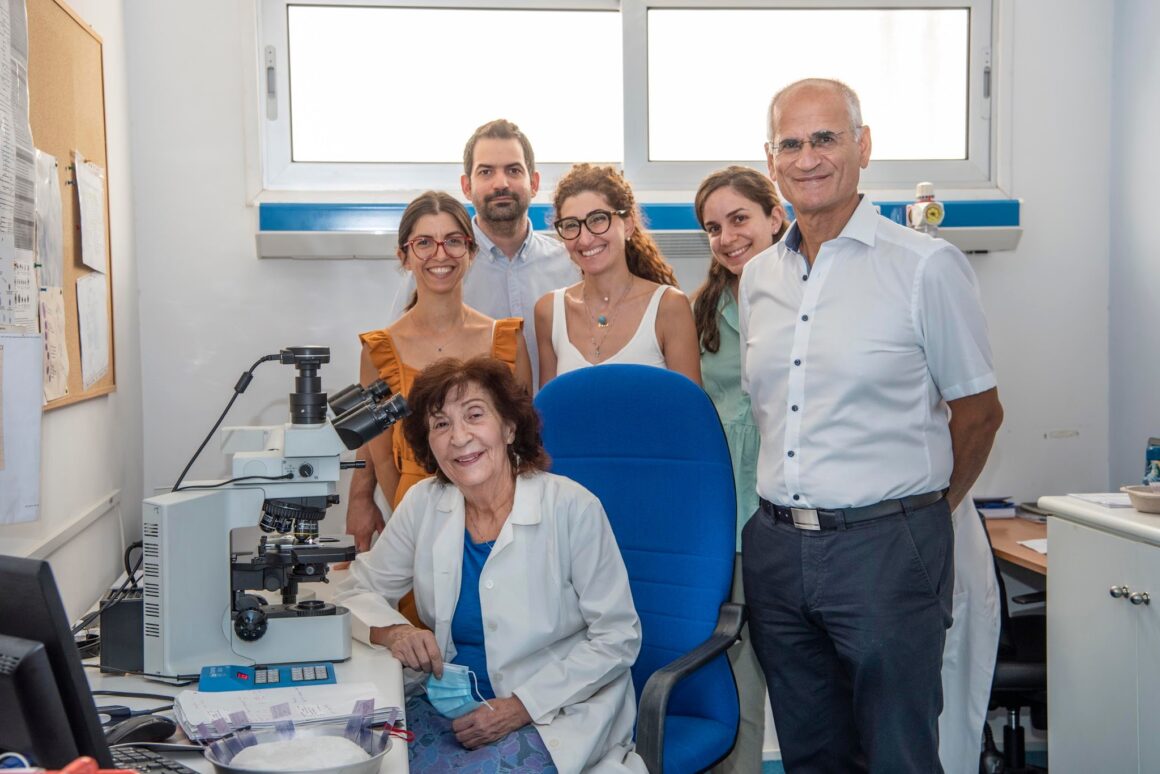
Prof. Loizos Loizou with a team
From Receiving Help to Giving It
By 2023, Prof. Loizou felt Cyprus had reached another turning point.
For decades, the country had learned from others.
Now it could help.
“We gained significant experience over 30–35 years,” he says. “We had been exactly in the same position that less affluent countries are in today.”
He knew what it meant to lose children because medicines were unavailable, expertise was insufficient or infrastructure did not exist.
So Cyprus launched the Cyprus International Action Plan for Children with Cancer, supported principally through the Elpida Foundation and built in cooperation with governmental, academic and medical institutions.
“The question is: why Cyprus?” he says. “Because Cyprus has experience. We believe we are strong enough to help. It’s a gateway to Europe, and financially we could cope.”
The initiative also has active support from the Cypriot government.
The program began collaborating closely with French pediatric oncology partners working across Africa.
In 2024, shipments included chemotherapy, antibiotics and analgesics for sub-Saharan countries.
In 2025, Cyprus brought together more than 30 international experts for the inaugural convention of its international program.
Then the scope expanded.
“We sent medicines for tuberculosis because it was asked from Botswana. Now we are sending vaccinations for HPV.”
Over the past three years, Prof. Loizou estimates that the initiative has organized more than a dozen shipments.
“Last year, two tons of medicines to Botswana,” he says.
Other shipments have been much more targeted: chemotherapy for approximately 70 children with Burkitt lymphoma in Burkina Faso, medicines to Côte d’Ivoire and Morocco, and a year of oral chelation treatment for children with thalassemia at a pediatric hospital in Rabat.
But Loizos Loizou does not want the initiative to become simply a shipping program.
“Our purpose is not only to provide the medicine and know-how. At the same time, it builds capacity.”
The plan includes short-term scholarships—initially two, four or six weeks—for doctors and nurses, with training in areas such as central venous lines, interventional radiology, leukemia diagnosis and pain management.
“If the capacity can be offered in Cyprus, we will offer it in Cyprus. If not, then in France or elsewhere.”
The first phase is being developed with French-speaking pediatric oncology partners working across 18 African countries and around 25 pediatric oncology centers.
Eventually, he wants to go further.
“Our plan is also to expand it to English-speaking countries—for example, Botswana, Ethiopia, Tanzania.”
Then he adds:
“Step by step.”
Small Country. Big Initiative.
Loizos Loizou is realistic about scale.
Cyprus cannot solve the global childhood cancer crisis.
But that is not his measure of success.
“We’re a small country, but today I believe there are not small and big countries. There are small and big initiatives. It all depends on the people.”
He is equally clear that Cyprus is not trying to replace the work of WHO, St. Jude or other global organizations.
“The problem is so big, and the situations are so difficult. Cyprus can add a little bit to this effort.”
A little bit, in pediatric oncology, can mean an entire life.
“We’re not going to make the big difference,” he says. “But we will do as much as we can.”
Then comes the sentence that perhaps best summarizes his career.
“Even if we can alleviate the pain for one child—even if we can save the life of one child—that would be good.”
Prof. Loizou is now over 70 and increasingly thinking about continuity.
“I started training my young colleagues because my age advances. It’s important that we train the new generation.”
The work, in other words, must outlive the person who began it.
More than three decades ago, Loizos returned to a country where pediatric oncology had almost no organized structure and spent years asking others for advice, medicines, training and help.
Today, Cyprus is beginning to send those things in the opposite direction.
His philosophy for the next chapter is simple.
“It’s a program that gives without asking anything.”
And then, as if four decades in pediatric oncology have reduced everything to one principle:
“We try to help.”