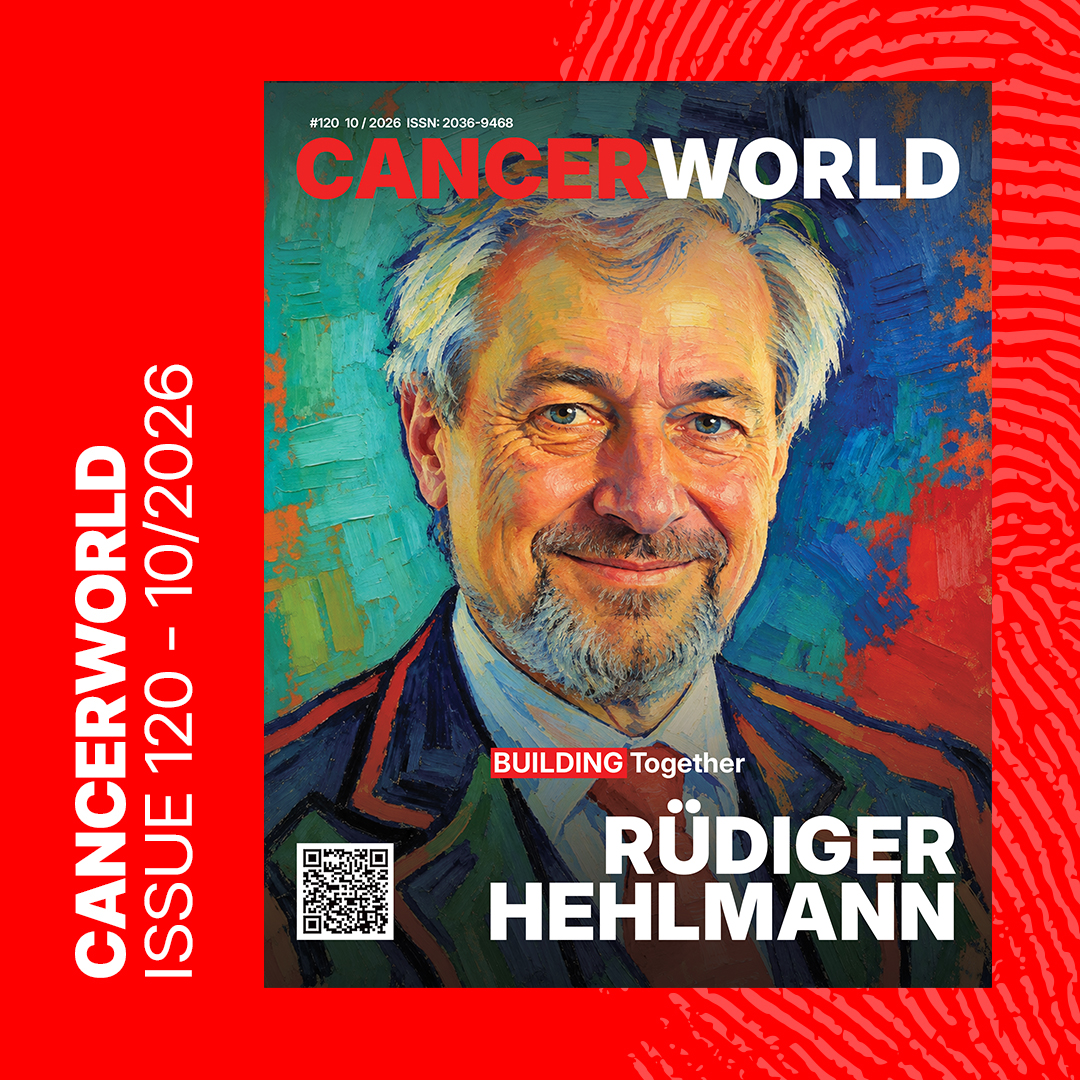
He took on the leukemia nobody wanted, helped transform CML from a fatal disease into a chronic condition, and built a network in Europe that changed how leukemia research is done across the world. More than five decades into his career, Professor Rüdiger Hehlmann says the lesson is remarkably simple: cooperate, stay free, accept failure and know yourself.
Rüdiger Hehlmann describes his career with a word one would hardly expect from someone who helped shape modern leukemia research.
Accidental.
“This career was a little bit accidental, I must say.”
It began not with leukemia, but with DNA, the substance of life..
Prof. Hehlmann was fascinated by the emerging understanding of genetic material following the work of Watson and Crick in the 1950s.
“That was very exciting. And I think that was the beginning of my research.”
He decided medicine would give him the best route into this new world of biology.
During medical school, he was already doing research. After completing his studies, he pursued his thesis at the Max Planck Institute for Biochemistry in Munich and trained in molecular biology.
That eventually took him to New York.
The Lesson from New York
Prof. Hehlmann spent five years in the USA, four at Columbia University with Dr. Sol Spiegelman.
What stayed with him most was not a specific experiment.
It was a culture.
“In Germany, each candidate for a doctoral thesis did their own job. In New York, it was much more cooperative.”
He saw what happened when researchers stopped protecting individual territories and started working together.
“I realized that by cooperation you make advances much faster. And that this is actually a powerful tool for getting results.”
It became one of the fundamental principles of his career.
“The first thing is cooperation. And the second is to be liberal—to allow everybody’s opinion.”
Germany at the time remained strongly hierarchical.
“The chief decided, people were scared, it interfered with communication.”
Rüdiger Hehlmann did not like it.
“That was kind of intimidating for some, and I thought this is not the way to success.”
When he later became a professor and department chair, first developing his work in Germany and ultimately in Heidelberg, he deliberately tried to create something different.
“I got good training, that’s clear. But leading my own group, in my hospital, I did it differently.”
That philosophy would eventually become the foundation of something much larger than a laboratory or a department.
It would help create the European LeukemiaNet.
But first, there was CML.
Nobody Wanted CML
Around the end of the 1970s and beginning of the 1980s, Germany was beginning to organize cooperative study groups around different leukemias.
ALL went to Dieter Hoelzer.
AML went to Thomas Büchner.
Hodgkin lymphoma went to Volker Diehl.
Then there was chronic myeloid leukemia.
Nobody wanted it.
“CML at the time was the most unfavorable leukemia you could think of. Everybody died within a few years.”
Treatment options were bleak.
“There were some palliative drugs like hydroxyurea or busulfan. They relieved pain or improved the general well-being, but they all died.”
For Rüdiger Hehlmann, the young patients were particularly difficult to watch.
“Particularly young people died. This was hard to bear.”
The field offered little excitement scientifically and little hope clinically.
So, when nobody else wanted it, he volunteered.
“I myself am somehow an optimistic character, if I’m permitted to characterize myself. And I said, ‘Well, I’ll try.’”
But he made one condition clear.
“If nobody wants to do it, you are going to support me. Otherwise, I can’t do it.”
They agreed. He started.
At first, it looked like an unfortunate choice.
“I started with hydroxyurea and busulfan. People said, ‘Well, the most boring study in the nation.’”
Then interferon arrived.
Suddenly, CML began to look different.
“CML was treatable, and maybe even cures Philadelphia negativity in some of those treated patients. This was unbelievable.”
Then came imatinib.
A disease that had once offered little beyond palliation suddenly had a drug capable of transforming its natural history.
And Rüdiger Hehlmann already had something most researchers did not.
An organized study group.
“We already were there. We had a study group, and we joined in with our studies right at the top of the progress.”
The disease nobody had wanted was becoming one of the most rapidly changing areas in hematology.
“We were noticed.”
He is quick to point out that Germany was not alone. Cooperative groups were developing in Italy, France, England and elsewhere in Europe.
Something larger was beginning.
Venice, Interferon and the Beginning of a European Network
One of the people who recognized the importance of European cooperation was the Italian hematologist Sante Tura.
“He was a great professor.”
Prof. Hehlmann describes him as hierarchical in some ways but transformed by his own training in the United States.
“He had similar views on cooperation and liberality in research.”
In 1992, Prof. Tura convened an international meeting on CML and interferon.
“Everybody reported, everybody came. It was a very good meeting.”
Afterward, he began bringing together leading European investigators working on CML (EI-CML).
The first regular meeting of EI-CMLtook place in Venice in 1993.
At the Hotel Danieli.
“The Hotel Danieli is the number one hotel in Venice, right next to St. Mark’s Square. Unbelievable location.”
There was a reason.
“The owner of the hotel was a patient of Professor Sante Tura.”
Prof. Hehlmann laughs at the memory.
“Sometimes you have important patients who can help your activities in the interest of others.”
More importantly, a cooperative community was forming.
And that community needed funding.
“This is important in research. You need money.”
Industry could provide it.
“You can get it from industry. That is good.”
But Rüdiger Hehlmann believed from the beginning that academic researchers also needed independent funding.
“You can also get it from the state or from foundations. This is sometimes even better because you are a little freer.”
Industry, he says, understandably wants to study its own products.
“They always want to test their drugs, which is legitimate and very useful very frequently.”
But academic medicine has different questions too.
“What is the fate of the patients? How can you follow them best? What methods can you apply?”
One of those questions was molecular monitoring.
Learning to See What Was Left Behind
Molecular monitoring in CML developed initially around transplantation.
“You needed very sensitive methods to detect this minimal residual disease, and that was molecular biology and PCR.”
For Prof. Hehlmann, it was almost a return to where he had started.
DNA. Molecular biology. The laboratory training he had brought back from New York.
But by now, the questions were directly connected to patients.
Meanwhile, Germany was trying to bring its separate leukemia study groups together.
The government launched a competition to create major competence networks in medicine.
There were approximately 180 applications.
Prof. Hehlmann’s group was one of them.
“I heard unofficially we ranked number five. I think fifteen applications were funded, so we were among those who were funded.”
The funding was substantial.
“There were many, many millions of Deutsche Mark first and then Euros which we got over time.”
The German Competence Network on Acute and Chronic Leukemias (KNL) was established.
The national competence network brought different leukemias together.
Then Europe offered a larger opportunity.
117 Groups
In 2002, the European Union launched its Networks of Excellence initiative.
At the EI-CML meeting in Palermo in 2002, Rüdiger Hehlmann’s colleagues asked him to coordinate an application that would bring together leukemia research across Europe.
Not only CML. All leukemias.
They began contacting individual study groups across individual countries. I had an incredible team in Mannheim.
“Each country had little networks for each leukemia. In order to get them all together, you had to ask each single group in each single European country to join in.”
They did.
“It was amazing. They all were interested.”
By the time the application was completed, 117 study groups had joined.
The proposal scored extremely well.
Based on the size of the consortium and the original framework, Prof. Hehlmann remembers calculating that the network might receive approximately €28 million.
Europe had another idea.
“They said, ‘Well, we should fund you, but I think six million instead of twenty-eight shouldn’t really jeopardize the network.’”
Prof. Hehlmann smiles.
“On the one side we were pleased. On the other side, a little disappointed.”
There was only one sensible response.
“Okay. Let’s try and do.”
The European LeukemiaNet was born.
“And the activity became a success again.”
How the ELN Recommendations Began
There was an immediate problem.
A network of 117 groups is not automatically a network.
“The group was heterogeneous.”
Different countries and centers used different definitions, different treatment approaches and different methods of monitoring.
Rüdiger Hehlmann and his colleagues decided that the first task had to be standardization.
“We decided that it was very important that we start with recommendations on treatment standards, on definitions—what a remission is and what we consider a cure, how we should monitor, and so on—for each leukemia.”
That decision became one of ELN’s most consequential contributions.
The first CML recommendations were published in 2006.
The lead author was Michele Baccarani, himself a student of Sante Tura.
“He did most of the work.”
The recommendations were widely adopted.
“Novartis had this blockbuster drug, imatinib, and they wanted everybody to know how to handle this drug and how to monitor the success and the residual disease.”
The company supported the first ELN Frontiers educational meeting.
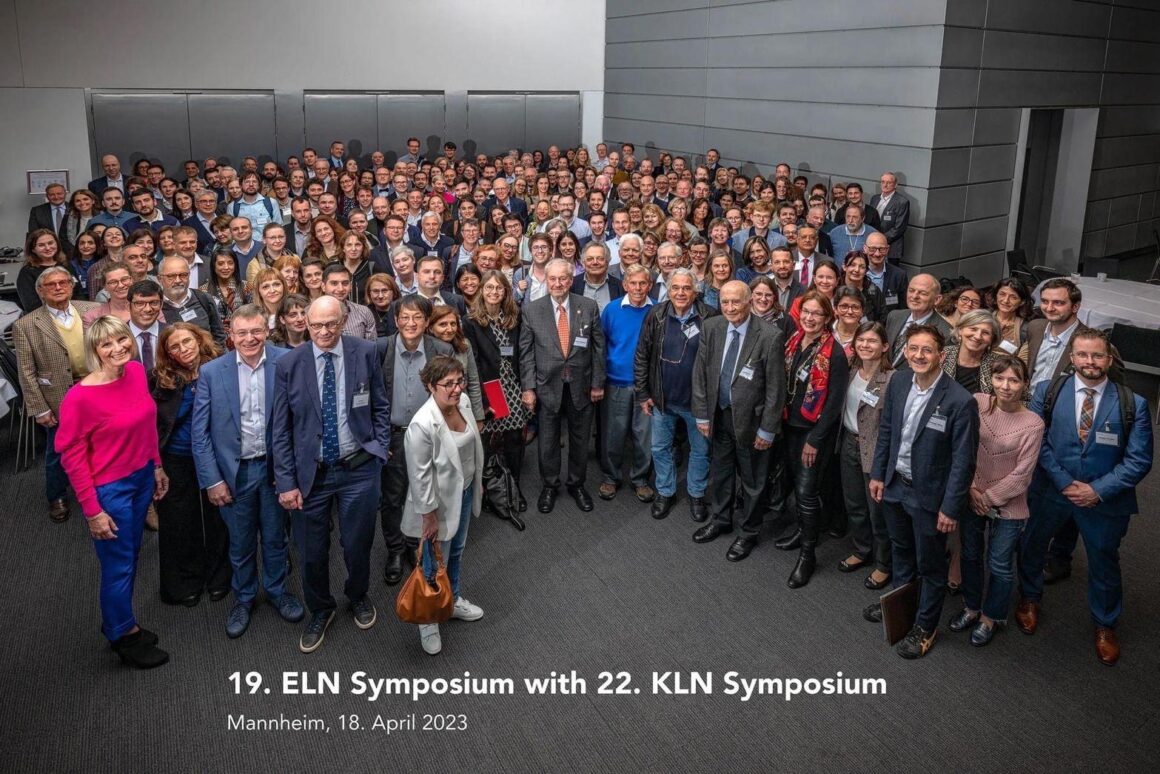
ELN meeting, 2023
ELN developed two parallel traditions: smaller scientific working meetings and major educational Frontiers meetings, the latter in cooperation with Novartis.
There would eventually be nine large Frontiers meetings across Europe
“Eight hundred to a thousand people.”
In addition, six meetings for young hematologists were organized in Naples
The meetings served two purposes.
“On the one side, it brought information on imatinib, on monitoring and how to deal with it to the people.”
And on the other:
“It was an advertisement for ELN.”
For years, ELN and Novartis cooperated through what became known as the EUTOS (European Treatment and Outcome Study) initiative.
One project created a European CML registry, gathering information from thousands of patients across more than twenty countries.
Another focused on something increasingly essential to modern CML care – standardizing molecular monitoring.
Making Molecular Monitoring Speak the Same Language
Prof. Hehlmann had established a strong molecular laboratory in Mannheim, drawing on his earlier training in molecular biology.
Other major CML centers brought their expertise.
There was John Goldman in London.
“He was a leader in CML in Europe. He was a very good person. Three of my coworkers trained with him”.
There was Nick Cross working with John Goldman, one of the key figures in molecular diagnostics.
And in Australia, Tim Hughes.
“He also was a leader in molecular diagnosis and molecular biology.”
The groups came together.
“That established how molecular monitoring should be done.”
It was no longer enough to say that a patient was responding.
The field needed common definitions.
“What we consider an optimal response. What we consider a failure. And there always is a grey area in between.”
ELN produced recommendations not only for specific leukemias, but also for the disciplines that made leukemia care possible.
Molecular monitoring. Morphology. Cytogenetics. Supportive care. Infections.
“The treatment of leukemia is accompanied by opportunistic infections. Many patients with leukemia don’t die directly of the insufficiency of their blood production. They die of infections.”
So ELN created a work package specifically dealing with opportunistic infections and regularly produced recommendations in the field.
The ambition was broad.
“To build a comprehensive network that could optimize treatment of leukemia globally.”
Globally was an important word.
Because despite its name, European LeukemiaNet was never intended to stop at Europe.
European in Name, Global in Reality
The original 117 groups did not remain 117 for long.
“Others realized this is good. They wanted to join.”
Within a relatively short period, participation approximately doubled.
Some groups later became less active. Investigators retired. Leadership at centers changed. And new centers continue joining.
“It always depends on personalities at each center. When they leave the interest of the center decreases and they don’t join the activity.”
“There’s no formal exclusion of anybody.”
Prof. Hehlmann eventually stopped counting.
“I think we leveled off at about two hundred twenty or so centers worldwide.”
Worldwide.
“The name is European LeukemiaNet, but it is and was from the very beginning international.”
American investigators were involved from the earliest recommendations.
Rüdiger Hehlmann names Richard “Dick” Silver, who had chaired the American Society of Hematology panel on interferon and CML in the 1990s.
He recalls the major leaders Hagop Kantarjian and Moshe Talpaz, Richard Larsson and Charles Schiffer.
“They really contributed, and it became a very good cooperation.”
The same happened in AML.
Thomas Büchner, one of the senior figures in German hematology, was deeply involved. Prof. Hehlmann remembers him also as the physician who cared for Raisa Gorbacheva, wife of Mikhail Gorbachev, during her leukemia.
“She had a type of leukemia that just could not be cured.”
Then came Hartmut Döhner, Clara Bloomfield.
And a relationship that illustrates how a European network became global.
The “Queen of AML”
Rüdiger Hehlmann calls Clara Bloomfield one of the defining figures in modern AML.
“She was called the Queen of AML.”
Bloomfield had been appointed by the European Union to independently review the progress of ELN.
The network had to justify its public funding through annual reports.
“Six million is still a lot of money.”
Bloomfield was the person reading the reports.
Initially, Hehlmann says, she was simply a demanding external reviewer.
“She was a very critical person. Initially she was neutral.”
Then something changed.
“After one or two years, she realized this was something she liked. From a critical reviewer, she became a supporter.”
When ELN later developed its major AML recommendations, Hartmut Döhner became lead author.
“He was supported by leading experts around the world.”
Clara Bloomfield was a major intellectual force behind the effort.
“She had incredible energy and also a good knowledge, of course.”
For Rüdiger Hehlmann, it was another example of what he had first learned at Columbia decades earlier.
Cooperation could move science faster than hierarchy or individual ownership.
But there was another rule he considered equally important.
Freedom.
“I Like to Stay a Free Man”
Twenty-five years after the beginnings of ELN, Prof. Hehlmann still worries about the same thing every academic network worries about.
How to pay for it.
The next ELN symposium is planned for Venice—returning, symbolically, to the country that played such a major role in its origins.
“It will be twenty-five years ELN.”
But beyond that?
“We have to decide how we continue, because in 2029 we have not yet the funds to pay for the symposium.”
Funding is never abstract for him. It determines whether people can meet, whether infrastructure survives and whether collaboration continues.
Yet there is one principle he has tried to protect.
“We try to do the whole thing without money from industry.”
Not because he opposes industry.
Far from it.
“I’m a strong supporter of cooperation with industry.”
But he wants academia to retain the ability to ask its own questions.
“I like to stay a free man.”
Industry has legitimate interests. Academia must have something else.
“I also think that academia needs some free space.”
He pauses.
“ELN is a free space. Everybody can do the research they like.”
After the original public funding ended, ELN survived largely through research projects led by its members.
“They are the leaders in their field. They are active, and they apply for money from the European Union in the new programs.”
Over the years, ELN members have participated in several major EU research contracts, including Horizon programs.
A portion of project funding—Hehlmann estimates around five percent in some cases—could support communication and dissemination through ELN.
Cooperation with KNL helps.
The network continued organizing its symposium in Europe together with KNL.
It also developed an annual meeting in the United States around ASH.
Other educational partnerships brought additional support.
“From many sources, thus far we managed.”
He does not pretend the future is guaranteed.
“Let’s see how it goes on.”
But he is convinced of one thing.
“I think we probably need to continue for some more years.”
The reason is visible in the patients.
From a Fatal Leukemia to a Normal Life
When Rüdiger Hehlmann began working on CML, virtually every patient eventually died from the disease.
Today, the picture is almost unrecognizable.
“Virtually nobody dies of CML anymore if he is in chronic phase and diagnosed early enough.”
The blast crisis remains dangerous.
“When he is in blast crisis, of course things are bad—but not hopeless. Even there it is not hopeless.”
For patients diagnosed in chronic phase, however, the transformation is extraordinary.
“You have a very high probability of leading a normal life and becoming as old as the general population.”
This is one of modern oncology’s great success stories.
“With other leukemias, we are not there yet.”
He points particularly to acute leukemias, where many patients still die from their disease.
“So from that point of view, I think for the time being we have got to continue.”
He does not know exactly how ELN will be funded in the years ahead.
His attitude remains what it was when he accepted the disease nobody wanted.
“If there is time, there is coming a solution.”
It sounds almost too optimistic.
But optimism, in Rüdiger Hehlmann’s career, has usually been followed by work.
“Join In First”
When I ask what he would tell young physicians and researchers hoping to become the next generation of leukemia leaders, his first advice is not to start by trying to become a leader.
It is to join.
“If you want success, the best for the next generation is first to join in.”
Before trying to reinvent a field, understand what already exists.
“Reach and have the level that’s already available.”
Find teachers.
“Have good teachers. Learn everything.”
Only then should you try to move the frontier.
“And then from there, developing new ideas, new approaches. That’s the way it should be done.”
Youth has an advantage that institutions cannot manufacture.
“Be young enough to still have the energy and the spiritual freshness which you need to start something new.”
He remembers what it took to prepare the original European LeukemiaNet application.
“To file an application to the European Union, this is like a book.”
Not metaphorically.
“You have to write a book and edit a book.”
It consumed months and required team work.
“It’s half a year’s work.”
Every possible question had to be addressed.
“What are the prospects for the future? What are alternatives in case you fail? What can you do otherwise?”
“You have to think all of this and write it down in a convincing manner.”
Prof. Hehlmann is now over eighty.
“Somebody like me, I’m beyond eighty meanwhile, I couldn’t do it.”
The next frontier belongs to younger investigators.
“The young ones, they can go to new borders, new frontiers.”
One area especially interests him.
Sequencing.
“This is a new technology.”
With sufficiently powerful sequencing technologies and analytical programs, he believes another major leap may be possible.
“This could provide a new approach to solving the cancer problem.”
But Rüdiger Hehlmann’s own career also carries a warning.
Not every promising idea works.
Sometimes you can spend ten years looking for something that is not there.
Ten Years Looking for the Wrong Thing
At Columbia and afterward, Hehlmann spent years searching for a human leukemia virus.
“At the time, we thought this could be the key to the problem.”
It was not.
“We could not associate any virus with any of the frequent leukemias.”
There were rare exceptions in certain geographic populations, including virus-associated hematologic diseases described in Japan and the Caribbean.
“But this was very rare and couldn’t be used.”
Prof. Hehlmann estimates that he invested roughly a decade of his scientific life in the search. Then he says it plainly.
“Ten years, and it failed.”
But failure in science is rarely empty.
“What we learned was something completely different.”
Research into retroviruses contributed to the emerging understanding of oncogenes, the detection of retroviral oncogenes.
“These leukemia viruses which we were looking for, they are retroviruses—RNA viruses with a reverse transcriptase. And some of these viruses carry oncogenes.”
His laboratory was also detecting something strange.
“We didn’t find the leukemia virus, but we found many footprints of viruses—virus-related RNA, virus-related proteins.”
There was no transmissible infectious virus.
“We couldn’t really understand.”
Years later, those observations were interpreted in the context of the enormous quantity of endogenous retrovirus-related and other repetitive sequences embedded in the human genome, even complete endogenous retroviral genomes
It was not what they had set out to discover.
But it was biology and interesting.
And the technologies developed during the search for human retroviruses became critically important when another retrovirus appeared.
HIV.
“Without the search for human retroviruses, leukemia viruses, we wouldn’t have had the technology and the know-how to isolate HIV so quickly as we did.”
When Robert Gallo’s and Luc Montagnier’s groups demonstrated the retroviral nature of HIV, Hehlmann’s laboratory naturally moved into AIDS research as well.
But eventually he made another difficult decision.
To stop.
Knowing What Not to Do
Clinical research is expensive.
Cancer is expensive.
AIDS research was even more expensive in that era.
A hospital cannot survive by treating only the most resource-intensive diseases.
“Your hospital goes bankrupt if you do research only on expensive diseases, because they usually calculate a mix of diseases. Some are very cheap and some are expensive. At least in Germany it is this way.”
When Prof. Hehlmann was called to Heidelberg University, he decided not to continue AIDS research.
“I thought I couldn’t do that.”
He continued cancer research instead.
And again turned toward another fundamental biological question.
Chromosomes. Cooperating with Peter Duesberg.
There had been observations going back approximately a century suggesting that aneuploidy—the abnormal distribution of chromosomes—might either cause cancer or represent an important intermediate step in carcinogenesis.
Rüdiger Hehlmann continued experimental work in this field until retirement.
He retired from his university faculty in 2017 after having completed his last randomized study on imatinib in CML, CML study IV on 1550 patients followed for 10 years.
At seventy-six.
“So now you know how old I am.”
He laughs.
“Thank goodness I’m well. I’m lucky again—still healthy, active.”
Retirement ended his experimental work. But it did not end his role.
“What I’m doing right now is giving the chance for the young ones to join in.”
And maintaining what his generation built.
“Maintaining the infrastructure of what we achieved together with my colleagues.”
He insists on the word together.
“It’s not me alone.”
He does not even like calling himself the leader.
“I’m calling myself always the coordinator.”
Then comes perhaps the best definition of leadership in the entire conversation.
“I’m the one who is doing the work, trying to get things together. The chiefs are my colleagues who are actively doing something.”
Why Some Things Are Easier at Sixty-One
Rüdiger Hehlmann was 61 when the European LeukemiaNet was created.
Looking back, he believes his age actually helped.
“At sixty-one, you are not anymore a competitor.”
That matters in science.
“It was easy for people to trust me.”
Why?
“Because it was quite clear at age sixty-one I would not take anything away from anybody anymore.”
Scientific collaboration may sound idealistic, but Prof. Hehlmann is realistic about the incentives underneath it.
“In research, you always have to be aware that you get the credit for what you are doing, both for your career but also for the support of your research.”
Young scientists need recognition. They need papers. They need grants. They need independence. And that can inevitably create competition.
“There are certain things you can only do when you are young.”
But age brings another kind of advantage.
“There are certain things which you do best when you are a little older.”
By then, perhaps, you can build structures without people wondering whether you are building them for yourself.
Rüdiger Hehlmann also credits something else throughout his career.
Friends.
“I had so many good friends who really helped me doing this.”
Thomas Büchner was one of them.
When the EU call for Networks of Excellence appeared, Büchner immediately saw the opportunity.
“He came to me and said, ‘Rüdiger, this is for us. We’ve got to apply. We’ve got to use this chance.’”
Hehlmann’s answer was typical.
“Okay. Let’s try.”
The Hardest Decision: Knowing Yourself
When I ask Prof. Hehlmann what was most difficult in his career, he does not name funding.
He does not name a failed trial.
He does not name bureaucracy.
He talks about self-knowledge.
“The first is you have to decide what you can do. You have to know yourself somehow.”
As a young researcher at Columbia, he was deeply immersed in experimental molecular biology.
His colleagues were brilliant.
The environment was cooperative.
But it was competitive too.
“You had to come up with good ideas that were realizable.”
He was even offered the possibility of pursuing an academic career at Columbia.
Then he looked carefully at the scientists around him.
“They were a tick better in designing experiments and coming up with experimental ideas.”
He asked himself a brutal question.
Could he compete with them for an entire career?
“I thought that I would have a hard time to successfully compete with these dear colleagues of mine in the long term.”
So he walked away.
“I decided I would not do an academic career at Columbia.”
Instead, he returned to clinical medicine.
“Back to clinical research and to patients.”
He thought clinical research might fit him better.
“I could imagine that clinical research was more for me, and I could do this better—maybe better than others.”
But going back meant starting over.
Starting Again While Everyone Else Knows More
Hehlmann entered an internship at Presbyterian Hospital in New York.
“Straight medical internship.”
It was brutal.
“Every third night on call, and some calls every second night.”
His peers were younger.
“They were five years younger, roughly.”
And after years in the laboratory, there was another uncomfortable reality.
“They knew more than I did.”
He had forgotten some of his clinical medicine.
“So that was not so easy.”
For someone already established in research, stepping backward into a position where younger physicians were more clinically fluent required a different kind of confidence.
“It was difficult to make a decision to stop with what you are doing and step backwards.”
But the decision ultimately defined everything that came afterward.
The molecular biologist returned to clinical research.
The laboratory scientist became a clinical investigator.
The investigator became a coordinator.
And the coordinator helped build a network.
When a Reviewer Declared the Field Dead
There were other difficult moments.
After returning to Germany, Rüdiger Hehlmann continued searching for human leukemia viruses and other possible cancer-associated viruses, including in breast cancer and melanoma.
Then, around 1980, funding collapsed.
One influential reviewer made a devastating judgment.
“If something has been proven now extensively, it is the non-existence of human retroviruses.”
That single conclusion, Hehlmann remembers, “killed many grants.”
Including theirs.
Then HTLV-1 was discovered.
“It was rare, but anyway, it showed the existence.”
Funding became possible again.
Then came HIV.
The reviewer who had declared human retroviruses essentially nonexistent never raised the subject again.
Prof. Hehlmann does not sound bitter.
Instead, he draws a broader conclusion.
“Even if you are very smart and important, you can be wrong once in a while.”
Scientific authority does not protect anyone from being wrong.
And scientific careers sometimes depend on surviving long enough for the evidence to change.
High-Risk Science
Prof. Hehlmann distinguishes between two types of research.
One begins with something you already know exists and tries to understand its mechanism.
“There is an event, or some process or some outcome, and then you try to understand how it came about.”
He calls that relatively low-risk research.
Then there is the search for something unknown.
“The search for the unknown is high risk.”
That is what he chose.
“So I did high risk.”
Sometimes it works.
Sometimes it consumes ten years and the outcome is something different.
Sometimes funding disappears because the thing you are searching for may not exist.
“I survived, luckily.”
What does that require?
“You need persistence.”
“You have to be active.”
And perhaps most difficult of all:
“You must not be afraid to work for nothing.”
“The research you are doing might fail. You can show your lab books, just to justify your time, but it’s nothing your peers would say is great or fantastic. You would just barely survive.”
That is the risk.
But there is another side.
“If you find a positive result, this is very rewarding.”
He remembers something Clara Bloomfield once told him.
“When you find something new, this is the greatest.”
For Rüdiger Hehlmann, that remains the reward.
Cooperation, Competition and Hartmut Döhner
At the end of our conversation, I ask the question I ask every guest:
Who should I interview next?
His answer comes immediately.
“Hartmut Döhner.”
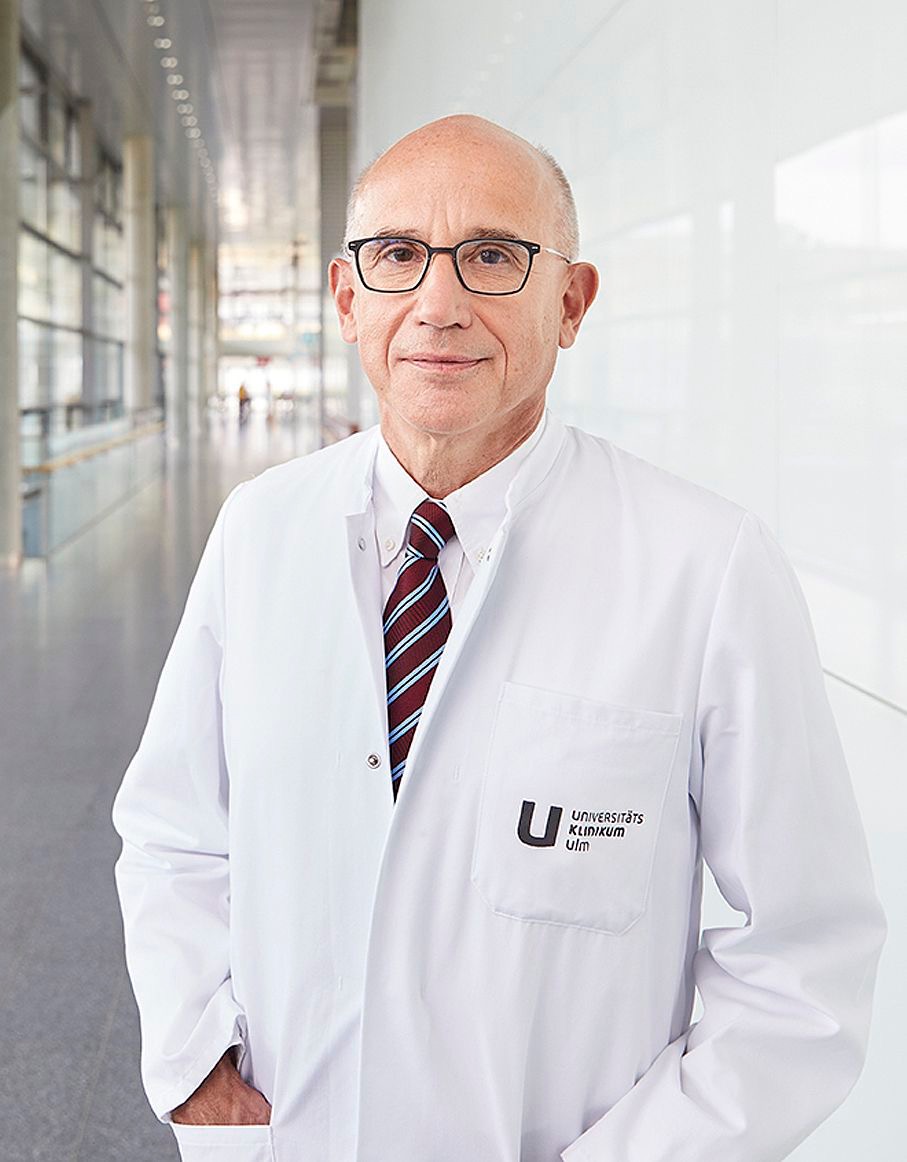
Prof. Hartmut Döhner
AML, he says, remains a major frontier.
“This is a hot topic. He is successful. I think he is right now the flagship of recommendations for AML.”
Döhner had trained with Clara Bloomfield before returning to Heidelberg.
And Hehlmann remembers exactly how he entered the German leukemia competence network.
Döhner had not been part of the original successful application.
The funding competition had already ended.
Hehlmann’s group had won.
Then Döhner asked to join.
“I said, ‘Well, why didn’t you apply yourself?’”
There was a practical problem.
“The funds were earned by the others. How should I do this?”
Döhner persisted.
So did his chief at the time, Anthony “Tony” Ho, a friend of Hehlmann’s.
Eventually, principle won.
“Cooperation is a principle which I like.”
Döhner was good.
The group was next door.
Ho was a friend.
So Hehlmann agreed.
“Okay, we take you.”
When European LeukemiaNet was created later, Döhner was there from the beginning.
Today, another generation has followed.
Döhner’s student Lars Bullinger in Berlin has taken over Rüdiger Hehlmann’s role in the German competence network for acute and chronic leukemias.
“That is a generation.”
Prof. Hehlmann looks back at his decision to let Döhner join a network whose funding others had won.
“I’m very happy that we did it the way we did.”
Perhaps that is the Rüdiger Hehlmann story in one sentence.
Again and again, when science gave him the choice between protecting territory and opening the door, he opened the door.
He took the disease nobody wanted.
He left a career path at Columbia because he believed others could do that work better.
He returned to clinical medicine even when younger doctors knew more than he did.
He spent ten years searching for a virus he never found.
He built networks instead of kingdoms.
And at 61, when he was finally old enough not to be seen as a competitor, he used that freedom to bring competitors together.
More than twenty years later, the European LeukemiaNet remains.
Rüdiger Hehlmann does not call himself its chief.
He calls himself the coordinator.
“I’m the one who is doing the work, trying to get things together.”
And for the generation coming after him, his advice is equally simple.
“Join in first. Have good teachers. Learn everything.”
Then?
“Go to new borders. New frontiers.”