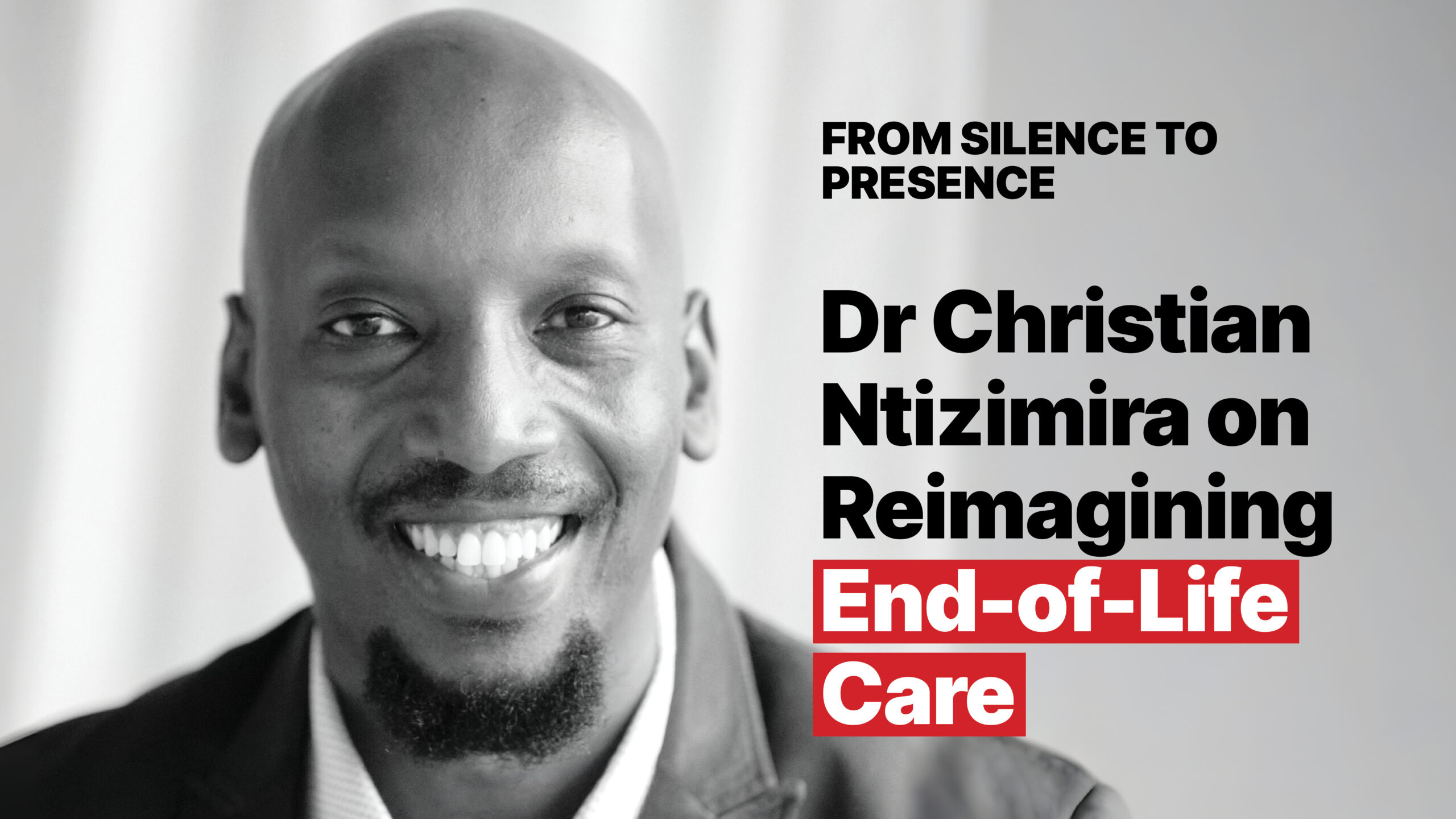
Dr Christian Ntizimira, MD, MMsGHE, Founder and Executive Director of the African Center for Research on End-of-Life Care (ACREOL), and author of “The Safari Concept: An African Framework on End-of-Life Care,” speaks about dignity, suffering, and reimagining care at the end of life.
In the aftermath of the 1994 genocide against the Tutsi in Rwanda, a young boy dreamed not of healing, but of escape. He wanted to become a pilot—“to leave the realities behind,” as he now reflects. Today, Dr. Christian Ntizimira is one of Africa’s leading voices in palliative care, a physician who has spent his life not escaping suffering, but confronting it—sitting with it, learning from it, and ultimately redefining what it means to care.
His journey into medicine, he admits, was almost accidental. Persuaded by his father to try medical school “for just one year,” he never left. What began as a reluctant compromise became a calling that would take him from rural Rwandan hospitals to Harvard and back again, with a mission to transform how the world understands care at the end of life.
That mission was born, in part, from failure.
The Patient Who Changed Everything
The turning point came early in his clinical training, in a district hospital in Rwanda.
A 24-year-old man lay dying of liver cancer.
“I was familiar with physical pain,” Ntizimira recalls. “But this was different: suffering beyond pain.”
At the time, fear and stigma surrounded the use of morphine. He hesitated. The patient remained in severe distress.
Then came an image he has never forgotten: the patient’s mother kneeling before him, pleading not for cure, but for relief. Actually, she was asking for death.
“I failed twice,” he says. “As a doctor, because I could not relieve his pain. And as a Rwandan, because an elder should never kneel before a younger person.”
The young man died in agony. That moment reshaped everything.
“Why did I study medicine if my role is only to witness suffering? Why does medicine feel like it has no soul or perhaps never had one?”
Years later, during a fellowship in Boston, Ntizimira encountered a different model of dying—technologically advanced, medically controlled, and profoundly isolated.
In one hospital room, a patient lay surrounded by photographs.
“I thought these were people who had died,” he recalls. “I thought the patient was preparing to join them.”
They were not dead. They were simply far away.
“In Rwanda,” he says, “we don’t bring photographs. We bring people.”
The contrast was stark: advanced care, but human absence.
For Ntizimira, this became a defining insight: medicine can succeed clinically, yet fail profoundly in humanity.
Redefining a “good death”
Out of these experiences emerged a central question: what does a “good death” mean?
For Ntizimira, it is not defined solely by symptom control or medical outcomes.
It is defined by presence. “A good death is when you are surrounded. When you are not alone.”
His work argues that dying is not only a biological process, but also a biosocial, spiritual, and relational one. To separate these dimensions, he believes, is to misunderstand care itself.
From Autonomy to Community
Much of modern medicine is built on the principle of individual autonomy. But Ntizimira’s experience challenged this assumption.
“In Rwanda, we say: when you are well, you belong to yourself. When you are sick, you belong to your family.”
This philosophy reshaped how he approached care, not as a transaction between doctor and patient but as a relationship embedded in the community. It also led to the development of what he calls the Safari Concept, an African framework for end-of-life care that emphasises shared decision-making, cultural context, and open dialogue around suffering.
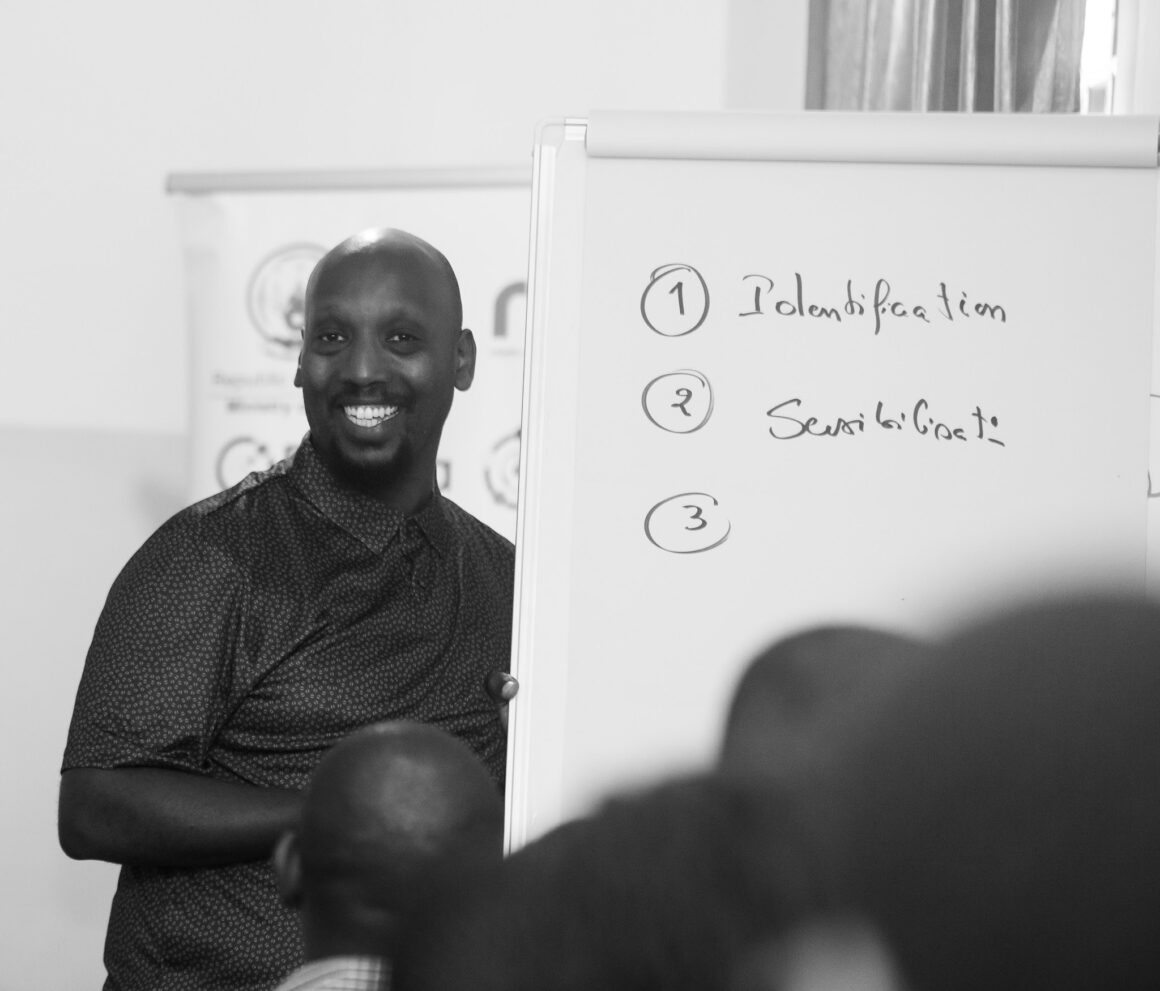
In practice, this means creating spaces where families can speak, grieve, question, and participate. It means recognising that illness does not affect individuals in isolation and that care should not be delivered that way either.
One moment, in particular, remains unforgettable.
During what he expected to be a routine family meeting, Ntizimira called the relatives of a patient. What followed defied every clinical expectation.
“Sixty people showed up in the room,” he recalls.
At first, he was overwhelmed. In many clinical systems, such a gathering would be considered unmanageable—even inappropriate.
But for the family, it was entirely natural.
“They were all connected to the patient,” he says. “I had never seen anything like it.”
The experience forced a quiet but profound realization: definitions of “family,” and therefore of “care,” are not universal. They are deeply cultural, relational, and contextual.
Rethinking Global Models of Care
Ntizimira’s work also exposes a deeper tension in global health: the assumption that models developed in high-income countries can be seamlessly applied elsewhere.
“The palliative care I learned came from Europe and America,” he says. “But it was difficult to duplicate that in an African context.”
Even language, he found, could become a barrier. The term “end-of-life care” has no meaningful equivalent in Kinyarwanda. Instead, the concept is expressed as “life until the end”—a subtle, but profound shift in perspective.
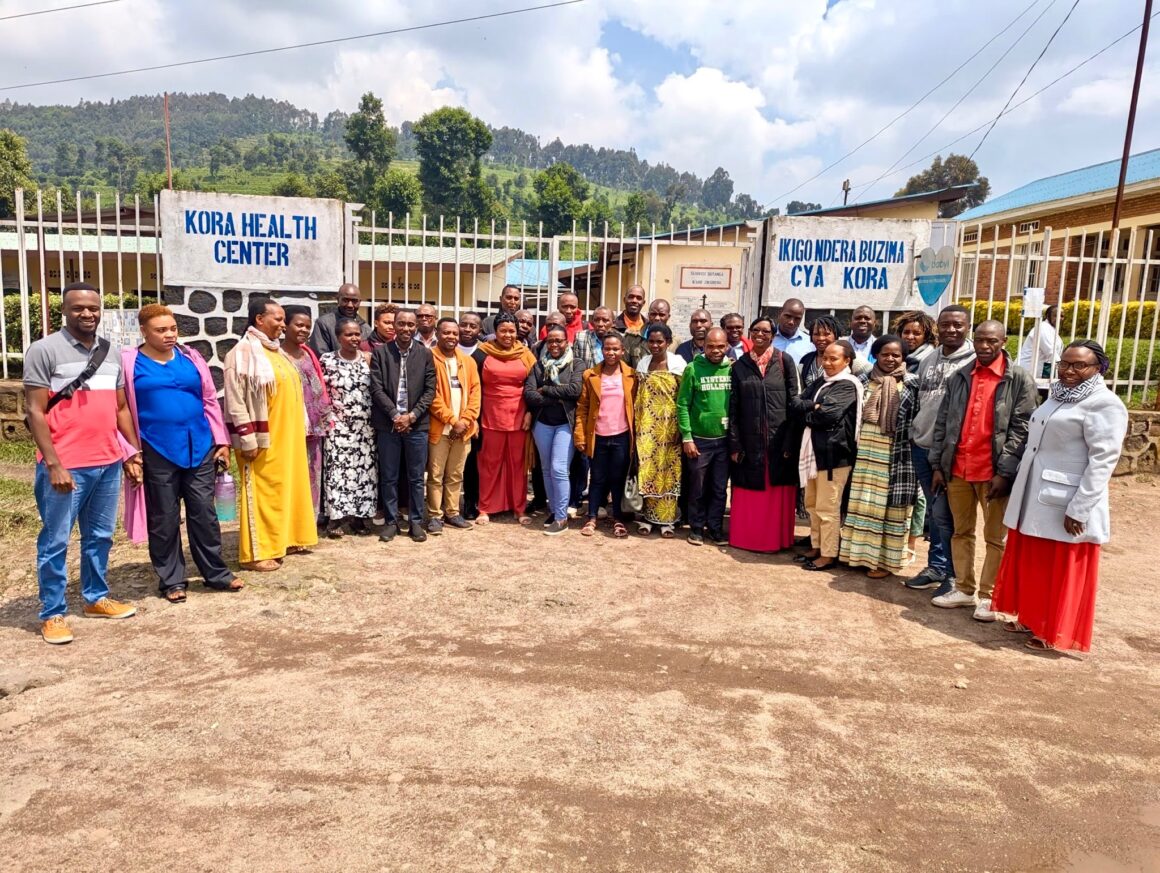
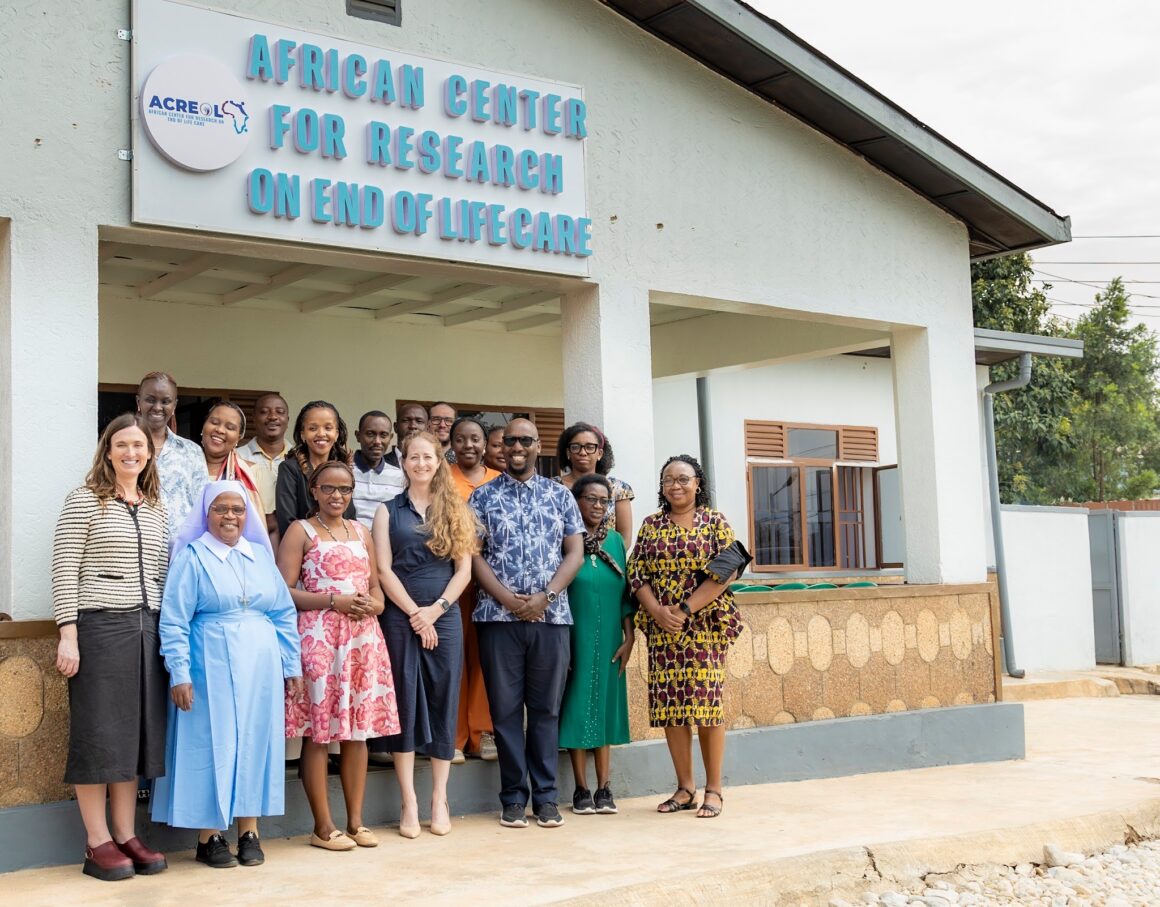
This realisation led him to found the African Center for Research on End-of-Life Care (ACREOL), an organisation dedicated to developing culturally grounded approaches to care through research, education, and advocacy.
At its core is a simple, but radical idea: that care must first be understood locally before it can be improved globally.
Ubuntu: “I am because you are.”
Central to Ntizimira’s philosophy is Ubuntu, an African ethical framework often translated as “I am because you are.”
It stands in contrast to the individualism that dominates much of Western medical thinking. “When you move from ‘I think, therefore I am’ to ‘I am because you are,’ everything changes,” he says.
Care, in this view, is no longer about treating disease in isolation. It becomes an act of connection of recognising the patient as part of a wider human network.
“Ubuntu is not only African,” he adds. “It is a universal invitation to build communities where people are seen, valued, and respected.”
Between Worlds and Ways of Seeing Care
Training in Rwanda and later at Harvard exposed Dr Christian Ntizimira to profoundly different medical cultures. At times, the distance between them felt unbridgeable.
His response was not to choose one over the other, but to hold both in tension and to reconcile them.
“We must deconstruct, then reconstruct,” he explains. “And through that process, we can reconcile.”
For him, this is not an abstract academic exercise, but a necessary rethinking of how medicine itself is taught and practised. It means questioning inherited models of care—particularly those shaped by colonial histories, while also refusing to discard the scientific advances they have produced.
What emerges is a delicate balance: resisting polarisation while insisting on relevance, and building approaches that are both scientifically grounded and culturally meaningful.
Through this lens, Ntizimira’s work becomes less about choosing between worlds, and more about learning how to inhabit them responsibly.
Teaching, Presence, and What Truly Matters
Through the ACREOL, Ntizimira has trained thousands of healthcare providers across Africa. His message to them is simple, but deliberately disruptive:
“There is a difference between treating the disease and treating the person.”
The distinction, he argues, is not philosophical but practical. Disease can be treated without ever fully acknowledging the person who carries it, but care is diminished when that happens.
“If you treat the person,” he says, “you have a greater chance of treating the disease as well.”
In resource-limited settings, where specialists are few and the burden of illness is high, this shift in perspective becomes not only ethical, but necessary for sustainable care.
For Ntizimira, however, impact is not measured only in systems changed or programmes delivered.
What sustains him is something far more immediate.
“The satisfaction of my presence—through the eyes of my patients and their families.”
In a field often defined by outcomes and metrics, he offers a quieter measure of success: simply being there.
“I am because you are. I am because we are.”
Legacy, Misconceptions, and What Endures
Asked about legacy, Ntizimira does not refer to institutions or professional achievements. He returns instead to something more fundamental: the kind of medicine that is practised when no one is watching.
“That kindness is not a weakness,” he says. “We must continue to show humanity in our practice.”
His reflections extend beyond palliative care to the wider field of oncology. One persistent misconception, he notes, is the equation of palliative care with end-of-life care alone—a framing that narrows its role and delays its integration into standard treatment pathways.
His message to younger clinicians is direct:
“The way a patient dies can reflect how a society lives.”
It is both observation and warning and perhaps also an invitation to rethink what care truly means.
Ubuntu, the African philosophy of interconnectedness, remains the anchor of his practice—reminding him that care is never solitary, and that meaning is always relational.
Life Until the End
If he had not become a doctor, Ntizimira might have been a pilot. In another life, he could have spent his days navigating the skies.
Instead, he has chosen to navigate something more complex and less predictable: the fragile space between life and death, where medicine meets humanity, and where care is ultimately defined not by cure, but by presence.
In one word, he says he would like to be remembered as someone “who lived until the end.”
It is a phrase that reflects his philosophy, but also quietly challenges its reader.
Not simply to extend life, but to honour it, all the way through.
About the Author
Knarik Arakelyan (PhD) is a psychologist and communications professional with over 14 years of experience in public relations, health communication, and public awareness campaigns. She is currently the Managing Editor of “CancerWorld“ magazine, Head of the “OncoDaily TV,” and serves as PR and Communications Officer at “EMERTÉ” Clinic.