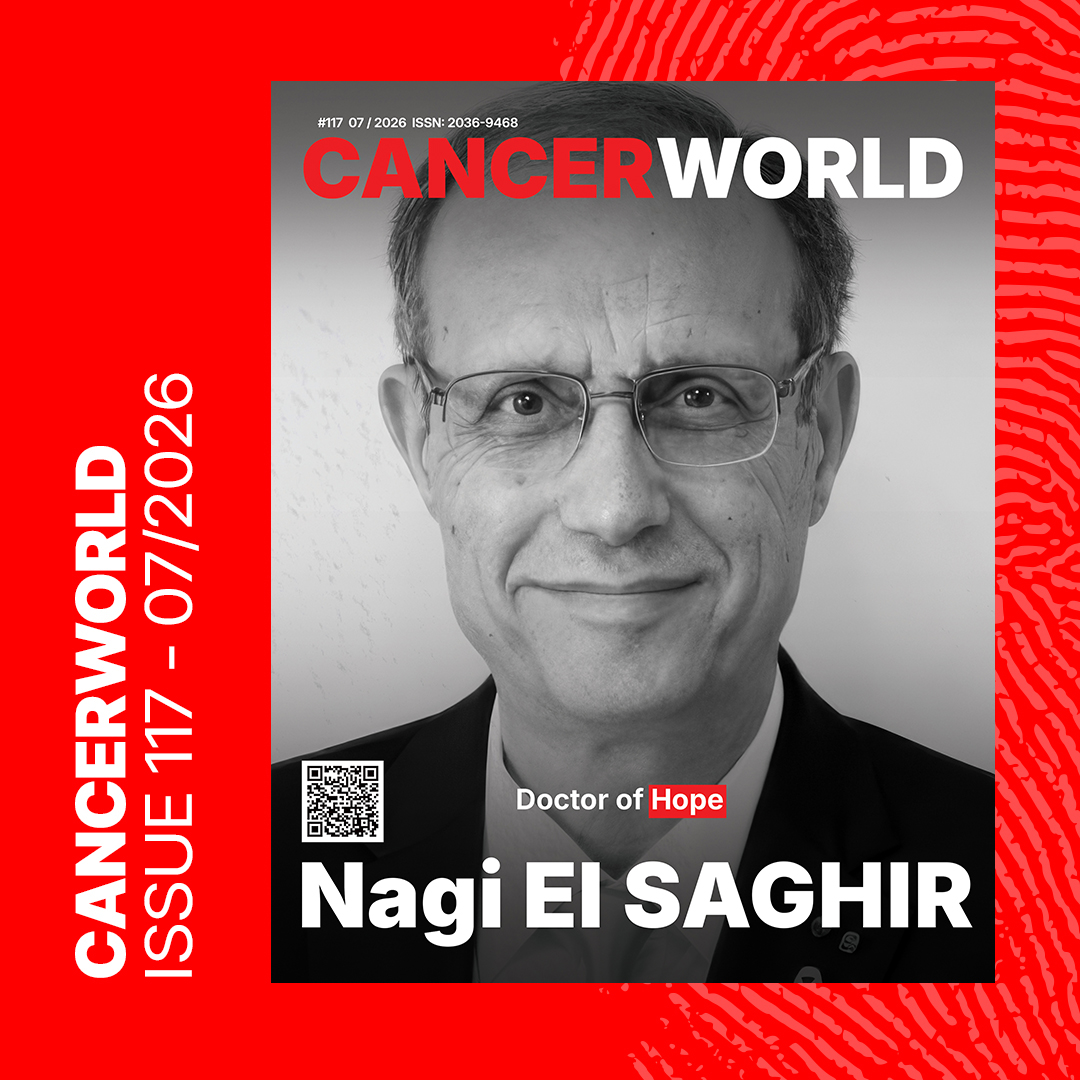
How Professor Nagi El Saghir Changed the Language of Cancer in the Middle East and Helped Redefine Global Oncology
The airport in Beirut looked very different in 1971.
Families walked all the way to the aircraft. Parents accompanied their children almost to the foot of the stairs. Goodbyes unfolded slowly, with embraces, advice and final words that sometimes stayed for a lifetime.
As a young Nagi El Saghir prepared to leave Lebanon for Europe, his father leaned toward him and quietly whispered:
“Now that you are going overseas, do something important. Become a doctor.”
At the time, medicine was not his dream.
He wanted to become an aeronautical engineer. He loved mathematics, physics and airplanes.
“That really affected me,” he recalls. “I wanted to become an engineer. But my father’s words stayed with me.”
More than fifty years later, patients throughout Lebanon and the Arab world know him by another title.
Doctor of Hope.
Growing Up Between Displacement and Opportunity
El Saghir, , Professor of Medicine and Director of Breast Center of Excellence, Naef K. Basile Cancer Institute, Immediate past Head of Hematology Oncology Division, American University of Beirut Medical Center, Immediate Past Chair of ASCO International Affairs Committee, Founder and Past-President of the Lebanese Society of Medical Oncology, Founder and President of the Lebanese Breast Cancer Foundation, and author of the book Breast Cancer from A to Z (in Arabic), was born into a family shaped by displacement.
His parents had left Bint Jbeil of Southern Lebanon in 1948 and settled in Burj Hammoud, one of Beirut’s diverse neighborhoods. Armenians, Lebanese, Muslims, Christians and refugees lived side by side.
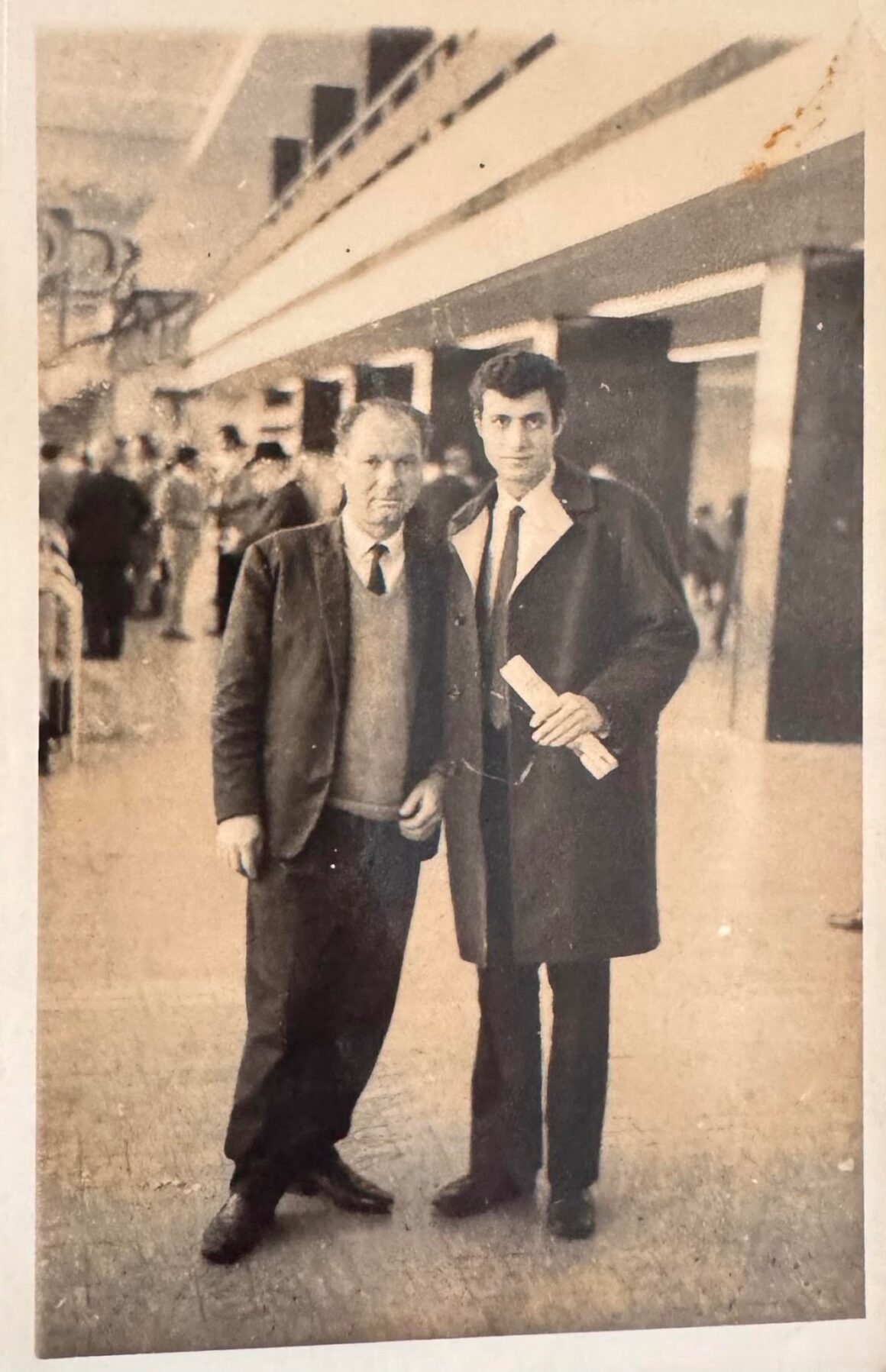
Dr El Saghir with his father Saeed at Beirut Airport in 1971
“We were six brothers and two sisters,” he says.
His parents believed education represented the only path toward progress, prosperity and stability.
“They wanted us to become doctors, engineers or lawyers.”
Medicine eventually replaced engineering for him, while three of his brothers became engineers.
After studying in Lebanon, he traveled first to France to learn the language before continuing on to Belgium.
Medical school in Brussels proved demanding.
“It was very difficult. You had to work very hard.”
Yet the sciences appealed to him.
Physics. Chemistry. Biology.
Medicine became both an intellectual challenge and human purpose.
Running Toward Medicine
The day he graduated from medical school, he nearly missed his flight to New York.
His ceremony in Brussels had ended only hours earlier.
The aircraft doors had already closed. The crew reopened them. His luggage remained behind. His future did not.
New York introduced him to modern oncology.
Training in internal medicine evolved into hematology and later oncology.
“I liked looking at cells,” he says. “I liked the laboratory.”
At St. Luke’s-Roosevelt Hospital Center of Columbia University in Manhattan, he entered oncology during a period of extraordinary change.
Clinical trials were expanding. Chemotherapy was advancing. Research was transforming practice. He took care of many patients on CALGB (Cancer and Leukemia Group B) clinical trials. Many foreign graduate physicians remained in America. They take care of patients and advance medical research. He always intended to return to his native country to make a difference.
In 1993, after years in New York and Michigan in the United States and Riyadh in Saudi Arabia, El Saghir returned to Lebanon.
“It was the dream of my life to return and join the prestigious American University of Beirut.”
The country was emerging from civil war. Large numbers of physicians had emigrated. Cancer services remained fragmented.
What disturbed him most was not only the lack of infrastructure. It was fear.
“In Lebanon and Arab Countries, people would not say the word ‘cancer’,” he recalls. “They would say ‘that other disease.’” Because for them “Cancer meant death.”
Patients delayed seeking care. Families remained silent. Women arrived with advanced breast tumors. The challenge was not only medical. It was cultural.
When Nobody Said the Word Cancer
One patient remained unforgettable. She was thirty-seven years old. Her breast tumor measured nearly nine centimeters. Fear had become stronger than medicine.
El Saghir decided to confront the silence publicly. Television became a classroom. Newspapers became educational tools.
He remembers asking audiences: “Does your husband put his hands around your breasts? Does he not notice?”
The question shocked viewers. But it also started conversations.
“If you do not face cancer, it will kill you.”
Patients gradually began speaking publicly. Survivors appeared on television. Women discussed breast cancer openly. The silence slowly disappeared. Awareness and early detection campaigns reversed the trends towards more early stages of cancer at diagnosis.
Today, many women diagnosed early survive for years and decades.
“Cancer is no longer a death sentence.”
He was also shocked at the high rates of tobacco smoking in Lebanon and Arab countries. In addition to campaigning against tobacco advertising, he argued against letting people smoke cigarettes on TV talk shows and offering cigarettes with the coffee at peoples’ home gatherings. Physician’s members of Parliament later on introduced anti-smoking laws in Lebanon.
Building More Than a Clinic
Very early in his career, Dr El Saghir realized that treating patients individually would never be enough.
“I realized that seeing ten or fifteen patients a day was not enough. You have to educate thousands.”
He founded the Lebanese Society of Medical Oncology (LSMO).
He founded the Lebanese Breast Cancer Foundation (LBCF). He organized educational meetings. He developed awareness and early detection campaigns.
“This is citizenship work,” he says. “It is our duty.”
Public attitudes changed. Cancer survivors participated in campaigns and on television shows. Screening increased. Earlier diagnosis improved survival.
For him, education itself became a form of treatment.
“We Treat Patients, Not Cancer”
One sentence appears repeatedly throughout the conversation.
“We do not treat cancer. We treat patients with cancer.” For Dr El Saghir, medicine begins with listening.
“You have to give patients time. Show them respect. Smile. Be truthful and provide hope. Some doctors see patients in five minutes. I cannot do that.”
Appointments may last thirty or forty minutes. Patients ask questions. Families participate. Residents observe.
“When a patient tells me, ‘Doctor, now that I saw you, I feel better,’ that is one of my greatest rewards.”
Technology changes. Medicines change. Human relationships remain.
The Global Oncologist
While rebuilding oncology in Lebanon, Dr El Saghir emerged as one of the leading voices for global oncology.
For much of his career, Professor El Saghir lived between two worlds. One was the clinic in Beirut. The other was the international stage.
ASCO. ESMO. ABC Consensus conferences. Educational programs. Editorial Boards. Global oncology initiatives. Guideline committees. Scientific meetings.
Over time, he became one of the few voices from the Middle East helping shape international discussions about cancer care.
He chaired ASCO’s International Affairs Committee.
He helped develop ASCO’s international travel grants and ASCO’s International Development Educational Awards (IDEA), and the launching of ASCO’s Journal of Global Oncology, now renamed JCO Global Oncology.
He contributed to educational initiatives. He helped develop the ASCO-ESMO Global Curriculum.
“I was and remain very proud to serve in ASCO,” he says.
His work within the American Society of Clinical Oncology (ASCO) extended far beyond committee membership. As Chair of ASCO’s International Affairs Committee, he advocated for the needs of oncologists practicing outside North America and helped expand ASCO’s international vision.
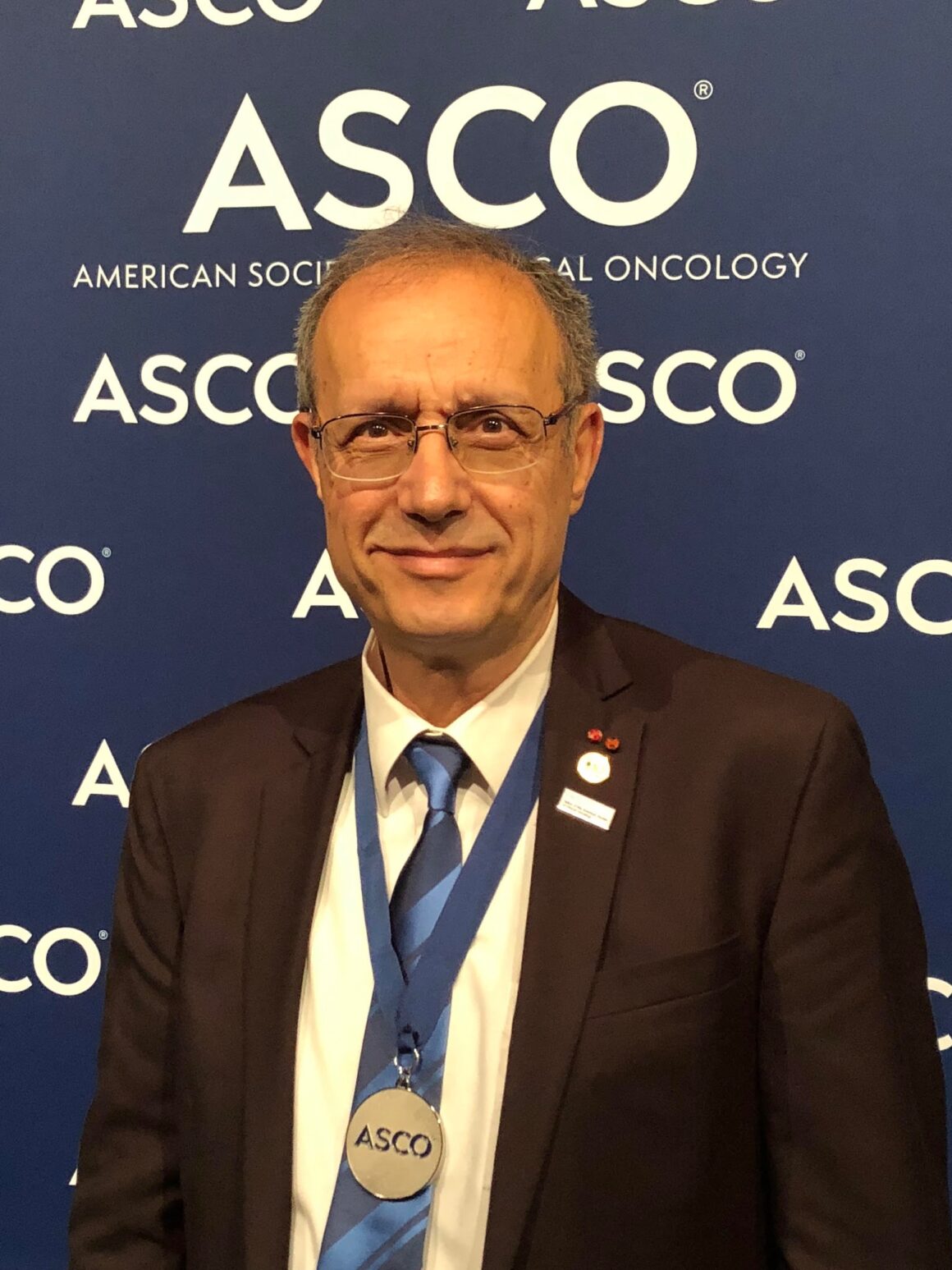
At FASCO award ceremony, ASCO
“Fifty percent of ASCO members are from outside the United States,” he says. “Their problems also matter.”
The statement reflects one of the central themes of his career.
Cancer care cannot be designed exclusively from the perspective of wealthy nations.
The realities of Lebanon, Egypt, Jordan, Pakistan, Africa, South America and many other regions must also shape international oncology.
Many young physicians, who participated later, became leaders in their own countries.
“You want them to become leaders where they live.”
Under his leadership, ASCO expanded travel grants, educational initiatives, Multidisciplinary Cancer Management Courses and international training opportunities. Young oncologists from low- and middle-income countries received opportunities to attend scientific meetings, visit major cancer centers and return home with new knowledge.
Education, El Saghir believes, creates multiplication. You teach one physician, and that physician later teaches hundreds more.
Cancer care, he argues, cannot be designed exclusively from the perspective of wealthy nations.
Shaping Global Oncology
His influence also extended to the European Society for Medical Oncology.
Through ESMO, ASCO and other international organizations, El Saghir contributed to efforts aimed at standardizing medical oncology education worldwide.
The ESMO/ASCO Global Curriculum became one of these achievements. The initiative sought to establish common standards for medical oncology training worldwide while allowing adaptation to local realities.
For countries with developing oncology programs, these frameworks proved invaluable.
He also participated in international consensus conferences and expert guideline panels addressing treatment of patients with breast cancer, multidisciplinary care and resource-stratified approaches.
Why Guidelines Matter
One of his most influential contributions involves resource-stratified guidelines.
Basic. Limited. Enhanced. Maximal.
“We do not advocate giving inferior treatment. “We are recommending the best possible treatment with the resources available, while working on improving them.”
His work with the Breast Health Global Initiative helped establish one of the most important principles in global oncology: care should be adapted to available resources without compromising quality.
For countries and regions facing financial limitations, the approach offered realistic pathways toward improving care.
“While we work to improve resources, we still have to treat patients.”
These ideas eventually influenced international guidelines at ASCO, WHO and other societies and helped shape discussions about equity and access worldwide.
The Tumor Board Revolution
“Medicine is teamwork.”
He repeats the phrase often.
Surgeons. Medical oncologists. Radiation oncologists. Pathologists. Radiologists. Nurses. All discussing patients together.
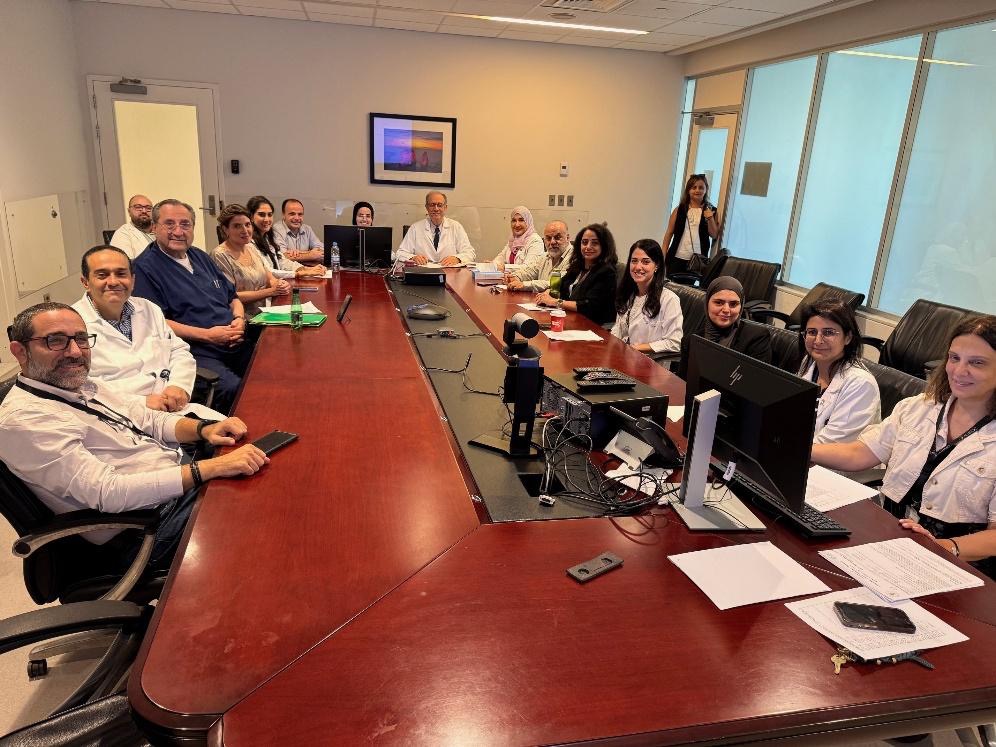
Tumor Boards
“One physician cannot know everything.”
Research from Lebanon as well as an ASCO survey demonstrated that multidisciplinary discussions frequently changed diagnoses and treatment decisions.
The physician learns. The resident learns. The patient benefits.
Research that Changed Practice
Research has remained central to El Saghir’s career.
His advice to young physicians: Follow literature advances. Keep your eyes open. Perform situation analysis where you are. Determine unmet needs. Make proposals. Have a research team and proceed. You will succeed.
His work contributed to important advances in breast cancer epidemiology in Lebanon and the Arab world, as well as treatment, endocrine therapy and targeted treatment worldwide.
He participated in international studies involving CDK4/6 inhibitors and ribociclib, and co-lead with Dr. Yen-Shen Lu of Taiwan the practice-changing RIGHT Choice trial, which demonstrated that endocrine therapy combined with targeted treatment could outperform chemotherapy in patients with aggressive hormone receptor-positive disease.
“For years people believed aggressive disease meant chemotherapy,” he says. “The data suggested otherwise.”
JCO Senior Deputy Editor commented on the relevance of the RIGHT Choice study: The “conventional wisdom” that patients with visceral disease need chemotherapy even if estrogen receptor–positive should be retired.
His research has consistently focused on improving outcomes while making treatment more individualized, more effective and more accessible.
For El Saghir, research is valuable only when it ultimately changes patient care.
The Fight for Equity
One theme returns repeatedly: Equity.
“It cannot be that patients participate in research and later cannot receive the new treatments.”
Modern oncology has produced extraordinary advances. Yet millions remain unable to access them.
Drug pricing concerns him. Disparities concern him. Access concerns him. A large percentage of patients participating in clinical trials are from Low- and Middle- Income countries. Dr El Saghir argues that they should benefit from special pricing formulas.
For El Saghir, equity represents the defining challenge of modern oncology.
Cancer Care During Crisis
His career has unfolded against civil war, economic instability, political crises and global pandemics.
“To lead, you have to be present. You have to communicate and be transparent. You have to reassure people.”
He believes oncology must pay greater attention to displaced populations and patients affected by conflict.
“We do not speak enough about refugees and displaced patients.”
He often returns to one observation.
“If we spent even a fraction of military budgets on healthcare, we could treat everyone everywhere.”
The Brain Drain
“We export brains.”
The phrase appears repeatedly.
Lebanon educates excellent physicians.
Many leave.
The answer, he believes, is not preventing migration.
It is creating reasons to return.
“We need to reverse the brain drain by improving infrastructure, advancing basic and clinical research, and improving living conditions for skilled physicians and other experts. We need to give people opportunities. We did succeed at AUB and recruited back over 100 physicians of Lebanese origin.”
The Teacher
“We are eternal students and eternal teachers.”
He tells residents to remain curious. To ask questions. To challenge assumptions.
“I never make anyone feel that I am teaching them. We learn together.”
Medicine requires excellence. It also requires humility.
Many of the young oncologists who benefited from his international programs later became leaders themselves. For El Saghir, mentorship extends far beyond the classroom. It means opening doors, creating opportunities and helping the next generation build institutions of their own.
Building Oncology at AUBMC
At the American University of Beirut Medical Center, Dr El Saghir helped build one of the region’s leading oncology programs. As Head of the Division of Hematology and Oncology, he promoted multidisciplinary care, expanded clinical research, strengthened fellowship training, obtained ACGME accreditation for the Oncology Fellowship at AUBMC and developed international collaborations.
He emphasizes that hard work and good clinical training build strong decision-making personalities of medical students, residents and fellows.
Many of the physicians trained at AUB later became leaders throughout the Middle East and beyond.
“You build people,” he says. “And they build institutions.”
Music, Memory and Hope
The conversation frequently returns to music. He encourages patients who develop forgetfulness and so-called chemo brain to sing. He recommends memory exercises.
Crossword puzzles. Songs. Mental activity.
“I tell my patients to sing along with the songs they love.”
For him, healing extends beyond medicine.
Hope matters. Music matters. Human connection matters.
Doctor of Hope
Last year, at Casino du Liban, artists, musicians and public figures gathered to honor individuals who had influenced society.
El Saghir received an unusual title: Doctor of Hope.
He remembers standing before an audience very different from those he usually addresses.
“I usually speak to doctors and students. That evening I spoke to artists.”
The title remained with him. Not a professor. Not chairman. Not an international leader.
Al Zaman Al Jamil Awards 2025
Doctor of Hope. His patients had already given him that title long before.
Helping Patients Beyond Medicine
Throughout his career, El Saghir has supported fundraising initiatives and charitable efforts aimed at helping patients who could not afford treatment.
For him, access to care remains a moral responsibility.
To ensure better access to care for patients, Dr El Saghir is very active in fundraising for needy patients and does dinners, campaigns, telethons and is custodian of AUB Breast Cancer Support Fund.
“A diagnosis should not determine a person’s future because of financial limitations.”
Breast Cancer from A to Z
His commitment to education also led to the publication of Breast Cancer from A to Z, a book written to help patients and families better understand diagnosis, treatment and survivorship. Physicians-in-training and medical students found it very helpful.
Great positive feedback at book signing ceremonies and debates in Beirut, Dubai and Cairo International Book Fairs.
“Education reduces fear,” he says.
Recognition and Legacy
Professor El Saghir’s work has been recognized by numerous professional societies, academic institutions and national leaders. He has received awards for medical research, continuing medical education, public service and contributions to cancer care including AUB Dean’s Excellence Research Award, King Hussein Cancer Research Award, Cedar Medal of Honor from the President of Lebanon.
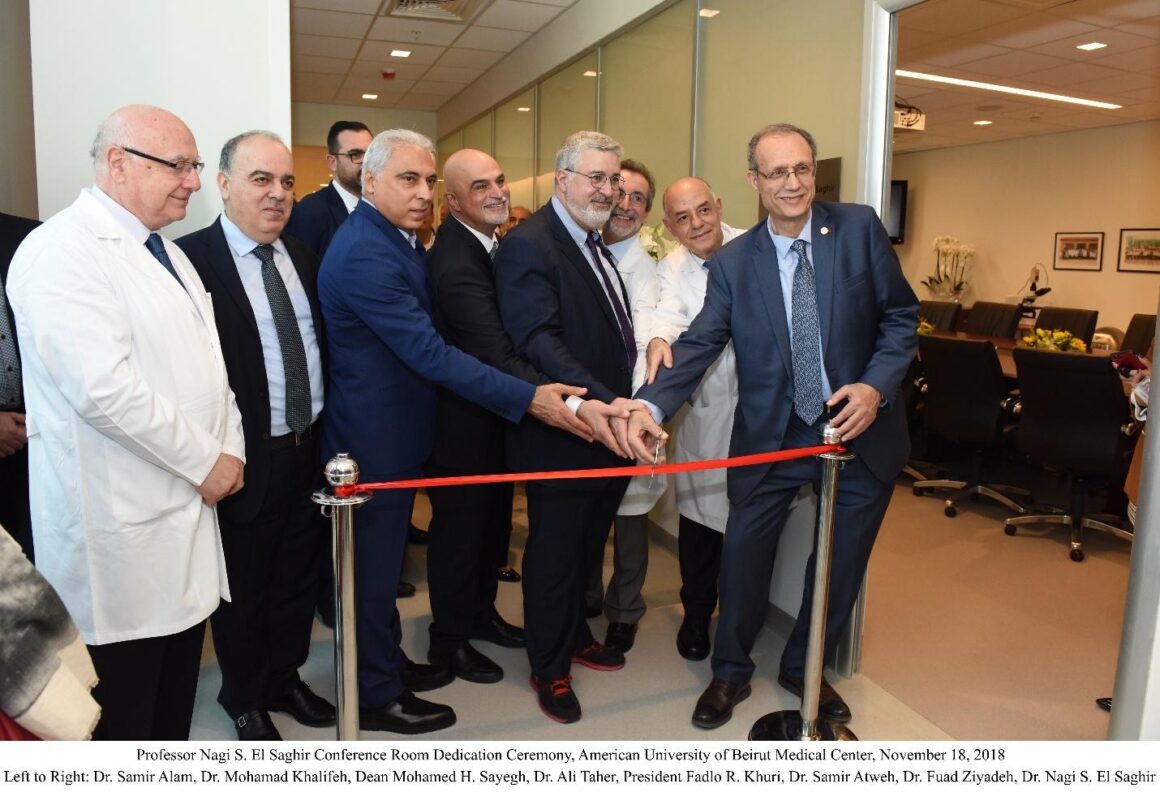
At the American University of Beirut, a conference room bears his name, honoring decades of leadership, mentorship and service.
Yet he measures success differently.
“The greatest reward is when a patient says, ‘Doctor, now that I saw you, I feel better.’”
The Unfinished Chapter
When asked what remains unfinished, his answer comes immediately.
Prevention. Research. Early detection. Equity. Access. Collaboration. National cancer control plans.
The story of cancer in the Middle East remains unfinished.
But much has changed. People speak openly. Smoking is decreasing. Women seek screening. Patients survive. Young physicians lead. Research grows.
More than fifty years after his father whispered those words at Beirut airport, Professor Nagi El Saghir still arrives at work for the same reason.
“I love my patients.”
He has treated tens of thousands of people. He has helped build institutions. He has trained generations of physicians. He has argued for equity, access and global collaboration. But perhaps his greatest achievement is simpler.
He helped a society say the word cancer. He taught patients that hope belongs inside the clinic.
And in a region where cancer was once spoken about in whispers, the Doctor of Hope helped turn silence into conversation.
“Cancer is no longer a death sentence.”
After half a century in medicine, he still believes the most powerful treatment may begin with a physician sitting beside a patient and saying:
“We will face this together.”
About the Author
Knarik Arakelyan (PhD) is a psychologist and communications professional with over 14 years of experience in public relations, health communication, and public awareness campaigns. She is currently the Managing Editor of “CancerWorld“ magazine, Head of the “OncoDaily TV,” and serves as PR and Communications Officer at “EMERTÉ” Clinic.