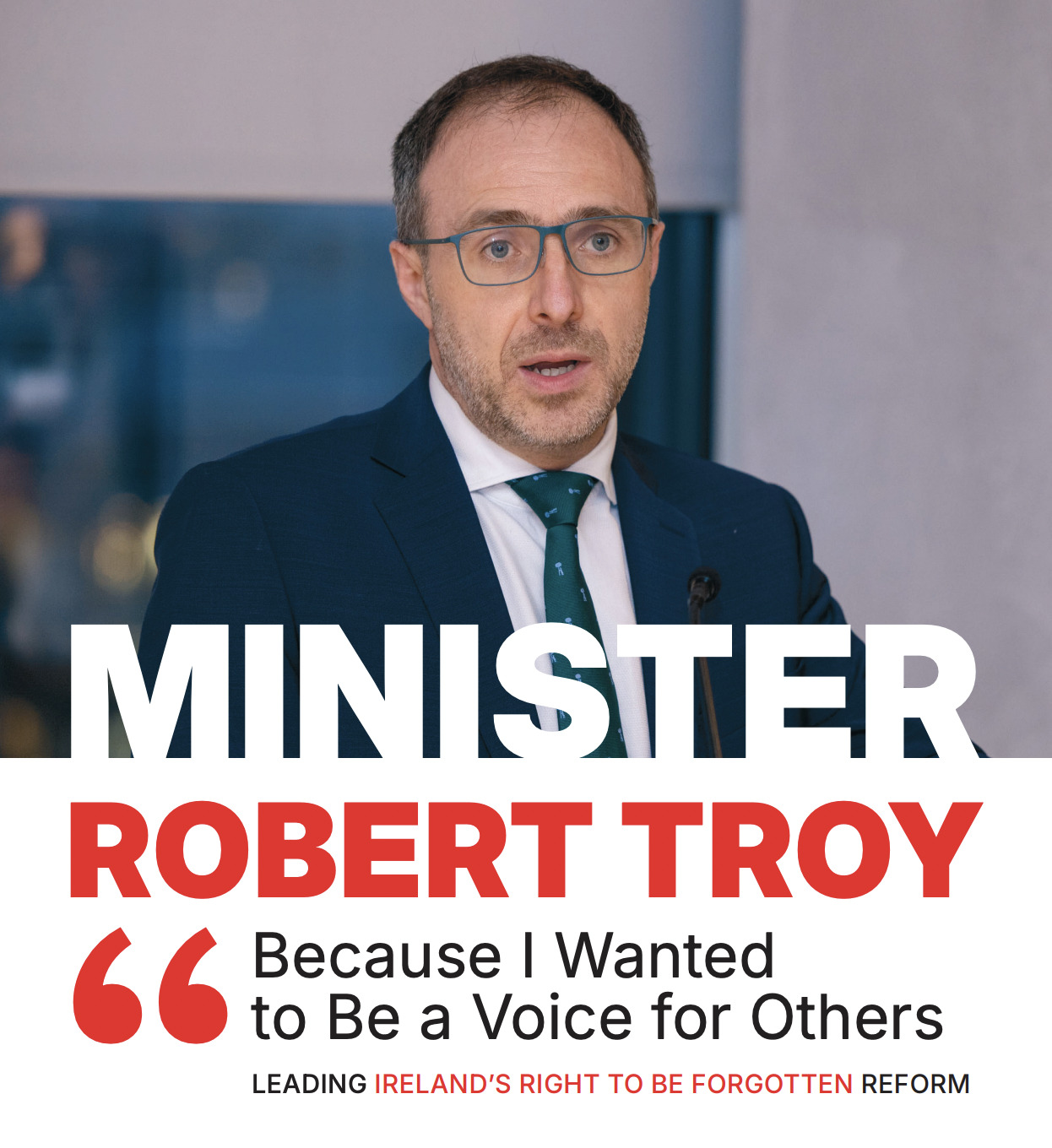
I expected to meet a Minister defined by data, evidence and pragmatism. And I did. What I did not anticipate was the depth of empathy behind those qualities, or the disarming honesty of someone who describes himself, with a smile, as “the spoiled youngest of twelve.”
Our conversation revealed a policymaker driven not only by analysis, but by lived experience, loss, and an unwavering belief that public service must make life fairer for those who need it most. It was a discussion that lingered long after the recording stopped, a conversation about fairness, responsibility, and the quiet determination to turn policy into action for the people and communities he serves.
Where Does Good Fortune Come From?
He begins not with policy, but with family, a large, textured, disciplined childhood that still shapes every instinct in his public life. Raised in a home where resources were stretched but affection was limitless, and where work was less a duty than a rhythm of daily life. “From a very early age, it was always instilled in me a very strong work ethic,” he says. “Both my parents worked extremely hard… they made many, many sacrifices so we could have a better start in life than maybe they did.”
Their hard work gave their children opportunities they themselves had not known: boarding school, third-level education, the freedom to imagine horizons beyond survival. These opportunities, he says, carried a moral counterpart. “Good fortune comes from working hard, but also that there is a responsibility to think of others, and people who are less fortunate, and where the opportunity arises to help those people out.”
His father, a community activist deeply involved in local organisations, embodied that ethic. Though never elected, he was often the first stop for neighbours seeking help or guidance. Young Robert watched as his father connected people to those who could help them. “I would have seen from a very early age that politics is a force of doing good,” he says. “You can use individual challenges to address maybe a societal change on a larger scale.”
That conviction carried him into the student council, “because I wanted to be a voice for others”, and later into local politics, where the connection between policy and people felt immediate. “I really enjoyed making a difference for my community,” he says. “The strong motivational factor is the ability to make positive change that might improve one person’s life, but could be a huge difference in a broader sense also.”
The Youngest of Twelve
If being the youngest softened him, it also gave him a second mother. His eldest sister, nearly two decades older, played a central role in his childhood. “On the weekends, I used to go and stay with my sister… We were really, really close. She was like a second mother to me.”
He smiles gently as he recalls it. “I’m told I was spoiled and had a much more sheltered upbringing than the older family.” But the bond he formed with his sister, later lost to cancer, remains a quiet, formative thread beneath his public work.
The Right to Be Forgotten: I Know the Impact that Cancer Has
“This is not my initiative,” he says of the Right to Be Forgotten. “This was something I adopted when I was appointed to this role.”
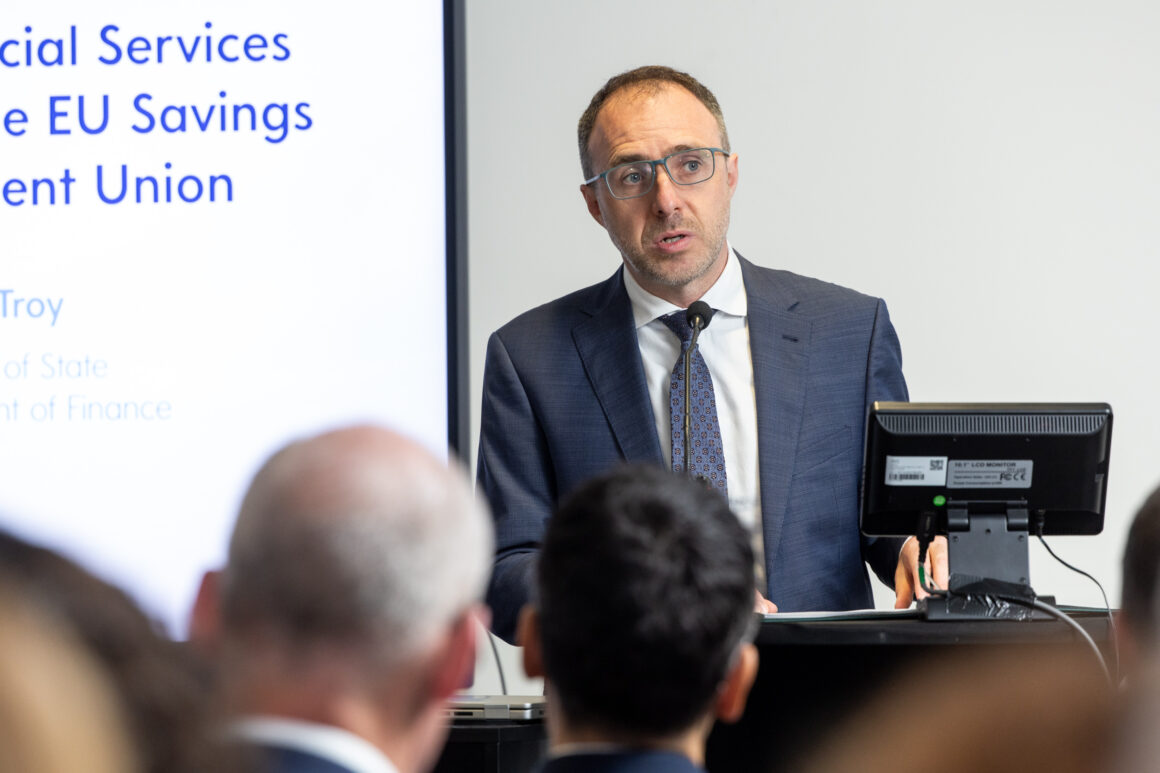
The bill had been introduced in the Seanad by his colleague Catherine Ardagh. It appeared in the Programme for Government, but not as an urgent priority. “It could have been year three, year four, year five,” he says. But once he stepped into the portfolio, he recognised an opportunity to accelerate it. “I wanted to prioritise this because I know the difference. I know the impact that cancer has on families.”
His own siblings “didn’t get a cancer-free period,” he says quietly. “Ultimately, the disease captured them.” But instead of anchoring the story in loss, he shifts immediately to the people who can be helped.
“Many people, thankfully, because of the advances in medical technology and improvements we have in cancer care, people are going on to live very normal lives after having been diagnosed with cancer, after having had the treatment. And we didn’t want this preventing them, having gotten over this awful illness, preventing them going on to live out their lives.”
Why Mortgage Protection Comes First
At the center of the legislation is one simple premise: survivors should be able to rebuild their lives. And in Ireland, that begins with a home. “One of the basic principles for living a full life is home ownership,” he says. “The ability to buy a home, build a home, roots in the community.”
For cancer survivors, the barrier has been blunt: without mortgage protection, there is no mortgage, and without a mortgage, there is no home. He stresses that this is where discrimination bites hardest. “This fundamental stage in somebody’s life is where we could make the greatest difference.”
The consequences extend far beyond the individual. “If you’re prevented from owning your own home, the only choice you have is to rent, and rent indefinitely,” he says. In Ireland, where long-term home ownership shapes security, identity and intergenerational stability, the impact can echo for decades. “It has ramifications… it can have an impact on subsequent generations.”
The voluntary code introduced by Insurance Ireland provided early evidence that progress was both possible and practical. “We’ve seen the positive impact… people were able to access mortgage protection and move on with their lives,” he says. Legislating it is now “the next logical step.”
And he is clear about the timeline: “It is my aim and desire that we will have this legislation enacted very early in 2026.”
Finding the Right Balance
The remission period, seven years for adults, five for those diagnosed under 18, is one of the most debated elements of the bill. Critics argue that it still feels long. Minister Troy’s response is grounded in process rather than politics. “We have to take an evidence-based approach,” he says.
Consultations included the Irish Cancer Society, the Central Bank of Ireland, the Financial Services and Pensions Ombudsman, and the Society of Actuaries. Ireland also benefited from learning from early adopters such as France and Belgium.
Based on all this, “we felt this was the right balance.” But he adds, with disarming candour: “We may not land at this. There may be scope to reduce it somewhat.”
The challenge, he says, is avoiding unintended consequences. “Other countries have up to 10 years. So it’s about balancing the equation, and it’s about ensuring that you don’t introduce something that’s going to have a detrimental, unintended consequences to other people who are looking for mortgage protection.”
The goal is fairness that does not jeopardise stability. “An opportunity for people to reset and start again,” he says, “while not distorting the market.”
When Insurers Say ‘Yes’
One of the striking aspects of this reform is the degree of cooperation from industry. “Insurance companies have been willing, open and engaged,” he says, a contrast to negotiations in other policy areas. Ninety-three percent of providers signed the voluntary code. “It has been positive and fruitful,” he notes. “We will work now to enhance those codes and enshrine them in legislation.”
Balancing survivor protections with market stability is the central tension of this legislation. He speaks about it with a clear sense of responsibility. “In government, you have a responsibility to ensure that you have a properly functioning insurance market,” he says. “Our businesses need insurance, our homes need insurance, our cars need insurance.”
If the market becomes unstable or providers withdraw, the consequences fall on ordinary people. “We are still paying the consequences for insurance companies that failed in the past,” he says. Stability isn’t ideological; it’s practical.
His department’s insurance team monitors international developments, examines data, and anticipates market reactions. The Action Plan on Insurance Reform aims to keep the market competitive, proportionate and fair. Insurance providers “do have to make a profit,” he says, not as a defence of industry, but as a recognition that financial sustainability is essential for consumer protection.
Financial Literacy: People in Real Terms are Losing Money
Financial fairness, he argues, cannot be achieved without improving financial literacy, not just among young people, but across every generation. Too many households, he says, are losing money without realising it. “We have €170 or €180 billion on low-interest deposit accounts in Ireland,” he explains. “And people in real terms are losing money because when you see the level of interest that’s been paid, marked with the rate of inflation, in actual fact, they’re losing money. And people perceive that to be the safest investment out there.”
For him, this misconception is not a minor issue but a national vulnerability. This is why he sees auto-enrolment as a fundamental shift rather than a technical reform. “What we want to do is support people, make the right decisions so that they can have the greatest security for their own future.” The new auto-enrolment pension scheme, “my future fund,” is designed to change that behavioural landscape. “It ensures that people can have their own pension scheme where the government will pay into it, where your employer will pay into it, and where you, as an employee and worker, will pay into it.”
Far too many people, he notes, rely solely on the state pension, which cannot meet future needs on its own. “We want to support people to make the right decisions so they can provide for themselves economically and give themselves the greatest security in the future and for their old age.”
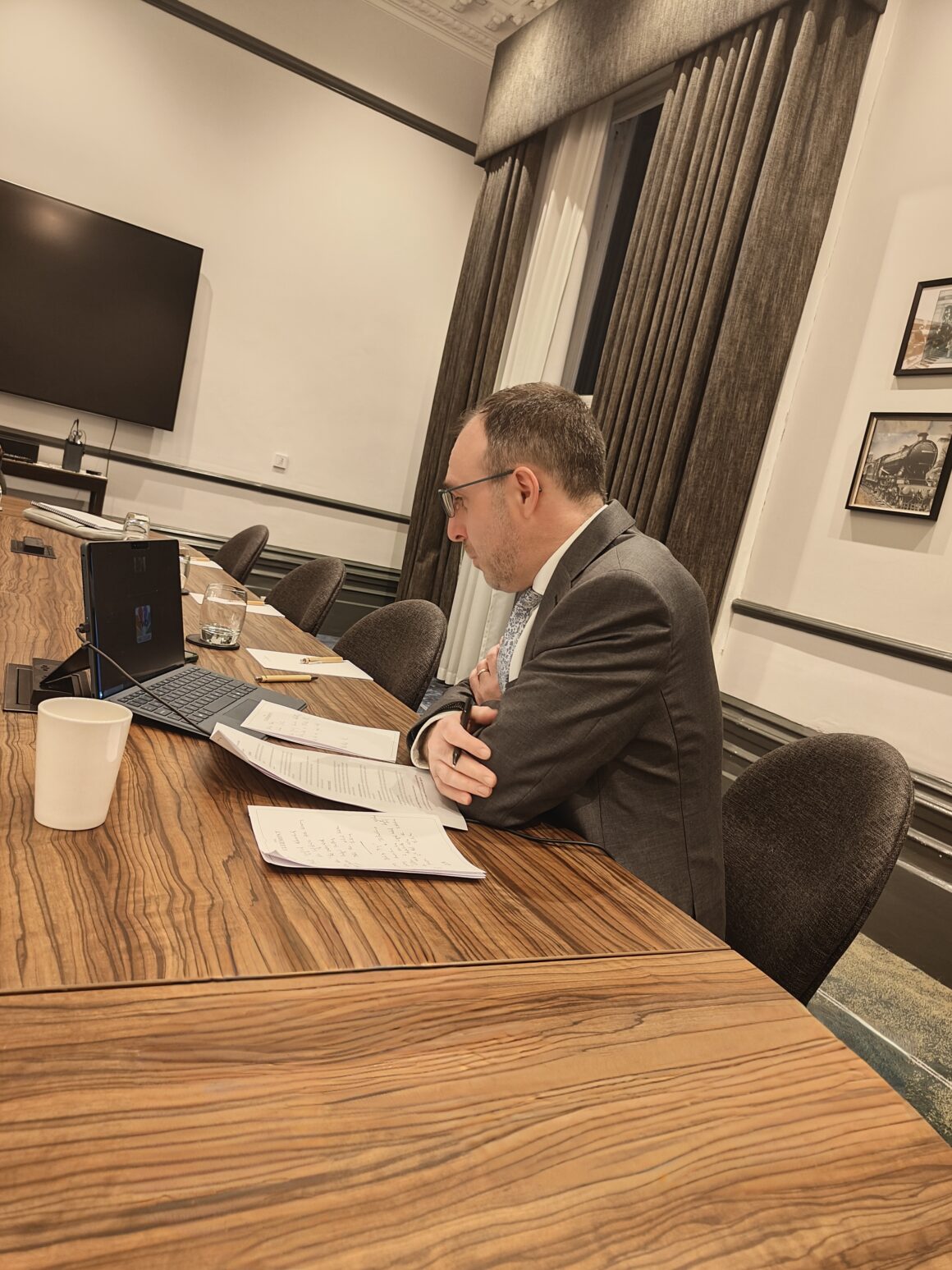
People
Throughout the interview, one word appears again and again: people. His governing philosophy is disarmingly straightforward: “The common good. What can you do that will have the greatest impact for the most amount of people?”
He describes Ireland’s political culture, direct, local, human. “Most people can have access to their TD or a Minister very easily, literally turn up at their constituency office.” When they do, “they’re entrusting me with one of their biggest problems.”
For him, that trust imposes two duties: 1. Solve the problem in front of you if you can. 2. Ask whether this individual case reveals a wider societal issue. “Is there a wider societal issue that is causing that problem? And can I use the knowledge of this to influence a national change?” Helping one person matters, he says, but using their experience to help many more is the real work of public life. “That’s how I approach most of my dealings in public life.”
Looking ahead to the end of his mandate, he is realistic. “You can’t achieve everything,” he says. But you can prioritise policies that deliver real impact. He recalls previous reforms, modernising the Personal Injuries Resolution Board, introducing SCARP for small businesses, as examples of policy that strengthen people’s lives in concrete ways.
For him, economic security is dignity. “If you can help people be secure economically,” he says, “let them make the decisions that best influence their own lives.”
That is the Purpose
When asked what he hopes his late siblings might ask him today, he pauses. “I would just hope that they would be proud that I’m using the position that I am to make a difference to families it can benefit.”
The Right to Be Forgotten will not change what happened to his siblings. But it will change what thousands of survivors and families can build for themselves. That, he says, is the purpose of the work.