Key discussions and priorities from the 2026 Cancer Patients Europe Annual Meeting
As Europe faces growing pressure on its healthcare systems, Cancer Patients Europe (CPE) brought together patient representatives, policymakers, clinicians, researchers, and industry leaders in Brussels from 24 to 26 June 2026 to examine one central question: how can Europe protect and strengthen equitable cancer care in an increasingly complex political and economic landscape?
While the discussions covered diverse topics—from regional governance and clinical trials to innovation and survivorship—they all pointed to the same conclusion: equitable cancer care depends not only on scientific progress, but also on political leadership, regional cooperation, and meaningful patient involvement.
Regions at the Heart of Europe’s Cancer Care
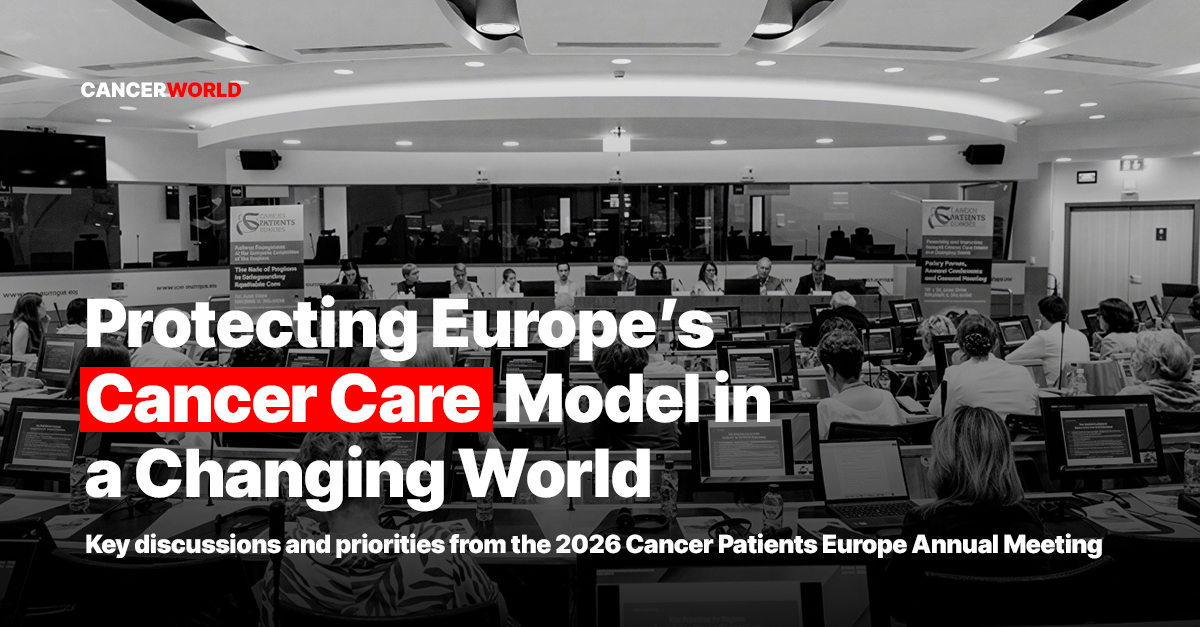
The Annual Meeting opened with an institutional event hosted by the European Committee of the Regions, dedicated to “The Role of Regions in Safeguarding Equitable Care.” The session highlighted the growing importance of regional authorities in ensuring that European health policies translate into tangible improvements for patients.
Europe’s cancer care model, grounded in solidarity, equity, and universality, is under increasing pressure from economic constraints, workforce shortages, and territorial disparities. As Europe’s Beating Cancer Plan moves from policy development to implementation, the focus turned to how regional leadership can bridge the gap between European ambitions and patients’ everyday realities.
The event opened with welcoming remarks from Francisco Lozano (Chair of the Board, Cancer Patients Europe) and Dorota Tomalak (Deputy Head of Unit, European Committee of the Regions), followed by a keynote address from the event’s host, Birgitta Sacredeus (Representative, Dalarna Region, Sweden), who underlined the essential role of regions in delivering equitable cancer care across Europe.
Tackling Cancer Inequalities
The challenge of regional disparities was explored further through evidence presented by Stefano Giordani (Scientific Director, Onconauti), who highlighted the inequalities experienced by cancer patients across Italy. Onconauti, a Bologna-based association providing integrated oncology rehabilitation in several Italian regions, illustrated how differences in specialist availability and access to innovative therapies continue to divide the country, reflecting broader inequalities seen across Europe.
These findings provided the foundation for a panel discussion bringing together MEP Nicolás González Casares (S&D, Spain), MEP Elena Nevado del Campo (EPP, Spain), Marco Di Donato (EUREGHA), Anita Granero (Oscar’s Angels, CPE Board Member), and Stefano Giordani.
The discussion moved beyond healthcare delivery. It examined how socioeconomic conditions, workforce shortages, delayed diagnosis, and territorial disparities continue to shape cancer outcomes across Europe. Particular attention was given to the ongoing negotiations on the EU’s next Multiannual Financial Framework (2028–2034). While welcoming the proposed increase in the health budget, MEPs González Casares and Nevado del Campo stressed the importance of preserving a strong role for regions in deciding how European funding is allocated. They also expressed concern that the European Commission’s proposal for the next long-term budget could weaken regional decision-making, calling for this issue to be addressed during the European Parliament’s negotiations.
Despite the challenges outlined, the discussion concluded on a constructive note. Speakers agreed that cancer inequalities are not inevitable but stem from policy choices, implementation gaps, and investment decisions. They called for stronger collaboration between regional authorities, European institutions, and patient organisations, while emphasising that patients should be recognised not merely as consultees but as equal partners in shaping cancer policy at every level of governance.
Turning Policy into Practice
The discussions on regional inequalities naturally led to a broader question: how can Europe turn ambitious cancer policies into meaningful improvements for patients? This question shaped the Annual Conference, held under the theme “Europe’s Cancer Care Model: From Policy to Action.“
Against a backdrop of geopolitical uncertainty and evolving European health policy, participants explored how Europe can translate political commitments into measurable improvements in cancer care. Expert presentations and interactive discussions identified practical priorities that will shape Cancer Patients Europe’s future advocacy work.
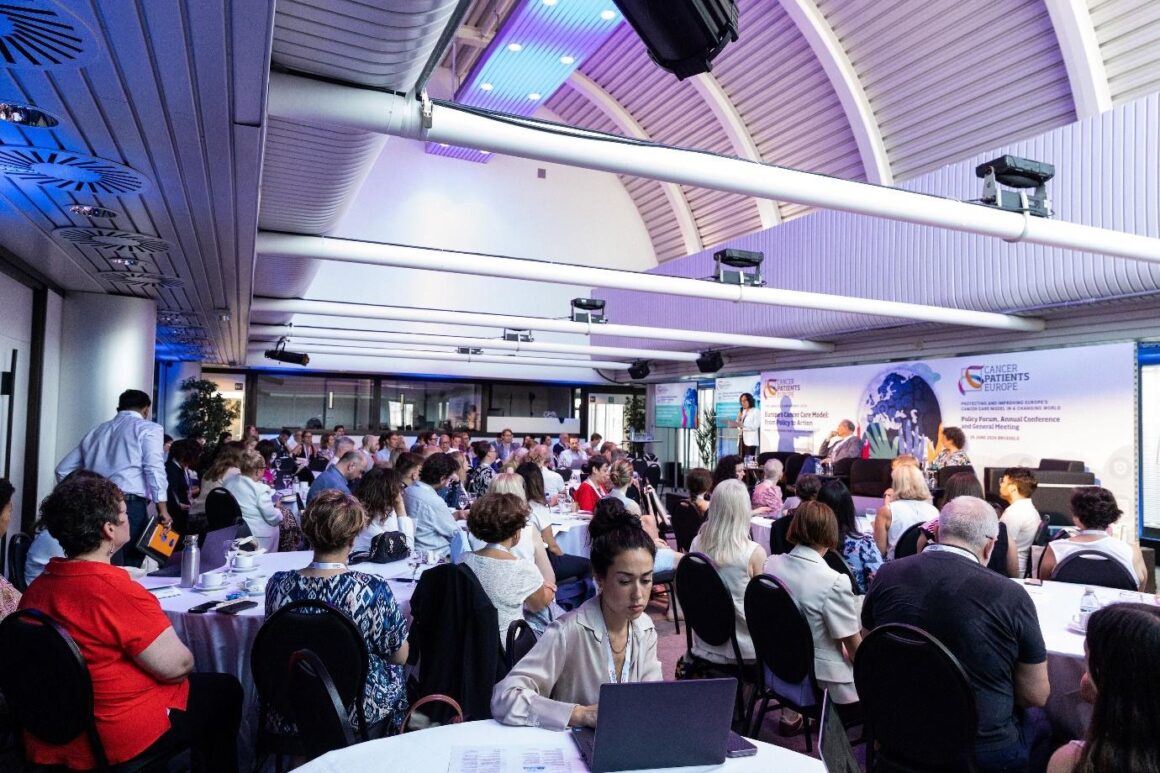
Cancer Patients Europe Annual Meeting, 2026 | Credits: Elza Lőw (Event and Conference Photographer, Graphic Designer)
From Priorities to Action
Three priorities emerged repeatedly throughout the meeting: improving access to clinical trials, ensuring equitable access to care, and making personalised medicine a reality for every patient.
One of the strongest calls for action focused on clinical trials. The greatest barriers to participation are not scientific, but practical: limited awareness, insufficient personalisation, fragmented information, and unequal access across borders. Participants encouraged Cancer Patients Europe to strengthen patient information on ongoing clinical trials, contribute to shaping the forthcoming Biotech Act, and advocate for policies that facilitate cross-border participation in research.
Equitable access to cancer care emerged as another major priority. Access guaranteed by legislation does not always translate into timely or equal access in practice. Differences in pricing, reimbursement, healthcare resources, and national policies continue to create unequal outcomes across Member States. Among the recommendations were stronger European cooperation in health policy, a coordinated response to the US Most Favoured Nation pricing policy, and broader recognition of supportive care, including mental health services and return-to-work programmes, as essential components of comprehensive cancer care.
The discussions also reinforced that personalised cancer care extends well beyond genomic testing. Shared decision-making remains difficult to implement in routine clinical practice, despite broad recognition of its importance. Greater education for both patients and healthcare professionals, integration of shared decision-making into medical training, and wider adoption of successful models already in practice were identified as important steps towards more patient-centred care.
Achieving these goals, however, will depend not only on policy reform but also on Europe’s ability to turn scientific innovation into routine clinical practice.
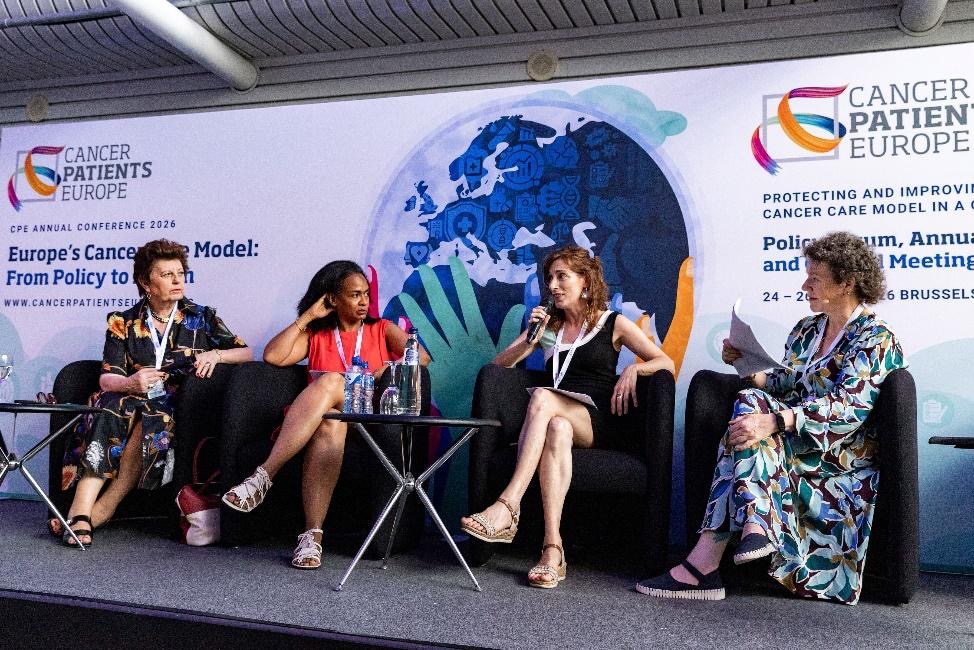
Cancer Patients Europe Annual Meeting, 2026 | Credits: Elza Lőw (Event and Conference Photographer, Graphic Designer)
Driving Innovation into Practice
Innovation alone is not enough. Speakers argued that Europe’s next challenge is not developing new technologies, but ensuring they can be implemented consistently across healthcare systems.
The VOICE PM examined current barriers and best practices for involving patients in personalised medicine research, translating these experiences into recommendations for future policy and research.
A roundtable on Unlocking Cancer Innovation in Europe focused on the conditions needed to accelerate innovation, including sustainable investment, evidence generation, and health system readiness.
Another important focus was Mission Early, which argued that Europe already possesses much of the evidence and policy framework needed to improve early detection and treatment. The remaining challenge is consistent implementation and reducing inequalities in access to timely diagnosis and care.
Life After Cancer: From Survival to Equal Rights
Survivorship was another major focus of the meeting, particularly the growing European movement to establish a Right to Be Forgotten for cancer survivors. Despite growing momentum, only ten European countries had adopted binding legislation at the time of the meeting, highlighting the persistent inequalities in legal protection across the continent.
In his keynote address, Hon. Robert Troy, Ireland’s Minister of State with special responsibility for Financial Services, Credit Unions and Insurance, confirmed that Ireland was on track to introduce Right to Be Forgotten legislation—a commitment fulfilled only weeks later when the Irish Oireachtas formally adopted the law.
Dr Françoise Meunier (EDACS), cancer survivor and patient advocate Elordi Garcia, and Ingrid Krücken (Europa Donna Luxembourg) emphasised that financial discrimination against cancer survivors is ultimately “a matter of dignity.” Their discussion reinforced a shared conclusion: extending these protections across Europe is not primarily a financial challenge, but a political one.
Taken together, the meeting underscored that delivering Europe’s cancer policy ambitions will require stronger patient involvement, more equitable access throughout the care pathway, and continued political commitment to removing the inequalities that patients continue to face.
Strengthening the Patient Voice
Beyond the policy discussions, the Annual Meeting also reaffirmed the importance of a strong and united patient community. During the CPE Annual General Assembly, member organisations reviewed the organisation’s progress, discussed strategic priorities, and helped shape its future direction.
The Assembly reinforced Cancer Patients Europe’s role as a patient-led organisation committed to ensuring that the experiences and perspectives of people affected by cancer continue to inform healthcare policy, research, and advocacy across Europe.
Looking Ahead
Across three days of discussion, a consistent message emerged: protecting Europe’s cancer care model requires more than scientific innovation or ambitious policy alone. Delivering equitable cancer care depends on sustained political commitment, effective implementation, meaningful patient involvement, and close collaboration between European institutions, regional authorities, healthcare professionals, researchers, and patient organisations.
From addressing regional inequalities and expanding access to clinical trials, to advancing personalised care, accelerating innovation, and securing equal rights for cancer survivors, the discussions reflected a shared determination to translate policy into practice.
For Cancer Patients Europe, this work continues beyond the Annual Meeting. The organisation will maintain its advocacy for harmonised Right to Be Forgotten legislation across Europe, building on Ireland’s recent progress while encouraging other Member States to adopt similar protections. It will also continue contributing to major European policy initiatives, including the forthcoming Biotech Act, ensuring that the patient perspective remains central as future legislation is developed.
Ultimately, the meeting reinforced that protecting Europe’s cancer care model is not about preserving existing systems, but ensuring they continue to evolve in response to patients’ needs.
Behind every statistic, policy proposal, or healthcare reform are individuals living with cancer, survivors rebuilding their lives, families providing support, and communities working to ensure that equitable, high-quality cancer care becomes a reality for everyone across Europe.
The next Cancer Patients Europe Annual Meeting will take place on 19–21 May 2027.