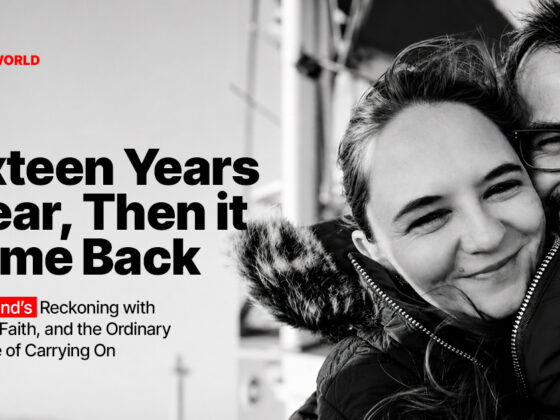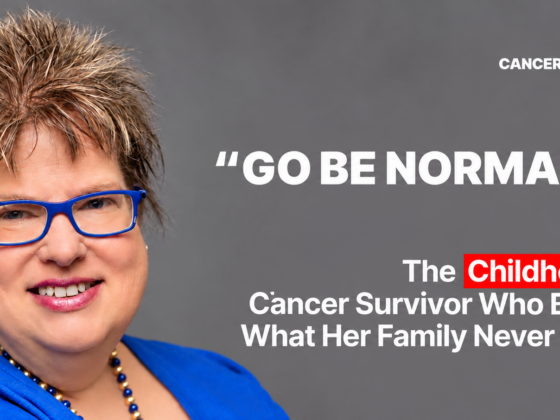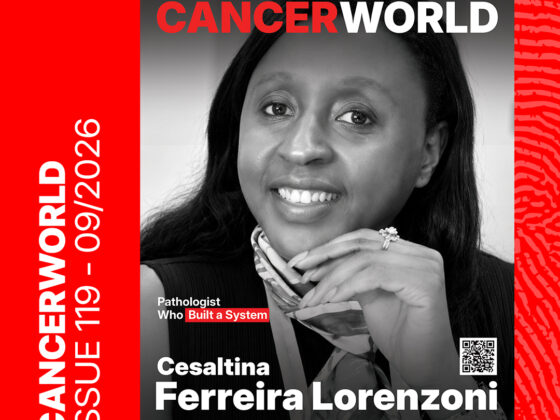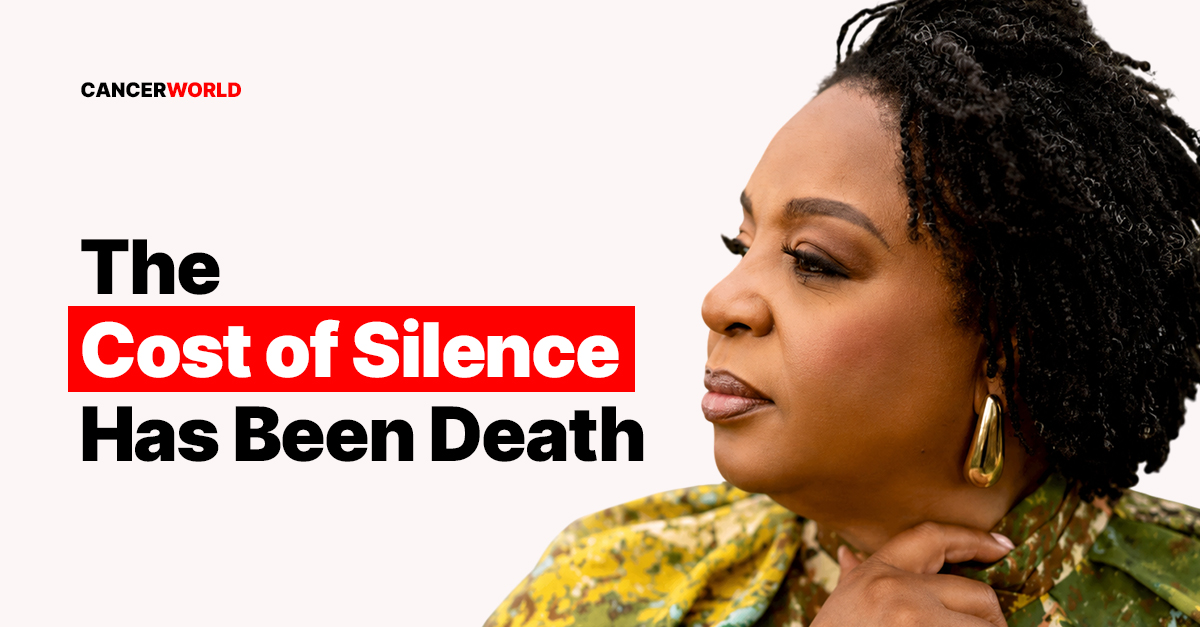
After surviving cervical cancer at 25, Tamika Felder transformed personal tragedy into a global movement. In this CancerWorld interview, she reflects on fear, stigma, infertility, survivorship, advocacy, and why the world already has everything it needs to eliminate one of the few cancers we know how to prevent.
There is one moment during our conversation that catches Tamika Felder by surprise.
She has spoken publicly about cervical cancer for more than two decades. She has addressed audiences at the FDA, the G20, and the World Economic Forum in Davos. She has stood before policymakers, researchers, clinicians, and thousands of patients around the world.
But when she learns that another cervical cancer survivor found hope through her advocacy, her voice begins to break.
“That literally makes me want to cry,” she says, pausing for a moment.
“Growing up, this is not what I imagined for my life. I didn’t want to be the person who talked about cervical cancer. But if along the way I can impact people like Karen, then it’s worth it.”
That moment says everything about Tamika Felder.
Diagnosed with cervical cancer at the age of 25, she survived a disease that today is largely preventable. What followed was not only recovery, but also transformation. Instead of leaving cancer behind, she chose to confront the silence surrounding it—challenging stigma, advocating for HPV vaccination and screening.
Today, as Founder and Chief Visionary of Cervivor, Inc., she is one of the world’s leading voices in cervical cancer advocacy. Yet beneath the international recognition remains the same woman who remembers exactly what it felt like to hear the words: “You have cancer.”
In this conversation with CancerWorld, Felder reflects on fear, faith, infertility, prevention, survivorship, and why eliminating cervical cancer is no longer a scientific challenge, but a question of education, political will, and compassion.
Growing Up with Purpose
“My parents, who are now my angels, were incredible people. They poured so much love into my siblings and me. Education was always important in our family, but just as important was learning how to be a good human being. Those are the values that have stayed with me throughout my life.”
Tamika Felder with her parents and siblings
Felder smiles as she speaks about her childhood in South Carolina. Long before advocacy became her life’s work, her parents taught her something that would ultimately shape every decision she made: knowledge matters, but kindness matters just as much.
“I also believe that every stage of life should teach you something. Whether it’s something big or something small, there should always be something new to learn. At the same time, there are parts of ourselves that we leave behind as we grow older.”
“I turned 51 last month, so I’m now in my sixth decade of life. Sometimes I think about the different versions of myself that belonged to earlier decades. What parts of them remain? What eventually becomes your legacy?”
“I hope my legacy is really about the lives I’ve helped save. I hope people remember that there was a part of me that simply wanted to make a difference.”
After graduating from college, she moved to Maryland, just outside Washington, D.C., to pursue her dream of becoming a broadcast journalist.
Everything seemed to be unfolding exactly as she had imagined.
“And then life kind of threw me a curveball called cervical cancer.”
“I Thought I Was Going to Die.”
More than twenty-five years later, some memories are as vivid as if they happened yesterday.
“People talk about chemo brain or chemo fog, and you forget so many things,” she says quietly. “But I clearly remember hearing those words: ‘You have cancer.’”
She remembers the fear.
She remembers being told that although treatment would probably save her life, it would almost certainly cost her the chance to have biological children.
“Even though I wasn’t in a rush to have children, it was devastating for me.”
“And the truth was, even with my faith, I was so scared that I was going to die. I just wasn’t going to make it.”
Her diagnosis came in 2001, when cervical cancer was rarely discussed openly.
“In 2001, hearing the words cervical cancer was astonishingly shameful. I felt like a leper. I thought I was the only person who had this disease. Whenever I searched for information, everything I found made it feel even worse.”
While attitudes have changed over the past two decades, she believes stigma remains one of the greatest barriers to prevention.
“We’ve made progress. We really have. But we still have a long way to go.”
Cancer had already shaped her family’s story. It had taken people she loved.
“My father died of colon cancer the day before my seventeenth birthday. Before my own diagnosis, I had already experienced so many deaths in my family from different kinds of cancer.”
“So when I heard those words,” she says, “I truly believed it was going to take me too.”
A Preventable Cancer
Today, Tamika Felder speaks about cervical cancer with remarkable clarity. But there was a time when she couldn’t help wondering whether her own diagnosis might have been prevented.
“I don’t want to blame myself because I don’t want to do that anymore,” she says. “I used to do that.”
“When you’re young, you think you’re healthy. You think, ‘What’s going to happen to me?’ I know differently now.”
Looking back, she knows that routine cervical screening could have detected changes earlier. But she is equally aware that her story reflects larger failures—gaps in education, access, and awareness that continue to affect millions of women around the world.
“When I was younger, we didn’t have the HPV vaccine. I didn’t even know HPV caused cervical cancer. None of us were talking about it.”
She had begun having regular Pap smears when she turned eighteen, as recommended at the time. But after graduating from college and moving to Maryland, life became busy, insurance disappeared, and routine healthcare quietly slipped away.
“I just fell off that routine schedule.”
It is a story she has heard countless times since—not because women do not care about their health, but because life gets in the way, healthcare is not always accessible, and prevention can feel less urgent than everything else demanding attention.
For Felder, one lesson has become impossible to ignore.
“We have to do a better job educating people about their bodies.”
She believes conversations about cervical cancer should begin long before anyone enters an oncology clinic.
“We need people to understand what the cervix is, where it is, and why screening matters. We don’t do a great job talking about sexual health—or even about our intimate health in general.”
“It should begin with conversations about menstrual health. That’s a natural opportunity to talk about cervical cancer and other important health issues.”
“This is where I am now. This is my story. And now this is what I’m doing with it.”
From Survivor to Advocate
If surviving cervical cancer changed Tamika Felder’s life, it did not immediately change her plans.
“I wanted to never think about it again.”
She wanted to move on, rebuild her life, and leave cancer in the past. But that became impossible.
Not because of the disease itself, but because of what people believed about it.
“I started hearing people say things that just didn’t make sense.”
Some told her cervical cancer was a disease that only affected women who had “a lot of sex.” Others described it as the consequence of being promiscuous.
“I remember thinking, ‘I’m a good person.’”
“Am I a virgin? No. But I don’t think there’s anything wrong with not being a virgin.”
What troubled her most was not the judgement directed at her.
It was the damage those myths were causing to everyone else.
“The truth is, you can get HPV from one partner or from multiple partners.”
Reducing cervical cancer to a moral judgement, she says, only discourages women from seeking information, screening, or treatment.
“The longer we keep this ugliness going, the more people we don’t educate and unfortunately, the more people will succumb to cervical cancer.”
That realization became a turning point. Her anger gradually transformed into purpose as she recognised that silence was costing lives.
That mission has guided every chapter of her life since—from founding advocacy initiatives and supporting survivors to speaking before governments, international organisations, and healthcare leaders around the world.
Yet despite the global stage, her message has remained remarkably simple.
Education saves lives.
Honest conversations save lives.
And breaking the silence around cervical cancer may be one of the most powerful forms of prevention we have.
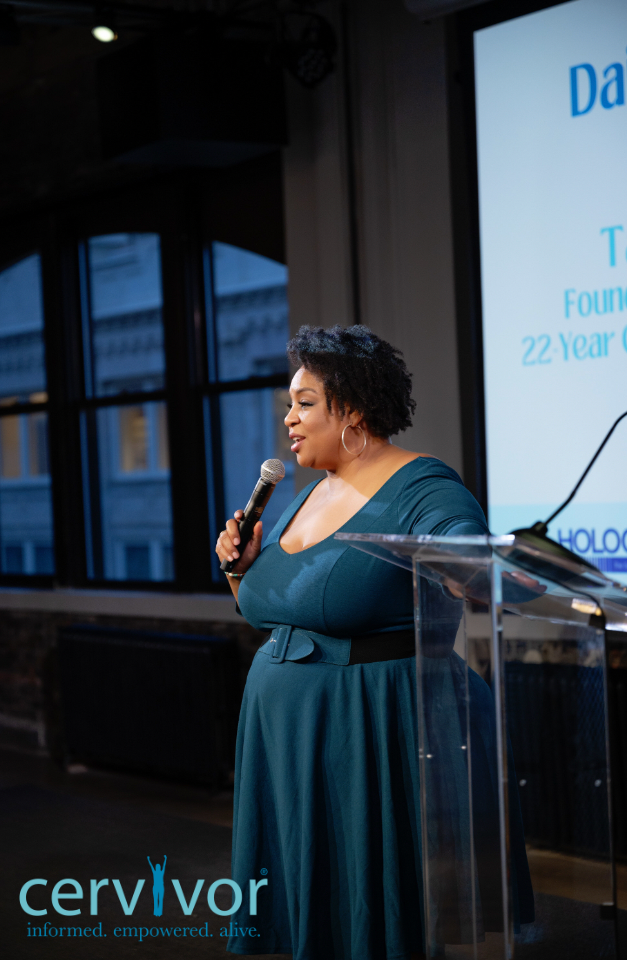
During event
The Cost of Silence
For Tamika Felder, one truth has become painfully clear over the past two decades.
The greatest barrier to eliminating cervical cancer is no longer science.
It is silence.
“The cost has been death,” she says without hesitation. “The cost has been death, and it’s unfortunate.”
She believes stigma continues to shape how people think about HPV and cervical cancer long before they ever meet a healthcare professional.
“You’ve already decided what kind of person gets cervical cancer,” she says. “So why would someone want to be screened if they’re afraid of being judged? Why would they want to talk about it?”
For many women, she explains, the assumptions begin even earlier.
“I’ve only been with my husband.”
“I’ve already had my children.”
“This couldn’t happen to me.”
“We spend so much time focusing on the virus that people don’t understand this is really about a cancer we can actually prevent.”
“You’re missing an opportunity to tell people that we can protect them from cancer.”
For Felder, conversations about HPV must move beyond shame.
Yes, HPV is sexually transmitted.
But reducing cervical cancer to that single fact has distracted generations from what truly matters: education, prevention, and early detection.
She sees the same pattern repeating itself whenever cervical cancer appears in popular culture or public conversations.
People focus on blame. Rarely on prevention.
“I was watching a series on Netflix recently,” she recalls. “It mentioned both HIV and cervical cancer. While everyone was talking about the show, I kept thinking we were missing an opportunity to educate people.”
Instead, old stereotypes resurfaced.
People assumed those affected had somehow brought the disease upon themselves.
“Yes, HPV is sexually transmitted. But human beings are sexual,” she says. “That’s exactly why education matters.”
The consequences reach far beyond public perception.
“They stop people from seeking help.”
Women experiencing symptoms may delay seeing a doctor because they feel embarrassed.
Others avoid conversations about sexual health altogether.
And some remain silent until their disease has progressed.
“If something is wrong and you’re having symptoms,” she says, “people need to feel they can speak to their healthcare provider without shame.”
Listening Before It’s Too Late
Years of working with survivors have taught Felder that another barrier often appears inside the healthcare system itself.
Too many women speak. Too few feel heard.
“I think many patients are proactive. They notice symptoms. They tell someone.”
But their concerns are not always taken seriously.
Unexpected bleeding may be dismissed as a difficult menstrual cycle.
Bleeding after intercourse may be attributed to something else.
Persistent symptoms may receive reassuring explanations rather than thorough investigation.
“I think providers have to listen to patients.”
They must listen before symptoms are dismissed and precious months are lost.
“We have to be proactive with caring for people so that, if they do have cancer, it’s caught early—not later.”
No technological advance can replace the moment when a healthcare professional truly hears a patient’s concerns.
Surviving Is Only the Beginning
Medical progress has transformed cervical cancer outcomes.
More women than ever are surviving.
For Felder, that success creates a new responsibility.
“We’re living longer now.”
She smiles as she says it.
“But we have to listen to survivors.”
Because survival, she explains, is not the end of the story.
“When we listen to survivors, we learn.”
We learn what life after cancer really looks like—the physical, emotional and quality-of-life challenges survivors continue to face.
“What secondary issues are people dealing with after diagnosis? What challenges are they facing after treatment?”
These experiences help improve care for future generations.
Even as the world works toward eliminating cervical cancer altogether, survivors still have much to teach.
“Until we eliminate cervical cancer,” she says, “we have to keep learning from patients and from survivors.”
Because every survivor carries lessons that science alone cannot measure.
And every story has the power to make care better for the person who comes next.
When we listen to survivors, we learn not only how to treat cancer, but how to help people live beyond it.
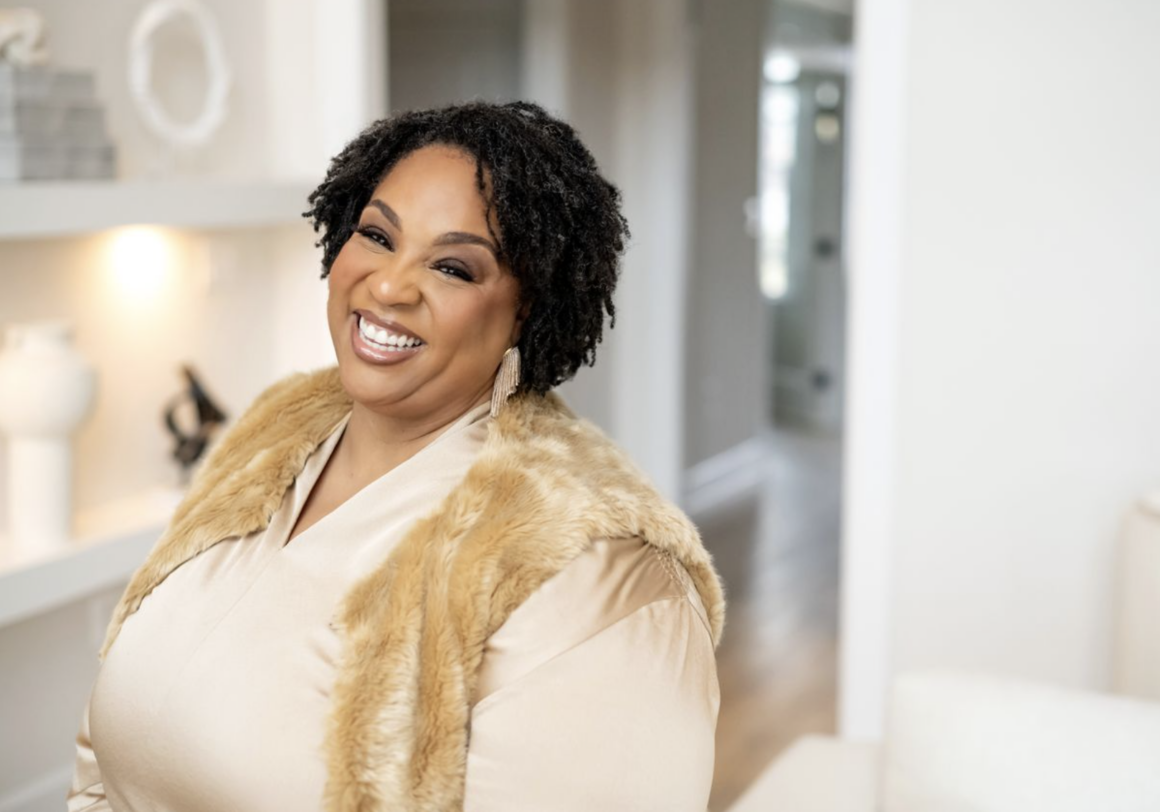
Tamika Felder
A World Without Cervical Cancer Is Possible
For the first time in history, the elimination of cervical cancer is no longer an aspiration—it is an achievable goal.
That gives Tamika Felder hope.
“I’m very excited about it,” she says. “But we’re not moving fast enough.”
She understands the obstacles. Political will, funding, unequal access to healthcare, and persistent stigma continue to slow progress. Yet she refuses to believe those challenges are insurmountable.
“We’re all still moving forward toward that goal. We see that it can be done.”
She points to countries already demonstrating what is possible.
“We see it with Rwanda. We see it with Australia. We see it with Scotland. We see it with Denmark.”
“There is no reason anyone in this world should die from cervical cancer. We have the tools.”
Turning Prevention into Reality
Among those tools, vaccination remains one of the most powerful.
But only if everyone has access.
“We have to be gender-neutral when we vaccinate our young people. Boys and girls both need to be vaccinated.”
“We have to make sure people are educated. We have to make sure vaccines are available. We have to make sure there are healthcare professionals who can deliver them.”
“These vaccines are safe. Millions of doses have been given, and we’re seeing countries move toward eliminating cervical cancer.”
For Felder, prevention is not only a medical issue; it is also a political one.
“We need funding. We need vaccine programmes. We need policies that recognise this isn’t a ‘one day’ issue. This is a right now issue.”
Throughout the conversation, one message returns again and again.
Education.
Not as a slogan.
As the foundation on which prevention, trust, and ultimately elimination depend.
The Legacy She Hopes to Leave
After more than two decades of advocacy, Tamika Felder still measures progress one life at a time.
She believes data can shape policy, but it is patients’ stories that inspire change.
“When someone says a woman in Mozambique, the United States, or Canada has cervical cancer, we can show who she is. We can show her life before cancer, what she endured to survive, and what survivorship really looks like.”
Too often, she says, people see survival as the end of the story.
“They look at you and say, ‘You survived. You’re doing great.’ But they can’t see what cervical cancer has done to me. They don’t see the scars.”
Some scars are physical.
Others are invisible.
Cervical cancer took away her fertility. It interrupted the broadcasting career she had dreamed of. It took years of her twenties and thirties as she struggled to rebuild her life.
“I love my son so much. He is the best thing that could have happened to me. But I can also mourn the biological child I was never able to have. Those two things can both be true.”
Later, when I tell her that another survivor found strength through her advocacy, she pauses. Her eyes fill with tears.
“That literally makes me want to cry,” she says softly. “I never imagined this would be my life. But if my story can help people—not just one person, but future generations—maybe it was worth it.”
When asked what she hopes healthcare professionals will remember, her answer is immediate.
“We should be talking about cervical cancer. We should be talking about all cancers, but this is one of the few we can actually prevent. We have the vaccine. We have screening. We have the tools.”
Then she reflects on the legacy she hopes to leave.
“Maybe that I was brave enough to talk about something really difficult. This horrible thing happened to me. But if it could help other people, maybe it was worth it.”
Rapid Fire
Three words that describe you?
Happy. Alive. Determined.
One habit you can’t live without?
Reflection. It helps with clarity and progress in one’s life.
One book that changed your life?
Who Moved My Cheese?
One person who inspires you?
My mom. She had a tough life, and she made it through.
A lesson cancer taught you that nothing else could?
I knew I was tough, but I didn’t realize how resilient I could be or how I would always find a way through difficult times.
One message to every woman reading this interview?
Cervical cancer is preventable. Don’t let it happen to you.
One message to your 25-year-old self?
You’re going to survive, and you’re going to be okay.
What does survivorship mean to you?
The ability to continue to live life. A happy epic life.
About the Author
Knarik Arakelyan, PhD, is a psychologist and communications professional with over 14 years of experience in public relations, health communication, and public awareness campaigns. She is currently the Managing Editor of “CancerWorld“ magazine, Head of the “OncoDaily TV,” and serves as PR and Communications Officer at “EMERTÉ” Clinic.