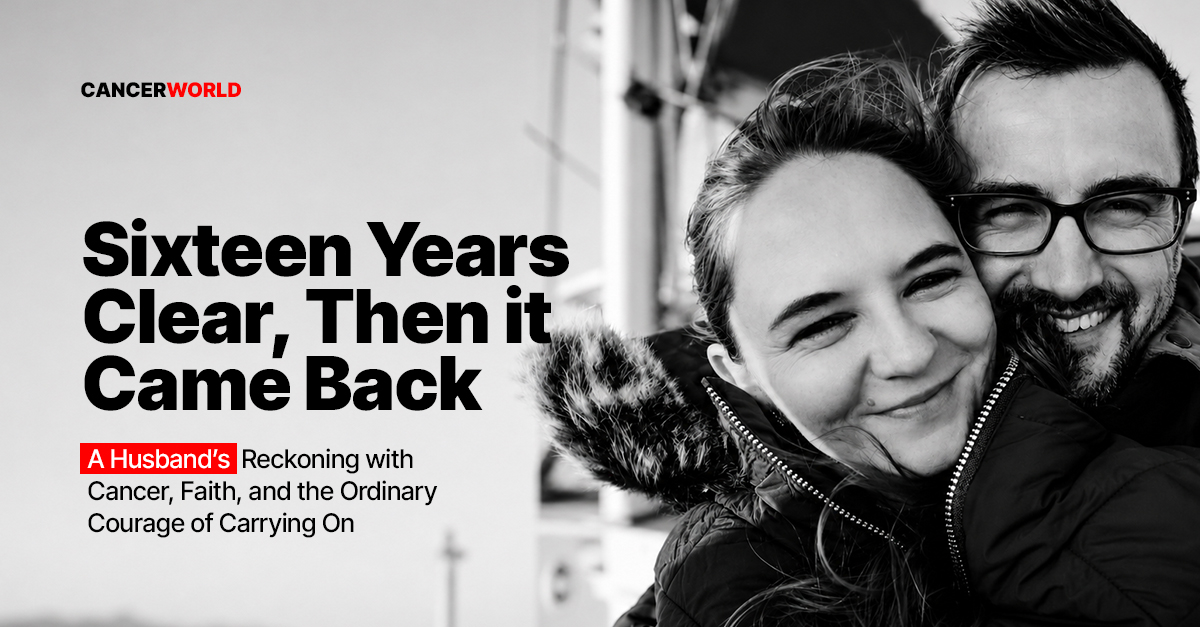
For sixteen years, cancer became something we spoke about in the past tense.
My wife, Lynn, had survived a rare smooth-muscle cancer (leiomyosarcoma) after two operations in 2009. Year after year the scans came back clear. Gradually, we stopped living from appointment to appointment. We raised two sons. We built careers. We argued over ordinary things, planned family holidays, celebrated birthdays, and quietly assumed that cancer belonged to another chapter of our lives. Looking back, I realise those ordinary years were never ordinary at all. They were a gift.
When Cancer Returned
Then, in October 2025, Lynn developed what seemed like an unremarkable cough. Two courses of antibiotics made no difference. A CT scan, ordered largely to rule out anything serious, revealed a pulmonary embolism and two large masses in her left lung. Within days she was in intensive care. A biopsy confirmed what we had scarcely dared to imagine: the cancer had returned. This time it was metastatic, stage 4. The disease we thought we had left behind had found us again.
Our oncologist outlined the treatment options and their likely outcomes. For a short while, a targeted therapy appeared to offer hope, but the cancer progressed aggressively. After a second bout of pneumonia, one of the tumours grew to the size of a tennis ball within weeks. We were told Lynn likely had only weeks to live.
That conversation took place a few months ago. Lynn is still here. She now depends on oxygen twenty-four hours a day. A couple of months ago, after much discussion, we decided together to try chemotherapy, fully aware that the chances of success are limited and the risks are considerable. When the alternative is to stop trying, hope often looks less like certainty and more like choosing the next step anyway.
Telling Our Sons
Some conversations change a family forever. Our sons, TJ and Daniel, were twelve and nine when we first told them their mother had cancer. We sat together in our lounge, trying to explain something no child should ever have to understand.
Months later, after the devastating ‘weeks’ prognosis, we had to tell them again.
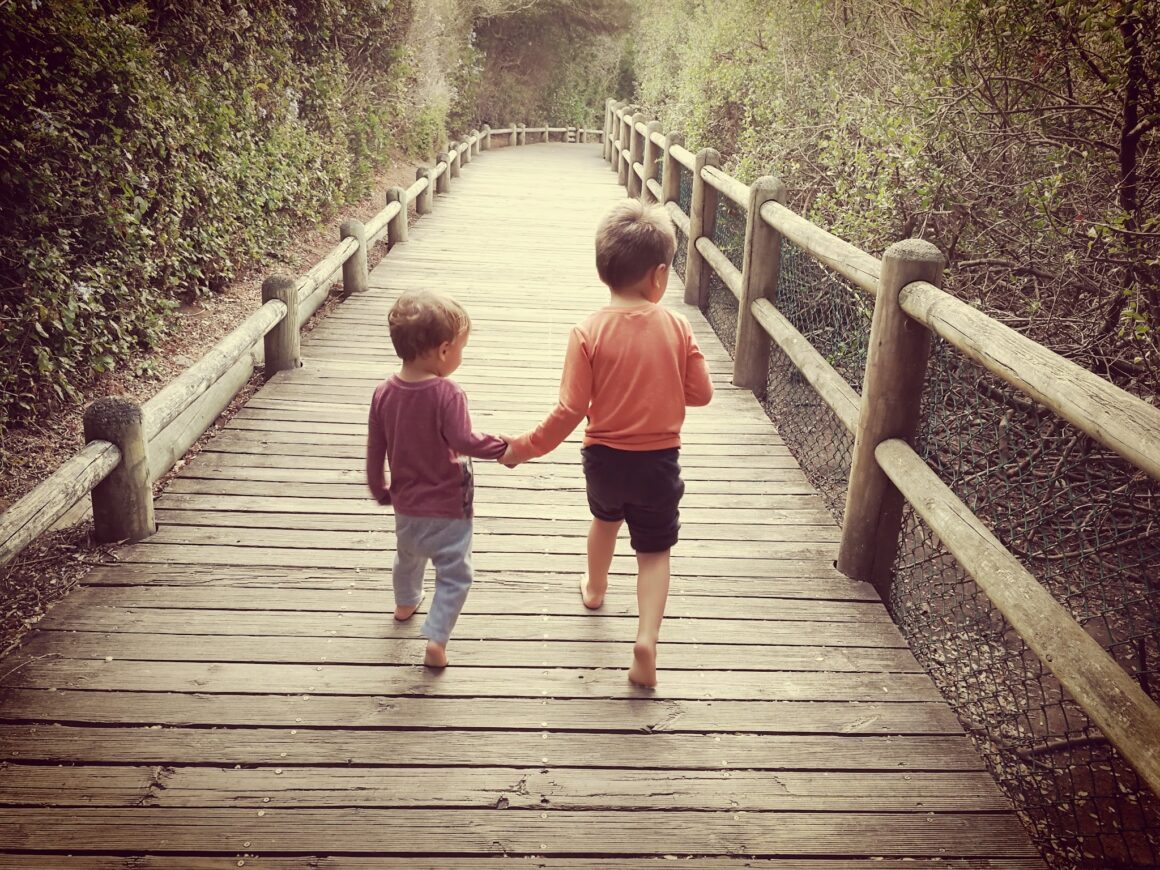
TJ and Daniel, the sons of Michael and Lynn
This time the conversation happened in a hospital room. Our sons climbed onto their mother’s bed and held her.
People sometimes ask about how we told our children, and if we think it was the right thing to do to tell them their mother is dying. The truth is, there is no right way. We chose honesty over false reassurance. Not because honesty hurts less, but because we wanted fear to enter our home through our voices, not through silence or lies
What Theology Could Not Teach Me
Only about a year before Lynn’s cancer returned, I had completed a doctorate in theology examining in part one of humanity’s oldest questions: how a good and all-powerful God can coexist with suffering. Somewhere in that thesis I mentioned cancer almost in passing, simply as an illustration of suffering. I had no idea I was writing about my own future.
The verses I once reached for so confidently suddenly felt too small for an intensive care unit. I found myself sitting on the floor beside Lynn’s hospital bed with nothing meaningful to say. Instead, I found comfort elsewhere.
In the shortest verse in the Bible, “Jesus wept.” Those two words gave me permission to grieve without believing that my faith had failed.
I also found myself returning repeatedly to Psalm 88 and what theologians call Holy Saturday—the day between the crucifixion and the resurrection, when no one yet knows Sunday is coming. That is where we have lived. Not in despair. Not in certainty. Simply in the difficult space between devastating news and whatever comes next.
Learning to Write Instead of Explain
Late at night, after the boys had gone to bed, our home would finally become quiet. Almost quiet. The oxygen concentrator in the passage never stopped humming. Its steady rhythm became the soundtrack of our evenings.
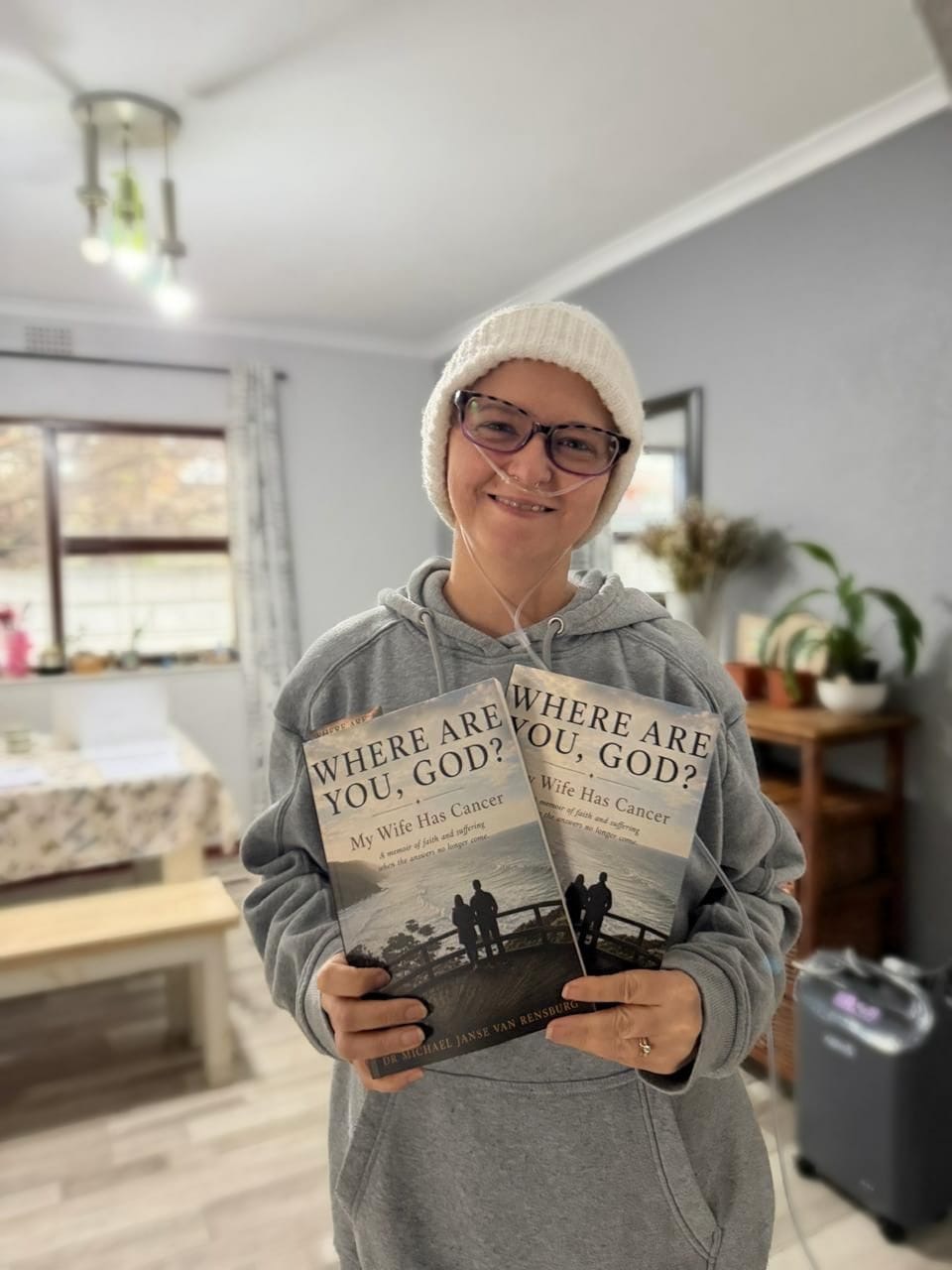
Lynn during treatment
I would sit at the dining room table and write. Not because writing changed anything. Not because I expected anyone else to read the pages. I wrote because I was trying to make sense of things and I was afraid of forgetting. I was afraid of forgetting the conversations, the prayers, the fear, the unexpected laughter, and the extraordinary kindness of nurses, doctors, friends, and strangers who quietly carried pieces of our burden. Over time those writings became a memoir: Where Are You, God? My Wife Has Cancer.
The book does not attempt to explain suffering or offer easy answers. It is simply a raw and honest story of one family learning to live inside uncertainty. It follows our marriage from our wedding day through the return of cancer, the difficult conversations with our sons, and the ongoing reality of living with a future we cannot predict.
If there is one thing this journey has taught me, it is that faith and honest grief are not opposites. Sometimes faith is simply refusing to pretend everything is okay. Sometimes hope is accepting that today is enough. Sometimes the greatest gift we can offer one another is not an explanation, but our presence.
Our story is still unfolding.
Lynn is still here.
We still do not know what tomorrow will bring.
If sharing our story helps even one patient, caregiver, husband, wife, or frightened child feel a little less alone, then writing it has been worthwhile.
About the Author
Dr Michael Janse van Rensburg lives in South Africa with his wife, Lynn, and their two sons, TJ and Daniel. In 2024 he completed a doctorate in theology exploring the problem of suffering—a subject that became profoundly personal when Lynn’s cancer returned after sixteen years. His memoir, Where Are You, God? My Wife Has Cancer, grew from notes written during his family’s ongoing journey with advanced cancer.