In oncology, some milestones arrive with applause. Others arrive quietly.
This year, one of the most important cancer drugs of the modern era begins to lose its monopoly. Nivolumab, one of the first PD-1 inhibitors to reach patients, is set to move off patent in major markets.
For some patients with advanced melanoma, it was the drug that turned a terminal prognosis into years of life. For others with lung cancer, it offered a second chance when chemotherapy failed and brought a cure not previously seen. For oncologists, it marked the moment the immune system long considered to blunt an instrument against cancer became a precision tool in oncology.
Now, more than a decade after its first approval, the patent protecting Nivolumab is beginning to expire in parts of the world. Biosimilars are arriving. Prices may fall. Access may widen.
For most readers, that sounds technical.
For cancer care, it is seismic.
The Drug that Changed the Curve
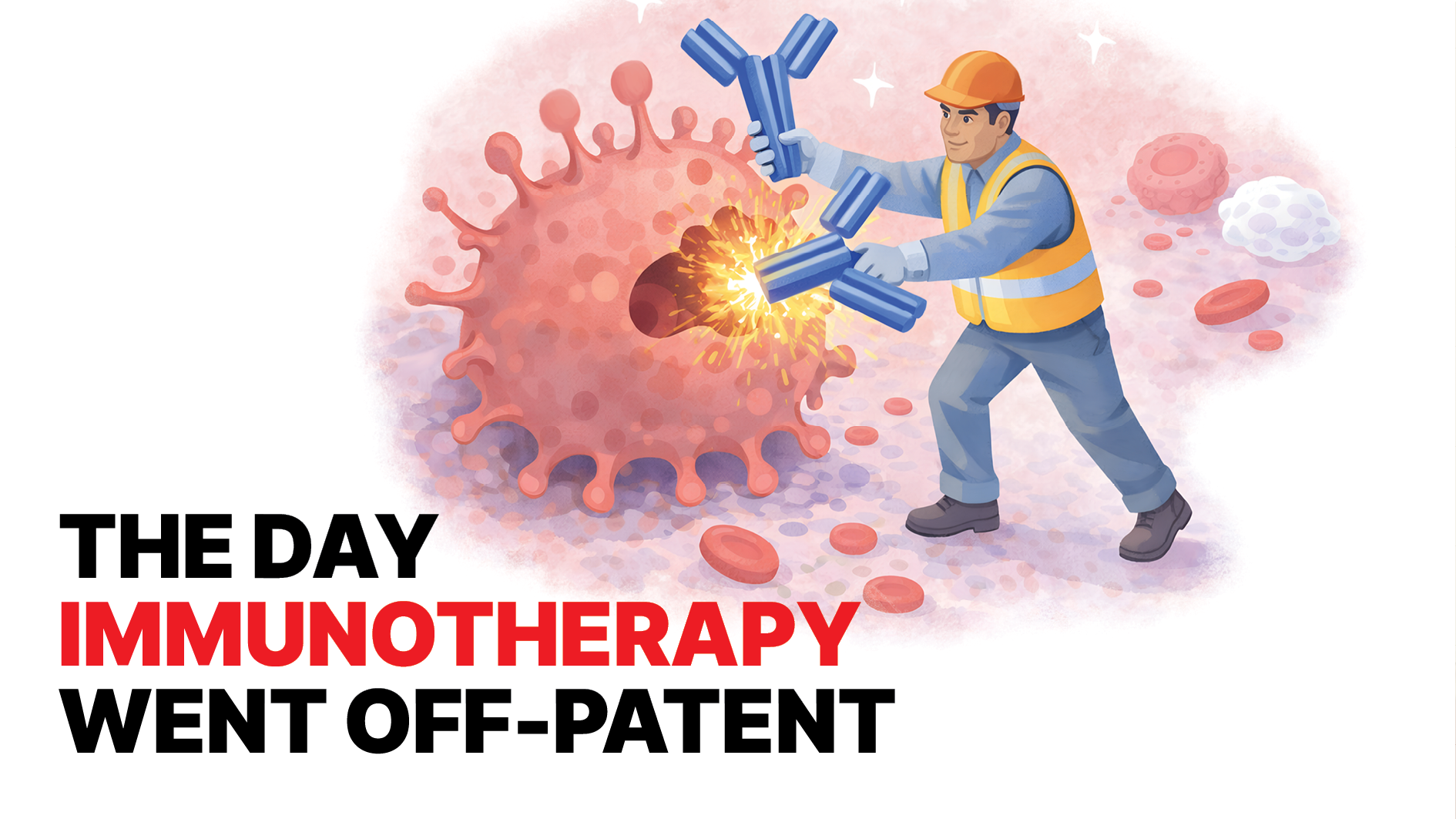
When Nivolumab was approved in 2014 in the United States and Japan, it validated a radical idea: that the immune system, long thought too indiscriminate to fight cancer, could be precisely redirected. Cancer exploits PD-1 as a kind of invisibility cloak. When PD-1 on an immune cell binds to PD-L1 on a tumour cell, it sends a “stop” signal. The immune system stands down. The cancer grows.
Nivolumab is an antibody designed to block that interaction. By binding to PD-1, it lifts the brake. The immune system can see the tumour again.
In advanced melanoma, five-year survival once hovered around 10–15%. With the immunotherapy revolution, survival rose toward 40–50% in pivotal trials, creating a new group of durable responders. In the final 10-year analysis of CheckMate 067, nearly half of patients treated with Nivolumab plus ipilimumab were still alive at a decade, an outcome that would once have seemed unreal in metastatic disease. (Wolchok et al, NEJM, 2025). In metastatic non-small cell lung cancer, long-term survival, once rare, became possible for a subset of patients.
In 2024, Nivolumab generated approximately $9.3 billion in global sales.
It became the standard of care across melanoma, lung, kidney, head and neck, bladder, and other cancers and is now approved for more than 20 indications.
From laboratory Bench to Hospital Ward
To understand what patent expiry means, we need to go back to the beginning, to how a cancer drug is born.
Most medicines start as a molecule in a laboratory. Scientists identify a biological target, such as a protein, pathway, or signal, that cancer cells rely on. In the case of Nivolumab, the target was PD-1, a receptor sitting on immune cells.
But discovering a target is only the first step.
A potential drug spends years in preclinical testing, first in cells and then in animals, before it is ever administered to a human being. If early safety data are reassuring, it moves into
Phase 1 clinical trials typically involve a few dozen patients, while Phase 2 expands the cohort to explore activity signals. Phase 3 trials often enrol hundreds or thousands across multiple countries, comparing the new drug to the standard of care.
From laboratory discovery to regulatory approval, the journey often takes 10 to 15 years. The cost, when accounting for failed candidates along the way, is commonly estimated at over $1 billion.
At the moment a company files for patent protection, often early in development, the 20-year patent clock begins ticking.
By the time the drug is approved, a decade of that exclusivity may already be gone.
The Meaning of a Patent
A patent is not simply a legal formality. It is a period of market exclusivity, a monopoly granted in exchange for public disclosure of the invention.
During that time, no other company could manufacture and sell the same molecule without permission.
For small-molecule tablets, when patents expire, generic copies usually appear quickly, and prices can collapse by 80 or 90 percent.
Checkpoint inhibitors are different. They are biologic medicines of complex proteins grown inside living cells. They cannot be copied identically. Instead, competitors develop “biosimilars”: highly similar versions that must demonstrate no meaningful clinical differences in safety or efficacy.
They are not shortcuts. Developing a biosimilar antibody can cost 100–300 million $ and take seven or eight years.
But when they arrive, competition begins.
Nivolumab: The First Domino
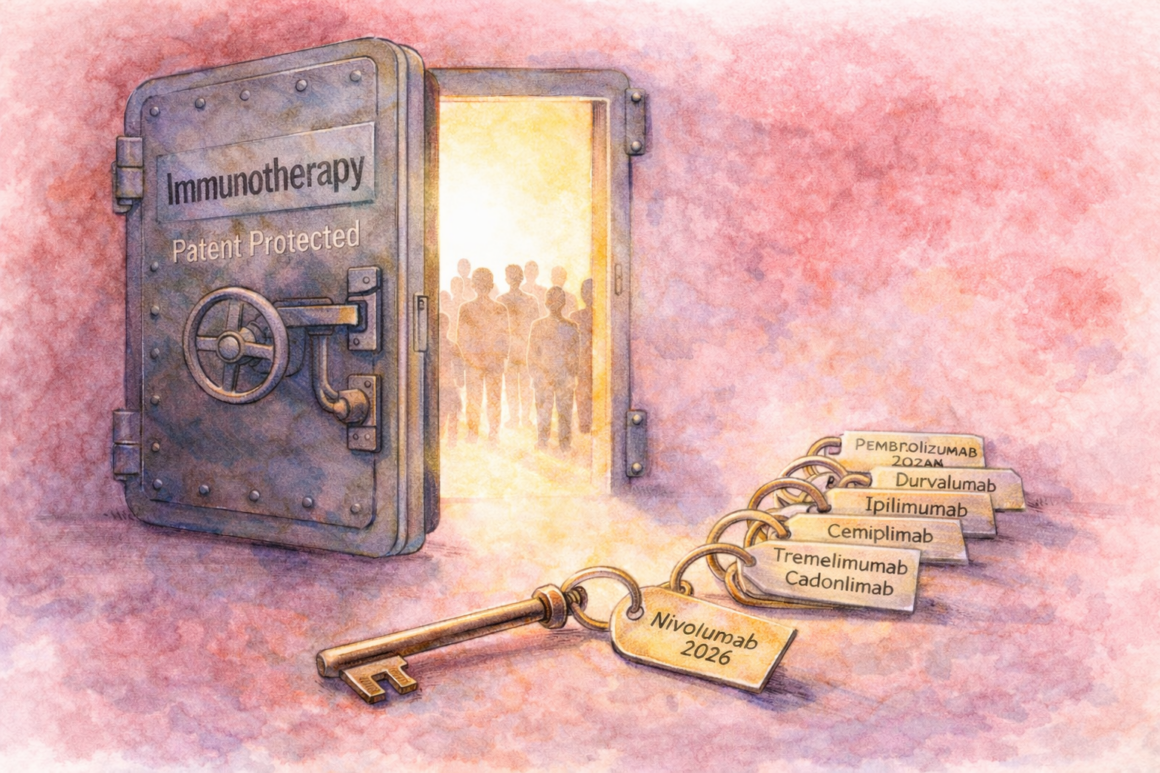
First introduced in 2014 in the United States and Japan, Nivolumab’s exclusivity period is now ending.
In Europe, basic patents for Nivolumab expire around 2026, while supplementary protection certificates and paediatric extensions may extend effective market exclusivity in some countries towards 2030. In the United States, key patents are expected to expire between 2027 and 2028. In India, the key Nivolumab patent is due to expire in May 2026, but a Delhi High Court decision in January 2026 allowed Zydus to market a Nivolumab biosimilar, effectively enabling early competition
The price difference was striking: a fraction of the originator’s cost.
It is a glimpse of what could follow elsewhere.
The Larger Wave Behind It
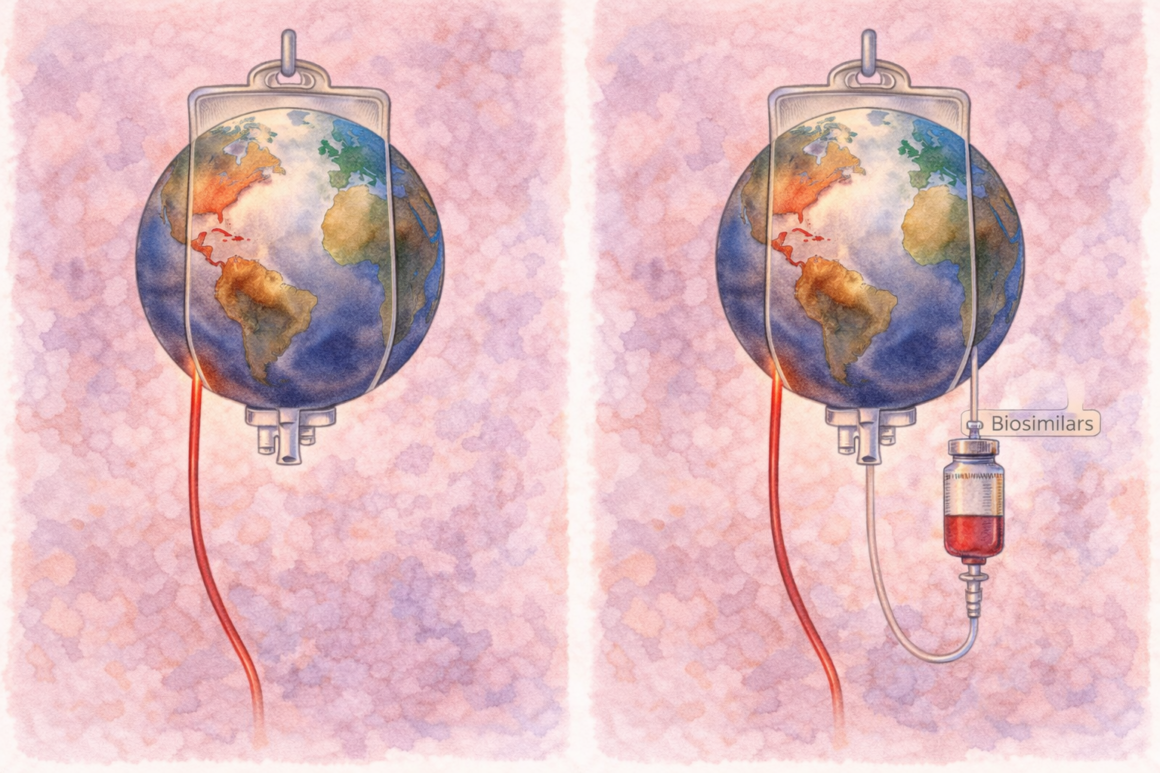
If Nivolumab is the first domino, Pembrolizumab is the largest.
Pembrolizumab, approved the same year, became the world’s best-selling cancer drug. In 2024, it generated nearly $30 billion, an extraordinary figure that reflects its use across more than 40 indications.
Its US patent protection runs to 2028; European exclusivity extends to 2031 in some countries. More than a dozen biosimilars are already in development.
Together, PD-1 and PD-L1 inhibitors represent over $50 billion annually in global spending.
This is not a marginal shift. It is one of the largest patent cliffs oncology has ever faced.
What History Suggests Will Happen
We have seen this story before, though never on this scale.
When trastuzumab lost exclusivity, biosimilars entered European markets rapidly. Within a few years, they captured the majority of the market share. Prices fell by roughly 50 per cent in many settings — more in some national procurement systems.
In the United States, uptake was slower but ultimately substantial.
The same pattern followed with bevacizumab and rituximab.
Checkpoint inhibitors are more complex, but the economic dynamics are similar. Even two or three competing biosimilars can create downward pressure on price. With a crowded field expected for pembrolizumab, discounts of 30 to 50 per cent over time are plausible.
Not overnight. Not uniformly. But meaningfully.
What it Could Mean for Patients
For patients in wealthier nations, the change may feel subtle at first. Formularies will adjust. Hospitals may negotiate. Physicians will reassure patients that a biosimilar is not an inferior product but a rigorously evaluated equivalent.
For patients in lower- and middle-income countries, the implications are more profound.
Today, access to checkpoint inhibitors remains deeply unequal. In many regions, they are unavailable in public systems or accessible only to those who can pay privately. Yet roughly 70 per cent of global cancer deaths occur in these settings.
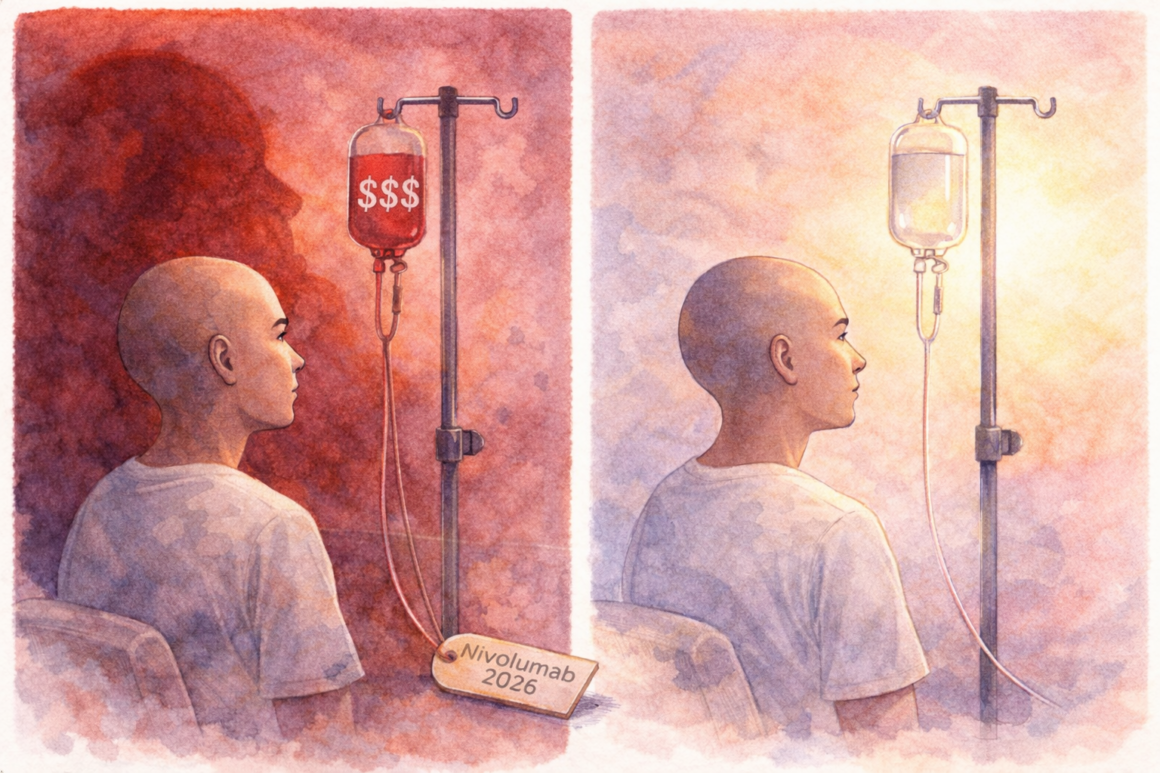
If biosimilar competition drives substantial price reductions — and if governments reinvest savings into oncology budgets — the reach of immunotherapy could expand dramatically.
Access, however, is not simply about price. It requires infusion centres, trained oncologists, pathology services capable of PD-L1 testing, and reliable supply chains.
The drug is only part of the equation.
The Access Gap
Today, an estimated 22% of eligible patients globally receive PD-1 or PD-L1 inhibitors. Access is concentrated in high-income countries (Tay-Teo, Lancet, 2025).
Meanwhile, 70% of cancer deaths occur in low- and middle-income countries, according to the American Cancer Society.
Annual treatment costs in the United States often range between $100,000 and $150,000 per patient. In parts of sub-Saharan Africa, checkpoint inhibitors are largely unavailable in public systems.
In 2025, the World Health Organization added pembrolizumab to its Model List of Essential Medicines for selected indications. WHO modelling suggests biosimilar competition could reduce prices by up to 60%.
If paired with procurement reform and health system investment, coverage could theoretically rise from 22% to as high as 75%.
But price is only one barrier.
Checkpoint inhibitors require infusion centres, cold-chain storage, pathology services for PD-L1 testing, and trained oncology staff. Many health systems lack all of these.
A cheaper drug does not automatically mean access.
A Quiet Revolution
Patent expiry rarely makes front-page news.
There is no applause in a hospital pharmacy committee meeting.
Yet the loss of exclusivity for Nivolumab marks the beginning of the largest economic transition immuno-oncology has ever faced.
Science succeeded and the survival curves changed.
Now comes a different test: whether a revolution in biology can become a revolution in equity.
For patients who have watched immunotherapy transform outcomes from afar — visible in journal articles but out of financial reach, this chapter may matter as much as the first approval in 2014.
The day immunotherapy went off-patent may prove to be the day it finally became global.
About the Author
Amalya Sargsyan MD, MSc in Precision Medicine, GI and Sarcoma Medical Oncologist at Yeolyan Oncology and Hematology Center and D’Clinic, Clinical Research Physician at Immune Oncology Research Institute, Head of Intelligence Unit at OncoDaily.