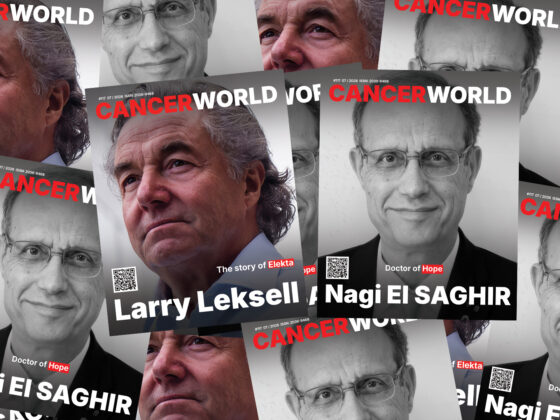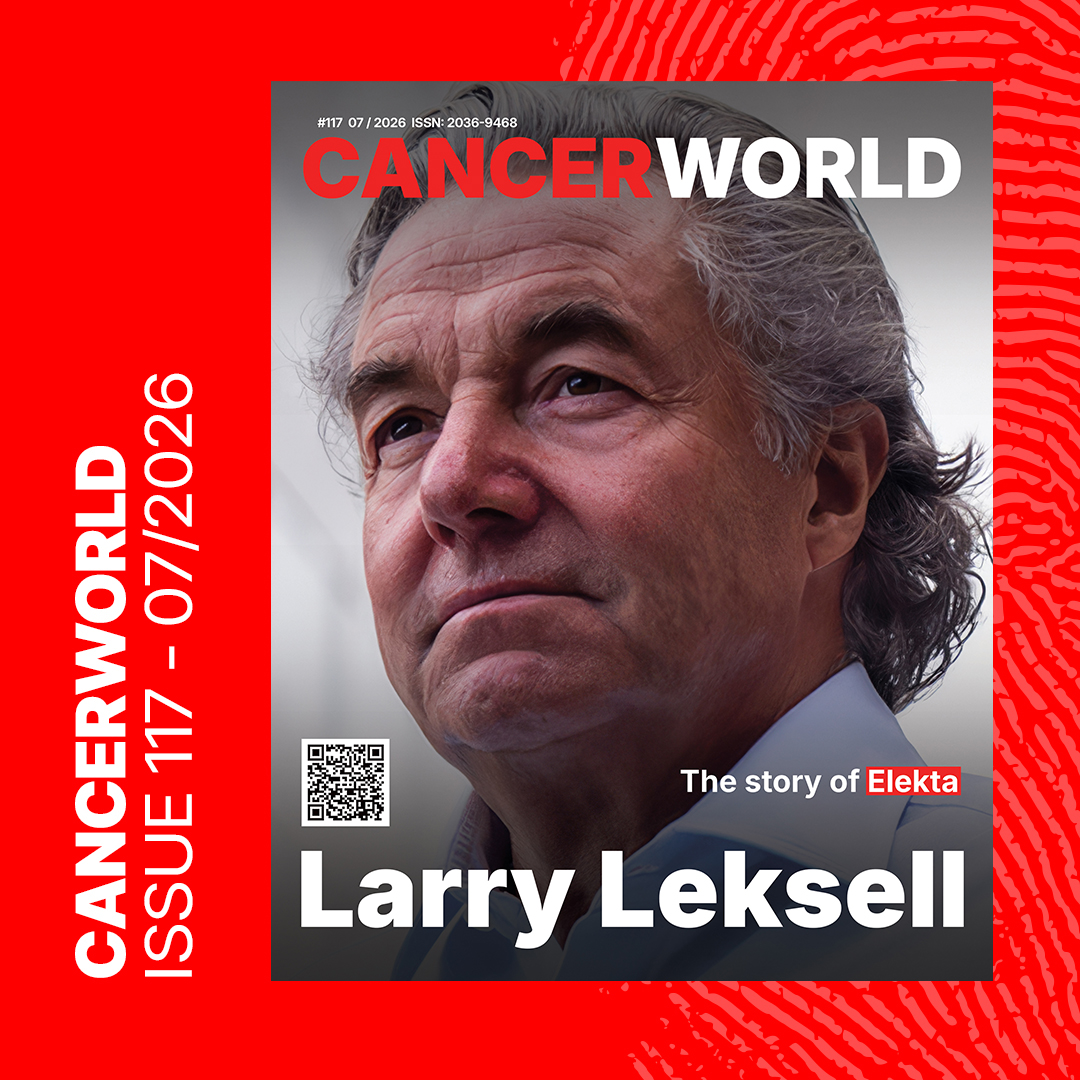
“Tax planning was one major reason for the foundation of Elekta.”
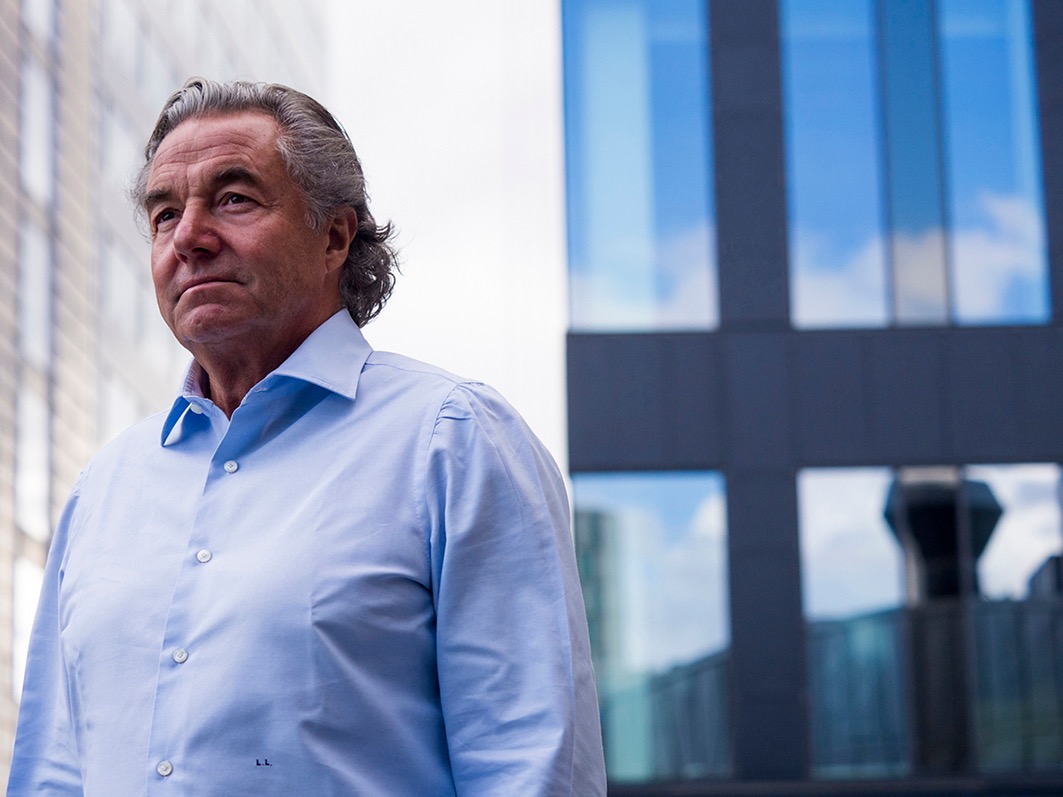
Larry Leksell says it with a smile that suggests he enjoys disrupting the mythology people create around founders.
Most people expect a grand story of origin. A visionary revelation. A dramatic moment of destiny.
Instead, the founder and longtime chairman of Elekta began with the Swedish corporate and personal taxation system in the 1970s.
But as our conversation unfolds, it becomes clear that humor hides something deeper: Elekta was built around necessity. Around persistence. Around solving problems no one else wanted to solve.
And long before Elekta became one of the defining companies in radiation oncology, it was first the continuation of a father’s unfinished mission.
A Family Formed by Revolutions and Reinvention
Larry Leksell’s story does not begin in Sweden.
It begins in movement.
“My grandfather was Armenian, my grandmother was Russian, and my father was Swedish,” he tells me.
His mother’s family escaped the Bolshevik Revolution through Turkey into Germany. But Germany soon became dangerous too. So, they moved again. Spain. Then Italy during Mussolini’s era. Then eventually Brazil.
His grandfather — a geologist, engineer, and professor — advised governments and explored natural resources across Europe and North Africa.
At one point, he proposed oil exploration in Libya to the Italian authorities.
“But his Italian colleagues wanted to please Il Duce who believed Sardegna possessed rich natural resources,” Larry says. “So, they said this Armenian doesn’t know shit.”
Eventually, his grandfather grew tired of politics, nationalism, and instability.
“He moved to Brazil from Italy to create a new base for his family. Then the second world war struck and the family got separated.”
What Larry inherited from that side of the family was not comfort. It was adaptability.
Reinvention became normal.
On his father’s side, things were more stable externally, but intellectually relentless.
His father, Lars Leksell, would later become one of the most influential pioneers in neurosurgery and radiosurgery. Before entering surgery, he studied neurophysiology and became known for work explaining how small muscle cells and nerves function.
Then came neurosurgery at the Karolinska Institute.
“He was totally devoted to research,” Larry recalls. “Worked all the time. Read three books every night.”
And then, when Larry was thirteen years old, his mother died from pancreatic cancer.
There were five siblings.
His father remained consumed by science and surgery.
“So, it was really the brothers and sister who raised ourselves.”
He pauses.
“That was both good and bad.”
Boarding School, Business School, and the Decision Not to Become a Doctor
Two of Larry’s brothers became physicians.
Larry decided early that he would not.
“Mostly because my dad was such a giant figure in surgery.”
And because he genuinely doubted his own surgical ability.
“I have my thumb in the middle of my hand,” he laughs.
Instead, he gravitated toward business.
At the Stockholm School of Economics (SSE), he studied economics and took his Ph.D. in finance, international business, and strategy during a period when Sweden had some of the highest taxes in the world.
“We had ninety percent marginal tax on personal income,” he says.
Meanwhile, his father had developed patents from neurosurgical instruments and stereotactic systems that generated modest royalty income.
Larry immediately saw an opportunity.
“Why don’t you put the patents into a company?”
His father loved the idea.
But he had no interest in business.
“So then I founded Elekta 1972 for him during my first semester at SSE.”
The company that would eventually help shape modern radiation oncology was born from accounting logic.
“Basically,” Larry says, “the formation of Elekta was based on tax planning.”
The Neurosurgeon Who Wanted Surgery Without Surgery
To understand Elekta, Larry insists, you first have to understand his father.
Lars Leksell was obsessed with precision and his patients’ wellbeing.
Long before MRI or CT-guided surgery existed, he believed many neurological conditions could only truly be treated if physicians could target structures deep inside the brain with extraordinary accuracy.
He developed the Leksell Stereotactic System — a coordinate-based instrument allowing surgeons to navigate the depth of the brain in three dimensions.
This system remains foundational in minimally invasive and image guided neurosurgery today.
But then came the event that changed everything.
During a stereotactic procedure, a blood vessel was accidentally damaged. The patient died from internal bleeding.
“He took that very, very badly,” Larry says.
His father became determined to create something entirely non-invasive.
“He said: I need something that doesn’t enter the body at all.”
At first, Lars Leksell explored focused ultrasound.
“It didn’t really work.”
Then proton therapy.
But proton systems at the time were massive and impractical.
Eventually, using stereotactic principles and cobalt radiation sources, he began developing what would later become the Gamma Knife.
The idea sounded radical.
Deliver surgical-level precision without surgery itself using a single high dose fraction of radiation with precisely delivered to surgical and malignant targets in the brain.
And perhaps most remarkably, Lars Leksell was pursuing this before modern radiobiology even understood what extremely high-dose single fraction focused radiation truly did biologically.
“There was really no radiobiological model,” Larry says.
So, development became painstaking.
“Two or three patients…follow up and then wait and see.”
Sometimes for years.
“This is Absolutely Impossible”
In Elekta’s early years, the company barely existed. Larry was university professor and had founded two other companies
“My sister-in-law handled the operations,” Larry says. “And I kept the books 5% of my time.”
The company generated a few hundred thousand dollars from stereotactic frames and small royalties.
Then came the request that changed everything.
Dr Douglas Lunsford at the University of Pittsburgh Medical Center wanted a Gamma Knife in the United States.
Larry immediately rejected the idea.
“I said this is absolutely impossible.”
There were no FDA approvals. No NRC radiation licenses. No infrastructure. No money.
Still, on his father´s request he flew to Pittsburgh to meet hospital leadership — intending to discourage them.
“I basically tried to convince them not to buy it.”
Instead, the CEO became even more interested.
Larry quoted what he thought was an absurdly high price.
The CEO accepted instantly.
Then Larry added another obstacle:
“We need full payment upfront.”
Again, they agreed.
The final problem was even worse.
Elekta needed an advanced payment bank guarantee it could not obtain.
Eventually, Sweden’s state investment bank backed the project.
Five years later in 1986, the first Gamma Knife in the US was installed in Pittsburgh.
Three months after the inauguration, Larry’s father died of a cardiac infarction.
“And then I said… shit. What am I going to do now?”
Because suddenly, he wasn’t simply overseeing a small family company anymore.
He had installed a radioactive neurosurgical device in the middle of Pittsburgh.
Becoming Elekta
In 1986, Larry Leksell committed himself fully to Elekta and divested his other companies
At first, the mission was narrow:
Prove radio surgery mattered.
He expanded aggressively into the United States, Japan, and Asia.
The Japanese expansion alone sounded like a movie script.
At the University of Tokyo, regulators inspecting a new Gamma Knife installation discovered radioactive isotopes buried beneath the hospital parking lot from decades earlier.
“It became a huge scandal.”
The senior radiology leader involved committed seppuku.
And yet Larry kept expanding.
“We got our first installations in Iowa, Virginia, Japan, China and more…”
Then came the Asian financial crisis 1997.
And almost everything collapsed.
“Forty-five percent of our business disappeared more or less overnight.”
Elekta’s valuation in the Swedish stock market fell catastrophically.
“We were basically twenty-four hours from bankruptcy.”
Larry learned a brutal lesson during that period.
“A company has three things: your P&L, your balance sheet, and your cash flow statement.”
“If you have a problem with one, you can survive. Two becomes difficult.”
“But if you have problems with all three — you are in deep shit.”
The Reinvention of Elekta
Larry realized something important early:
“You don’t sell a Gamma Knife every day.”
Radiosurgery alone could never sustain this growth ambition for a global medtech company.
So Elekta expanded into broader radiation oncology.
At the time, the field was dominated by industrial giants:
Varian Medical Systems, Siemens, Philips…
Elekta was tiny by comparison.
Then opportunity emerged.
Philips wanted out of accelerator-based radiation therapy.
In 1997, Elekta acquired the business.
“That business was three times larger than Elekta.”
It was also deeply unprofitable.
Larry recruited Volker Stieber, former head of Siemens’ radiation therapy division, to help restructure it.
Together, they rebuilt Elekta into a serious global force.
Eventually, the radiation oncology world narrowed in more or less into a duopoly:
Varian and Elekta.
“Varian Loves the Customer. Elekta Loves the Patient.”
Larry speaks about competitors with unusual respect.
Especially Varian.
“They’ve always been an admirable competitor.”
But he believes the companies evolved differently.
“Varian is really good at fixing the customer.”
Then he pauses.
“And Elekta loves to fix the patient.”
That distinction shaped Elekta’s innovation philosophy.
Three Questions That Guided Every Innovation
Larry insists he is not an engineer.
“I don’t know much about accelerators,” he says bluntly.
Instead, every innovation at Elekta had to survive three questions.
“What does it do for the patient?”
“What does it do for the physician?”
“And what does it do for society?”
If all three aligned, Elekta moved forward aggressively.
“If all three answers are yes,” he says, “then you should not hesitate.”
That framework guided Elekta into IMRT, VMAT, image-guided radiation therapy, adaptive therapy, and eventually MR-guided linear accelerators.
The MR-Linac journey became one of Elekta’s defining bets.
Many experts believed combining MRI with radiation delivery was impossible.
“One board member told me you cannot mix MR with high-voltage X-ray beams,” Larry recalls. “It’s like fire and water.”
Larry ignored the skepticism.
Ten years later, Elekta launched Unity — the first MR-guided linear accelerator.
“And now,” he says, “we are starting to get the mission completed.” Our focus now is to improve and develop effective and productive workflow solutions built on automated and with AI support.
Gamma Knife: From Parkinson’s Disease to Brain Metastases
One of the most fascinating parts of Larry’s story is how the Gamma Knife evolved.
Originally, his father developed it for Parkinson’s disease.
“It never really worked well.”
But then came arteriovenous malformations.
The first two patients failed.
“My dad said, let’s try a third one and increase the dose.”
That one worked.
Then came acoustic neuromas. Pituitary tumors. Trigeminal neuralgia and other brain diseases.
Eventually brain metastases.
Today, the largest indication for Gamma Knife is metastatic disease.
And the machine itself has become almost fully roboticized and automated.
“You can treat twenty, thirty or forty metastases in less than an hour.”
What began as an experimental neurosurgical concept became one of the defining platforms in stereotactic radiosurgery and from there it has evolved into SBRT or Stereotactic Radiation Therapy as well as hyper fractionation.
“Radiation Therapy Should Be Like an iPhone”
At seventy-three, Larry Leksell still thinks obsessively about the future.
And interestingly, he no longer believes the biggest challenge in radiation oncology is precision itself.
He believes the field now has the technical tools it needs.
The real crisis is access.
“Eighty percent of global radiation therapy capacity is in developed countries.”
Meanwhile, low- and middle-income countries remain profoundly underserved.
And even where effectively machines exist, there are not enough professionals to operate them.
“We need to make this simpler, safe and efficient. We need to help our customers to drive productivity.”
He wants radiation therapy workflows to become intuitive.
“Like an iPhone,” he says. “Plug and play.”
That is where he believes software, AI, workflow automation, and adaptive treatment systems will define the next era.
Elekta now spends enormous portions of its R&D budget on software infrastructure.
“Most of our R&D now goes into software.”
Entrepreneurship as “Chronic Anxiety”
When I ask Larry for advice to younger entrepreneurs, he answers instantly.
“The definition of entrepreneurship,” he says, “is chronic anxiety.”
He laughs.
But he means it.
“You have to learn to live with that.”
And money, he insists, cannot be the motivation.
“You cannot start a company believing you are going to quickly become rich.”
What matters is the mission.
“You need a meaningful vision.”
Something capable of surviving setbacks, attracting talent, and sustaining you through decades of uncertainty.
“If you’re good to mankind,” he says, “mankind will be good to you.”

The Industry, the Competitors, and the Future
Larry remains deeply fascinated by the personalities who built radiation oncology.
He mentions pioneers across neurosurgery, radiation oncology, physics, imaging, adaptive therapy, and stereotactic techniques.
But what stands out most is that Larry never speaks about the industry as a market.
He speaks about it as a living ecosystem.
A collaboration between physicians, physicists, engineers, entrepreneurs, and patients.
And perhaps that explains why Elekta survived moments when survival itself seemed statistically impossible.
Because for Larry Leksell, innovation was never about technology or devices alone.
It was about reducing suffering through precision and personalization.
And refusing to stop improving and innovating, constantly.