Hope as a Guiding Mantra
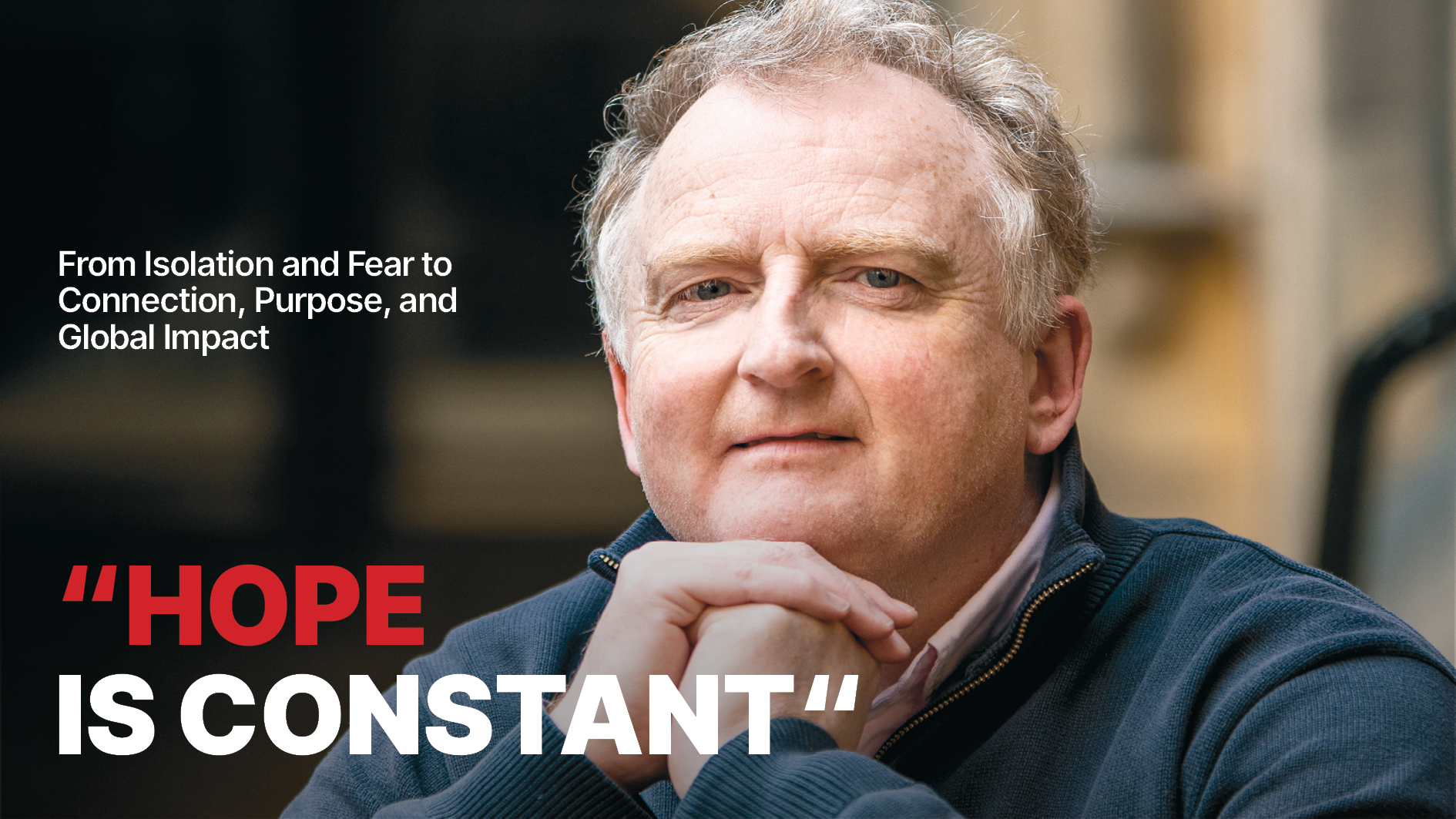
One of my friends, a retired oncology nurse in Scotland, where I live, has become a source of hope for my family and me, and her words have become a mantra: hope is constant.
Prior to my diagnosis of stage 4 metastatic melanoma in December 2019, my hope was perhaps pedestrian and mirrored that of most of my friends and family: hope that our children would do well at school, that my career would progress, and that the weather would be kinder than it is in Scotland for our summer vacation.
Suddenly, hope had changed color, shape, and texture, and was centered around immunotherapy, which I had never heard of. I hoped this relatively new treatment would enable me to see our children attend and graduate from university, and that we would have time to see friends and family in case I didn’t respond.
Facing the Data and Uncertainty
Working in IT, I’m surrounded by data, statistics, and probability. When I sat in the sterile oncologist’s office, trying to process what I had just been told that I had a tumor on my right lung and one next to my spine, which had been causing my back pain that quickly led to X-rays and a CT scan I asked him if he had any data on the effectiveness of my planned treatment.
Being already in shock and trying hard to focus on what the oncologist said, I was even less prepared for the Overall Survival chart he showed me, which made for very bleak reading in the first twelve months but painted a picture of hope after three years.
How was I to convey this news to my wife, mother, sisters, and teenage children just a few days before Christmas? I had made the worst decision of my life by not asking my wife to accompany me to the oncologist. Eighteen months previously, I had been told that my stage two melanoma had been successfully removed from my forearm and hadn’t spread to my lymph nodes. How could I pass on this news without my voice breaking, tears falling, my legs failing me, or my heart breaking, thinking about what we could all miss if I died?
Christmas seemed like a blur, with everyone knowing it could be the last one we’d all spend together. As we entered 2020, our plan was to spend as much time with friends and family as my treatment would permit and hopefully travel to our favorite destinations.
Isolation, COVID, and Mental Health Struggles
2020 had other plans for us. Due to COVID, I was placed in the high-risk category due to being immunocompromised, and every day became a routine of avoiding any situation where I could encounter infection. I was unable to see anyone outside our household for months on end.
The physical impact of my treatment was overshadowed by a severe mental impact, not just on me. Given the likelihood of my treatment being unsuccessful, combined with COVID restrictions, my mental health deteriorated even further, and my sense of isolation became overwhelming.
Finding Strength Through Community
At this point, I decided to seek out other people with melanoma who were going through a similar experience. Thankfully, I found an online melanoma group in the UK, where patients supported each other via Zoom. Following my first Zoom call, my wife remarked that she hadn’t seen me so happy since my diagnosis. Being able to talk to others who shared their stories and listened to mine, and understood how I felt, gave me immense hope.
The Birth of “Stories of Cancer and Hope”: From Idea to Impact
I’ve always had an interest in other people’s stories, and hearing strangers share their deepest fears and hopes while supporting me inspired me to collect and share other people’s cancer stories.
Following my successful treatment, I started to collect “Stories of Cancer and Hope,” with the ambition to share them as widely as possible to help others affected by cancer not feel alone. My original ambition was to produce a hardback book that could be read and then shared. If I could obtain sponsorship to fund its production, I could donate 1,000 copies to cancer charities and treatment centers in the UK. With the help of family, friends, sponsors, and story contributors, we created the book and to date, have donated 8,000 hardback copies of “Stories of Cancer and Hope” to 90 cancer charities and treatment centers in the UK and Ireland.
Our book contains stories from 39 people, including oncology professionals, pharmaceutical professionals, people living with cancer, and those who have lost someone to cancer, as not all cancer stories have a happy ending.
Voices of Gratitude and Healing
We regularly receive feedback from patients and oncology professionals on the positive impact of our book. Here are just two examples:
“The last thing I wanted to do was read about cancer – I wanted to get away from it! How wrong was I! About halfway through my treatment, I picked up the book and started to read some of the stories. I cannot believe the strength that people develop to overcome this awful disease. I now feel I am part of that community and developing the strength I never thought I had. Thank you so much to the author and to all the brave people who contributed to this book. It really is helping me as I continue my battle.” — UK Cancer Patient
“This book is great at focusing on the patient behind the disease process; they are deeply personal, and they are something I would want all my nurses to read. For me personally, the book helped me focus on why I do what I do, who I do it for, and the stories behind the treatments. I will encourage all my staff to read it regularly.” — Head of Day Oncology Centre, United Kingdom
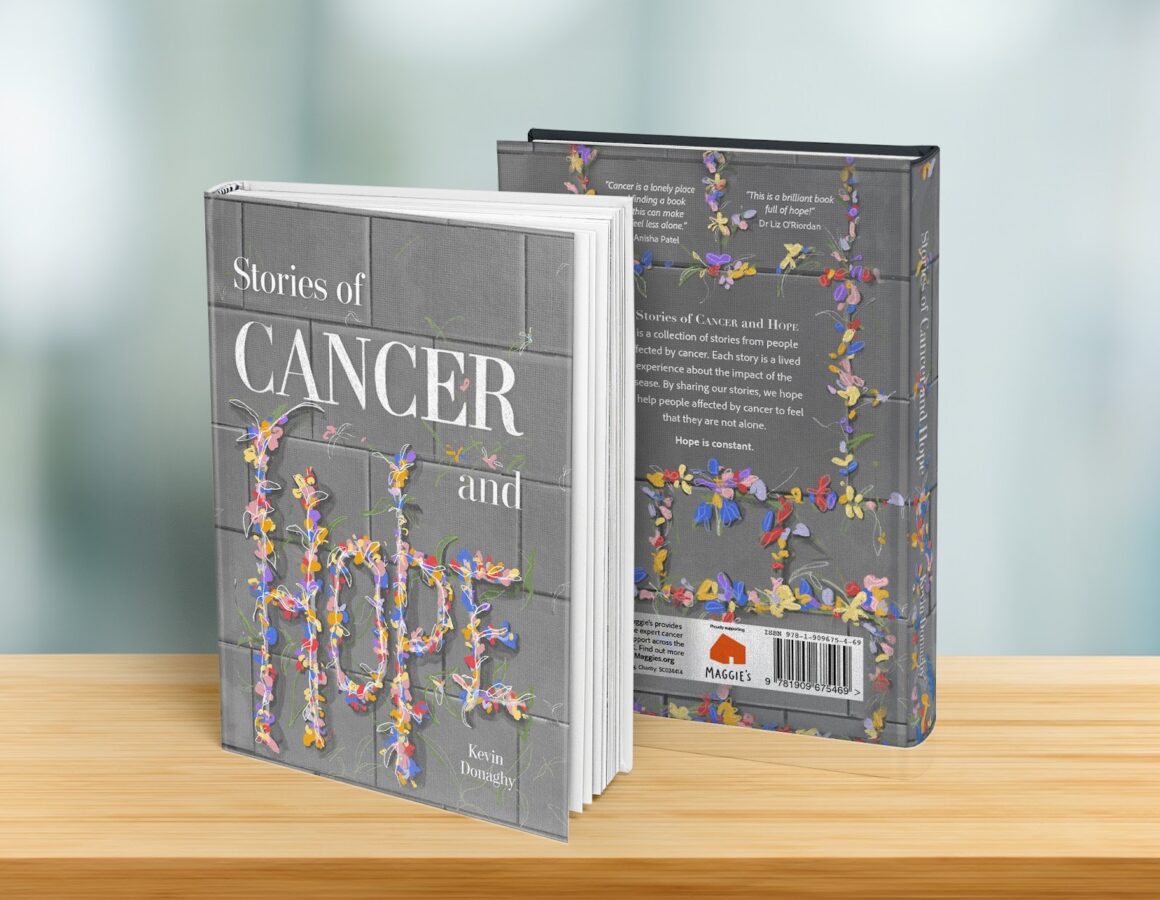
Stories of Cancer and Hope was launched for sale in 2024 and it is currently available for sale in hardback and digital form around the world, with all royalties going to the UK cancer charity, Maggies, who have 27 locations in the UK and 4 outside the UK.
We know that our stories of hope are spreading and bringing light where perhaps darkness lurks.
About the Author
Kevin Donaghy lives with his family in the Scottish Borders. He has spent his career in IT services and IT consulting. Now living with incurable cancer, he has worked with several cancer charities in the UK, for whom he promotes causes and raises money, including donations from the sales of his book. He has travelled the country, taking “Stories of Cancer and Hope” directly to the doors of various charities and people affected by cancer.