Immunotherapy has redefined cancer care—offering survival where little once existed, and in some cases, the possibility of long-term remission. But as its use expands across tumor types and earlier lines of treatment, a more complex reality is coming into focus: the same immune activation that drives tumor control can also trigger serious, sometimes life-threatening toxicities.
“These toxicities are fundamentally different,” says Dr Yinghong Wang, MD, PhD, MS, Professor in the Department of Gastroenterology and Hepatology and Deputy Division Head (Research) in the Division of Internal Medicine at MD Anderson Cancer Center. “They are immune-mediated, often unpredictable, and can affect virtually any organ system.”
Immune-related adverse events are no longer rare complications. They are an inherent consequence of treatment—one that is testing how well modern oncology can balance innovation with responsibility.
A New Toxicity Landscape
Checkpoint inhibitors and other immunotherapies have shifted the therapeutic paradigm. But unlike chemotherapy, their side effects do not follow predictable timelines or organ-specific patterns.
Instead, clinicians are confronted with an activated immune system that may turn against healthy tissue with little warning.
“While the benefits are transformative, the responsibility to manage these side effects effectively has never been greater,” Wang explains.
This shift demands more than clinical vigilance. It requires new models of care—ones that integrate early detection, rapid response, and cross-specialty coordination as standard practice.
Gastrointestinal Toxicities: A Growing Clinical Pressure Point
Among immune-related toxicities, gastrointestinal complications have emerged as one of the most frequent and clinically significant—reported in a substantial proportion of patients receiving checkpoint inhibitors in routine practice.
“Gastrointestinal toxicities, especially colitis, are among the most frequent and clinically significant immune-related adverse events,” says Wang.
What may begin as mild diarrhea can escalate quickly into severe colitis, leading to dehydration, hospitalization, and, in some cases, life-threatening complications.
Management is rarely straightforward.
“They often require immunosuppressive therapy,” Wang notes, “which can complicate the overall cancer treatment strategy.”
The diagnostic challenge is equally pressing. Symptoms can mimic infection or disease progression, narrowing the window for timely and accurate intervention.
A System Still Catching Up
Despite growing awareness, the infrastructure needed to manage these toxicities remains uneven.
“One of the biggest gaps is awareness and early recognition,” Wang says. “Patients may not immediately report symptoms, and healthcare providers outside oncology may not always be familiar with immune-related toxicities.”
Variation in care pathways persists across institutions, often reflecting differences in access to multidisciplinary expertise.
“We still lack fully standardized pathways in many settings,” she adds, “particularly when it comes to integrating gastroenterologists and other specialists into the care team.”
For patients, this fragmentation can translate into delayed diagnosis and suboptimal management—at a point when timing is critical.
Supportive Care, Reimagined
As immunotherapy reshapes treatment, it is also redefining the role of supportive care—from a complementary service to a central pillar of oncology.
“Supportive care is absolutely central,” Wang emphasizes. “It’s no longer just about managing side effects—it’s about enabling patients to stay on potentially life-saving treatments safely.”
In this context, reactive approaches are no longer sufficient.
“In the context of immunotherapy, supportive care must be proactive, not reactive,” she says, highlighting the need for patient education, structured monitoring, and rapid access to specialist care.
The objective is not only to mitigate toxicity, but to preserve both treatment continuity and quality of life.
Building a Collaborative Response: The ASPIRE-IOTOX Initiative
Efforts to close these gaps are gaining momentum.
The ASPIRE-IOTOX meeting has emerged as a key forum for addressing the real-world complexities of immune-related toxicities—bringing together oncologists, gastroenterologists, and other specialists to align on practical strategies.
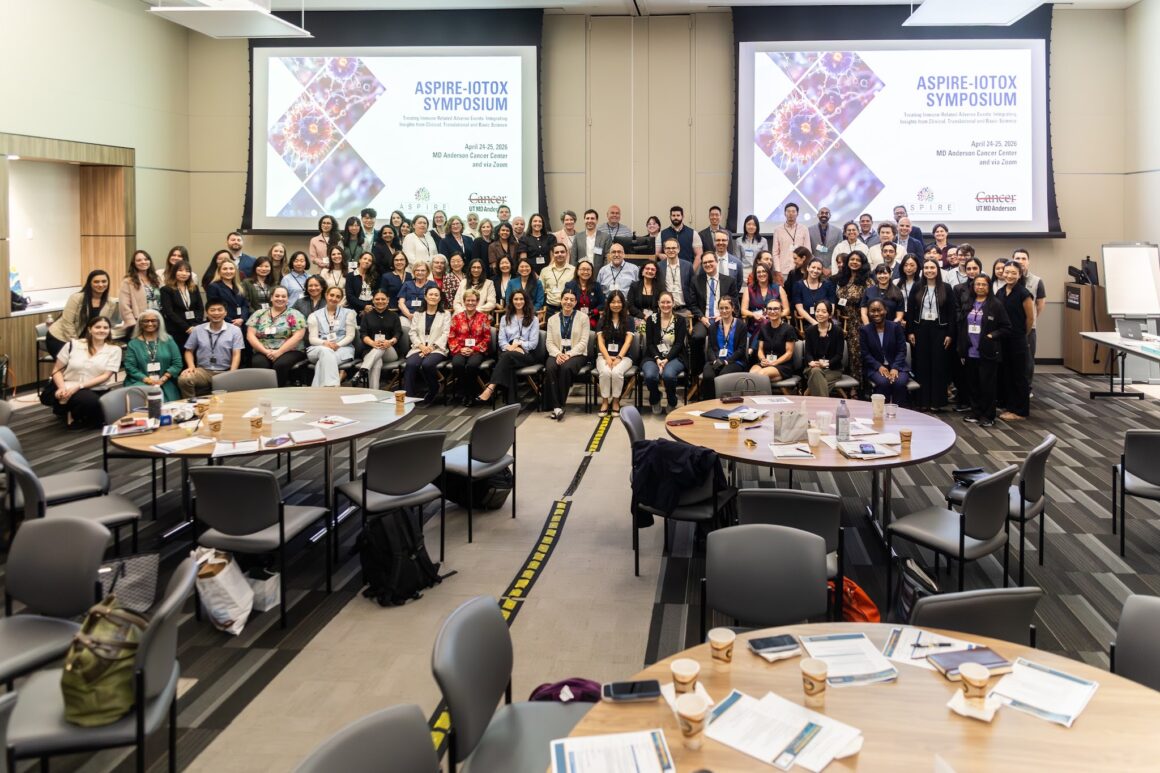
“The ASPIRE-IOTOX meeting is a critical step,” Wang says. “It creates a platform for specialists to come together and share knowledge, with a strong focus on real-world practice.”
Beyond knowledge exchange, the initiative reflects a broader shift toward coordinated care.
“It helps build a community of experts who can drive forward research, education, and standardized approaches,” she adds.
In an increasingly complex treatment landscape, such collaboration is becoming essential, not optional.
The Next Phase of Immunotherapy
As the field evolves, so too must its priorities.
“We need better predictive tools to identify which patients are at risk of developing severe toxicities,” Wang notes. Equally important are refined management strategies that can control toxicity without compromising anti-tumor efficacy.
Education remains a critical gap.
“We also need broader education for healthcare professionals and patients,” she says.
But perhaps the most urgent need is structural change.
“We must continue strengthening multidisciplinary collaboration. Immunotherapy has changed oncology, and our care models must evolve accordingly.”
Beyond the Breakthrough
The success of immunotherapy has transformed expectations in cancer care. But its long-term impact will depend not only on expanding indications or improving response rates, it will depend on how well the field manages its unintended consequences.
Gastrointestinal toxicities are not simply side effects. They are a measure of whether oncology can adapt to its own progress.
Because the next frontier in cancer care is no longer just extending life, but learning how to manage, with precision and responsibility, the cost of doing so.
About the Author
Knarik Arakelyan (PhD) is a psychologist and communications professional with over 14 years of experience in public relations, health communication, and public awareness campaigns. She is currently the Managing Editor of “CancerWorld“ magazine, Head of the “OncoDaily TV,” and serves as PR and Communications Officer at “EMERTÉ” Clinic.