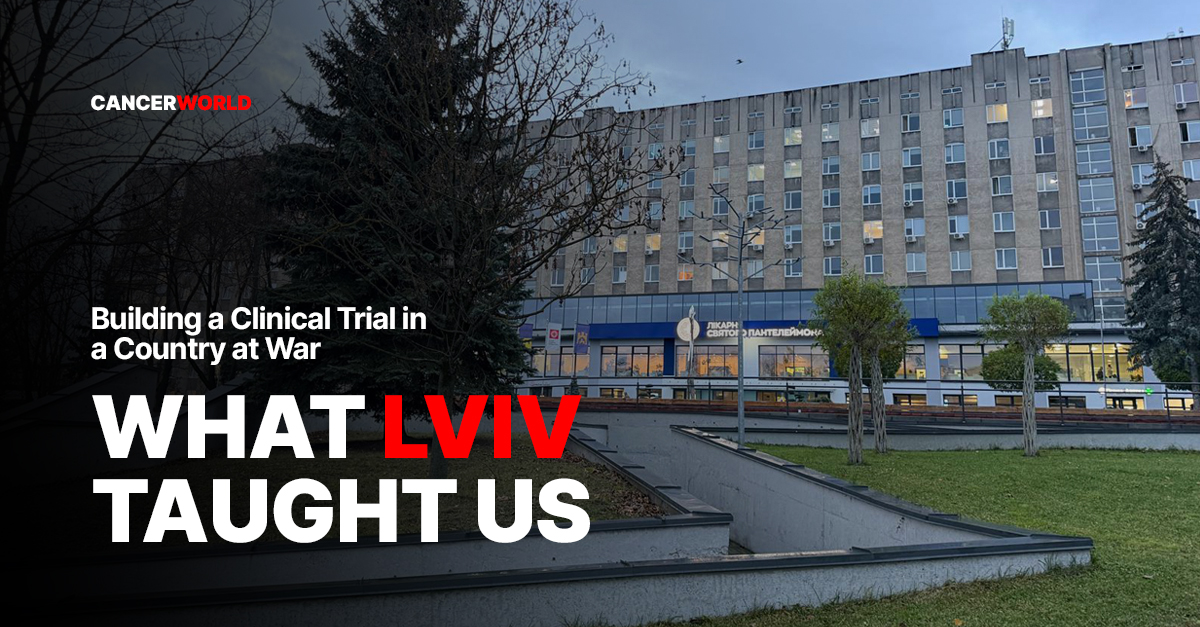
What does it take to bring a complex cell-therapy trial to an intensive care unit in a country at war? Thiago Favano travelled to Lviv expecting to assess whether it could be done. He came away with a different understanding of clinical research, resilience and what remains possible under extraordinary circumstances.
There are moments every critical care clinician recognizes, wherever they work. A patient survives the injury that brought them in, and then the lungs begin to fail. The chest film whites out, the oxygen requirement climbs, and the organism on the culture report is one that the strongest available antibiotics will not touch.
I have spent most of my career powering that moment into statistical assumptions. I had not stood next to it in a country at war until last year.
The wards at First Lviv are full of young men and women who have lost arms and legs, and of patients with burns and severe wounds. In the intensive care unit, most patients are unconscious. What I did not expect was the dedication and determination of the caregivers, from seasoned clinicians to young doctors and nurses in training: precise and wholly serious at the bedside, and, in the corridor afterwards, among the warmest and least guarded people I have met.
In their case discussions, both were present at once. The rigour never slipped, and neither did the sense that the person under discussion belonged to them.
When Infection Becomes the Greater Threat
Severe pneumonia is the most common cause of acute respiratory distress syndrome, or ARDS, worldwide. In conflict zones, it is often caused by highly drug-resistant organisms with few available treatments, particularly in austere conditions. Among patients who progress to severe ARDS, despite everything intensive care can offer, close to half do not survive.¹ No approved therapy has been shown to improve mortality, and many survivors face long recoveries and lasting disability.
The therapy MiNK Therapeutics has been developing takes a different route: rather than blocking one cytokine or one immune pathway, agenT-797 is designed to restore and rebalance the immune cell population. Invariant natural killer T cells sit at the junction of innate and adaptive immunity, and under severe stress they are rapidly depleted. What is lost is not only the capacity to clear the infection; it is the signal that tells inflammation when to stop.
agenT-797 is an off-the-shelf, donor-derived iNKT cell therapy: no HLA matching, no lymphodepletion, no patient-specific manufacturing. It is thawed at the bedside and given as a single infusion, much like a unit of plasma, and MiNK has shipped it to sites worldwide.
In our first-in-human study during the COVID-19 pandemic, published in Nature Communications, 28-day survival among the treated patients was 70 percent.² Under expanded access, we have since observed clinical responses in individual patients outside viral disease, including a case of disseminated fungal infection treated in combination with an IL-15 super-agonist.³
Those early, uncontrolled observations suggested the approach might have potential against multidrug-resistant organisms. They also argued for opening the next study to patients with hypoxemic pneumonia of any cause who meet ARDS criteria.
In conflict zones, patients reaching an ICU arrive not with a single injury but with infection layered on top of it; although trauma may bring them into the hospital, infections such as pneumonia are often what kill them. That meant going where those patients are, and Ukraine is among the regions most affected by multidrug-resistant infection.
That work is now a randomized, double-blind, placebo-controlled Phase 2 trial (NCT07615010), cleared to proceed by the US Food and Drug Administration. It is active in Ukraine, where the first site opened and patients are enrolling; site expansion in the United States is underway.
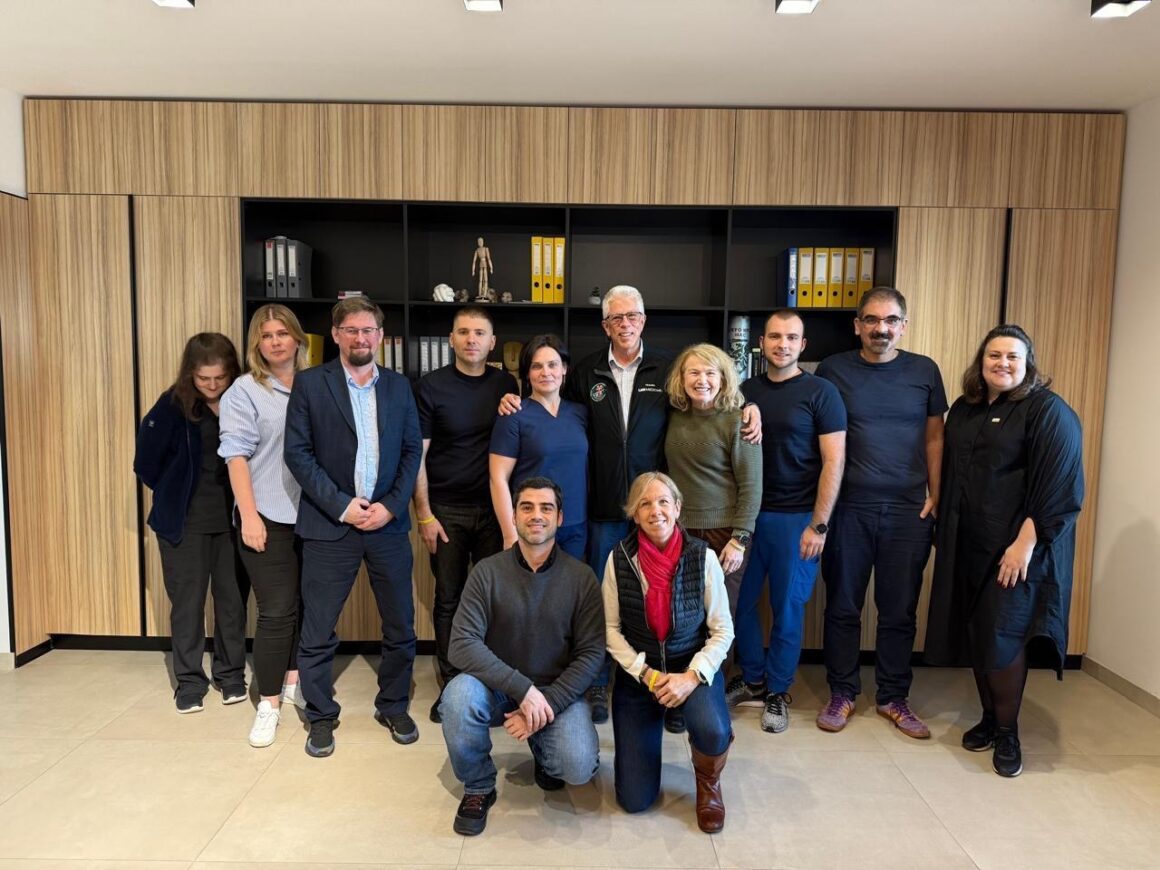
The team
Going Where the Patients Are
There are no direct flights into Ukraine. You fly to Rzeszów, get into a van, and drive.
At the border, handing over a passport and our letters from the hospital, I spoke with Ukrainians on their own soil for the first time, in the handful of words I had learned in two weeks of lessons in Boston. What I felt was recognition, and respect for what they are living through.
Lviv itself was vibrant, animated, unlike anything I expected in a war zone. The city is alive: people on the streets, cafés full, children, music. In many moments, we forgot we were in a country under constant threat of attack.
First Lviv Territorial Medical Union is among Ukraine’s largest medical institutions and the referral centre for the west of the country. UNBROKEN was built inside it after the invasion, under the Ministry of Health; together, the two have treated more than 30,000 war-affected Ukrainians.
We came to assess whether the study could be run there. We left having learned impactful lessons ourselves.
On rounds, the standard of critical care was not a compromise version of what I know from the United States; in places, it was ahead of US ICUs. Their microbiology service identifies 1,066 organisms, resistant strains included, faster than I expected.
But the capability is not what I remember.
What I remember is how each case was discussed: the insistence on the best available option for that particular person, the refusal to treat anyone as a lost cause.
The principal investigator is Dr Khrystyna Orlynska, head of anesthesiology and intensive care, and the anesthesiologist on the team that performed Ukraine’s first deceased-donor lung transplant. She is as humble as she is formidable; what she has built is not only a service but a generation of young intensivists trained to a standard I would recognize anywhere.
“Many of our patients reach us after long evacuations, and by the time pneumonia develops, the organisms are often resistant to almost everything we can give. We do not yet know whether this therapy helps — that is exactly why it had to be a randomized, blinded trial. Our patients deserve a real answer, and our team is ready to produce one. For our young intensivists, this trial is a school in itself: every step done to an international standard, with no shortcuts.”
— Dr Khrystyna Orlynska, Head of Anesthesiology and Intensive Care, First Lviv Territorial Medical Union
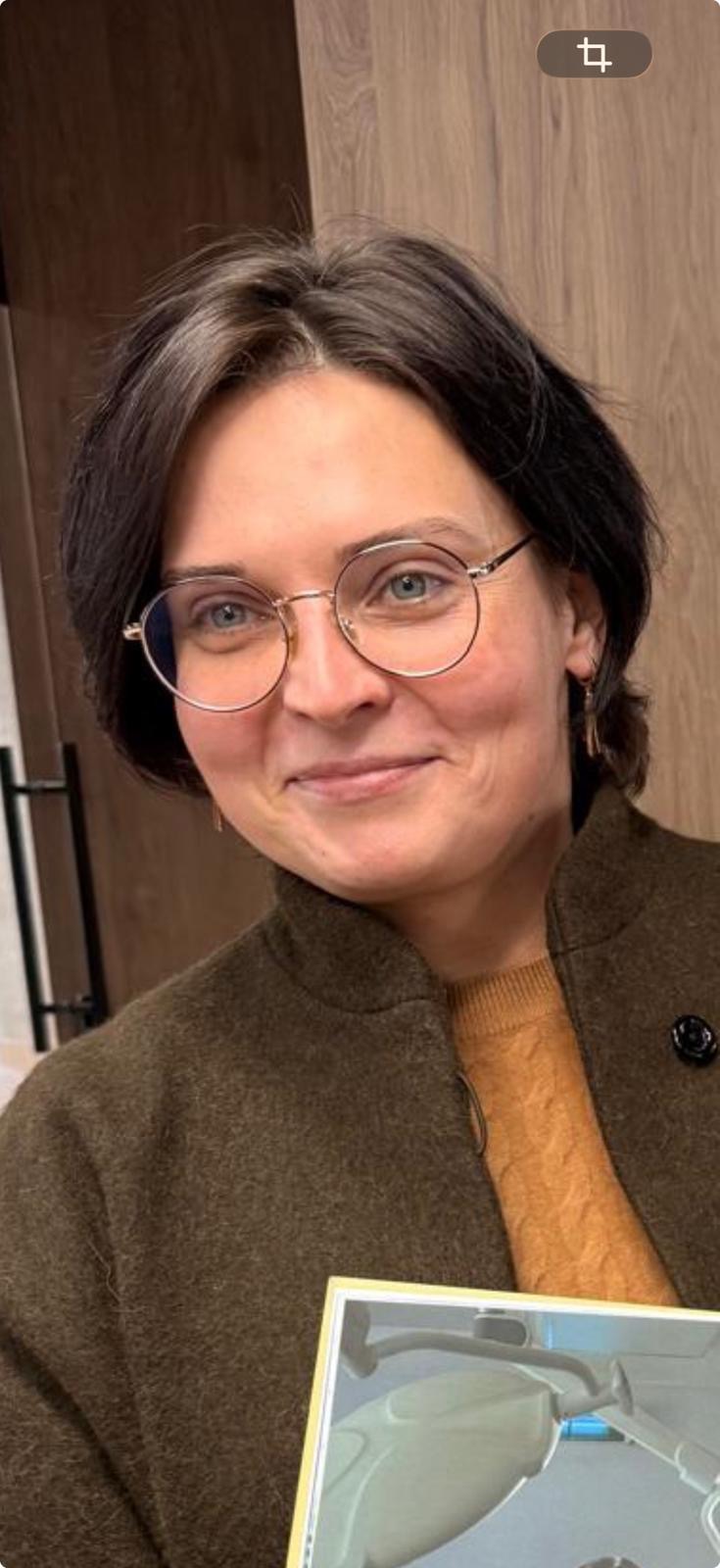
Dr Khrystyna Orlynska
Her sub-investigator, Dr Demian Kalysh, is a young attending physician who works around the clock. They, their colleagues and the people I met in the streets of Lviv shared the same dichotomy: inside the hospital, complete seriousness about the country and the patients; outside it, a capacity for happiness and even joy, in the company of each other and of their foreign visitors, eating, drinking and laughing together despite the persistent stress of war.
UNBROKEN does not stop at surgery and prosthetics. There is a whole building for rehabilitation, art programmes and a route back to work, and some of those who arrived as wounded soldiers now work in the institution that treated them.
Walking through it, I heard a guitar somewhere down the corridor – a patient playing, someone sitting with him, the two of them entirely absorbed. In the gallery, I stood for a long time in front of a painting made by one of them and thought, without exaggeration, that it belonged in a museum in New York.
Building Research Capacity During War
We came to build the capability to run a randomized, blinded trial of a cryopreserved cell therapy in critically ill patients – technically demanding anywhere in the world – and I have rarely been so thoroughly impressed.
The senior team and the younger physicians arrived already knowing the protocol and the science; colleagues who spoke no English sat through translation to be certain of every detail, then asked questions sharper than the ones I had prepared for. Whatever the gap was, it closed in days.
The Ministry of Health approved the trial and the first patient was dosed days later. The site continues to enroll.
“Taking part in international clinical trials is important to us not only because it can give our patients access to innovative therapies, but because it builds lasting research capacity within our institution. Our clinicians are gaining experience as investigators, our teams are developing new expertise, and this knowledge remains in Ukraine. Even during the war, we want Ukrainian patients and medical professionals to be part of the global development of new treatments — not only recipients of what has already been developed elsewhere.”
— Maryana Svirchuk, Executive Director, First Lviv Territorial Medical Union and UNBROKEN
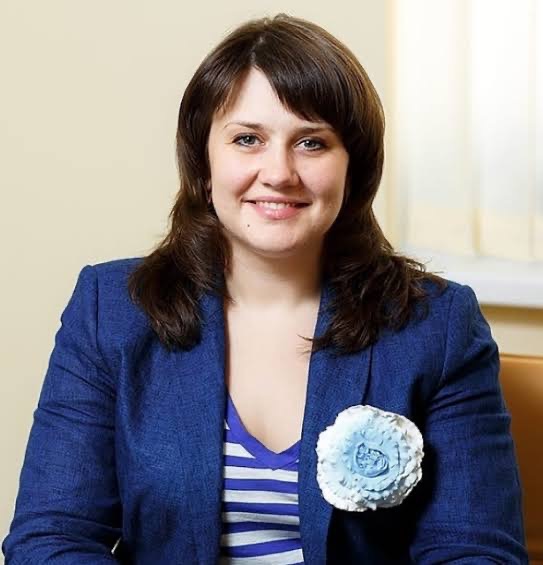
Maryana Svirchuk
Dr Antonio Paulo Nassar Junior, an intensivist in São Paulo who is not involved in the study, puts the evidence plainly.
“For patients who develop pneumonia caused by multidrug-resistant microorganisms in the ICU, few treatment options are currently available, and no immunomodulatory strategy has been shown to improve survival in randomized clinical trials. Strategies aimed at restoring normal immune system function are scientifically reasonable, but the available data come from animal studies or small human studies without a control group.
That is precisely why a randomized, blinded, placebo-controlled study is the fundamental next step.”
— Antonio Paulo Nassar Junior, MD, PhD, D’Or Institute for Research and Education, São Paulo, Brazil
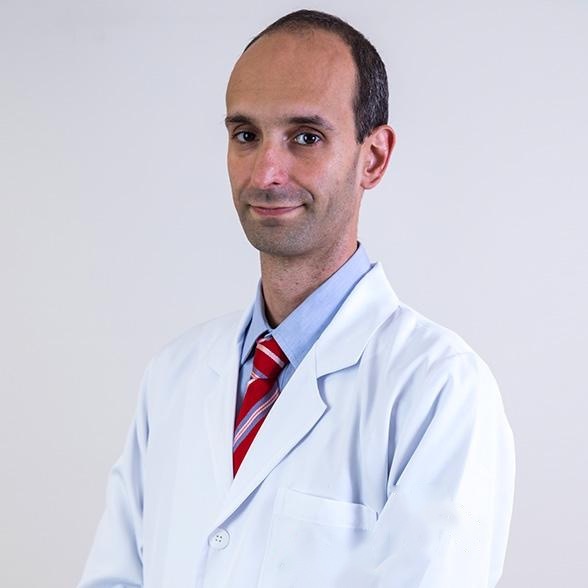
Antonio Paulo Nassar Junior
What Lviv Taught Us
Development programmes are described by what they produce: data, endpoints, filings. This one produced something I had not planned for.
Patients in one of the hardest critical care environments in the world have access, through a clinical trial, to an investigational therapy they would otherwise never have seen.
And a group of us who arrived to teach spent three days being taught – not about medicine, but about what remains possible in circumstances that would excuse almost anything.
They had every reason to wait for easier conditions and did not: the rehabilitation service, the research capability, the standard of care, all built while the war went on.
What Lviv taught me is what its old town has been saying for seven centuries, with its Armenian, Jewish, Ruthenian and Latin quarters set around one market square: that seriousness and warmth are not opposites.
They are serious about the work, they belong to one another, and they are determined to be glad of their lives while they do it.
I have not found a better formula for hard circumstances, and all of us can learn from it.
References
- Bellani G, Laffey JG, Pham T, et al. Epidemiology, patterns of care, and mortality for patients with acute respiratory distress syndrome in intensive care units in 50 countries (LUNG SAFE). JAMA 2016;315(8):788–800.
- Hammond TC, et al. A phase 1/2 clinical trial of invariant natural killer T cell therapy in moderate–severe acute respiratory distress syndrome. Nat Commun 2024;15:974.
- Hammond TC, et al. Rapid suppression of unresolving disseminated coccidioidomycosis infection with combined IL-15 super-agonist (N-803) and invariant natural killer T cell therapy. Clin Immunol Commun 2026. doi:10.1016/j.clicom.2026.04.002.
About the Author
Thiago Favano is Senior Director, Program Operations, MiNK Therapeutics, Inc. (Nasdaq: INKT), the sponsor of the trial described in this article, and wrote this piece on the company’s behalf. agenT-797 is an investigational therapy and has not been approved by any regulatory authority for any use.