Too Much Hope is a False Hope
K. still remembers the moment she heard the diagnosis. The room felt suddenly smaller, the air heavier, and time strangely suspended. “You wake up in a void, alone and scared,” she says. “But you can still choose to climb out, to ask for help.” That choice, she believes, saved her life — not only physically, but emotionally.
In the world of psycho-oncology, where professionals and patients debate how much hope is helpful and when hope becomes a burden, K. ‘s experience raises a fundamental question: when cancer enters a person’s life, is hope truly the first emotion, or is it fear?
This remains a contested issue in psycho-oncology, as both patients and healthcare professionals hold differing views on how much hope is healthy — and when it risks becoming false reassurance.
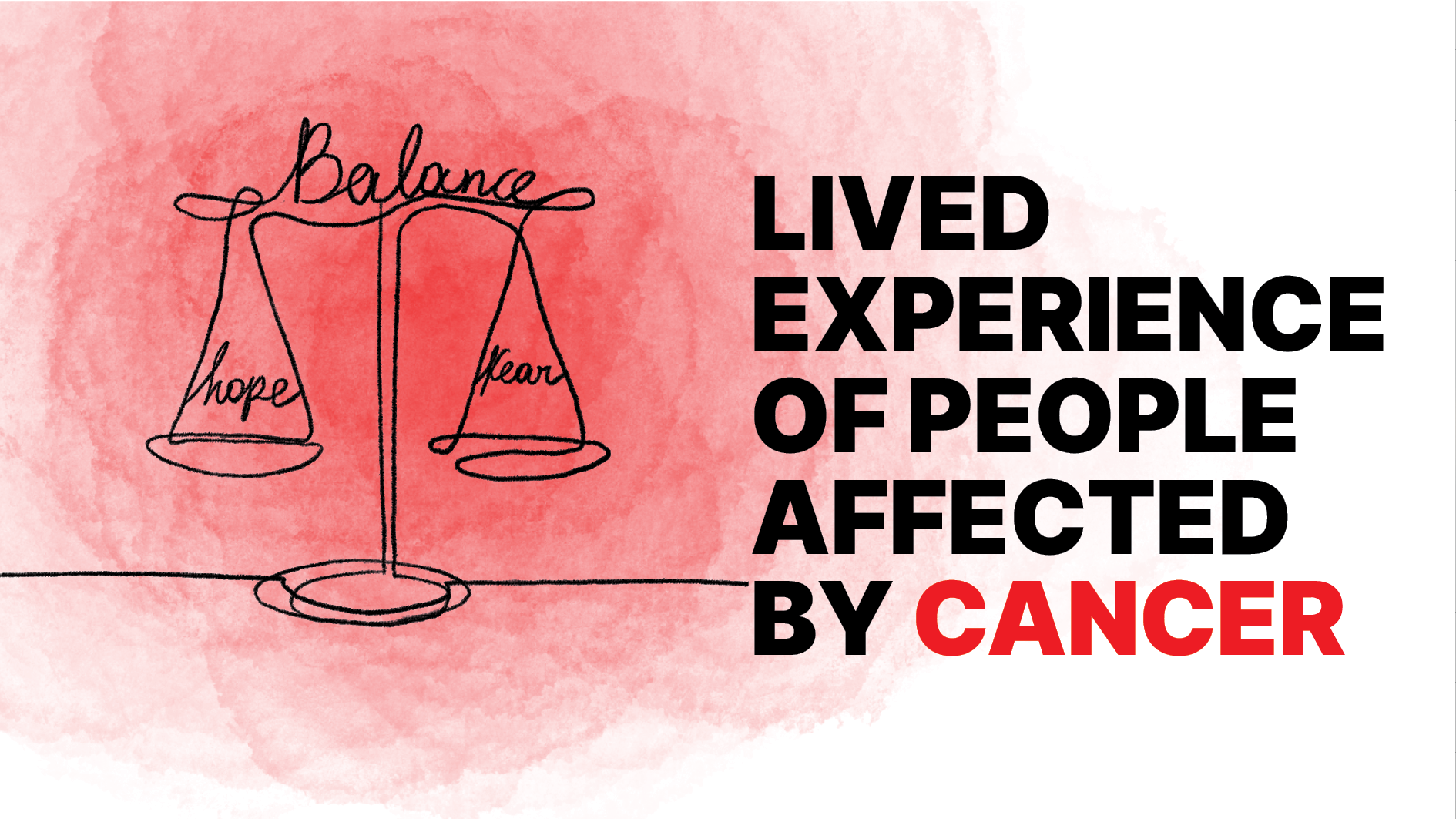
But is hope really the first thing a cancer patient thinks about, or is it fear? I believe this is the central question when exploring the lived experience of cancer. The “lived experience of people affected by cancer” refers to the experience of living with or having lived through cancer, including treatment, recovery, and long-term survivorship, as well as supporting others through the disease. The psychosocial impact of cancer encompasses interconnected psychological, social, and financial dimensions (Schilstra et al., 2025).
Emotional Resilience, Social Support, and Psychological Transformation
“The diagnosis doesn’t prepare you, it confronts you with reality. You wake up in a void, alone and scared. But you can still choose to climb out, to ask for help,” K. once said during a counselling session. A young woman marked by prudence and optimism, she had long hidden the emotional scars of her painful journey. Yet, she grew stronger once she chose to seek help, giving meaning to her suffering. She learned to exercise her freedom of will and the power to choose and began searching for answers to the haunting question of Why me?, navigating a new reality shaped by identity, meaning, and legacy.
K.’s experience shows that the psychological, psychosocial, and behavioral consequences of cancer can no longer be ignored. Psychological distress, anxiety and depression, often becomes a source of deeper suffering than the disease itself. Cancer treatments, while life-saving, profoundly disrupt patients’ physical, emotional, and social lives.
She came to understand that cancer is not merely a personal struggle, but a collective one. “In my fight with the illness, I surrounded myself with people who encouraged me, who lifted me when I needed it, and who pushed me to keep going. They didn’t let me fall, and I didn’t let them fall either. By the end of treatment, none of us were the same anymore.” The past she once knew no longer exists, the future feels uncertain, and the present moment is all that truly remains.
Emotions are a vital form of communication both with ourselves and with others. There is nothing more harmful than suppressing inner feelings. Emotions motivate us, help us act, and allow us to overcome obstacles. Yet, as human beings, we often avoid confronting them. K. had no such luxury. As she explained, survival meant facing uncertainty daily, never knowing what the next morning might bring.
The lived experience of cancer encompasses profound physical, emotional, and social transformations, from diagnosis to survivorship and beyond. These changes reshape daily life, relationships, professional roles, and even personal identity often prompting individuals to search for or rediscover life’s meaning, as Viktor Frankl described.
Hope and Fear in Clinical Communication: Finding the Balance
Hope serves as an inner source of motivation, guiding individuals toward goals and resilience. It supports meaning-making, self-esteem, and emotional adaptation, helping patients withstand the psychological strain of illness.
But what happens when hope collides with fear? Can they coexist? Humans often fall into “all-or-nothing” thinking either hopeful or hopeless, brave or terrified. Yet, we possess the capacity to experience complex emotions simultaneously. “Cancer is not a disease you can carry on your own,” K. repeats in almost every therapy session. She is right. Therefore, we must learn to accept fear while nurturing hope.
As medical oncologists and psychologists, we consider ourselves healers, yet we cannot avoid delivering painful truths. Patients need to be heard, understood, and emotionally supported. “When you go through something like this,” K. reflects, “it matters enormously that medical staff show empathy, patience, and understanding.”
Nevertheless, healthcare professionals often struggle with the fear of extinguishing hope, which can hinder open communication. Managing their own emotional reactions, the patient’s tears, fear, and suffering along with feelings of professional inadequacy, becomes a profound challenge.
Ultimately, effective communication requires balance: between clarity and compassion, honesty and empathy, realism and hope. Because no matter how blue life becomes, hope always has a hue.
Bibliography
1. Schilstra, C.E. et al. (2025) Development of a World Health Organization International Survey assessing the lived experience of people affected by cancer: Outcomes from pilot testing, user feedback, and survey revision – supportive care in cancer, Springer Link.
About the Author
Adrian Pogacian, PhD, is a licensed clinical psychologist with advanced training in psycho-oncology. His expertise is in Coping with Cancer, Complicated Grief, Posttraumatic Growth and Meaning-Centered therapy approach.