In oncology, progress is measured in survival rates, response curves, and treatment gains. But those numbers rest on a quieter assumption: that health systems can deliver what science makes possible. When they cannot, progress becomes uneven—not in discovery, but in reality. What does advancement mean when its impact depends as much on context as on knowledge?
Each issue of CancerWorld examines the people and ideas shaping oncology. This month, the tension between progress and delivery is especially clear. Scientific advances continue to expand what is possible, but health systems, geography, and inequality continue to shape what is actually achieved in practice.
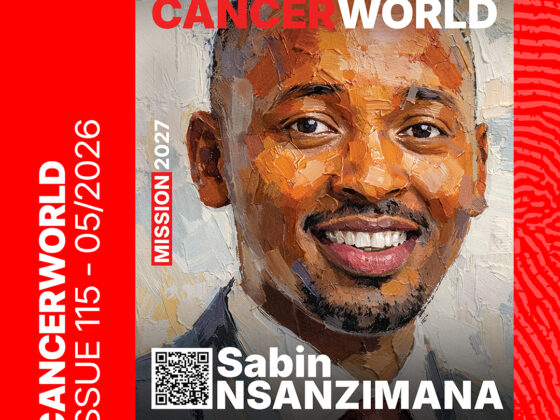
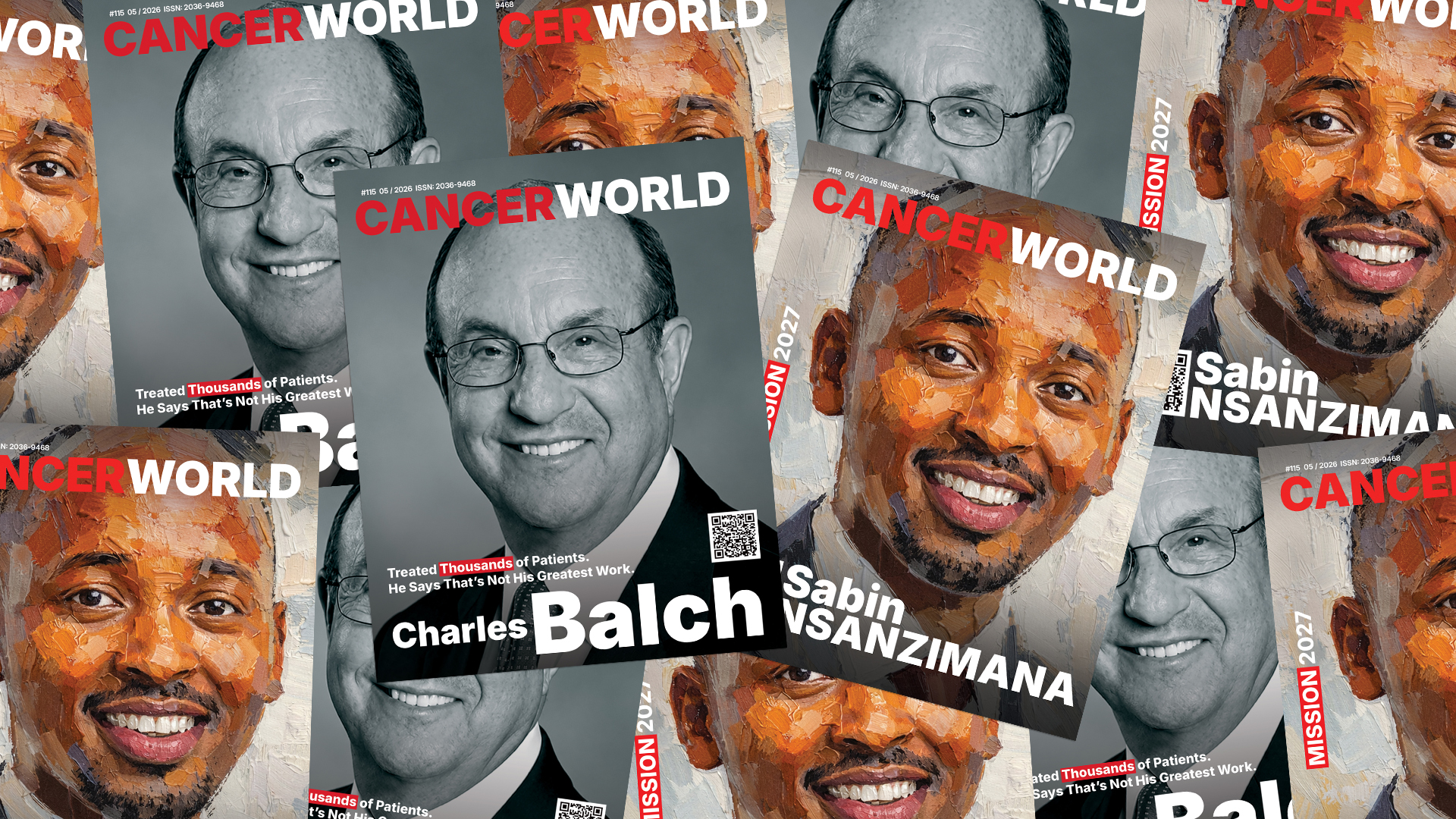
The May issue opens in Rwanda, where ambition has become operational. Under the leadership of Dr Sabin Nsanzimana, “Mission 2027” seeks to eliminate cervical cancer ahead of the World Health Organization target — transforming a global aspiration into a national programme defined by urgency, coordination, and execution.
Physician, epidemiologist, and key architect of Rwanda’s post-genocide health system, Nsanzimana leads within a context shaped by the legacy of the 1994 genocide against the Tutsi, where progress is measured less in intent than in delivery. In this interview, he reflects on the making of a doctor in a rebuilding nation and the long arc of reform that has carried Rwanda’s health system from recovery to global reference point.
There are careers that unfold alongside the evolution of a discipline, and then there is Dr Charles Balch. For more than half a century, his work has helped define surgical oncology, shape the structure of modern cancer centers, and influence the global architecture of oncology itself.
Yet his legacy is not measured in institutional milestones alone. It is reflected in continuity — in the generations of physicians and researchers who carried forward the systems, standards, and ideas he helped establish.
In cancer care, some of the most important shifts are structural rather than visible. Through Dr Lazaros Papadopoulos, we see a surgeon shaped by loss, mentorship, and restraint. His work reflects a broader move in oncology toward care that is not only effective, but deliberately measured.
Some of the most consequential developments begin outside the clinic. In Robin Toft’s experience, early detection becomes a dividing line between survival and loss. Meanwhile, in San Diego, cancer research is shaped by an alignment of science, philanthropy, and policy operating as an ecosystem rather than an isolated effort.
From Silence to Presence, Dr Christian Ntizimira reframes end-of-life care as presence rather than withdrawal. Grounded in post-genocide Rwanda and global practice, his work challenges a core assumption in medicine: that technical success alone defines good care. In his model, dignity is defined not only by symptom control, but by the absence of abandonment.
Immunotherapy has expanded the boundaries of cancer care while introducing new complexity. Dr Ricky Dylan Frazer describes a field defined by longer survival and harder decisions. Dr Yinghong Wang highlights a quieter shift: immune-related toxicities are now central to oncology, requiring systems that can manage not only treatment, but its consequences.
Metastatic pancreatic cancer has long been defined by stagnation, but emerging RAS-targeted approaches are beginning to challenge that narrative. Early data on daraxonrasib, explored by Dr Shiraj Sen, suggest a possible shift in a disease driven almost universally by RAS mutations.
Cancer treatment may depend not only on what is given, but when it is given. A Spanish study led by Pablo Huertas shows circadian regulation of DNA repair affects tumour sensitivity, opening a new dimension in precision oncology. Janet Fricker explores this emerging role of timing in treatment.
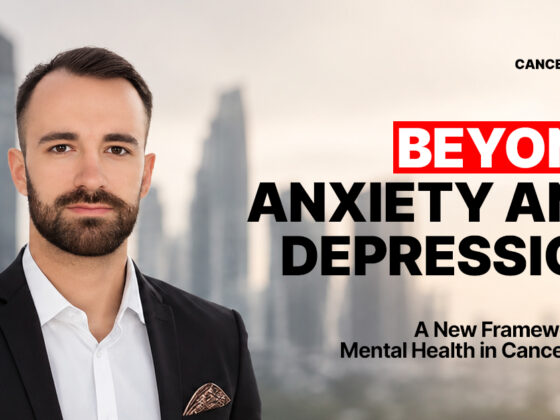
As survival improves, another gap becomes more visible beyond treatment itself. Adrian Pogacian highlights survivorship as an unstructured phase where psychological and social needs remain unmet. Oncology has become precise in treating disease, but care beyond disease remains uneven.
Across all these stories, a single thread runs through: oncology is advancing rapidly, and its impact is increasingly defined by how far and how effectively that progress is carried into practice. From national programmes to individual care, from discovery to survivorship, the central question is not only what is known, but how consistently it improves outcomes for patients.
This issue closes on that tension—running through every story in these pages, and continuing to shape oncology in practice.