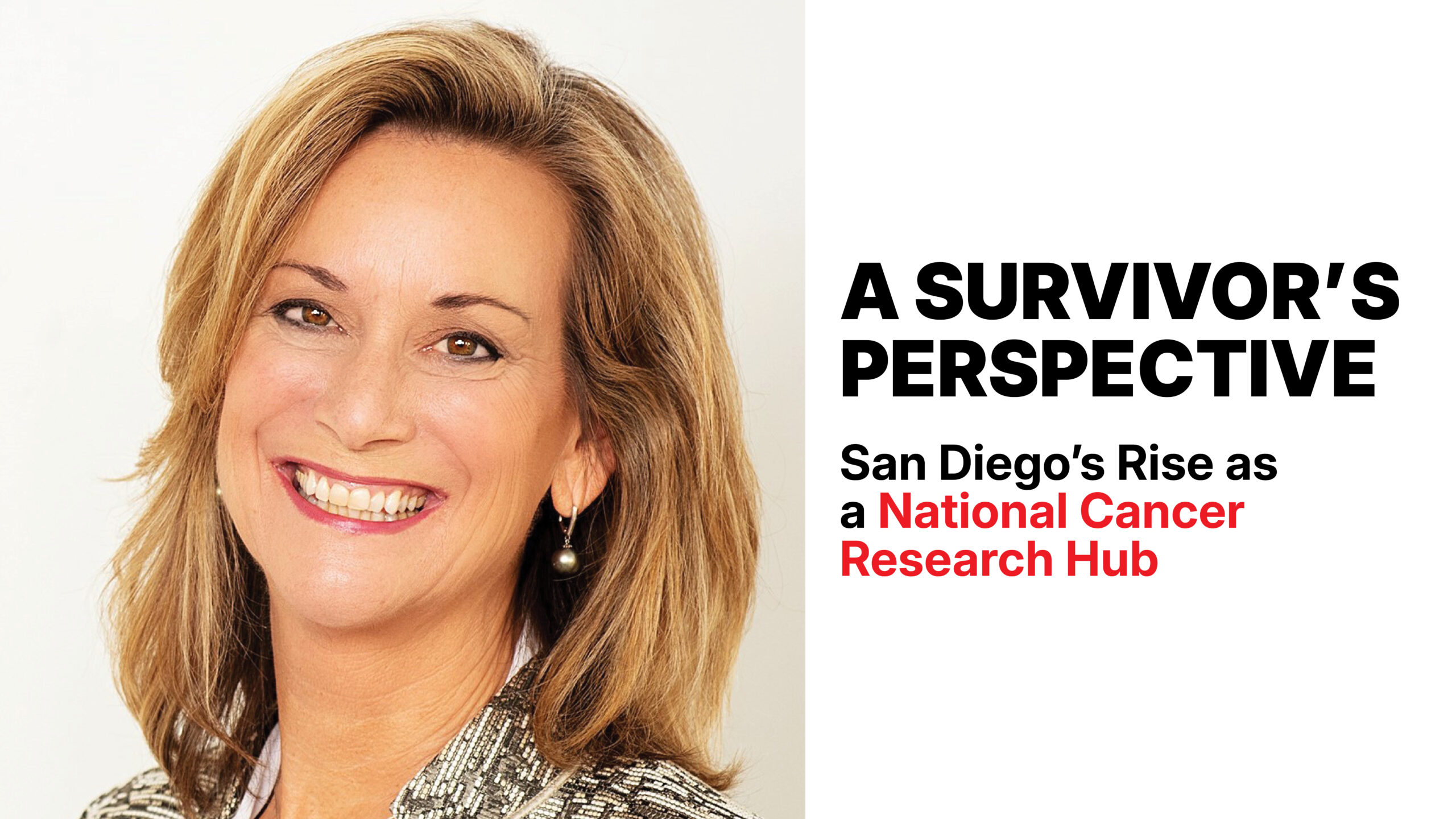
How policy, philanthropy, and scientific collaboration are reshaping the cancer research landscape and why early detection can be the difference between life and death.
Twenty years ago, I received a diagnosis that changed everything and led me to dedicate the rest of my life to transforming cancer care. I was in my early forties—well under the then-prevailing threshold of fifty for routine colorectal cancer screening. An MRI in the emergency room for gastrointestinal pain revealed an intestinal obstruction, leading to emergency surgery with no warning. I was fortunate: diagnosed with stage two colorectal cancer before the disease had spread to my lymph nodes. Six months of aggressive chemotherapy followed, and I have gone on to live a full life.
Under the guidelines of that era, my cancer might have gone undetected for years. It was only in 2021 that the U.S. Preventive Services Task Force formally lowered its recommended colorectal cancer screening age from 50 to 45, driven by evidence of rising incidence in younger adults. Research has since confirmed that the risk of colorectal cancer at age 45 today mirrors the risk at age 50 twenty years ago, and the policy change has already produced measurable increases in early-stage detection, translating directly into lives saved.
Battling cancer and learning to thrive as a survivor has shaped my life’s purpose and is why I find myself writing about something larger than my own experience: the emergence of San Diego as one of the world’s most dynamic cancer research ecosystems, and why the structures that support discovery matter as profoundly as the science itself.
A Rare Concentration of Scientific Talent
San Diego is not the story of one great institution. It is the story of deliberate, decades-long investment in the conditions for scientific collaboration. The region is home to UC San Diego’s Moores Cancer Center, one of only 57 NCI-Designated Comprehensive Cancer Centers in the United States and the only one in San Diego, ranked number one in the region by U.S. News & World Report. San Diego also hosts two of the nation’s only seven NCI-Designated Basic Laboratory Cancer Centers: the Salk Institute and Sanford Burnham Prebys, which together with UC San Diego formed the San Diego NCI Cancer Centers Council to advance joint research and clinical translation.
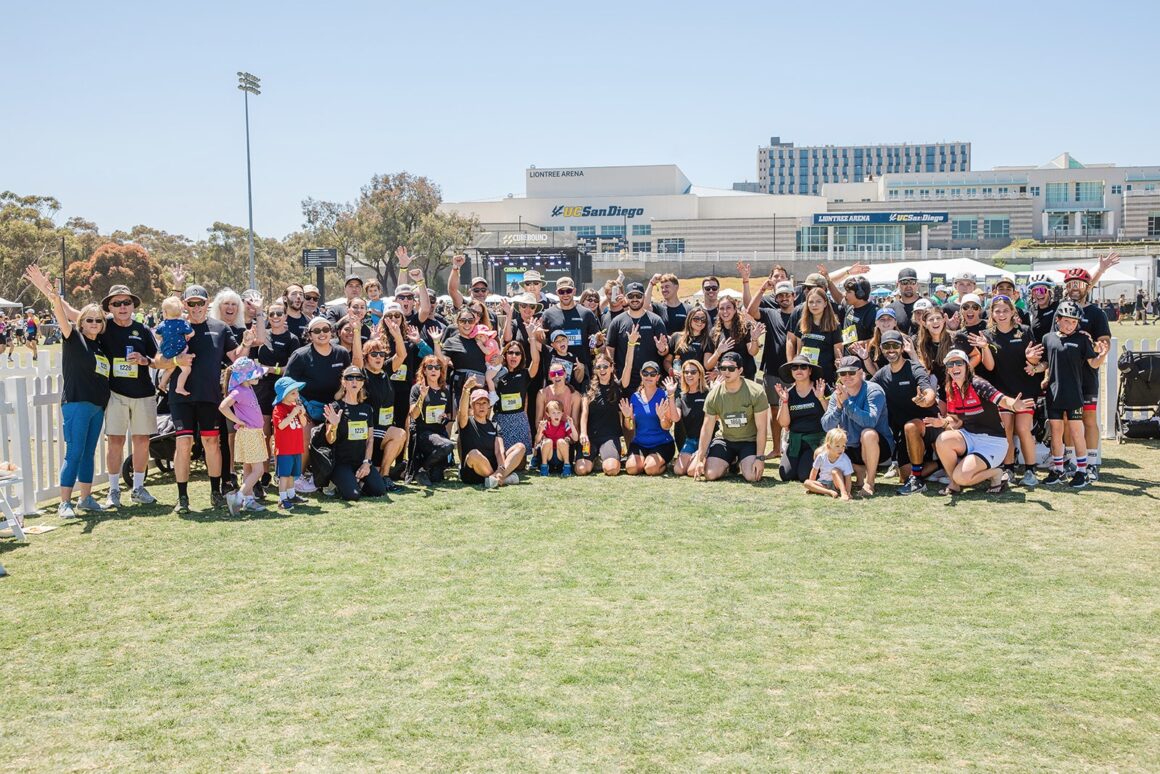
2025 Curebound Cancer Challenge at UC San Diego / photo credit to Asilomar Photography
Beyond these flagships, the region encompasses more than 3,000 life sciences companies, world-class research universities, Rady Children’s Health, and major oncology firms including Pfizer, AstraZeneca, and Illumina. In 2024, San Diego’s life sciences sector employed approximately 57,000 people, secured more than $1.1 billion in NIH (National Institutes of Health) funding, and raised nearly $2 billion in venture capital. The threads of academia, clinical care, industry, and philanthropy are now being woven together in ways that define the region’s future research landscape.
That integration was on global display in April 2026 when the American Association for Cancer Research held its Annual Meeting in San Diego, the world’s largest professional oncology gathering, reflecting recognition that the region is contributing not only important science but viable models for organizing, funding, and translating that science into patient benefit.
Discovery Research at a Crossroads
The most vulnerable point in any cancer research pipeline is also its most consequential: discovery research, where bold hypotheses are tested and new approaches take shape. The NIH has historically sustained this work, but competition for grants has intensified sharply, success rates have narrowed, and review processes increasingly reward incremental advances over high-risk, high-reward science. A recent $1.8 billion reduction across NIH capacity has deepened these pressures, elevating the strategic importance of philanthropic and community-based funding in ways few anticipated even five years ago. The consequences of these funding gaps are not measured in dollars. They are measured in lives.
Philanthropy as Strategic Infrastructure
Against this backdrop, Curebound, a community-powered cancer research accelerator headquartered in San Diego, has emerged as a distinctive and increasingly essential part of the ecosystem. Since its founding, Curebound has awarded more than $50 million across 170 study grants spanning 23 cancer types, created impact including researchers receiving over $166 million in follow-on funding, and has seed-funded four companies. What sets Curebound apart is its structural insistence on cross-institutional collaboration: every grant requires interdisciplinary teams working together, embedding cooperation as a condition of funding rather than a cultural aspiration. Its portfolio spans Discovery Grants of up to $250,000 for early-stage, high-potential research, Targeted Grants of $500,000 for projects approaching clinical translation, a $1 million Cure Prize awarded to improve the standard of care within 3–5 years, Catalyst Grants of $250,000 for early-stage San Diego biotech companies, and Equity Grants of $250,000 targeting cancer health disparities in underserved communities.
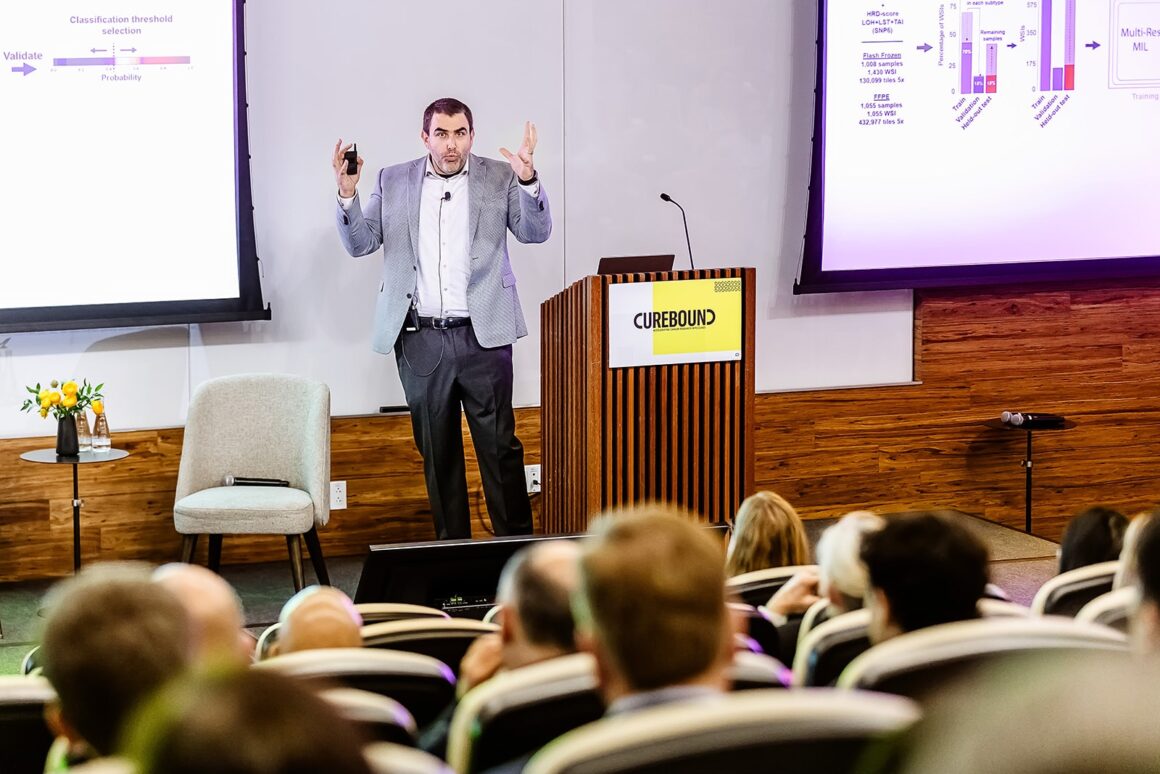
Ludmil Alexandrov, PhD, of UC San Diego / photo credit to Asilomar Photography
The 2025 Cure Prize, Curebound’s flagship award of $1 million, was granted to Ludmil Alexandrov, PhD, of UC San Diego for AI-driven research identifying mutational signatures in cancer genomes. By mapping the biological fingerprints left by cancer-causing cellular processes, his work aims to improve early detection across tumor types and populations. This is precisely the kind of research that demands interdisciplinary teams, sophisticated computational infrastructure, and diverse datasets—resources that early-stage federal grants cannot easily supply. Strategic philanthropy bridges that gap.
Community engagement amplifies this work. In 2025, Curebound’s Concert for Cures featured Elton John and drew more than 27,000 attendees and raised $11.5 million, becoming the largest single cancer research fundraiser in San Diego history.

Curebound Concert for Cures with Elton John at Petco Park in San Diego, 2025 / photo credit to Alex Matthews
This spring,P!nk will headline the event, honoring her late father. Over the past twelve years, the Curebound Cancer Challenge has united over 20,000 participants and raised $32.5 million for early-phase research. These are not peripheral contributions. In a constrained funding environment, they are essential.
A Model Worth Studying
San Diego’s experience holds clear lessons. For policymakers: federal funding remains indispensable, but is most powerful when complemented by agile, regionally anchored models that reduce administrative barriers and reward collaboration. For donors: strategic philanthropy focused on early discovery, coordination, and infrastructure accelerates progress in ways that project-based giving cannot. For scientific leaders: collaborative governance, shared data infrastructure, and cross-sector partnerships are not preferences—they are the organizational conditions under which contemporary cancer science progresses.
I was lucky. My cancer was detected early, before it spread. I know, more personally than any statistic can convey, that early detection is not just a public health talking point. It is the difference between a diagnosis that reshapes a life and one that ends it far too soon. None of what San Diego has built happened by accident. It happened because institutions, health systems, philanthropists, funders, and communities made deliberate decisions to invest in the conditions for discovery.
The cancer research enterprise is at an inflection point. Scientific opportunities have never been greater. Whether the structures that support early discovery can keep pace with science is the defining question of this moment. San Diego’s experience suggests they can, and my second chance at life is the reason I work every day to ensure they do.
About the Author
Robin Toft is a 20-year colon cancer survivor, an advocate for cancer research, and currently serves as CEO of Curebound, raising money to fund cancer discovery. Before joining Curebound, she built and sold an executive search firm focused on improving cancer care. She currently also serves on the Board of Directors for the American Cancer Society’s San Diego Chapter and the La Jolla Institute of Immunology.