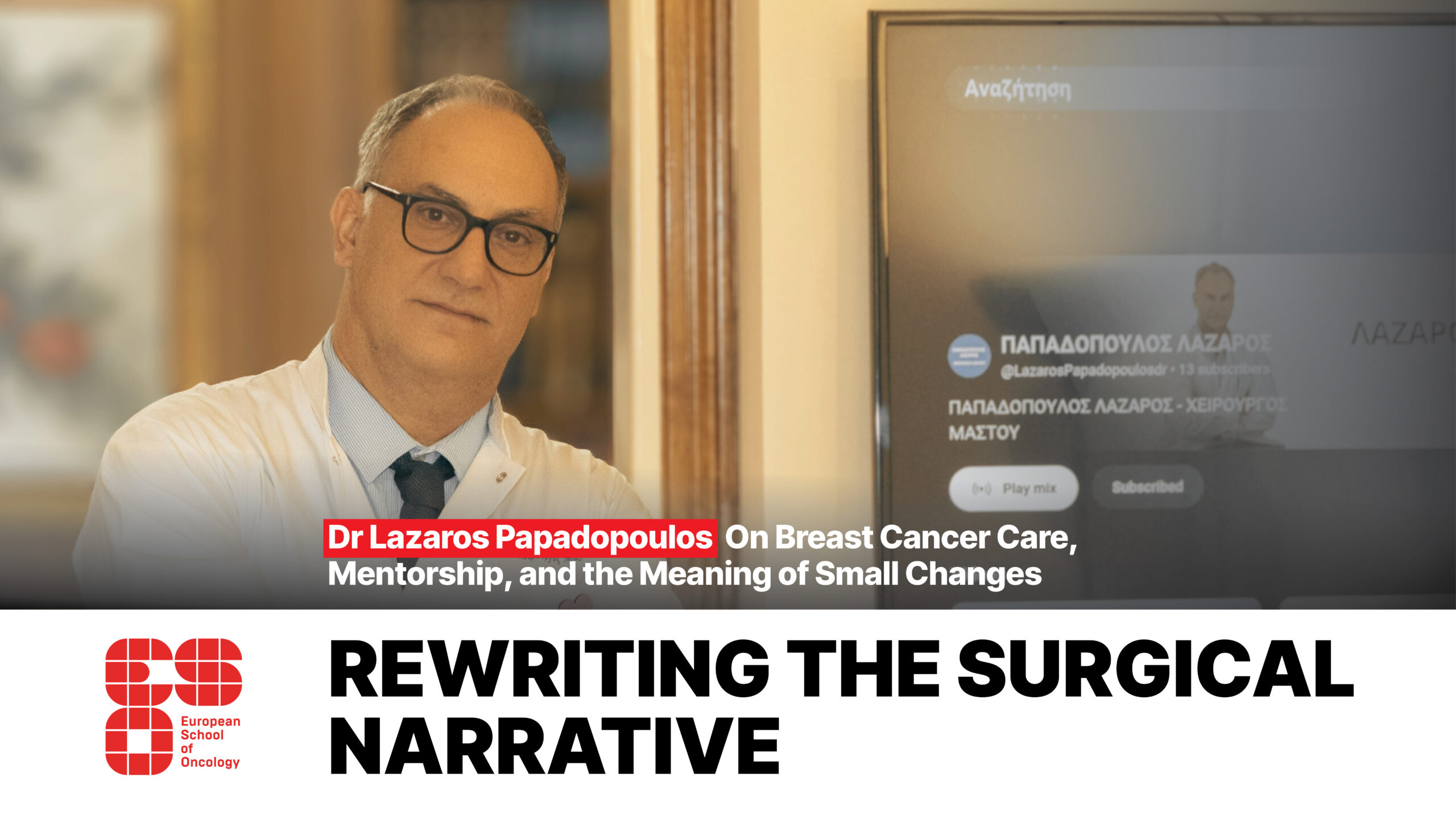
“Life is often a sequence of chance events, and many times we are called to rewrite our own narrative.”
For Dr Lazaros Papadopoulos, that idea is not abstract. It is the thread that connects a childhood shaped by admiration for his father, an early dream of becoming a pilot, and a medical career defined by unexpected turns, formative encounters, and a steady movement toward breast surgical oncology.
Becoming a doctor, he admits, was not his first ambition. As a child, he wanted to follow in his father’s footsteps, whom he describes as a model of “transparency, integrity, and constant self-audit”—qualities that remain his personal compass. Over time, however, something shifted.
“The instincts of adolescence, the rush, the adrenaline, the boiling blood, gave way to reason, realism, and a deeper desire to offer something meaningful to other people.”
That path eventually led him to Italy for medical school and into surgery. He was initially drawn to plastic surgery for its reconstructive and aesthetic dimension, and to abdominal surgery for its urgency and decisiveness. The decisive turn came later, in Athens, through a combination of circumstance and personal loss, when he met the late Dr G. Asimakopoulos, one of Greece’s pioneers in breast surgical oncology.
“I realised I could unite my love for aesthetic and reconstructive work with the principles of general surgery and surgical oncology within one field. That field was breast surgery.”
A Moment in Düsseldorf
If that was the beginning, a second moment transformed direction into commitment.
In 2015, still early in his career, Papadopoulos attended the Düsseldorf Breast Cancer Symposium organised by Dr M. Rezai. Invited by Dr Asimakopoulos, he found himself sitting at a table with some of the most influential figures in breast cancer care, including M. Morrow, V. Galimberti, and B. Gulluoglu.
“I remember that evening very clearly. For me, it was a gift, but also a sign. There was a path in front of me, and it should not be wasted.”
That sense of direction soon became a clear professional commitment.
Learning Across Europe and Bringing it Home
His training took him across Italy, Germany, and Ireland, where he encountered different healthcare systems and, importantly, more structured models of cancer care.
Greece, he reflects, sits at a crossroads between East and West—reflected in both patient expectations and clinical practice. While still deeply patient-centred, important structural gaps remain.
Ireland, in particular, shaped his thinking. There, multidisciplinary teams, standardised pathways, and quality frameworks were not aspirational, they were routine.
“Patients should ideally be treated within an MDT environment, in recognised centres, by surgeons with appropriate expertise and case volume.”
Returning to Greece, he brought back not only technical experience, but a systems-based mindset, including MDT culture, the importance of preoperative diagnosis, and modern axillary management after neoadjuvant treatment. He also adopted newer technologies such as paramagnetic seed localisation and magnetic tracers.
“To me, innovation means improving efficiency, simplifying workflows, and introducing better systems—always within an oncologically safe framework.”
The COVID-19 pandemic, which coincided with his fellowship, added another layer of complexity. Screening stopped, operative volumes dropped, and trainees competed for fewer cases.
“It was a difficult period, with reduced exposure and many trainees trying to gain experience in a limited space.”
It reinforced for him that surgical training must be structured, not dependent on chance.
ESO, Mentorship, and the Apprentice Mindset
A central influence throughout his career has been the European School of Oncology (ESO). From Clinical Fellowship to postgraduate training and later his role within the ESO College Council, he describes ESO less as a list of achievements and more as a continuous formative process.
“Titles and distinctions, in themselves, have little value. What matters is the process.”
That process, he explains, is about exposure to different systems, different ways of thinking, and a culture of reflection and responsibility.
“ESO teaches you how to think, how to communicate, and how to take responsibility.”
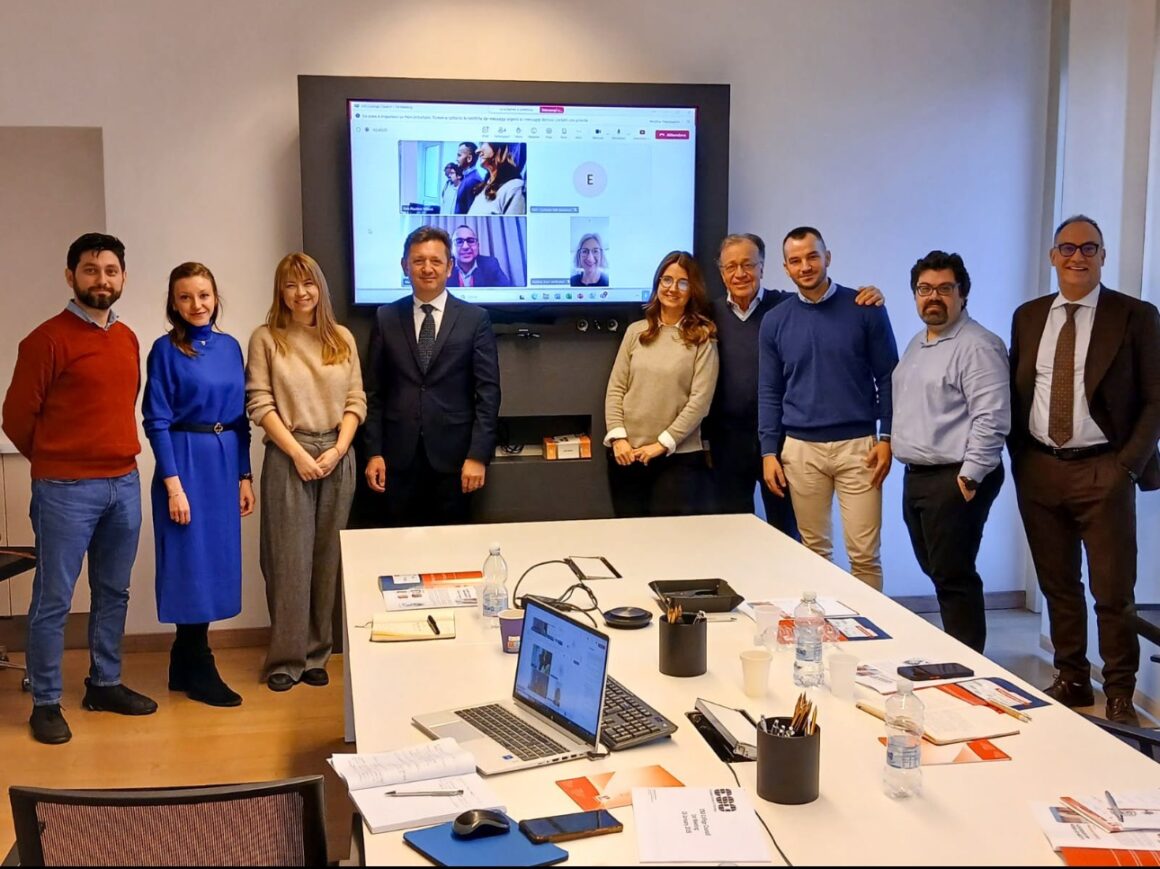
Members of the elected board of the ESO college with CEO Alberto Costa and Chairman Alexandru Eniu
Now, as an ESO Ambassador and College Council member, he sees his role as contributing to a more unified European approach to oncology training.
“As a European community, we need to think and act more as one.”
He advocates for a modern, evolving curriculum that includes not only core oncological principles, but also advanced oncoplastic surgery, endoscopic techniques, localisation technologies, and surgeon-performed ultrasound. For him, training must be standardised, not left to geography or opportunity.
Despite his experience, he resists the idea of arrival.
“I still see myself as an apprentice.”
It is a philosophy shaped by mentorship. He speaks of learning not only how to operate, but also how not to operate, and how to understand judgement, restraint, and responsibility.
“I have learned not only how to operate, but also how not to operate.”
Among those who have influenced him, he cites Dr A. Costa, Dr C. Tinterri, Mr J. Gerraghty, Mr D. McCartan, Dr B. Gulluoglu, Dr G. Pechlivanides, Mr V. Gruzman, Dr G. Asimakopoulos and his current director, Dr G. Xepapadakis.
Each contributed in distinct ways—some shaping his character, others refining his surgical expertise, and several influencing both. Drawing selectively from these mentors, he has developed a professional identity that extends beyond technical proficiency, embracing a patient-centred approach that prioritises meaningful communication and human connection alongside clinical care.
Patients, Precision, and the Power of Small Change
In daily practice, Papadopoulos places strong emphasis on shared decision-making.
“Patients need more than facts. They need context, clarity, and, whenever possible, numbers.”
He is equally aware of the emotional fragility of these conversations.
“Our role is not only to inform, but to do so without making them feel overwhelmed, uncomfortable, or confused.”
This balance between clarity and compassion runs through his entire surgical philosophy. While he values oncoplastic techniques, he remains grounded in oncological safety and restraint.
“I always want to understand what is acceptable to my patients, but also what is acceptable to me as a surgeon.”
And always, he returns to a simple principle:
“Less is very often more.”
Looking ahead, he does not speak of transformation, but of accumulation—small, evidence-based improvements: fewer unnecessary mastectomies, reduced axillary surgery, stronger preoperative diagnosis, greater MDT integration, and increased engagement in clinical trials.
“Our treatment decisions must always be justified by data, not habit.”
Beyond the Operating Theatre
Papadopoulos sees Greece as having strong potential in regional and international oncology collaboration not because of infrastructure alone, but because of people.
“It is a resource-rich environment in terms of human potential and clinical experience.”
What is needed, he argues, is openness.
“Extroversion in medicine is not superficial. It is productive. It allows ideas, energy, and good practice to circulate.”
Maintaining balance in such a demanding field requires both distance and connection. Family provides grounding; patients provide perspective. Outside medicine, he turns to kitesurfing.
“When I am on the sea, I think only of the wind and the waves, nothing else.”
Finally, when asked whom he would recommend for a future interview, his answer is immediate: his director, Dr G. Xepapadakis.
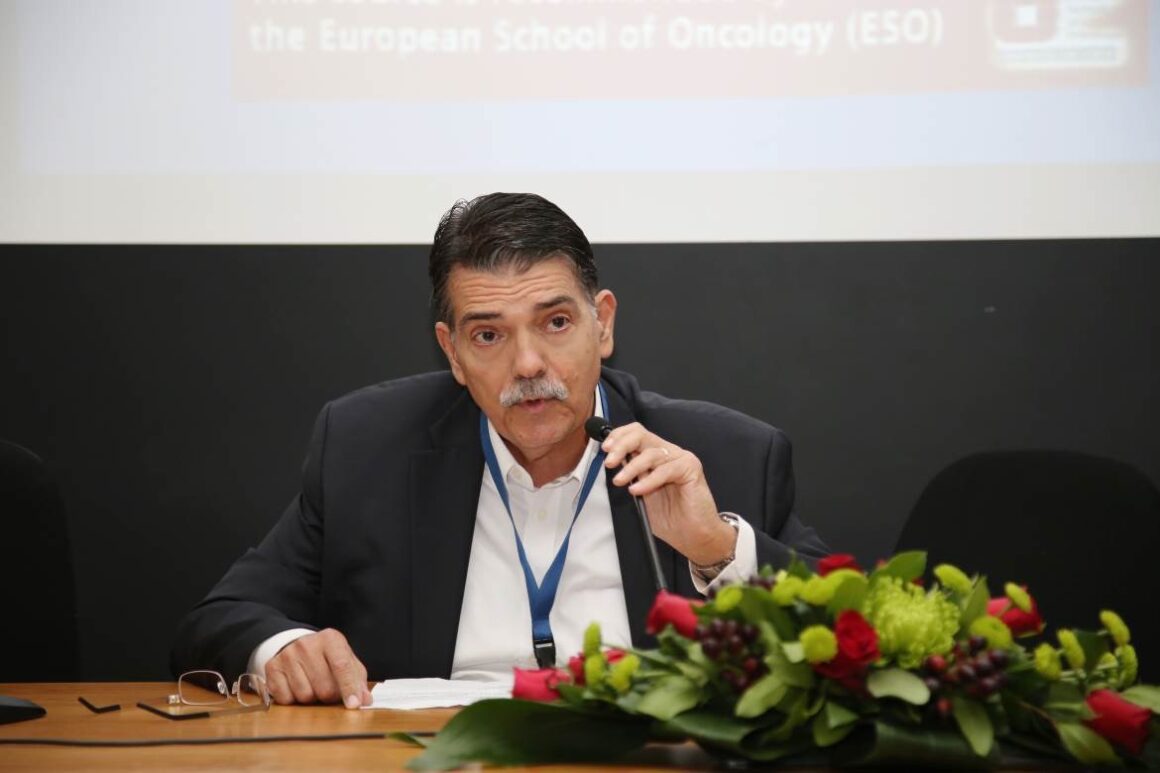
Dr G. Xepapadakis
“He is a legend in our field. He has operated on more than 15,000 women, manages over 600 cancer cases per year, and has a story that is still not widely known.”
For Papadopoulos, the essence of his journey is continuity rather than arrival—a constant process of learning, refining, and working within a team.
“No matter our age, we must keep learning and we must learn to function as part of an MDT.”
About the Author
Knarik Arakelyan (PhD) is a psychologist and communications professional with over 14 years of experience in public relations, health communication, and public awareness campaigns. She is currently the Managing Editor of “CancerWorld“ magazine, Head of the “OncoDaily TV,” and serves as PR and Communications Officer at “EMERTÉ” Clinic.