Cancerworld Magazine
  • About the Magazine
    • About us
    • Editorial Team
    • Events
    • Archive
    • Contacts
  • Articles
    • Policy
    • Practice Points
    • Delivery of Care
    • Biology basic
    • Medicine
    • Featured
  • Contents
    • News
    • Editorials
    • Interviews to the Expert
    • In the Hot Seat
    • Profiles
    • Obituaries
    • Voices
  • ESO College Corner
SUBSCRIBE FOR FREE
Facebook
Twitter
LinkedIn
Cancerworld Magazine
  • About the Magazine
    • About us
    • Editorial Team
    • Events
    • Archive
    • Contacts
  • Articles
    • Policy
    • Practice Points
    • Delivery of Care
    • Biology basic
    • Medicine
    • Featured
  • Contents
    • News
    • Editorials
    • Interviews to the Expert
    • In the Hot Seat
    • Profiles
    • Obituaries
    • Voices
  • ESO College Corner
Cancerworld Magazine > News > Improving outcomes in elderly patients taking multiple medications
  • News

Improving outcomes in elderly patients taking multiple medications

  • 24 March 2023
  • Janet Fricker
Improving outcomes in elderly patients taking multiple medications
Total
0
Shares
0
0
0
0
0

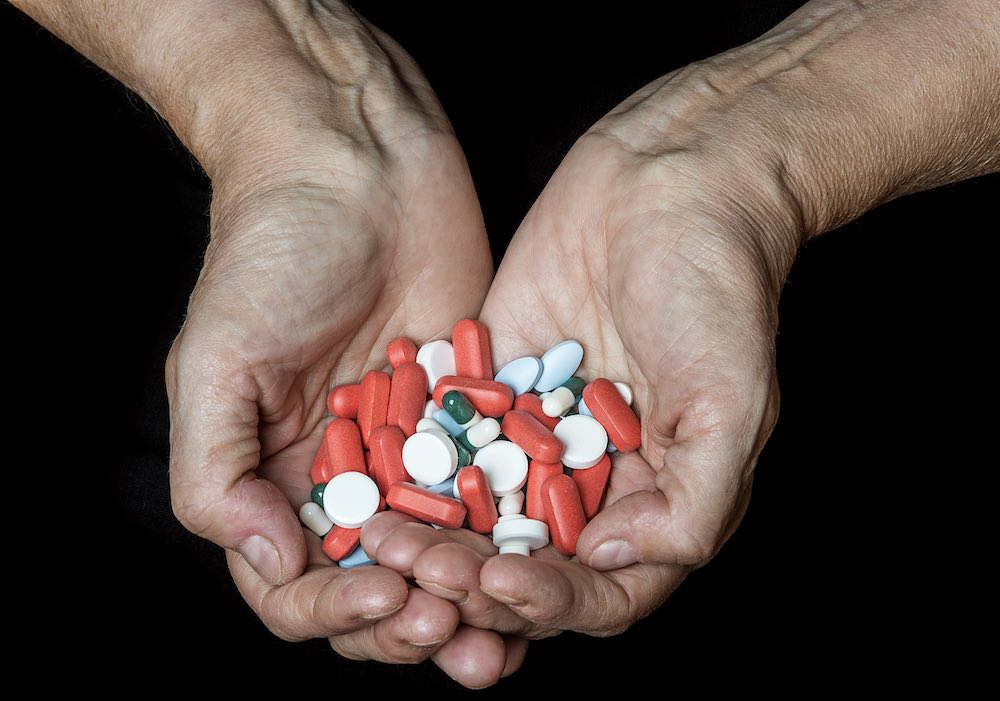
For older patients with cancer, taking multiple medications can result in toxic chemotherapy side effects and even the need to stop cancer treatment. The cohort study, published in Cancer, 24th January, found cancer patients with one or more potential drug interactions had a 59% higher odds of having to stop cancer treatment earlier then recommended.

“It’s possible that polypharmacy affects both the experience and the effectiveness of chemotherapy,” says geriatric oncologist Erika Ramsdale, the senior author, from Wilmot Cancer Institute, University of Rochester, New York. “Providing meaningful screening and interventional tools to optimize medication use may improve treatment-related outcomes in these patients.”

Polypharmacy, the use of multiple concurrent medications, represents a growing public health issue. Risk factors for polypharmacy include advancing age, comorbidities, and disabilities, as well as healthcare system factors including care fragmentation and use of multiple pharmacy practices. Studies have estimated that up to 80% of cancer patients take five or more medications, and up to 40% take more than 10, representing a significant increase compared to older adults without cancer. Older adults with cancer, who are more likely to have frailty, disability, and geriatric syndromes than older patients without cancer, may be at particularly high risk of adverse events from potentially inappropriate medications.

Last year, Ramsdale and colleagues undertook a descriptive study exploring the scope of polypharmacy in a nationwide sample of 718 cancer patients aged 70 or more with stage 3 and 4 cancers, enrolled from community-based oncology practices across the US. The mean age of patients in the study was 77.6 years. The study involved secondary data from the GAP70+ study, a trial assessing whether providing community pharmacists with information regarding geriatric assessments could reduce clinician rated grade 3-5 chemotherapy toxicity in older patients. Results, published in The Oncologist, showed that 70% were at risk of drug–drug interactions, 67% were taking at least one drug that was potentially inappropriate, 61% were taking five or more medications before starting chemotherapy, and nearly 15% were taking 10 or more medications. Each additional medication increased the odds of a potential major drug–drug interaction by 39% and drug–cancer treatment interaction by 12%.

For the current study, Ramsdale and colleagues looked at data from the same cohort of 718 older advanced cancer patients, to identify associations between polypharmacy, potentially inappropriate medications, and potential drug–drug interactions on the one hand, and adverse cancer treatment outcomes, including unplanned hospitalisations and death, on the other. Prior to initiating treatment, patients had been asked to complete a polypharmacy log at baseline.

In patients with polypharmacy, the mean number of grade ≥2 toxicities was 9.8 vs 7.7 in those without polypharmacy (P<0.01), and the mean number of grade ≥3 toxicities was 2.9 vs 2.2 in patients without polypharmacy (P<0.04).

Patients with one or more major potential drug–drug interaction had 59% higher odds of early treatment discontinuation (OR 1.59. 95%CI 1.03–2.46; P=0.03).

“Our findings emphasize the need to critically evaluate the utility and safety of every medication before the initiation of cancer treatment,” write the authors.

Such actions are supported by the 2021 National Comprehensive Cancer Network guidelines which recommend performing a careful medications’ review before initiating chemotherapy, including identifying polypharmacy and potentially inappropriate medications, reviewing medication indications and dose appropriateness, assessing adherence and drug interactions, and deprescribing inappropriate or unnecessary medications.

The authors also express concern about grade 1 and 2 toxicities. “Interestingly, we observed an association between polypharmacy and an increased risk of ≥2 toxicities (low-grade toxicities). A prior study indicated that low-grade toxicities have clinical significance in older adults undergoing chemotherapy because these patients may have a lower ability to tolerate symptomatic toxicities caused by concurrent functional decline and comorbidities,” write the authors.

Total
0
Shares
Share 0
Tweet 0
Share 0
Share 0
Share 0
Related Topics
  • chemotherapy side effects
  • chemotherapy toxicity
  • drug-drug interactions
  • geriatric oncology
  • grade 1 and 2 toxicities
  • inappropriate medication
  • polypharmacy
  • potentially inappropriate medications
Janet Fricker

Janet Fricker is a medical writer specialising in oncology and cardiology. After researching articles for Cancerworld she runs, swims, and eats porridge.

Previous Article
  • News

Localised prostate cancer: active monitoring offers valid option

  • 24 March 2023
  • Janet Fricker
View Post
Next Article
  • News

Body weight influences breast cancer risk in women with BRCA1 and 2 mutations

  • 5 April 2023
  • Janet Fricker
View Post
You May Also Like
View Post
  • Articles
  • News

The Right to Be Forgotten: Why Voluntary Measures are Not Enough for Cancer Survivors 

  • Cancer Patients Europe
  • 1 July 2026
View Post
  • Articles
  • News

European Cancer Nursing Day 2026: Supporting Life Beyond Cancer

  • European Oncology Nursing Society
  • 27 June 2026
View Post
  • Articles
  • News

Oncologists Urged to Have Open Discussion about CAM Use with Patients

  • Janet Fricker
  • 20 June 2026
View Post
  • Editorials
  • News

The Scientists Who Turned Cancer Prevention into a Vaccine: Dr Douglas Lowy and Dr John Schiller

  • Adriana Albini
  • 17 June 2026
View Post
  • ESO Contest
  • News

Cancer is Universal. Meaning is Not!

  • Fatjona Kraja
  • 16 June 2026
View Post
  • News

CancerWorld #116 (June 2026)

  • Knarik Arakelyan
  • 12 June 2026
View Post
  • Articles
  • News

A Survivor’s Perspective: San Diego’s Rise as a National Cancer Research Hub

  • Robin Toft
  • 5 June 2026
View Post
  • News

A Matter of Timing: Radiotherapy Efficacy Linked to Circadian Regulation 

  • Janet Fricker
  • 29 May 2026
search
CancerWorld #117 Download CancerWorld #116 Download CancerWorld #115 Download CancerWorld #114 Download CancerWorld #113 Download CancerWorld #112 Download CancerWorld #111 Download CancerWorld #110 Download CancerWorld Special Issue Download CancerWorld #109 Download CancerWorld #108 Download CancerWorld #107 Download CancerWorld #106 Download CancerWorld #105 Download CancerWorld #104 Download CancerWorld #103 Download CancerWorld #102 Download CancerWorld #101 Download or search in Cancerworld archive
Newsletter

Subscribe free to
Cancerworld!

We'll keep you informed of the latest features and news with a fortnightly email

Subscribe now
Latest News
  • The Right to Be Forgotten: Why Voluntary Measures are Not Enough for Cancer Survivors 
    • 1 July 2026
  • European Cancer Nursing Day 2026: Supporting Life Beyond Cancer
    • 27 June 2026
  • Oncologists Urged to Have Open Discussion about CAM Use with Patients
    • 20 June 2026
  • The Scientists Who Turned Cancer Prevention into a Vaccine: Dr Douglas Lowy and Dr John Schiller
    • 17 June 2026
  • Cancer is Universal. Meaning is Not!
    • 16 June 2026
Article
  • The Right to Be Forgotten: Why Voluntary Measures are Not Enough for Cancer Survivors 
    • 1 July 2026
  • Building Beyond the Bedside: Dr Mohamed Emam Sobeih’s Vision for the Future of Oncology
    • 29 June 2026
  • European Cancer Nursing Day 2026: Supporting Life Beyond Cancer
    • 27 June 2026
Social

Would you follow us ?

Contents
  • Building Beyond the Bedside: Dr Mohamed Emam Sobeih’s Vision for the Future of Oncology
    • 29 June 2026
  • The Scientists Who Turned Cancer Prevention into a Vaccine: Dr Douglas Lowy and Dr John Schiller
    • 17 June 2026
  • No Woman Left Behind: Dr Miriam Mutebi and the Quest for Equitable Cancer Care in Africa
    • 15 June 2026
MENU
  • About the Magazine
    • About us
    • Editorial Team
    • Events
    • Archive
    • Contacts
  • Articles
    • Policy
    • Practice Points
    • Delivery of Care
    • Biology basic
    • Medicine
    • Featured
  • Contents
    • News
    • Editorials
    • Interviews to the Expert
    • In the Hot Seat
    • Profiles
    • Obituaries
    • Voices
  • ESO College Corner
Cancerworld Magazine
  • About us
  • Articles
  • Media Corner
  • Privacy Policy
  • Cookie Policy

Cancerworld is published by OncoDaily (P53 Inc.) | Mailing Address: 867 Boylston st, 5th floor, Ste 1094 Boston, MA 02116, United States | [email protected]

Archivio Cancerworld

Input your search keywords and press Enter.