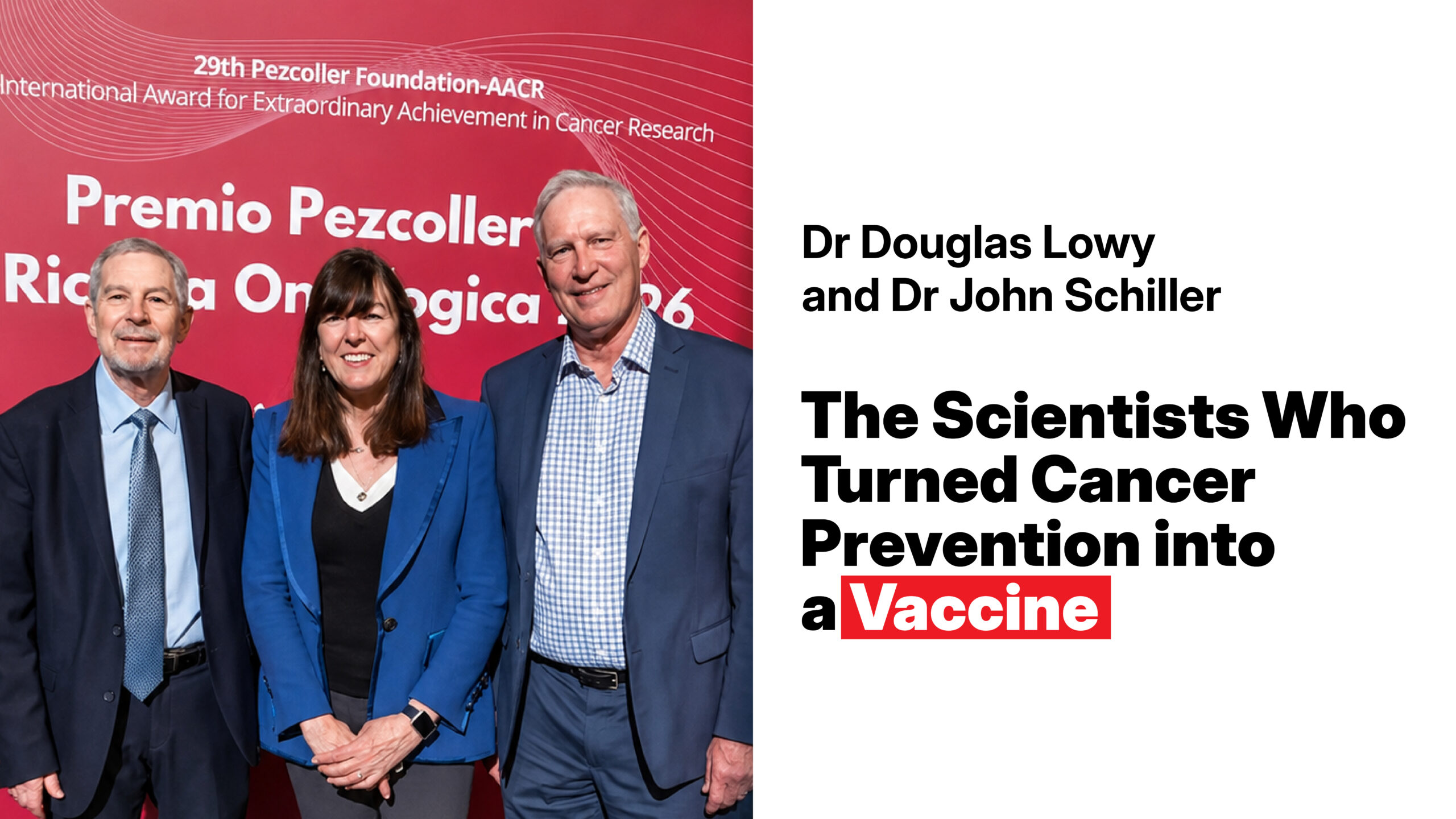
The 2026 Pezcoller Foundation–AACR International Award for Extraordinary Achievement in Cancer Research has recognised two scientists whose discoveries reshaped one of oncology’s greatest ambitions: preventing cancer before it begins. On 9 May, at the Teatro Sociale in Trento, Italy, Dr Douglas R. Lowy and Dr John T. Schiller of the U.S. National Cancer Institute were honoured for pioneering the science behind the HPV vaccines that are now transforming cancer prevention worldwide.
A Landmark in Cancer Prevention
Their work stands among the most consequential advances in modern oncology. By developing virus-like particle (VLP) technology — the foundation of HPV vaccination — Lowy and Schiller helped create a public health intervention capable of preventing cancer rather than treating it after diagnosis, marking a decisive shift in the history of cancer medicine.
Human papillomavirus (HPV) is responsible for nearly all cervical cancers, as well as a substantial proportion of anal, oropharyngeal, vulvar, vaginal, and penile cancers. Today, HPV vaccination programmes are reducing infection rates and precancerous lesions across multiple countries, with early evidence already pointing to dramatic declines in cervical cancer incidence among vaccinated populations.
The scientific journey began with German virologist Harald zur Hausen, who demonstrated that HPV infection is the main cause of cervical cancer. His discovery, recognised with the 2008 Nobel Prize in Physiology or Medicine, fundamentally changed the understanding of cancer etiology and opened the door to prevention strategies targeting oncogenic viruses.
Building the Vaccine Platform
In the 1990s, Lowy and Schiller advanced this field by developing a novel vaccine approach based on virus-like particles (VLPs). These structures mimic the outer shell of HPV but contain no viral DNA, meaning they cannot cause infection. At the same time, they trigger a strong immune response, making them both safe and highly effective as a vaccine platform.
Their research ultimately enabled the development of the first HPV vaccines, including Gardasil and Cervarix, now widely used around the world. In countries with strong vaccination coverage, dramatic reductions have already been observed in HPV infections and high-grade cervical lesions — early indicators of a future decline in cancer incidence.
Recognition of a Prevention Breakthrough
The importance of their contribution has been recognised repeatedly over the past decade. In 2017, Lowy and Schiller received the Lasker–DeBakey Clinical Medical Research Award, often seen as a strong predictor of future Nobel recognition. The Pezcoller Foundation–AACR Award further confirms the global impact of their work on both cancer research and public health.
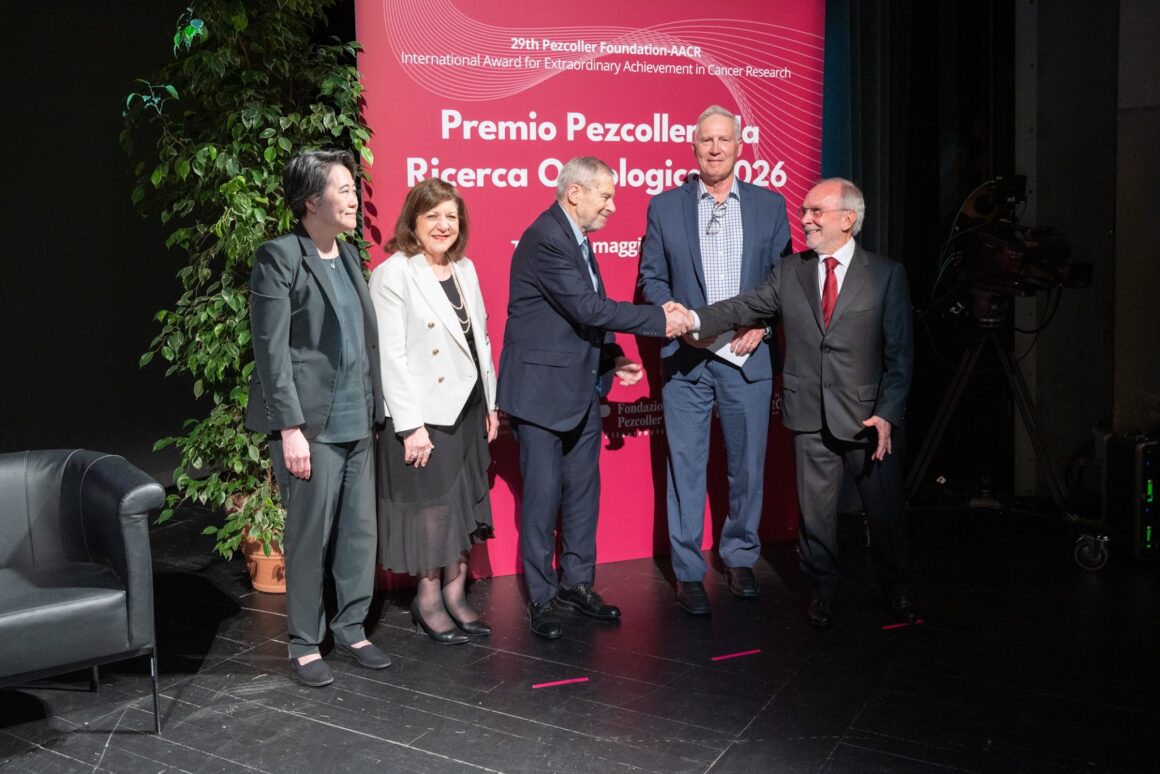
From left to right: Lillian Siu, President of AACR, Margaret Foti, Chief Executive Officer of AACR, the two awardees, Douglas Lowy and John Schiller, and Enzo Galligioni, President of the Pezcoller Foundation
The award ceremony in Trento brought together leading figures in oncology, including Professor Enzo Galligioni, President of the Pezcoller Foundation; Margaret Foti, Chief Executive Officer of the American Association for Cancer Research (AACR); and Dr Lillian Siu, Immediate Past President of AACR. Their presence highlighted the growing international commitment to cancer prevention and cross-border scientific collaboration.
The achievements of Lowy and Schiller illustrate a profound shift in oncology: from treating cancer after it develops to preventing it altogether.
About the Author
Prof. Adriana Albini is Editor-in-Chief of “CancerWorld” magazine and Scientific Advisor to the Scientific Directorate of the IRCCS Istituto Europeo di Oncologia (IEO), Milan, Italy. She is Past and Founding Chair of the “Cancer Prevention Working Group (CPWG)” of the American Association for Cancer Research (AACR).